A Collector’s Guide: Identifying Valuable Vintage Baseball Cards
That shoebox of old cards in the attic might be hiding a treasure, but telling a common card from a valuable one goes beyond just the player's name. The real value is often found in the details—the specific year, the sharpness of the corners, and the rarity of the print run.
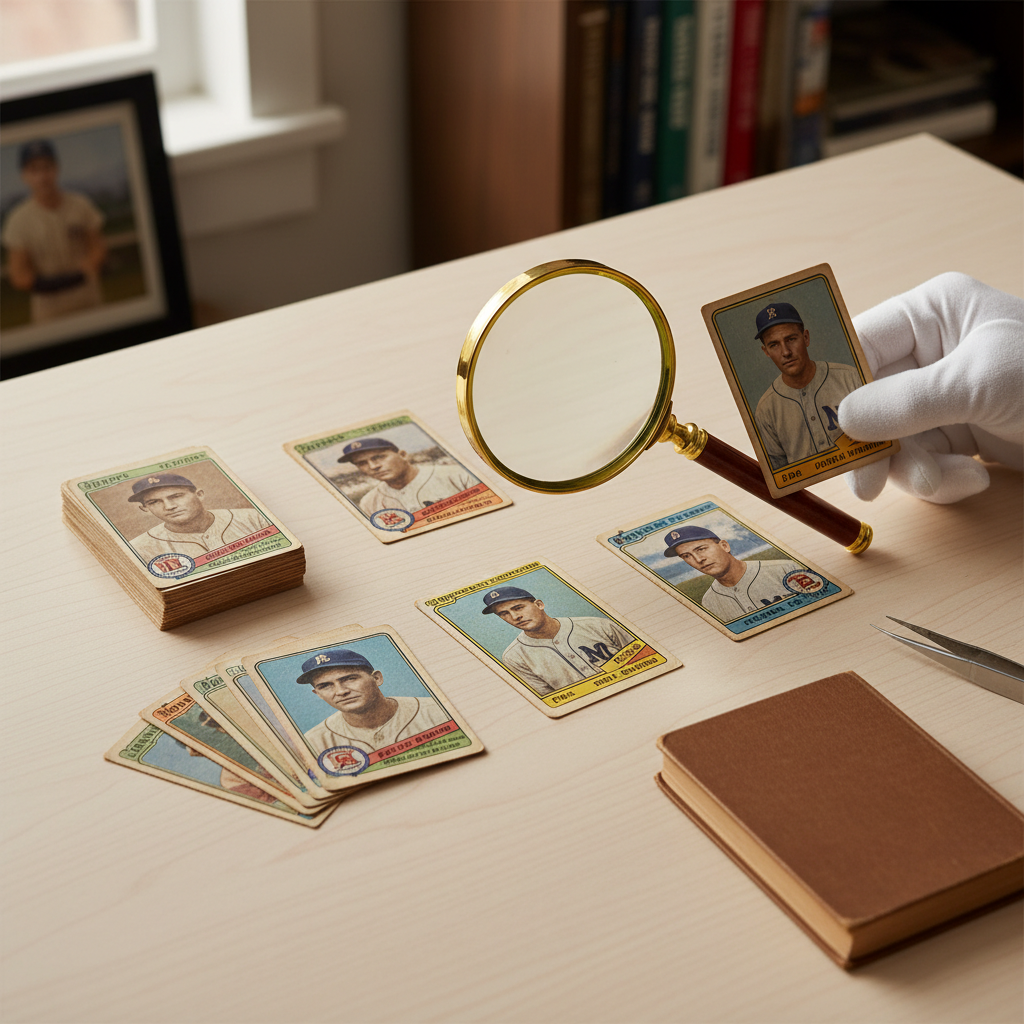
Key Factors in Identifying Valuable Vintage Baseball Cards
Uncovering a hidden gem in a shoebox of old baseball cards is a dream for many collectors. But what separates a priceless piece of cardboard from a common one? Identifying a valuable vintage baseball card involves a combination of factors, from the player depicted to the physical condition of the card itself. Understanding these key elements is the first step toward recognizing true treasure.
1. The Player and Rookie Card Status
The single most significant factor in a card's value is the player featured on it. Cards of Hall of Fame legends like Babe Ruth, Mickey Mantle, Ty Cobb, and Honus Wagner will almost always command high prices. These are the titans of the sport, and their memorabilia is highly sought after by generations of fans and collectors. Beyond the absolute legends, popular stars from any era can also hold substantial value, especially if they had a major impact on the game.
Even more important is the "rookie card" designation. A player's rookie card is the first card featuring them in a major, nationally distributed set. These cards are highly coveted because they represent the very beginning of a legendary career. The 1952 Topps Mickey Mantle, for example, isn't technically his rookie card (that would be his 1951 Bowman), but it is his first Topps card and is considered one of the most iconic cards in the hobby, often fetching millions of dollars at auction. Always check if the card you have is a player's recognized rookie card, as this can multiply its value exponentially.
2. Card Condition and Professional Grading
A vintage card's condition is paramount to its value. A mint condition card of a common player can be worth more than a heavily damaged card of a superstar. Condition is typically assessed by professional grading companies like Professional Sports Authenticator (PSA) or Beckett (BGS), which use a 1 to 10 scale. A "PSA 10 Gem Mint" card is a flawless example and is incredibly rare for vintage cards, making it exponentially more valuable than a PSA 8 or PSA 9 of the same card.
Graders look at four primary criteria. Centering refers to how well the image is centered on the card; perfect 50/50 centering is ideal. Corners should be sharp and pointed, not rounded, soft, or frayed. Edges must be smooth and clean, without any chipping or "feathering." Finally, the surface should be free of scratches, creases, print defects, or stains. Even a minor crease can drastically reduce a card's grade and, consequently, its market value.
3. Rarity and Scarcity
The basic economic principle of supply and demand is a driving force in the card collecting world. Cards with a low print run are inherently more valuable. The most famous example is the T206 Honus Wagner, which was pulled from production early because Wagner reportedly did not want his image used to promote tobacco products. As a result, only a handful are known to exist, making it the "holy grail" of baseball cards.
Scarcity can also come from other sources. "Error cards," which feature a mistake like a wrong photo, a misspelled name, or incorrect stats, can sometimes be more valuable than the corrected version if the error was caught and fixed early in the print run. Additionally, cards from the "pre-war" era (before WWII) are naturally scarcer due to the materials used and the simple fact that fewer have survived over the decades. A card's "population report" from a grading company can tell you exactly how many examples have been graded at each level, giving you a clear picture of its true scarcity.
4. Card Manufacturer and Set
The set a card belongs to plays a huge role in its desirability. Certain sets are considered iconic and are highly collected. The 1909-1911 T206 set, produced by the American Tobacco Company, is legendary for its beautiful artwork and the famous Wagner card. The 1952 Topps set is another landmark, cherished for being the company's first major set and for its classic design and star-studded checklist, including the iconic Mickey Mantle.
Other highly regarded vintage sets include the 1933 Goudey, 1954 Bowman, and 1956 Topps. Cards from these flagship sets often carry a premium over cards from less popular or regional sets. Knowing which sets are historically significant is crucial, as a card's "address"—the set it comes from—can be just as important as the player on the front.
5. Historical Significance and Eye Appeal
Sometimes, a card's value is tied to a specific moment in baseball history. A card might feature a player during a record-breaking season, a World Series championship year, or another significant milestone. This adds a layer of narrative and historical context that collectors find appealing, which can increase its value beyond the typical metrics.
Finally, don't underestimate the subjective quality of "eye appeal." This refers to how visually pleasing a card is. A card with a crisp, clear photo, vibrant colors, and great centering will be more desirable than a poorly printed or off-center one, even if they have the same technical grade. Collectors are willing to pay a premium for a card that simply looks stunning in their collection.