A Comprehensive Guide to Choosing the Best Weight Rack for Your Home Gym
Choosing the right weight rack is a huge step in building a serious home gym, but the options can be confusing. This guide breaks down the essential differences between the most popular types, from full power racks and half racks to minimalist squat stands.
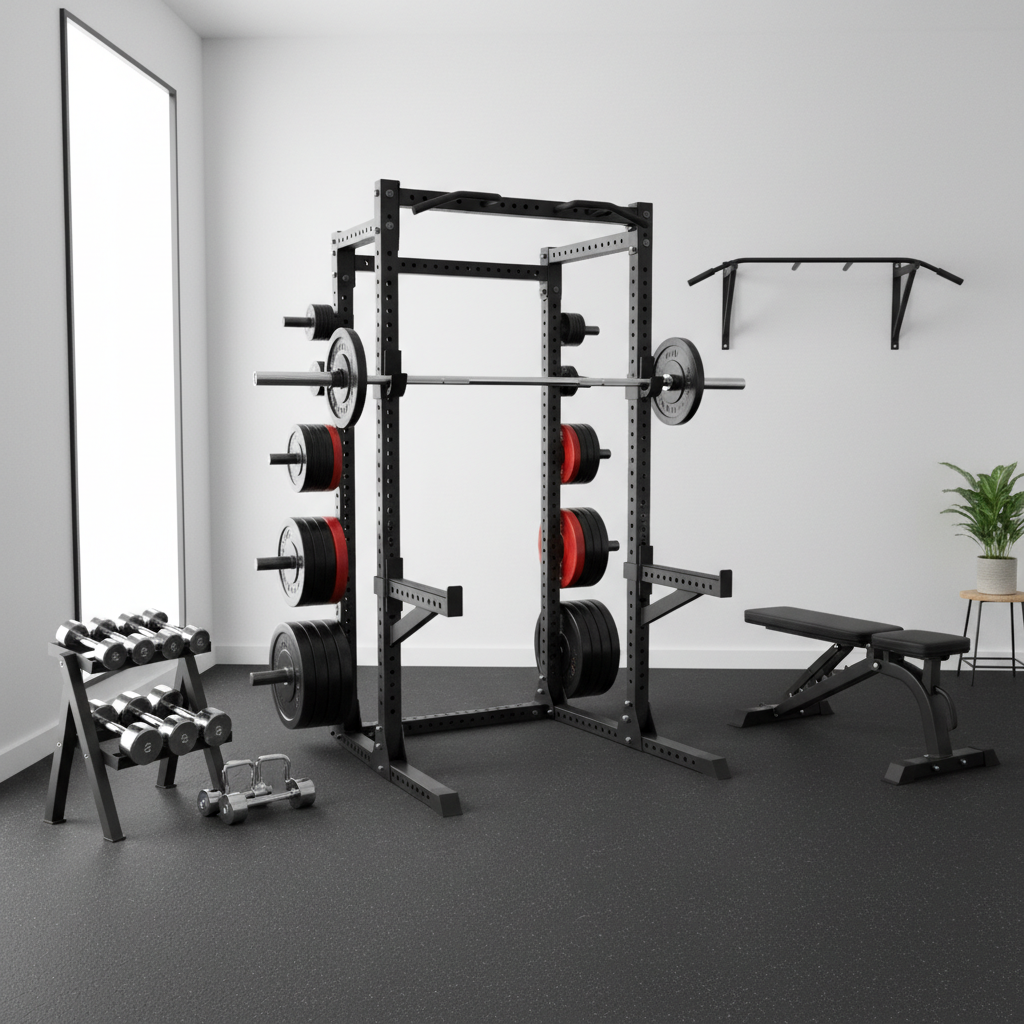
Setting up a home gym is an exciting endeavor, and at the heart of any serious strength training space is the weight rack. It's the central piece of equipment that enables safe and effective lifting, particularly for foundational compound exercises. However, the market is filled with various types of racks, each designed for different spaces, budgets, and training styles. Understanding the differences is crucial to making an informed decision that will serve your fitness goals for years to come.
From full-scale power cages to space-saving folding units, this guide will break down the primary weight rack options available for home gyms, explaining their features, benefits, and ideal use cases.
The Main Types of Home Gym Weight Racks
Choosing the right rack is the first major step. Below are the most common categories you will encounter, each with distinct advantages.
1. Power Racks (Full Cages)
The power rack, often called a full cage, is widely considered the gold standard for safety and versatility in strength training. It consists of four vertical steel uprights connected to create a cage-like structure that you stand inside to perform exercises. This design is its greatest strength; the horizontal safety pins or straps can be set at a specific height to catch a loaded barbell if you fail a lift, such as a heavy squat or bench press. This feature allows you to train heavy with confidence, even without a spotter.
Beyond safety, power racks are incredibly versatile. Most come standard with a pull-up bar, and the numerous holes along the uprights (often called Westside or 1-inch spacing) allow for a vast array of attachments. You can easily add dip stations, landmine attachments, monolift arms, and more, turning the rack into a complete training hub. Their main drawback is their footprint; they are the largest and heaviest option, requiring significant floor space and ceiling height.
2. Half Racks
A half rack is a popular compromise between a full power rack and a more minimalist setup. It typically features two or four vertical uprights but has an open-front design, which means you aren't fully enclosed. While it still includes adjustable J-hooks to hold the barbell and long safety spotter arms that extend forward, the safety is slightly less comprehensive than a full cage since the barbell could potentially fall backward or sideways out of the rack. However, for most lifters, the provided safety arms are more than sufficient.
The primary advantages of a half rack are its smaller footprint and more open feel, which some users prefer as it feels less restrictive. Many half racks also come with integrated weight plate storage pegs on their rear uprights, helping you keep your gym organized without needing a separate weight tree. They offer much of the versatility of a power rack for core lifts like squats and presses, making them an excellent choice for home gyms where space is a consideration but safety and stability are still top priorities.
3. Squat Stands
Squat stands represent the most basic and budget-friendly rack option. In its simplest form, a squat stand consists of two independent, unconnected vertical uprights, each with an adjustable J-hook. This minimalist design makes them incredibly space-efficient and easy to move around or store when not in use. They are perfect for performing squats, overhead presses, and, if paired with a bench, bench presses. Some more robust models connect the two uprights with a base stabilizer bar for added rigidity.
The main trade-off with squat stands is the lack of safety features. Most basic models do not come with spotter arms, meaning you have to be confident in your ability to complete a lift or know how to safely bail out from under the bar. While some higher-end squat stands offer optional spotter arms, they still lack the overall stability and security of a half or full rack. They are best suited for beginners, those on a tight budget, or individuals with extremely limited space who understand the inherent safety limitations.
4. Folding Racks (Wall-Mounted)
For home gym owners with severely limited space, such as in a garage where a car still needs to be parked, the folding rack is a revolutionary solution. These racks are mounted directly onto the studs of a wall. They feature two uprights connected by a pull-up bar, and the entire structure is hinged. When not in use, the rack can be folded inward or outward to sit nearly flush against the wall, freeing up valuable floor space. When you're ready to work out, you simply swing the uprights out and lock them in place.
Despite their space-saving design, high-quality folding racks are surprisingly sturdy and can handle significant weight loads, often comparable to their freestanding counterparts. They provide the same core functionality for squats, presses, and pull-ups. The primary considerations are the installation process, which requires securely mounting the unit to a structurally sound wall, and the fact that their position is fixed once installed. They offer an incredible blend of functionality and practicality for multi-use spaces.
5. Combo Racks (All-in-One Trainers)
Combo racks, also known as all-in-one functional trainers, take the concept of a power rack and integrate numerous other gym machines into a single unit. These impressive pieces of equipment often combine a power rack or Smith machine with a dual cable pulley system, a lat pulldown and low row station, a leg press, and various other attachments. The goal is to provide a complete, commercial-gym-level experience within a single footprint.
The biggest advantage is unparalleled versatility; you can perform hundreds of exercises on one machine. This makes them an excellent option for those who want a true all-in-one home gym solution. However, this comes at a price. Combo racks are by far the most expensive option, and they can be complex to assemble. Their footprint, while consolidating multiple machines, is still substantial, so you need a dedicated space to house one.