Avoid These Common Home Gym Equipment Mistakes as a New Buyer
Building your first home gym is an exciting step, but it's also where expensive mistakes often happen. Many new buyers fall into the trap of choosing the wrong type of equipment for their goals, overlooking quality for a lower price tag, or simply buying gear that ends up as a fancy coat rack.
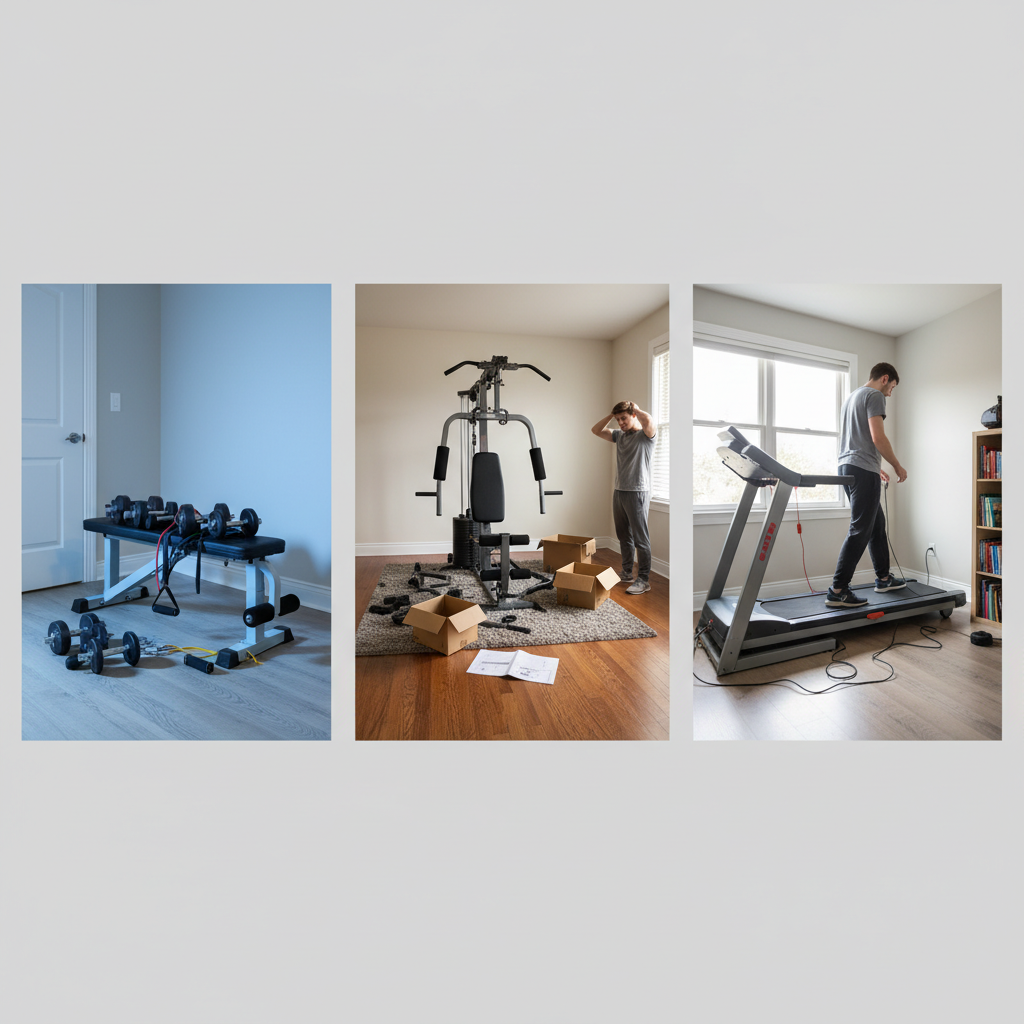
The Biggest Home Gym Equipment Mistakes to Avoid
1. Buying Based on Trends, Not Your Goals
It's incredibly easy to get swept up in the latest fitness craze. You see commercials for a high-tech stationary bike with live classes or a smart mirror that promises a personal trainer in your living room. While these products are fantastic for the right person, they might be completely wrong for you. The number one mistake new buyers make is purchasing equipment based on what's popular rather than what aligns with their personal fitness goals. Before you add anything to your cart, ask yourself what you want to achieve. Are you focused on building raw strength, improving cardiovascular endurance, increasing flexibility, or losing weight?
If your goal is to build muscle mass, that trendy cardio machine will be a supplemental tool at best, not the cornerstone of your gym. In that case, your money would be far better spent on a quality set of adjustable dumbbells, a sturdy bench, and a pull-up bar. Conversely, if you want to train for a marathon, a power rack is overkill. Your primary investment should be a quality treadmill. Always let your personal goals dictate your purchases, not marketing hype. This ensures you buy equipment you'll actually use consistently, which is the key to seeing results.
2. Ignoring Your Available Space and Layout
That commercial-grade power rack and treadmill combo looks amazing in a spacious, open-concept garage gym in an advertisement. In your 10x10 spare bedroom, it's a different story. A major and often costly mistake is failing to accurately measure your space before buying. This goes beyond simple floor dimensions. You need to consider ceiling height—is it high enough for you to do an overhead press or use the pull-up bar on a rack without hitting your head? Will you have enough clearance around a treadmill to safely get on and off? Can you fully extend your arms and legs when using resistance bands or doing floor exercises?
Create a detailed floor plan. Use painter's tape on the floor to mark the footprint of the equipment you're considering. This simple trick gives you a real-world sense of how much room the machine will occupy and how much usable space will be left for movement. Forgetting this step can lead to a cramped, unsafe workout environment or the frustrating realization that your brand-new, expensive equipment simply doesn't fit.
3. Prioritizing High-Tech Gadgets Over Proven Fundamentals
The fitness technology market has exploded with smart gadgets, connected devices, and subscription-based workout platforms. While these can be excellent motivators, beginners often make the mistake of thinking technology is a substitute for fundamental equipment. A smart scale or a fitness tracker is a great tool, but it won't build muscle. The core of almost any effective fitness program is built on the basics: resistance and movement.
Before investing in expensive electronics, ensure your gym is equipped with the essentials. A solid set of dumbbells or kettlebells, a versatile weight bench, a good-quality yoga mat, and a variety of resistance bands provide the foundation for thousands of exercises. These simple tools are time-tested, effective, and don't require a monthly subscription. Once you have the fundamentals covered and have built a consistent routine, then you can explore adding technology to enhance your workouts, not replace them.
4. Forgetting About Versatility
Single-purpose machines, like a bicep curl machine or a leg extension machine, are common in commercial gyms where space is plentiful. In a home gym, however, every square foot is precious. A common beginner error is buying bulky equipment that only does one or two things. This quickly leads to a cluttered space with limited workout options. Instead of buying a machine for each muscle group, prioritize items that offer maximum versatility.
Adjustable dumbbells, for example, can replace an entire rack of traditional dumbbells, saving an immense amount of space while allowing for hundreds of different exercises. A suspension trainer can be used for a full-body workout. A simple but sturdy power rack with a pull-up bar can be the centerpiece for squats, bench presses, pull-ups, and dozens of other compound movements. Always ask, "How many different exercises can I do with this?" The more versatile a piece of equipment is, the more value it brings to your home gym.
5. Skimping on Quality to Save a Few Dollars
When you're building a gym from scratch, the costs can add up quickly, and it's tempting to opt for the cheapest option available. This is one of the most dangerous mistakes you can make. When it comes to fitness equipment—especially items that bear weight, like squat racks, benches, and barbells—quality is directly tied to safety. A wobbly bench that feels unstable during a press or a flimsy squat rack that can't handle a failed lift is a serious accident waiting to happen.
Investing in well-made equipment from reputable brands is not just about durability; it's about your personal safety. A higher-quality item will last longer, feel more stable and secure during use, and ultimately provide a better, safer workout experience. It's better to buy one high-quality, essential piece of equipment now and save up for the next one than to buy three cheap, unreliable items that you'll need to replace in a year and that could potentially cause injury.
6. Not Trying Equipment Before You Buy
Every piece of fitness equipment fits and feels different. The ergonomics of a stationary bike, the cushioning on a treadmill deck, or the grip on a barbell can vary significantly between brands and models. Ordering a major piece of equipment online without ever having used it is a huge gamble. You might find that the seat is uncomfortable, the machine's movement feels unnatural, or it's simply not suited for your body type.
Whenever possible, find a way to test equipment before you commit. Visit a local sporting goods store to try out their floor models. If you're a member of a commercial gym, pay attention to the brands and models of the machines you enjoy using the most. This firsthand experience is invaluable and can save you from the significant hassle and expense of having to return a large, heavy item that just doesn't work for you.
7. Overlooking the "Hidden" Costs and Requirements
The price tag on the equipment is often just the beginning. New buyers frequently forget to factor in the total cost of ownership. Large machines can have substantial shipping and delivery fees. Are you prepared to assemble it yourself, or will you need to pay for professional assembly? This alone can add a few hundred dollars to the final cost.
Furthermore, consider the needs of the equipment itself. If you're lifting heavy weights, you'll need to invest in protective rubber flooring to prevent damage to your floors and the equipment. Does your new high-tech treadmill require a dedicated electrical circuit? Do you have a strong enough Wi-Fi signal in your basement or garage for a connected fitness machine to work properly? Thinking through these "hidden" requirements beforehand prevents unexpected costs and frustrating setup delays.
The Rise of the Home Gym: From Mail-Order Springs to Smart Mirrors
The concept of working out at home is not new, but it has undergone a dramatic evolution. In the early 20th century, fitness pioneers like Charles Atlas marketed "dynamic tension" programs and simple spring-based contraptions through mail-order catalogs, promising to build muscle in the privacy of one's home. These early home gyms were rudimentary, focusing on basic resistance training without the need for bulky equipment.
The modern home gym boom truly began in the 1980s, fueled by the aerobics craze led by figures like Jane Fonda. The VCR made it possible to follow along with structured workouts, and living rooms were converted into temporary fitness studios. This era also saw the rise of iconic all-in-one machines like the Bowflex and Soloflex, which promised a full-body workout from a single, albeit large, piece of equipment. The focus was on replicating the commercial gym experience with complex cable and resistance rod systems.
Today, the home gym has evolved again, splintering into several distinct philosophies. On one hand, the functional fitness movement, popularized by CrossFit, inspired thousands to build "garage gyms" centered around barbells, squat racks, and kettlebells. On the other hand, technological advancements have created the "connected fitness" space. Companies like Peloton, Tonal, and Mirror have merged high-quality equipment with interactive software, live classes, and data tracking, offering a boutique studio experience without leaving the house. This latest evolution has made home workouts more engaging, data-driven, and community-oriented than ever before.
Answering Your Top Home Gym Questions
How Much Space Do I Actually Need?
The amount of space you need depends entirely on your workout style. You don't need a dedicated room to get started. For activities like yoga, Pilates, and bodyweight exercises, a small, clear area of about 6x6 feet is often sufficient—enough space to lay down a mat and extend your limbs fully without hitting furniture. This "mat-sized" space can be created temporarily in a living room or bedroom.
If you plan to use free weights like dumbbells or kettlebells, you'll need a bit more room. A recommended minimum is an 8x8 foot area. This provides a safe buffer zone around you for exercises like kettlebell swings or dumbbell presses. For serious strength training involving a barbell and a power rack, you'll ideally want a 10x10 foot space or larger. Critically, you must also consider vertical space. A ceiling height of at least 8 feet is recommended to accommodate overhead movements and pull-ups without restriction.
Should I Buy Used or New Equipment?
Both used and new equipment have their pros and cons, and the right choice often depends on the type of equipment. Buying used can offer incredible cost savings. Simple, durable items with few or no moving parts are excellent candidates for the second-hand market. Think cast-iron dumbbells, kettlebells, weight plates, and basic flat benches. The main drawbacks are the lack of a warranty, the potential for hidden wear and tear, and the logistical challenge of transporting heavy items yourself.
For complex machines, especially those with motors, electronics, or many moving parts like treadmills and ellipticals, buying new is often the safer bet. A new purchase comes with a manufacturer's warranty, customer support, and the peace of mind that you're the first person to use it. While the upfront cost is higher, the warranty can save you from expensive repair bills down the road. Safety-critical items, like a high-quality barbell or squat rack, are also often best purchased new from a reputable brand unless you can thoroughly inspect a used one.
What Are the Most Essential Pieces of Starter Equipment?
If you're just starting and want the most bang for your buck in terms of versatility and space, a few key items stand out. For general fitness, it's hard to beat a set of adjustable dumbbells. They can be used for countless strength exercises and replace an entire rack of fixed-weight dumbbells, making them perfect for smaller spaces. Another fantastic option is a pair of kettlebells in a light and medium weight. They are excellent for building strength, endurance, and explosive power all at once.
Beyond weights, a high-quality workout mat is non-negotiable. It provides cushioning and a clean surface for floor exercises, stretching, and yoga. A set of resistance bands is another incredibly versatile and affordable tool. They are perfect for warm-ups, accessory work, and for taking with you when you travel. With just these few items—a mat, bands, and either adjustable dumbbells or kettlebells—you can perform a comprehensive, full-body workout routine.
Conclusion
Building a home gym is an exciting step toward achieving your fitness goals, but it's an investment that requires careful thought and planning. By avoiding common mistakes like buying trendy gadgets over fundamental tools, ignoring your space constraints, and skimping on quality, you can save yourself time, money, and frustration. The most effective home gym isn't the one with the most equipment; it's the one with the right equipment for your specific goals, space, and budget. Plan carefully, start with the essentials, and build a workout space that you'll be motivated to use for years to come.