Begin Your Journey: A Realistic Guide to Starting a Career as a Sonographer
Starting a career as a sonographer is an excellent goal, and you’ve come to the right place for a clear, step-by-step plan.
Step 1: Earn a High School Diploma or GED
The foundational step for any career in the medical field, including sonography, is completing your high school education or obtaining a General Educational Development (GED) certificate. This is a non-negotiable prerequisite for entry into any post-secondary sonography program. During high school, aspiring sonographers should focus on building a strong academic base, particularly in science and math.
Courses in biology, anatomy, physiology, chemistry, and physics are especially beneficial as they provide the essential knowledge needed to understand the human body and the principles of ultrasound technology. Strong performance in these subjects will not only prepare you for the rigors of a sonography program but also make your application more competitive. Additionally, developing strong communication and computer skills will be invaluable throughout your training and career.
Step 2: Choose an Accredited Sonography Program
Once you have your high school diploma, the next critical step is to find and apply to a diagnostic medical sonography program. It is absolutely essential to choose a program accredited by the Commission on Accreditation of Allied Health Education Programs (CAAHEP). Accreditation ensures that the program meets high standards of quality and that its curriculum will adequately prepare you for professional certification and employment. Graduating from a non-accredited program can make it difficult, or even impossible, to sit for the required certification exams.
Sonography programs are available at different levels, including associate's degrees (typically 2 years), bachelor's degrees (4 years), and certificate programs (12-24 months) for individuals who already have a degree in a related healthcare field. An associate's degree is the most common path. When evaluating programs, consider factors like curriculum, clinical training opportunities, faculty experience, program length, and cost.
Step 3: Complete Prerequisite Coursework
Before you can be formally accepted into the core sonography curriculum, you will likely need to complete several prerequisite college-level courses. These requirements vary by institution but generally mirror the science and math focus from high school, only at a more advanced level. Common prerequisites include anatomy and physiology, medical terminology, college-level math (like algebra or statistics), physics, and general psychology or communication.
Successfully completing these courses demonstrates that you have the academic capability to handle the challenging coursework ahead. Many students complete these prerequisites at a community college before transferring to a university or specialized sonography school. Achieving high grades in these classes is crucial, as admission into sonography programs is often highly competitive due to limited class sizes.
Step 4: Excel in Your Sonography Program and Clinical Training
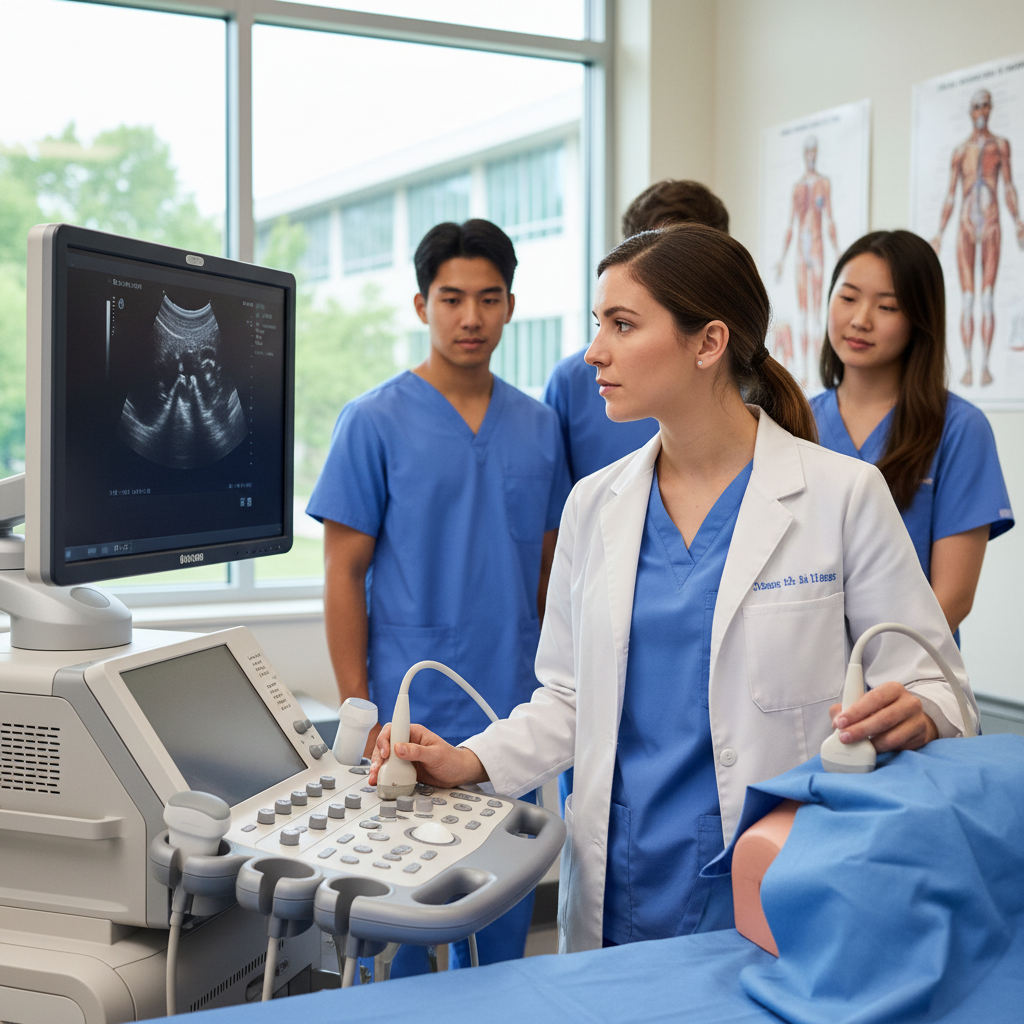
Your sonography program will be an intensive mix of classroom learning and hands-on clinical experience. Didactic coursework will cover topics such as patient care, medical ethics, ultrasound physics, cross-sectional anatomy, and pathophysiology. You will learn the principles of how ultrasound machines work and how to interpret the images they produce.
The clinical component, often called a practicum or internship, is where you apply your knowledge in a real-world setting. You will work alongside experienced sonographers in hospitals, clinics, or imaging centers, performing scans on actual patients under supervision. This is where you develop crucial hands-on scanning skills, learn to interact with patients, and become comfortable in a fast-paced medical environment. Completing the required number of clinical hours is mandatory for graduation and certification.
Step 5: Obtain Professional Certification
Upon graduating from an accredited program, the next step is to become professionally certified. While not legally required for licensure in every state, the vast majority of employers will only hire certified sonographers. Certification demonstrates your competence and commitment to the profession. The primary certifying body in the United States is the American Registry for Diagnostic Medical Sonography (ARDMS).
To earn the credential of Registered Diagnostic Medical Sonographer (RDMS), you must pass the Sonography Principles and Instrumentation (SPI) exam, along with at least one specialty exam (e.g., abdomen, obstetrics/gynecology, or breast). Passing these exams validates your skills and knowledge. Maintaining your certification requires completing continuing education credits, ensuring you stay current with the latest advancements in the field.
Step 6: Secure Employment and Consider Specialization
With your degree and certification in hand, you are ready to enter the job market. Sonographers can find employment in a variety of settings, including hospitals, outpatient imaging centers, physician's offices, and specialized clinics. Your job search should include preparing a professional resume that highlights your education, clinical experience, and certifications. Networking with professionals you met during your clinical rotations can also be an excellent way to find job openings.
As you gain experience, you may choose to pursue further specialization. The field of sonography is broad, and earning additional certifications in areas like vascular technology (RVT), pediatric sonography, or adult cardiac sonography (RDCS) can open up new career opportunities and potentially lead to higher salaries. Continuous learning and skill development are key to a long and successful career as a sonographer.
Understanding the Role of a Sonographer
A Diagnostic Medical Sonographer plays a vital, non-invasive role in modern healthcare. Often referred to as an ultrasound technician, a sonographer uses special equipment that directs high-frequency sound waves into a patient's body. The machine's computer then uses the echoes that bounce back to create detailed, real-time images of tissues, organs, and blood flow. These images, known as sonograms or ultrasounds, are then interpreted by a physician, typically a radiologist, to diagnose medical conditions and monitor patient health.
The role goes far beyond simply operating a machine. Sonographers must have a deep understanding of human anatomy and pathology to recognize what is normal versus what is abnormal on the screen. They are responsible for preparing patients for procedures, explaining the process, and ensuring their comfort. They must also be adept at selecting the appropriate settings and transducer to obtain the highest quality images, which is critical for an accurate diagnosis. This unique blend of technical skill, medical knowledge, and patient care makes the sonographer an indispensable member of the healthcare team.
Common Questions About a Sonography Career
What are the different specializations in sonography?
The field of diagnostic medical sonography is diverse, offering numerous areas for specialization. One of the most well-known is Obstetric and Gynecologic (OB/GYN) Sonography, which focuses on the female reproductive system and fetal development during pregnancy. Another common area is Abdominal Sonography, where sonographers scan organs within the abdomen like the liver, gallbladder, kidneys, and spleen to diagnose conditions.
For those interested in the cardiovascular system, Cardiac Sonography (echocardiography) involves creating images of the heart's chambers, valves, and vessels, while Vascular Sonography examines blood flow and circulation throughout the body. Other specialties include Musculoskeletal Sonography for imaging muscles, joints, and ligaments; Breast Sonography, often used to investigate abnormalities found on a mammogram; and Neurosonography, which focuses on the brain and nervous system, primarily in infants.
What is the job outlook and salary for sonographers?
The career outlook for diagnostic medical sonographers is exceptionally strong. As the population ages, the demand for non-invasive diagnostic imaging procedures is expected to grow significantly. Ultrasound is a preferred imaging modality because it is safe, cost-effective, and does not use ionizing radiation. The U.S. Bureau of Labor Statistics projects that employment for sonographers will grow much faster than the average for all occupations over the next decade, indicating excellent job security and ample opportunities for qualified professionals.
Salaries for sonographers are competitive and can vary based on several factors, including geographic location, level of experience, type of employer (hospital vs. private clinic), and number of specializations. Sonographers working in outpatient care centers and hospitals tend to earn higher wages. Those who obtain multiple certifications in high-demand specialties like cardiac or vascular sonography can also command higher salaries. Overall, it is a financially rewarding career that reflects the high level of skill and responsibility required.
What skills are essential for a successful sonographer?
A successful sonographer possesses a unique combination of technical and soft skills. On the technical side, excellent hand-eye coordination is paramount for manipulating the transducer to capture clear and precise images. A strong understanding of anatomy, physiology, and pathology is necessary to know what you are looking at and to identify potential abnormalities. Furthermore, a solid grasp of ultrasound physics and instrumentation is required to operate the complex equipment effectively.
Equally important are the soft skills. Strong communication and interpersonal skills are crucial for explaining procedures to anxious patients, obtaining medical histories, and collaborating with other healthcare professionals. Empathy and compassion help in providing comfort and care to patients who may be in pain or distress. Finally, sonographers must have exceptional attention to detail and strong critical-thinking abilities. They need to be able to analyze the images they are capturing in real-time and make decisions on whether additional views are needed to provide the physician with a complete diagnostic picture.
Conclusion
Embarking on a career as a diagnostic medical sonographer is a journey that requires dedication, a strong academic foundation in the sciences, and a passion for patient care. The path involves completing an accredited educational program, gaining extensive hands-on clinical experience, and achieving professional certification through rigorous exams. While the process is challenging, it leads to a highly rewarding profession that is at the forefront of medical diagnostics. Sonographers play a critical role in healthcare, providing physicians with the vital information needed to diagnose and treat patients effectively. With excellent job growth, competitive salaries, and the opportunity for continuous learning and specialization, sonography offers a stable and fulfilling long-term career path.
For more information from official sources, you can visit: