Building Consistent Habits: How a 2 Week Pill Organizer Can Enhance Your Daily Routine
Sticking to a health routine can be challenging, but the right tools make all the difference. A 2-week pill organizer is one of those simple yet powerful aids, moving beyond basic storage to actively reinforce your habits.
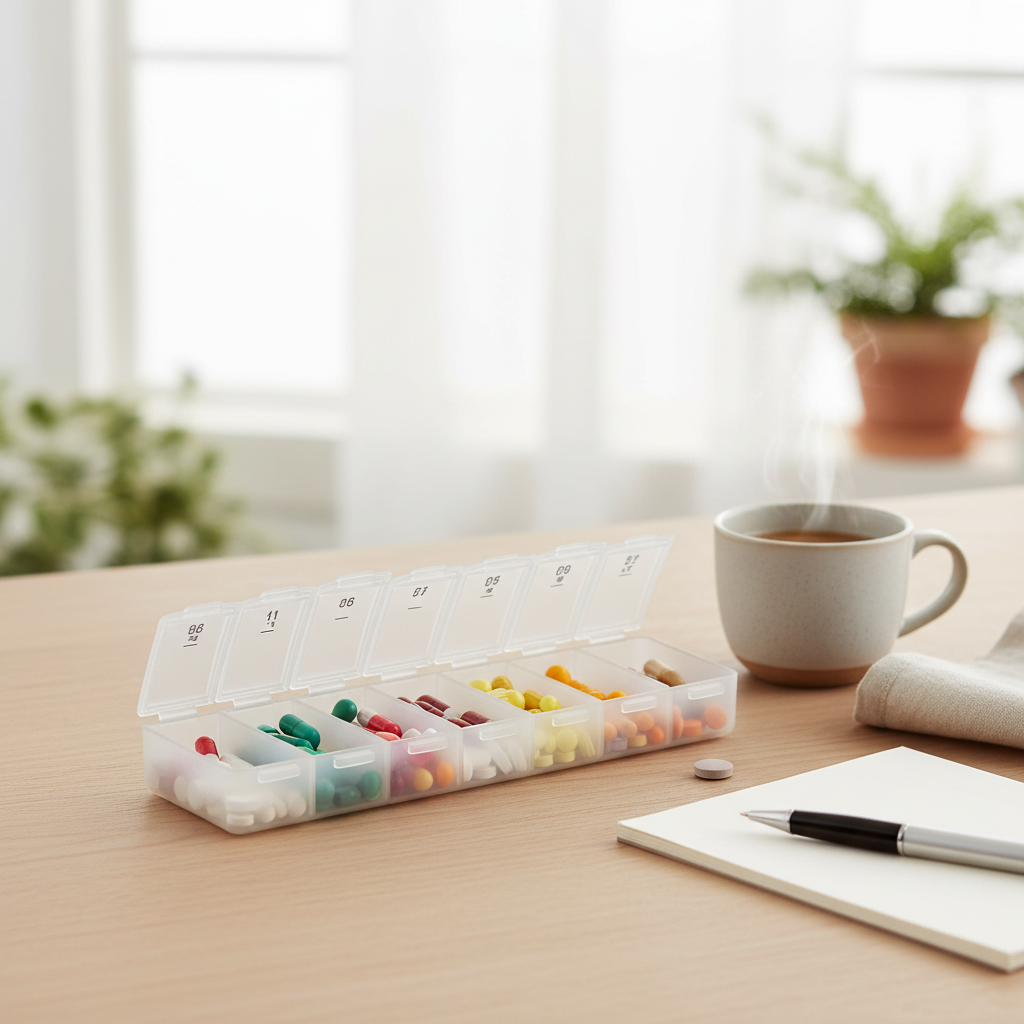
Key Ways a 2-Week Pill Organizer Reinforces Daily Habits
Maintaining a consistent routine, especially when it involves daily medication, can be a significant challenge. Life gets busy, schedules change, and it's easy to forget a dose. A 2-week pill organizer, also known as a 14-day medication planner, is a simple yet powerful tool designed to combat these challenges. By providing structure and visibility, it directly supports the formation and maintenance of consistent health habits. It transforms the abstract task of "taking your pills" into a concrete, manageable process.
Let's explore the specific ways this device can become a cornerstone of a reliable health regimen, helping individuals manage their medications with greater ease and confidence.
1. Reduces Daily Decision Fatigue
Every day, we make countless small decisions that slowly deplete our mental energy. This is often referred to as "decision fatigue." When it comes to medication, this can manifest as questioning whether you've already taken a dose or trying to remember which pills to take at what time. A 2-week organizer eliminates this daily mental burden. By setting aside time just once every two weeks to sort all your medications, you front-load the decision-making process.
For the next 14 days, the only decision required is to open the correct day's compartment. This simplification frees up cognitive resources for other tasks and reduces the anxiety associated with medication management. The routine becomes automatic: see the day, open the compartment, take the pills. This automation is the hallmark of a strong, ingrained habit.
2. Provides a Clear Visual Cue for Adherence
One of the most effective ways to build a habit is to have a strong visual trigger. A 14-day pill organizer serves as a constant, physical reminder of your medication schedule. Placing the organizer in a high-traffic area, like on the kitchen counter or a nightstand, makes it impossible to ignore. A quick glance is all it takes to see whether the current day's compartment is empty or full.
This visual confirmation is incredibly powerful. An empty compartment provides a sense of accomplishment and reinforces that you are on track. A full compartment, on the other hand, serves as an immediate, non-intrusive alert that a dose has been missed. This feedback loop helps you stay accountable without relying solely on memory, which can often be unreliable.
3. Simplifies Management of Complex Regimens
For individuals taking multiple medications at different times of the day, keeping everything straight can be overwhelming. A 2-week organizer with multiple compartments per day (e.g., AM/PM or Morning/Noon/Evening/Bed) is a game-changer. It allows you to pre-sort a complex regimen into simple, actionable steps. This not only prevents accidental double-dosing but also ensures you don't miss a critical medication.
By organizing two full weeks at a time, you get a broader view of your medication schedule. This can be particularly helpful for managing prescriptions that are taken on specific days of the week or every other day. The structure provided by the organizer turns a potentially confusing list of instructions into an easy-to-follow physical roadmap for your health.
4. Eases Travel and On-the-Go Lifestyles
Traveling with multiple prescription bottles is cumbersome and discreetness. It's easy to misplace a bottle or forget one entirely, disrupting your routine while away from home. A 2-week pill organizer consolidates everything into one compact, portable container. This makes packing simpler and ensures you have your complete regimen with you.
Many 14-day organizers feature detachable daily pods, allowing you to take just the days you need for a short trip or even just a single day's worth of pills when you're out and about. This flexibility supports your routine no matter where you are, preventing the common "I'm not at home, so I'll skip it" pitfall that can derail consistency.
5. Bridges the Gap Between Pharmacy Refills
The 14-day cycle aligns perfectly with common prescription refill schedules, which are often bi-weekly or monthly. When you sit down to fill your organizer, you get a clear inventory of your remaining pills. This act of sorting provides an early warning system, alerting you when a prescription is running low, well before you run out completely.
This foresight is crucial for maintaining an uninterrupted routine. It gives you ample time to contact your pharmacy or doctor for a refill, preventing the stress and health risks associated with a lapse in medication. The organizer effectively becomes a tool for proactive health management, not just daily pill-taking.
6. Supports Caregivers and Promotes Independence
For caregivers, managing a loved one's medication can be a source of constant worry. A 2-week pill organizer provides peace of mind. A caregiver can set up the medication for two full weeks, ensuring the correct doses are sorted. This allows the care recipient to maintain a degree of independence while still ensuring safety and adherence.
The visual nature of the organizer makes it easy for both parties to check if medications have been taken. A quick phone call can confirm, "Is Tuesday's PM compartment empty?" This simple check-in system fosters trust and reduces the need for constant, direct supervision, empowering the individual while reassuring the caregiver.
The Importance of Medication Adherence and Routine
The concept of a pill organizer is simple, but its impact is rooted in a critical medical principle: medication adherence. Adherence refers to the extent to which a person takes their medication as prescribed by their healthcare provider. Poor adherence is a widespread problem that can lead to significant negative health outcomes, including the progression of chronic diseases, increased hospitalizations, and higher healthcare costs. For conditions like hypertension, diabetes, or heart disease, consistency isn't just helpful—it's essential for managing the condition and preventing complications.
Establishing a solid routine is one of the most effective strategies for improving adherence. The human brain thrives on patterns and predictability. When an action, like taking medication, is tied to a specific time or another existing habit (like brushing your teeth or eating breakfast), it becomes automatic over time. Tools like a 14-day pill organizer act as a "scaffold" for building this routine. They remove barriers like forgetfulness and confusion, making it easier for the desired behavior to become a natural part of the day.
Furthermore, the psychological benefits of routine extend beyond just medication. Predictable schedules can reduce anxiety and stress by creating a sense of control and order. By successfully managing one part of your life, such as your health regimen, you can build confidence and momentum to establish other positive habits. The pill organizer is more than a plastic box; it's a structural support system for one of the most important routines you can have.
Common Questions About Using Pill Organizers
While a 2-week pill organizer is a fantastic tool, new users often have questions about choosing and using one effectively. Addressing these common concerns can help ensure you get the most benefit from this simple device.
How Do You Choose the Right 2-Week Pill Organizer?
Not all organizers are created equal, and the best one for you depends on your specific needs. First, consider the size of the compartments. If you take large pills, like fish oil supplements or certain vitamins, you'll need an organizer with deep, spacious wells. Conversely, if you only take a few small pills, a more compact design might be preferable.
Next, think about your daily schedule. Do you take pills once a day, or multiple times? Look for organizers that are clearly labeled for the frequency you need, such as "AM/PM" or even four-times-a-day options. Finally, consider features related to your lifestyle. If you have arthritis, look for easy-open lids. For those concerned about security or have small children at home, a locking mechanism is a crucial feature. Portability is another factor; models with detachable daily pods are ideal for travel.
What's the Best Way to Fill a 14-Day Organizer?
Accuracy is paramount when filling your organizer. To avoid mistakes, establish a consistent filling routine. Set aside a dedicated, quiet time every two weeks when you won't be interrupted. Lay out all your medication bottles and the organizer on a clean, well-lit surface. It's helpful to use a tray to contain any dropped pills.
Work with one medication at a time. Open the first bottle and distribute that single pill into all the appropriate compartments for the next 14 days. Then, close that bottle and move on to the next one. This methodical, one-at-a-time process dramatically reduces the risk of mixing up medications or double-dosing a compartment. Before closing the lids, do a final visual check to ensure everything looks correct.
Are There Any Downsides to Using a Pill Organizer?
While overwhelmingly beneficial, there are a few potential downsides to be aware of. The primary risk is human error during the filling process. If you accidentally put a pill in the wrong slot, you'll be taking it at the wrong time for up to two weeks. This is why a careful, focused filling routine is so important.
Another consideration is medication stability. Some medications are sensitive to light, air, or humidity and may degrade more quickly once removed from their original pharmacy packaging. It's always a good idea to ask your pharmacist if any of your prescriptions are unsuitable for a pill organizer. Lastly, most pill organizers are not child-resistant. If there are children in the home, the organizer must be stored securely out of their reach and sight at all times.
Conclusion
A 2-week pill organizer is far more than a simple storage container; it is a strategic tool for building and maintaining one of life's most important routines. By reducing daily mental load, providing clear visual cues, and simplifying complex medication schedules, it removes common barriers to adherence. It supports travel, helps in managing refills, and provides invaluable assistance to both individuals and their caregivers. By turning the daily task of taking medication into a simple, structured, and almost automatic process, a 14-day planner empowers users to take consistent, proactive control of their health.