Camping and Hiking Spots to Think Twice About Visiting in the US
While the US is filled with breathtaking scenery, some popular camping and hiking spots come with serious risks that are often overlooked.
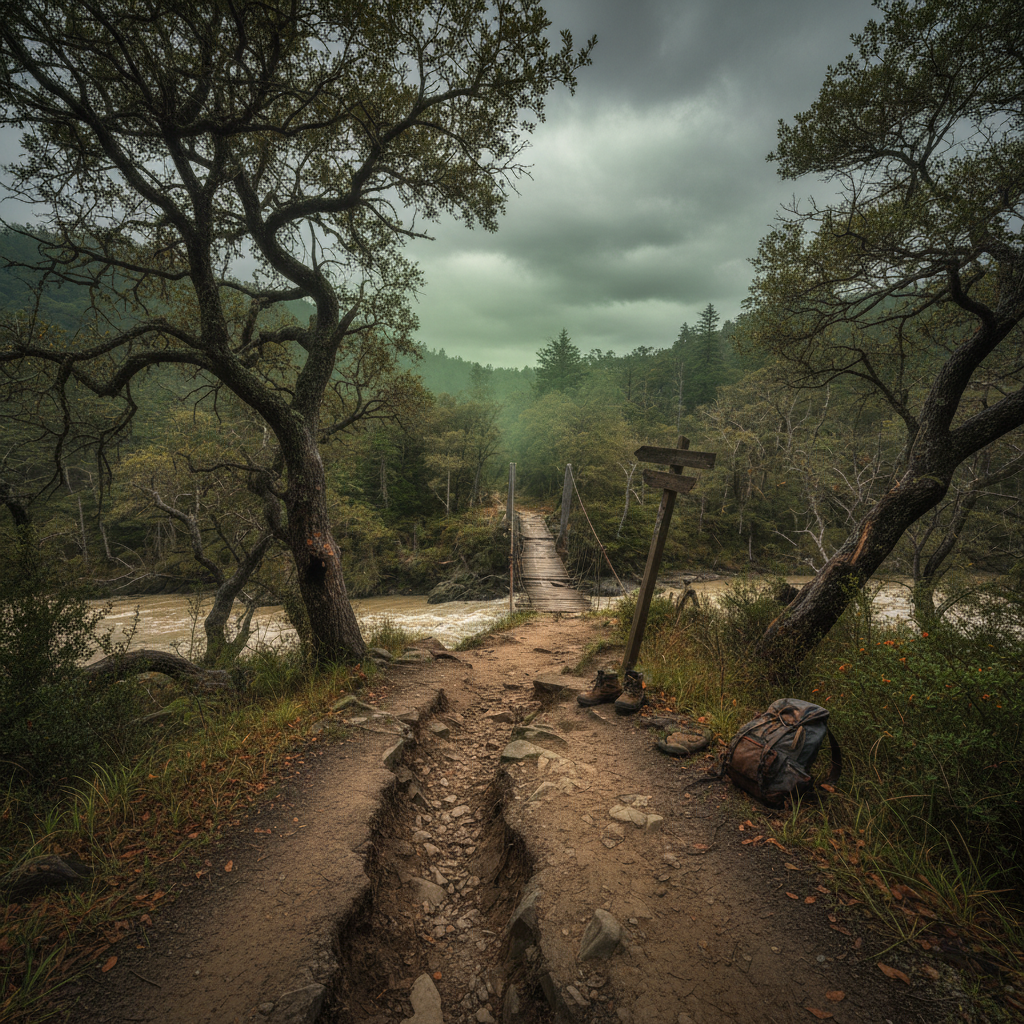
Challenging Camping and Hiking Spots to Approach with Caution in the US
The United States is home to a breathtaking array of natural landscapes, offering countless opportunities for adventure. While many trails and parks are welcoming to all skill levels, some locations harbor significant dangers that demand respect, extensive preparation, and a high level of expertise. These aren't necessarily places to avoid altogether, but rather destinations that should only be attempted by well-prepared and experienced individuals who fully understand the risks involved. Here are some of the most challenging camping and hiking spots in the country.
1. Death Valley National Park, California & Nevada
Death Valley holds the record for the highest air temperature ever recorded on Earth, a staggering 134°F (56.7°C). This extreme heat is the primary danger for any visitor. Hiking during the summer months is strongly discouraged by park officials, as temperatures routinely soar above 120°F. In these conditions, dehydration and heatstroke can set in with terrifying speed. The vast, remote landscape means that help is often hours away, and a simple car breakdown can quickly escalate into a life-threatening emergency if you are not carrying an ample supply of water (at least one gallon per person, per day).
Even for those visiting in the cooler months, the park presents challenges. The terrain is rugged and unforgiving, with vast salt flats, rocky canyons, and sand dunes. Cell service is virtually non-existent outside of the main visitor centers, making self-rescue a critical skill. Anyone planning to explore Death Valley's backcountry must be an expert navigator, carry extensive supplies of water and food, and have a reliable vehicle equipped for harsh desert conditions.
2. The Maze District, Canyonlands National Park, Utah
The Maze is widely considered one of the most remote and inaccessible areas in the continental United States. Its name is not an exaggeration; it is a bewildering labyrinth of deep, intersecting canyons that can easily disorient even seasoned hikers. There are very few marked trails, and navigating requires advanced map and compass skills, along with GPS proficiency. Getting lost in The Maze is a serious and potentially fatal risk.
Beyond the navigational challenge, water sources are scarce and unreliable. Hikers must carry all the water they will need for their entire trip, which is heavy and requires careful rationing. The terrain itself is demanding, often requiring scrambling and climbing to traverse. Flash floods are a constant threat in the narrow slot canyons, capable of turning a dry wash into a raging torrent with little to no warning. A trip into The Maze is a serious expedition that requires meticulous planning and a high degree of self-sufficiency.
3. Denali National Park, Alaska
Home to North America's highest peak, Denali is a land of raw, untamed wilderness. The primary challenge here is the extreme and unpredictable sub-arctic weather. Conditions can change in an instant, with clear skies giving way to blizzards, high winds, and plummeting temperatures, even in the middle of summer. Hypothermia and frostbite are ever-present dangers for those who are not equipped with appropriate four-season gear.
Furthermore, Denali is a trail-less wilderness for the most part. Navigating its vast tundra and crossing its powerful, glacially-fed rivers requires significant backcountry experience. The park is also home to a large population of grizzly bears, and encounters are common. Visitors must be well-versed in bear safety protocols, including proper food storage and knowing how to react during an encounter. The sheer remoteness of the park means that any rescue operation is complex and time-consuming.
4. Mount Washington, New Hampshire
Despite its relatively modest elevation of 6,288 feet, Mount Washington is notorious for having some of the worst weather in the world. The mountain sits at the convergence of several major storm tracks, and its topography funnels wind to incredible speeds; the highest wind speed ever observed by man, 231 mph, was recorded at its summit. The weather can shift from pleasant to life-threatening in minutes.
Many hikers underestimate Mount Washington because it is located in the Northeast and seems accessible. However, it is not uncommon for the summit to experience hurricane-force winds, dense fog, and blizzard conditions on a summer day when the valley below is warm and sunny. This rapid change catches many unprepared, leading to a high number of rescue incidents and fatalities due to hypothermia and falls on icy, exposed ridges.
5. The Kalalau Trail, Kauai, Hawaii
Often lauded as one of the most beautiful coastal hikes in the world, the Kalalau Trail is also one of the most treacherous. This 11-mile trail traverses the stunning Nāpali Coast, but it is not a casual beach walk. The path is often narrow, muddy, and slick, with precipitous drop-offs to the rocky shoreline and churning ocean below. A single misstep can have catastrophic consequences.
The trail also involves crossing several streams and rivers that are prone to flash flooding, especially after heavy rains. Hikers can become stranded for days if a river becomes impassable. Falling rocks from the steep cliffs above are another significant hazard. A permit is required to hike the full trail, and it should only be attempted by hikers with excellent balance, a head for heights, and experience with rugged, wet terrain.
6. Bright Angel Trail, Grand Canyon National Park, Arizona
The Bright Angel Trail is one of the most popular trails in the Grand Canyon, but its accessibility can be deceptive. The primary danger is the "reverse mountain" effect combined with intense heat. The trek down into the canyon is relatively easy, luring many hikers to go farther than they should. However, the return journey is a grueling, continuous ascent of nearly 4,500 feet.
Temperatures inside the canyon can be 20-30 degrees hotter than at the rim. In the summer, the inner canyon frequently exceeds 110°F. Many unprepared hikers suffer from severe dehydration, heat exhaustion, and heatstroke on the strenuous climb out. Park rangers conduct numerous rescues on this trail every year, many involving people who underestimated the physical demands and the amount of water needed to safely complete the hike.
Understanding the Risks: Common Dangers in the Great Outdoors
Understanding why certain locations are challenging requires an awareness of the two main types of hazards in the wilderness: objective and subjective. Objective hazards are risks inherent to the environment that are largely outside of your control. These include factors like sudden weather changes on Mount Washington, rockfalls on the Kalalau Trail, the extreme heat of Death Valley, or an unexpected wildlife encounter in Denali. While you cannot eliminate these risks, you can mitigate them through planning, such as by checking weather forecasts, being aware of your surroundings, and carrying the proper gear.
Subjective hazards, on the other hand, are dangers that arise from human error. This is where most outdoor emergencies originate. These hazards include poor planning, overestimating one's abilities, failing to bring enough water or food, navigating improperly, and not having the right equipment for the conditions. The trails listed above are particularly unforgiving of subjective errors. Getting lost in The Maze because you didn't practice with a map and compass, or suffering from heatstroke in the Grand Canyon because you didn't carry enough water, are examples of how human factors can turn a challenging situation into a dire one. The key to safely exploring these places is to minimize subjective hazards through rigorous preparation, honest self-assessment, and a deep respect for the power of nature.
Essential Safety Tips for Any Hike
How to Prepare for a Challenging Hike?
Proper preparation is the single most important factor for a safe and successful hike, especially on a demanding trail. The process begins long before you reach the trailhead. First, research your intended route extensively. Use official park service websites, recent trail reports, and detailed topographical maps to understand the terrain, elevation gain, water sources, and any specific alerts or closures. Second, check the weather forecast obsessively, not just for the day of your hike but for the preceding days as well. Look at forecasts for different elevations along your route, as conditions can vary dramatically.
Next, perform an honest assessment of your physical fitness and experience level. A challenging trail is not the place to test your limits for the first time. Ensure your fitness matches the demands of the hike. Finally, create a detailed itinerary that includes your planned route, start and end times, and an emergency plan. Leave this itinerary with a reliable person who knows to call for help if you don't check in by a specified time. This simple step is a critical safety net in a worst-case scenario.
What are the "Ten Essentials" for Hiking?
The "Ten Essentials" are a widely recognized collection of systems and tools that every hiker should carry to be prepared for an emergency in the outdoors. While the specific items might vary slightly based on the trip, the categories remain constant. They are designed to help you respond to an accident or survive a night outside if you become lost or injured. Every hiker, no matter how short the planned trip, should have them.
The classic list includes:
- Navigation: A physical map and a compass are crucial (and you must know how to use them). A GPS device or phone is a good backup but should not be your primary tool.
- Headlamp/Flashlight: With extra batteries, in case your hike takes longer than expected.
- Sun Protection: Sunglasses, sunscreen, and a hat to protect against solar radiation.
- First-Aid Kit: A pre-made or self-built kit to handle common injuries like blisters, cuts, and sprains.
- Knife or Multi-Tool: For gear repair, food preparation, and first aid.
- Fire: Waterproof matches, a lighter, and a fire starter to create a fire for warmth or signaling.
- Emergency Shelter: An emergency blanket, bivy sack, or even a large trash bag can save your life if you're forced to spend an unexpected night out.
- Extra Food: More than you expect to need, focusing on high-energy items like protein bars or nuts.
- Extra Water: More than your planned consumption, plus a way to purify more (like a filter or tablets).
- Extra Clothes: A layer of insulation beyond what you're wearing, as weather can change quickly.
How Do You Handle a Wildlife Encounter?
Seeing wildlife is often a highlight of any outdoor adventure, but it's important to know how to behave to ensure both your safety and the animal's well-being. The cardinal rule is to never approach or feed wildlife. Keep a safe and respectful distance at all times. For large animals like bears, moose, and elk, this means staying at least 100 yards away. If you encounter a bear, do not run, as this can trigger a chase response. Instead, stand your ground, make yourself look as large as possible, and make loud noises. If it's a grizzly bear and it attacks, play dead. If it's a black bear, fight back.
For animals like snakes, the best course of action is to simply give them a wide berth. Most snakes are not aggressive and will only bite if they feel threatened or are stepped on. Be cautious where you place your hands and feet, especially when scrambling over rocks or gathering firewood. For mountain lions, which are rarely seen, you should not run or play dead. Make yourself look large, make noise, and fight back aggressively if attacked. Being aware of the specific wildlife in the area you are visiting and understanding the recommended safety protocols is a critical part of pre-hike preparation.
Conclusion
The great outdoors offers unparalleled beauty and a profound sense of adventure, but it also commands respect. The locations highlighted are not amusement parks; they are wild places governed by the powerful and often unpredictable forces of nature. The goal is not to instill fear, but to encourage thorough preparation and humility. By understanding the risks, honestly assessing your capabilities, and equipping yourself with the right knowledge and gear, you can make informed decisions that lead to safe and memorable experiences in even the most challenging corners of the American wilderness.