Discover How Solar-Powered Car Ventilation Fans Help Reduce Fuel Consumption
Connecting a simple solar fan to real fuel savings might sound too good to be true, but the science is surprisingly straightforward.
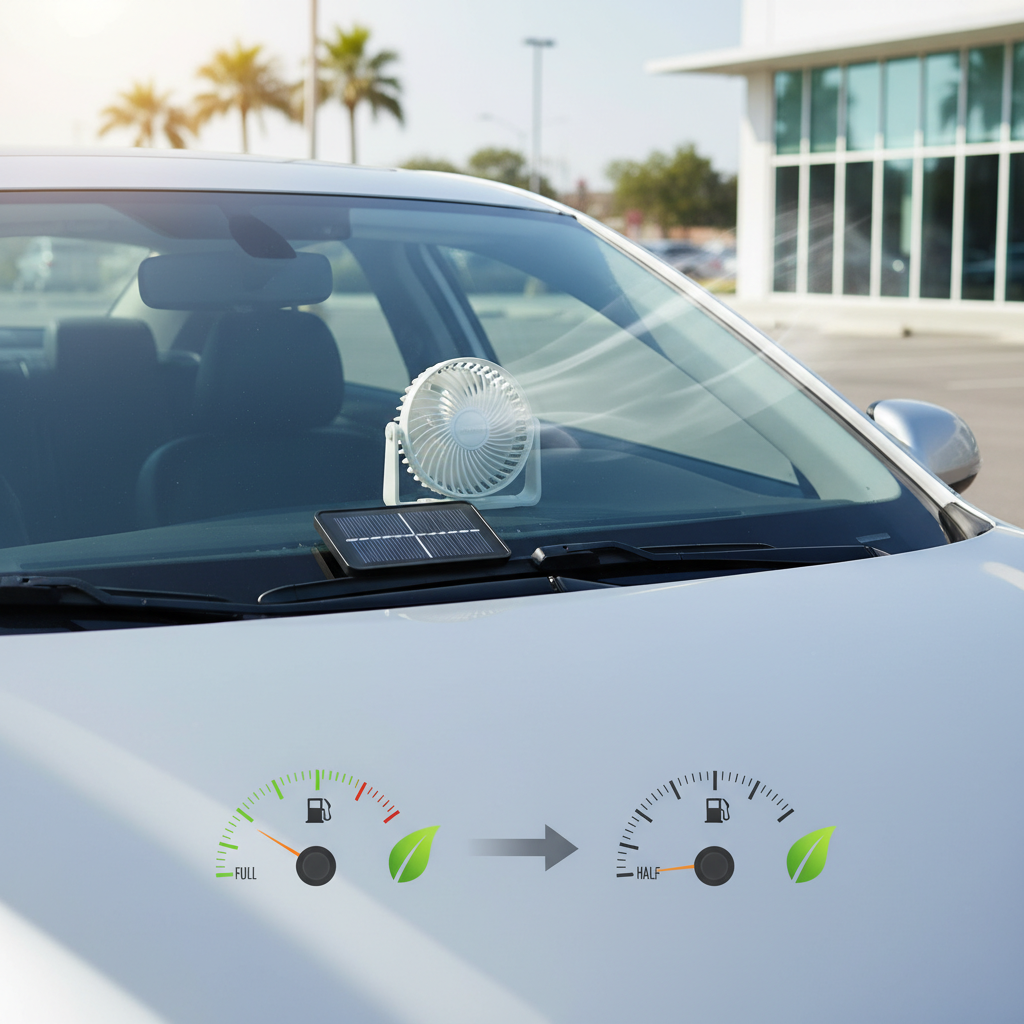
The Primary Ways Solar Fans Reduce Fuel Consumption
The connection between a small, solar-powered fan and your car's fuel tank might not seem obvious at first. However, the link is direct and revolves entirely around reducing the workload of your vehicle's most power-hungry accessory: the air conditioning (AC) system. By mitigating the extreme heat that builds up in a parked car, these simple devices create a chain reaction that leads to tangible fuel savings over time.
1. Minimizing the Need for Initial Air Conditioning Blasts
One of the most significant ways these fans save fuel is by tackling the initial temperature spike. When you park your car in the sun, the interior can quickly become an oven, with temperatures soaring 30-50 degrees Fahrenheit higher than the outside air. Upon returning to your car, the natural instinct is to turn the AC on full blast to make the cabin bearable as quickly as possible. This "max AC" setting puts an immense and immediate load on the engine.
A solar-powered ventilation fan works continuously while your car is parked in the sun. Its primary job is to expel the super-heated air from inside the cabin and draw in the relatively cooler ambient air from outside. While it won't make your car feel air-conditioned, it can effectively lower the peak interior temperature by 15-25 degrees. This means that instead of entering a 140°F car, you might be entering a 115°F car. The difference is substantial enough that you no longer need that initial, fuel-guzzling blast of maximum AC. You can start with a lower fan speed, which demands less power from the engine from the get-go.
2. Reducing the Overall Strain on Your Car's AC System
A car's air conditioning compressor is driven by the engine via a belt. When engaged, it acts as a significant parasitic load, forcing the engine to work harder and burn more fuel just to maintain its speed. The harder the AC has to work to cool the cabin down to your desired temperature, the more power it draws from the engine. This is why you can often feel a slight dip in power and see a drop in your fuel efficiency meter when you switch the AC on.
By preventing the interior from reaching extreme temperatures, a solar ventilator gives your AC system a crucial head start. The compressor doesn't have to run as long or as intensely to bring the cabin to a comfortable level. For example, cooling a car from 140°F down to 75°F requires significantly more energy and time than cooling it from 115°F. This reduction in the AC compressor's overall operating time directly translates into less engine load and, consequently, less fuel being consumed during your drive.
3. Protecting Interior Components from Premature Aging
While this is an indirect financial benefit, it's closely related to the vehicle's overall operational health. Extreme, prolonged heat is the enemy of your car's interior. It can cause dashboards to crack, leather seats to dry out and split, and delicate electronics in your infotainment system or instrument cluster to fail. The constant cycle of intense heating and cooling puts stress on every material inside your car.
By keeping the peak temperatures lower, a solar fan helps preserve the life of these components. This saves you money on costly repairs and replacements down the line. A well-maintained vehicle with an intact interior not only holds its value better but also ensures that all systems, including those that contribute to efficiency, are functioning as intended. Preventing the degradation of seals and electrical components helps maintain the vehicle's integrity, which can have a minor but positive effect on its long-term operational efficiency.
4. Improving Engine Efficiency by Lowering Accessory Load
Modern car engines are designed to operate within a specific range of efficiency. Every accessory that draws power—from the alternator to the power steering pump to the AC compressor—adds to the engine's total load. The higher the cumulative load, the more fuel the engine must burn to simply move the car forward and power these systems. Think of it like walking up a hill while carrying a heavy backpack; you have to expend more energy than if you were walking on flat ground with no weight.
The AC system is by far the heaviest "item" in the engine's backpack of accessories. According to the U.S. Department of Energy, using your car's AC can reduce fuel economy by more than 25%, particularly on short trips. By using a solar fan to reduce the AC's workload, you are effectively lightening that load. A less-strained engine can operate more efficiently, maximizing the energy it extracts from every drop of fuel. Over the life of a vehicle, even these marginal gains in efficiency add up to noticeable savings at the pump.