Discover Prestigious and Renowned Medical Schools in the U.S.
Choosing the right medical college is one of the most significant decisions on your path to becoming a doctor. To help you navigate this crucial step, we've analyzed the top-rated M.D. programs across the United States.
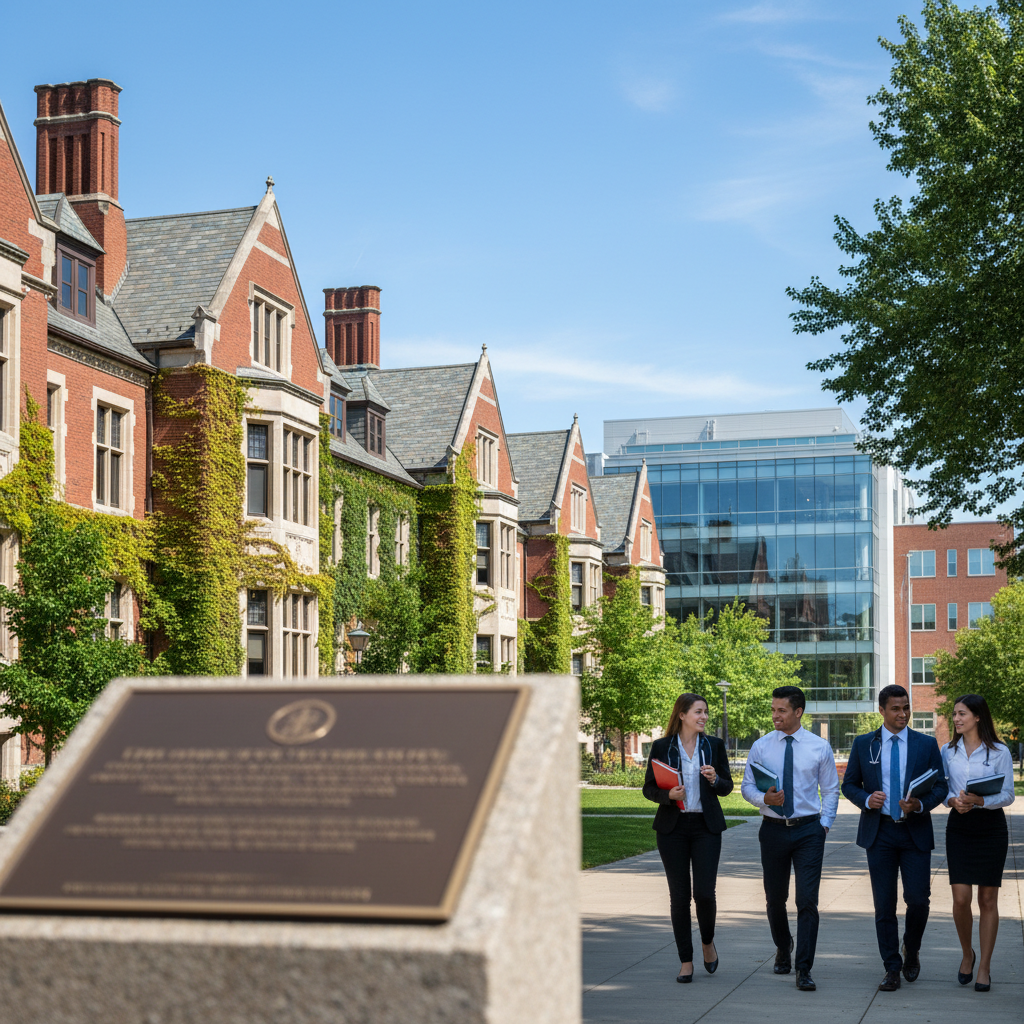
Choosing a medical school is one of the most significant decisions an aspiring physician will make. The top-rated medical colleges in the United States are renowned not only for their rigorous academic programs but also for their groundbreaking research, distinguished faculty, and extensive clinical training opportunities. These institutions consistently produce leaders in medicine, public health, and biomedical science. Below, we explore some of the most prestigious and highly-regarded medical schools in the country, detailing what makes each of them a center of excellence.
A Look at America's Premier Medical Institutions
1. Harvard University
Located in Boston, Massachusetts, Harvard Medical School (HMS) is consistently ranked among the best in the world. Its reputation is built on a foundation of pioneering research, an innovative curriculum, and affiliations with some of the nation's top hospitals, including Massachusetts General Hospital and Brigham and Women's Hospital. The "Pathways" curriculum at HMS integrates foundational science with early clinical experience, allowing students to engage with patients from their first year. This approach emphasizes small-group, case-based learning and encourages students to develop critical thinking and problem-solving skills essential for a career in medicine.
Harvard is a research powerhouse, receiving substantial funding from the National Institutes of Health (NIH). This provides students with unparalleled opportunities to work alongside leading scientists on cutting-edge projects, from molecular biology to global health. The school's vast resources, extensive alumni network, and commitment to training physician-leaders make it a top choice for aspiring doctors aiming to make a significant impact in the field.
2. Johns Hopkins University
The Johns Hopkins University School of Medicine in Baltimore, Maryland, has a storied history and is credited with revolutionizing medical education in America. It was one of the first schools to require a bachelor's degree for admission and pioneered the concept of the teaching hospital, where students learn through hands-on patient care. The "Genes to Society" curriculum provides a comprehensive framework, teaching students to consider all factors affecting a patient's health, from their DNA to their environment.
Johns Hopkins Hospital offers an incredibly diverse range of clinical experiences, exposing students to a wide spectrum of diseases and patient populations. The university's strong emphasis on research is evident in its numerous specialized institutes and centers. Students are encouraged to engage in research throughout their medical training, with many pursuing dual degrees like the MD-PhD to prepare for careers as physician-scientists.
3. University of Pennsylvania (Perelman)
The Perelman School of Medicine at the University of Pennsylvania in Philadelphia is one of the oldest medical schools in the nation and remains at the forefront of medical innovation. It is deeply integrated with the Penn Medicine health system, providing students with a seamless transition from classroom learning to clinical practice. The curriculum is designed to be modular and flexible, allowing students to customize their education with various certificate programs and dual-degree options, including an MD/MBA and MD/JD.
Penn Medicine has been a leader in groundbreaking research, most notably in the development of mRNA vaccine technology and CAR-T cell cancer therapy. This culture of innovation creates a dynamic learning environment where students are exposed to the latest advancements in medicine. The school's commitment to community engagement and global health also offers students numerous opportunities to serve diverse populations both locally and abroad.
4. Columbia University
Located in New York City, the Vagelos College of Physicians and Surgeons at Columbia University offers an exceptional medical education in one of the world's most vibrant and diverse cities. This location provides students with access to a wide array of clinical settings, from major academic medical centers to community clinics, serving patients from all walks of life. The school made headlines by becoming the first medical school in the nation to replace student loans with scholarships for all eligible students, reducing the financial burden of a medical education.
Columbia's curriculum emphasizes a humanistic approach to medicine, blending rigorous scientific training with a focus on compassion and ethics. Students benefit from the university's strong research programs, particularly in areas like neuroscience, genetics, and cancer biology. The diverse clinical exposure and focus on scholarly projects ensure that graduates are well-prepared to tackle complex health challenges.
5. Duke University
The Duke University School of Medicine in Durham, North Carolina, is known for its unique curriculum that condenses the core basic sciences into one year, allowing students to begin clinical rotations in their second year. The third year is dedicated entirely to research or scholarly pursuit, giving every student an intensive experience in a field of their choosing. This structure is ideal for students who are passionate about research and wish to make it a central part of their medical career.
Situated in the Research Triangle Park, Duke benefits from a collaborative environment rich with scientific and technological innovation. The school is highly regarded for both its research programs and its primary care training, offering a well-rounded education. This distinctive curriculum and emphasis on scholarly investigation make Duke a top destination for students aspiring to become leaders and innovators in medicine.
6. Stanford University
Located in the heart of Silicon Valley, the Stanford University School of Medicine is a hub of biomedical innovation and technology. The school's curriculum is known for its flexibility, allowing students to tailor their education to their specific interests and career goals from the very beginning. Students can choose from various scholarly concentrations, ranging from bioengineering to health policy, and have ample opportunities to engage in groundbreaking research.
Stanford's proximity to world-leading tech companies fosters a unique environment where medicine and technology intersect. Students are encouraged to think creatively and develop innovative solutions to healthcare problems. With its focus on discovery, strong mentorship programs, and a collaborative learning atmosphere, Stanford prepares graduates to be pioneers in the rapidly evolving landscape of medicine.
7. University of California, San Francisco (UCSF)
UCSF is unique among top institutions because it is dedicated solely to the health sciences. This singular focus creates a highly collaborative and immersive environment for students at its schools of medicine, nursing, pharmacy, and dentistry. Located in a city known for its diversity and social consciousness, UCSF provides extensive clinical training opportunities across various settings, serving a wide range of patient populations.
As a leading recipient of NIH research funding, UCSF is a powerhouse in biomedical research, particularly in fields like neuroscience, immunology, and HIV/AIDS. The "Bridges" curriculum is designed to integrate foundational sciences with clinical experience, while also emphasizing health equity and systems improvement. Graduates leave UCSF not only as skilled clinicians but also as advocates for healthcare reform and social justice.
8. Yale University
The Yale School of Medicine in New Haven, Connecticut, is famous for the "Yale System," a unique educational philosophy that promotes self-directed learning and collaboration. There are no grades or class rankings in the preclinical years; instead, students are evaluated through anonymous qualifying exams. This system is designed to reduce competition and encourage students to pursue their intellectual curiosity, fostering a supportive and collegial atmosphere.
A cornerstone of the Yale System is the requirement that every student completes a research thesis, providing in-depth experience in scientific investigation under the guidance of a faculty mentor. This deep commitment to student-led research, combined with strong clinical training at Yale New Haven Hospital, prepares graduates to be thoughtful, inquisitive physicians who are dedicated to lifelong learning.