Discover Prestigious Medical Schools to Kickstart Your Doctor Career
Choosing the right medical school is one of the most critical decisions on your path to becoming a doctor. To make it easier, we've broken down the top-rated programs across the country.
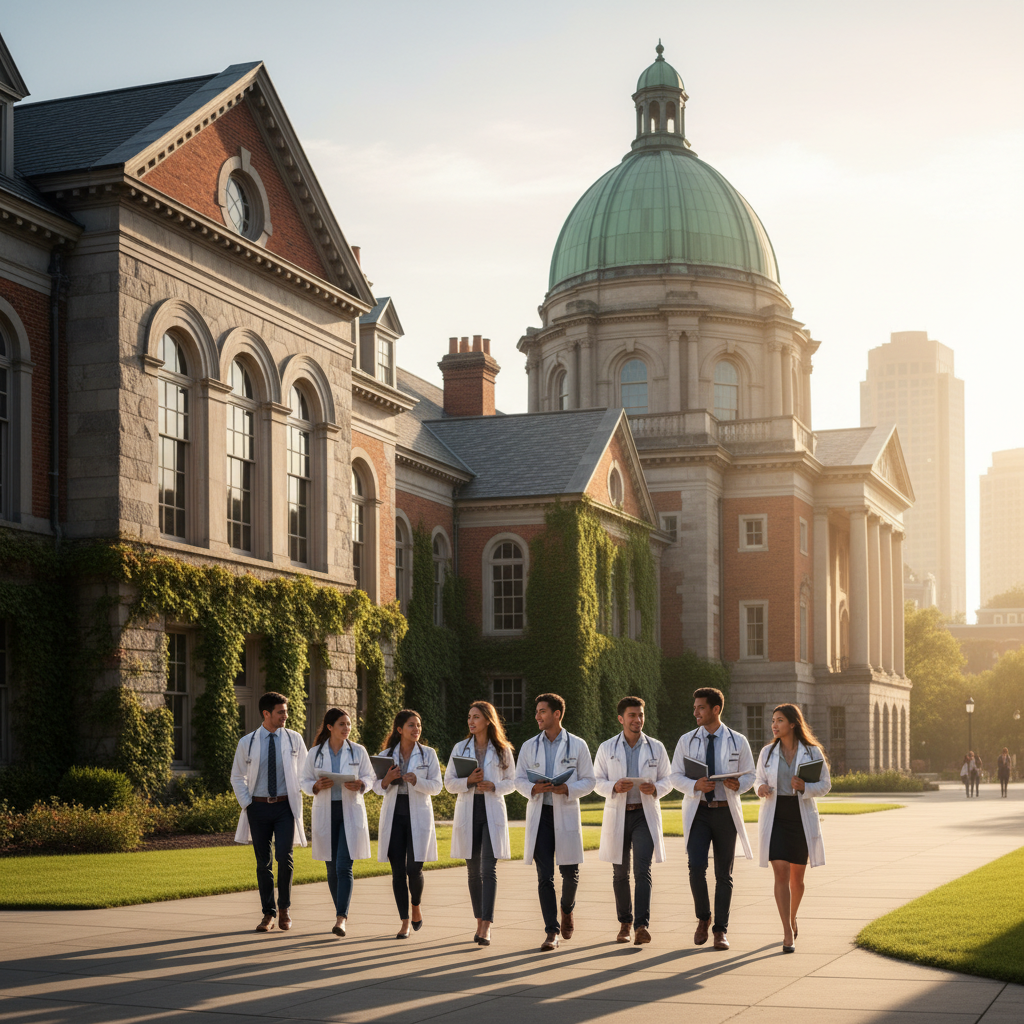
Top Rated Medical Schools For Doctor Careers
Choosing a medical school is one of the most significant decisions an aspiring physician will make. The institution you attend shapes not only your foundational knowledge but also your clinical skills, research opportunities, and professional network. While rankings can be a useful starting point, the "best" school is often a matter of individual fit, career goals, and learning style. Below, we explore some of the most consistently top-rated medical schools in the United States, known for their rigorous academics, groundbreaking research, and commitment to producing leaders in medicine.
Harvard University
Harvard Medical School (HMS) is globally recognized as a leader in medical education and biomedical research. Located in Boston's Longwood Medical Area, students are immersed in an unparalleled ecosystem of world-class hospitals, including Massachusetts General Hospital, Brigham and Women's Hospital, and Boston Children's Hospital. This provides students with an extraordinary range of clinical experiences across virtually every specialty, starting early in their education. The curriculum at HMS is known for its "Pathways" program, which emphasizes active learning, earlier clinical experience, and a deep integration of foundational sciences with patient care.
Beyond its clinical prowess, Harvard is a research powerhouse, consistently receiving more NIH funding than any other medical school. This translates into limitless opportunities for students to engage in cutting-edge research, from basic science to translational medicine and health policy. The faculty includes numerous Nobel laureates and members of the National Academy of Sciences, providing mentorship from the brightest minds in the field. Graduating from Harvard opens doors to the most competitive residency programs and leadership positions across medicine, academia, and public health.
Johns Hopkins University
The Johns Hopkins University School of Medicine in Baltimore has a storied history of revolutionizing medical education. It is credited with establishing the model of the modern American medical school, integrating a teaching hospital with a research-intensive university. This tradition continues today, with a strong emphasis on the "genes to society" curriculum, which teaches students to consider all factors affecting a patient's health, from their DNA to their social environment. The school is synonymous with Johns Hopkins Hospital, a world-renowned institution that offers students a diverse patient population and exposure to complex medical cases.
Research is deeply embedded in the Hopkins culture. Students are encouraged to pursue their research interests, with many taking a year off to conduct in-depth studies. The school is a leader in fields such as genetics, neuroscience, and immunology. Another hallmark of the Johns Hopkins experience is its flexible curriculum and the college advising system, which creates smaller, supportive communities within the larger student body. Graduates are highly sought after for their exceptional clinical training, research acumen, and a deep-seated commitment to patient-centered care.
Stanford University
Located in the heart of Silicon Valley, Stanford University School of Medicine is a hub of innovation, technology, and interdisciplinary collaboration. Its curriculum is designed to be flexible, allowing students to pursue a variety of scholarly concentrations, from bioengineering and health policy to clinical research. This approach encourages students to think beyond traditional medicine and explore how technology and other fields can solve complex health problems. The school's proximity to the tech industry provides unique opportunities for students interested in medical technology, digital health, and entrepreneurship.
Stanford's emphasis on discovery is evident in its research programs. It is a leader in areas like stem cell biology, cardiovascular medicine, and cancer research. Students have access to state-of-the-art facilities and work alongside faculty who are pioneers in their fields. The learning environment is known for being collaborative and supportive, fostering a sense of community among students. A Stanford medical education prepares physicians to be not just clinicians but also innovators and leaders capable of shaping the future of healthcare.
University of Pennsylvania (Perelman)
The Perelman School of Medicine at the University of Pennsylvania is the oldest medical school in the United States and continues to be a leader in education, research, and patient care. Located in Philadelphia, Penn provides students with a dynamic urban environment and access to the top-ranked Hospital of the University of Pennsylvania (HUP) and the Children's Hospital of Philadelphia (CHOP). The curriculum is notable for its integration of science and clinical practice from day one, with a modular approach that covers organ systems in a cohesive manner.
Penn is a research juggernaut, particularly renowned for its pioneering work in cell and gene therapy, including the development of the first FDA-approved CAR-T cell therapy for cancer. This commitment to translational medicine—moving discoveries from the lab bench to the patient bedside—is a core part of the school's identity. Students have abundant opportunities to participate in this groundbreaking research. Penn also offers numerous dual-degree programs, including an MD/PhD, MD/MBA, and MD/JD, allowing students to tailor their education to their specific career aspirations.
University of California, San Francisco (UCSF)
The University of California, San Francisco (UCSF) is unique in that it is a graduate-level institution solely dedicated to health sciences. This singular focus creates a highly collaborative and immersive environment for medical students. UCSF is celebrated for its excellence in both research and primary care training, a rare combination that makes it one of the most respected medical schools in the country. Its "Bridges" curriculum is forward-thinking, emphasizing inquiry-based learning and preparing students for the evolving healthcare landscape through training in health policy, quality improvement, and systems science.
UCSF is a dominant force in biomedical research, consistently ranking among the top institutions for NIH funding. It is particularly strong in neuroscience, immunology, and global health. The school is affiliated with a diverse network of clinical sites, including UCSF Medical Center, Zuckerberg San Francisco General Hospital, and the San Francisco VA Medical Center, exposing students to a wide spectrum of patient populations and healthcare systems. Graduates are known for their clinical excellence, social consciousness, and dedication to serving diverse communities.
The Pillars of a Top-Tier Medical Education
What truly sets these elite institutions apart? While prestige and name recognition are factors, the quality of a medical school is built on several foundational pillars. Understanding these components can help prospective students look beyond simple rankings and evaluate what makes a school a good fit for their long-term career goals. One of the most significant pillars is the strength and breadth of its clinical affiliations. Top schools are invariably linked with world-class teaching hospitals that expose students to a high volume and diversity of patients, complex cases, and specialized fields of medicine. This hands-on experience is where theoretical knowledge is transformed into practical clinical skill.
Another crucial pillar is the institution's commitment to research. Leading medical schools are centers of discovery and innovation, often receiving substantial funding from organizations like the National Institutes of Health (NIH). This robust research infrastructure provides students with invaluable opportunities to work alongside leading scientists, contribute to groundbreaking studies, and develop critical thinking skills. This exposure is vital not only for those pursuing academic medicine but for all future physicians, as it fosters a lifelong habit of evidence-based practice. Finally, the curriculum structure, faculty mentorship, and institutional culture play a massive role in shaping a student's journey from a trainee to a competent and compassionate physician.
Common Questions About the Path to Becoming a Doctor
What is the Difference Between an M.D. and a D.O.?
When exploring medical schools, you will encounter two types of degrees: Doctor of Medicine (M.D.) and Doctor of Osteopathic Medicine (D.O.). Both M.D.s and D.O.s are fully licensed physicians who can practice in any specialty and perform surgery. The educational paths are very similar, involving four years of medical school followed by a residency. The core difference lies in the philosophy of care. D.O. schools have a holistic, or "whole person," approach to medicine, emphasizing the interconnectedness of the body's systems and the importance of preventive care.
In addition to the standard medical curriculum, D.O. students receive hundreds of hours of training in Osteopathic Manipulative Treatment (OMT), a hands-on technique used to diagnose and treat issues in the musculoskeletal system. While M.D. schools also teach patient-centered care, the osteopathic philosophy formalizes this holistic perspective. In practice, the distinction often blurs after residency, as physicians from both backgrounds work side-by-side in hospitals and clinics. The choice between M.D. and D.O. programs often comes down to a student's personal philosophy on medicine.
Beyond Rankings: How Do I Find the Right Fit?
While this list highlights schools known for their prestige and resources, the "best" school is ultimately a personal decision. Finding the right fit involves self-reflection on your career goals, learning style, and personal priorities. For instance, if you are passionate about rural medicine, a school with strong programs and clinical rotations in underserved rural areas might be a better fit than an urban research powerhouse. If you thrive in a small, collaborative environment, you may prefer a school with a smaller class size and a pass/fail grading system, which can reduce competition.
Consider the school's location, cost of living, and student culture. Do you want to be in a major city or a smaller college town? What is the support system like for students? Look into the school's mission statement and the types of physicians it aims to produce. Some schools excel in primary care training, while others are geared toward producing academic researchers. Researching specific programs, talking to current students, and attending interview days can provide invaluable insight into the school's culture and help you determine if it aligns with your personal and professional aspirations.
Conclusion
The journey to becoming a physician is long and demanding, and selecting the right medical school is a critical first step. Institutions like Harvard, Johns Hopkins, Stanford, Penn, and UCSF represent the pinnacle of medical education, offering unparalleled resources, clinical exposure, and research opportunities. However, the best medical education is one that aligns with your individual strengths, passions, and career ambitions. Aspiring doctors should look beyond rankings to consider a school's culture, curriculum, and mission to find the environment where they will not only learn to be a great physician but also thrive as an individual.
For additional information, you can visit the Association of American Medical Colleges (AAMC) at https://www.aamc.org/ or the American Medical Association (AMA) at https://www.ama-assn.org/.