Discover the Cutting-Edge Features of Meta Ray-Ban Smart Glasses for 2026
The Meta Ray-Ban smart glasses are evolving fast, and the 2026 version is shaping up to be a true game-changer.
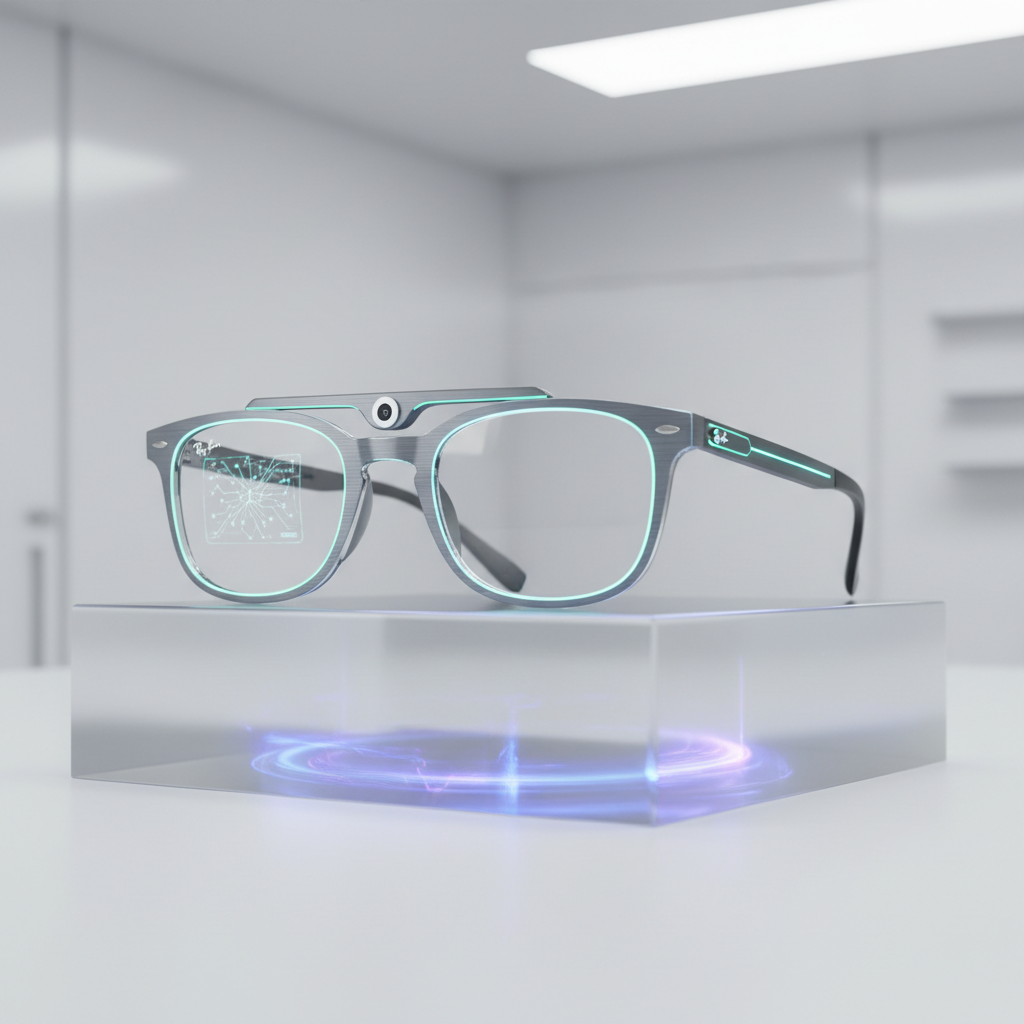
As technology continues its rapid march forward, the world of wearable tech is poised for a significant leap. The partnership between Meta and Ray-Ban has already introduced a new category of smart glasses, but by 2026, we expect to see a device that moves far beyond simple photo-taking and music playback. The next generation is anticipated to be a true augmented reality device, seamlessly blending the digital and physical worlds. Here are the top features we expect to see in the Meta Ray-Ban Display Glasses for 2026.
Top Expected Features for 2026
1. True Augmented Reality with a Full-Color Waveguide Display
The most significant upgrade anticipated for the 2026 model is the introduction of a genuine, full-color display integrated directly into the lenses. Unlike current models that primarily focus on audio and camera functions, this future version is expected to feature advanced waveguide or microLED projection technology. This will allow for the overlay of digital information directly onto the user's field of view without obstructing their vision. Imagine seeing turn-by-turn navigation arrows appearing on the road ahead, viewing incoming message notifications discreetly in your periphery, or seeing the weather forecast overlaid on the morning sky.
This technology will be designed for subtlety and context. The goal isn't to create an overwhelming "heads-up display" like in a sci-fi movie, but rather to provide glanceable, relevant information exactly when you need it. The brightness would automatically adjust to ambient light conditions, ensuring the display is visible in bright sunlight and not distracting in darker environments. This single feature represents the shift from "smart glasses" to true "AR glasses."
2. Advanced, Proactive Meta AI Assistant
By 2026, the onboard Meta AI is expected to be far more sophisticated and context-aware. Instead of just responding to "Hey Meta," the AI will be able to understand your environment through the glasses' sensors and camera, offering proactive assistance. For example, if you look at a restaurant, the AI could automatically pull up its menu and reviews. When looking at a foreign language sign, the AI could instantly display a translation directly in your vision through the AR display.
This proactive nature will extend to daily tasks and organization. The AI could remind you of an upcoming appointment when you glance at your watch or provide real-time public transit updates as you approach a bus stop. The integration will feel more like a natural extension of your own thought process rather than a command-and-response system, making it an indispensable daily companion.
3. Real-Time, On-Device Translation
Building on the advanced AI, one of the killer applications for the 2026 model is expected to be seamless, real-time language translation. Using the improved directional microphones, the glasses will be able to listen to someone speaking a foreign language and display subtitles in real-time on the AR display. This would revolutionize travel, international business, and human connection, breaking down communication barriers instantly.
Crucially, advancements in on-device processing will likely allow much of this translation to happen directly on the glasses without constantly needing to send data to the cloud. This not only makes the process faster and more reliable, even with poor connectivity, but also addresses significant privacy concerns by keeping sensitive conversations local to the device.
4. Next-Generation 32MP Camera with AI Image Processing
The camera is a core feature of the Meta Ray-Ban glasses, and the 2026 version is expected to see a massive upgrade. A move to a higher-resolution sensor, potentially around 32 megapixels, would provide stunningly detailed photos and crisp video from a first-person perspective. This would be paired with a wider-angle lens to capture more of the scene, making it perfect for vlogging, action shots, and capturing memories exactly as you see them.
Beyond the hardware, the real magic will be in the AI-powered image processing. This could include real-time HDR (High Dynamic Range) for perfectly balanced lighting, advanced electronic image stabilization that makes shaky video look smooth, and intelligent scene recognition that automatically adjusts settings for the best possible shot. This combination of powerful hardware and smart software will make content creation effortless and incredibly high-quality.
5. All-Day Battery Life and a Wireless Charging Case
One of the biggest challenges for any powerful wearable is battery life. For the 2026 model to be a truly useful all-day device, it needs a battery that can keep up. Advances in battery technology and more energy-efficient processors are expected to deliver a battery that can last from morning to night with moderate use of the AR display, AI, and camera functions.
To complement this, the glasses will almost certainly come with a stylish, redesigned charging case, similar to those used for high-end wireless earbuds. This case would not only protect the glasses but also hold several full charges, allowing users to top up their glasses on the go. The convenience of simply placing the glasses in their case to recharge would make managing battery life a non-issue, ensuring they are always ready when needed.
6. Enhanced Spatial Audio with Beamforming Microphones
Audio is already a key feature, but the 2026 version is expected to take it to the next level with true spatial audio. This technology creates a 3D soundscape, making audio feel like it's coming from specific points in the space around you. This would create a much more immersive experience for listening to music, podcasts, and especially for AR applications where sound cues can be used to direct your attention.
For calls and voice commands, the glasses are expected to incorporate a multi-microphone array with beamforming technology. This allows the device to focus on the user's voice while actively filtering out background noise. The result would be crystal-clear phone calls and highly accurate voice command recognition, even in loud environments like a busy street or a crowded cafe.
The Evolution of Smart Glasses: From Niche Gadget to Mainstream Tool
The concept of smart glasses is not new. Early attempts, like Google Glass in 2013, introduced the world to the idea but struggled with social acceptance, privacy concerns, and technological limitations. The device was ahead of its time; the battery life was short, the display was small, and the prominent camera led to public apprehension. It was a fascinating piece of technology that ultimately highlighted the challenges of creating a wearable device that is both powerful and socially discreet.
The journey from those early days to the current Meta Ray-Ban collaboration shows a significant shift in strategy. Instead of leading with technology, the partnership led with fashion and familiarity. By embedding technology into a classic, universally recognized Ray-Ban frame, the product became more socially acceptable. The initial focus was on core, easy-to-understand features: taking photos, listening to music, and making calls. This gradual approach has allowed the public to become comfortable with the concept of cameras and speakers in eyewear, paving the way for more advanced features. The anticipated 2026 model represents the culmination of this journey—a device that finally delivers on the original promise of augmented reality in a form factor people actually want to wear.
Exploring Key Considerations for Smart Glasses
How Will Privacy Be Addressed in Future Smart Glasses?
Privacy is arguably the most significant hurdle for the widespread adoption of smart glasses. As the devices become more capable, the concerns around surreptitious recording and data collection grow. To combat this, manufacturers are expected to implement more robust and obvious privacy indicators. This could include a much brighter, more visible recording light that is impossible to disable through software, or even an audible cue that announces when recording begins. The goal is to make it unequivocally clear to both the wearer and those around them when the camera is active.
Beyond external indicators, a major focus will be on on-device processing. By designing powerful chips that can handle tasks like AI analysis and language translation directly on the glasses, the need to send raw video and audio data to the cloud is minimized. This keeps sensitive information secure and private to the user. Furthermore, users will likely be given granular control over data permissions, allowing them to decide exactly what information the glasses can access and share, similar to the permissions model on modern smartphones.
What Is the Difference Between Augmented Reality (AR) and Virtual Reality (VR)?
It's common to hear AR and VR used interchangeably, but they describe two very different experiences. The 2026 Meta Ray-Ban glasses are focused on Augmented Reality (AR). AR overlays computer-generated images, sounds, and information onto the real world. Your view of your actual surroundings is enhanced, not replaced. A great example is seeing a digital navigation arrow on the real street in front of you or viewing a virtual piece of furniture in your actual living room through your phone.
Virtual Reality (VR), on the other hand, completely replaces your real-world environment with a fully digital one. When you put on a VR headset, like the Meta Quest 3, you are transported to a different place. You are fully immersed in a virtual world and cannot see your physical surroundings. VR is ideal for immersive gaming, virtual meetings, and simulations, while AR is designed for providing contextual information and enhancing your interaction with the world you're already in.
Can Smart Glasses Be Fitted with Prescription Lenses?
This is a critical question for the majority of people who wear corrective lenses, and the answer is a resounding yes. From the beginning, the Meta Ray-Ban collaboration has been designed with prescription wearers in mind. The current models can be taken to a partner optician to have custom prescription lenses fitted into the frames, and this flexibility is expected to be a core principle of future designs as well.
By 2026, the process is likely to become even more streamlined. We might see a more modular design where the "tech" components can be easily swapped between different frame styles and lens types. This could also involve deeper partnerships with lens manufacturers to offer a wider range of options, including transitions, specific coatings, and complex prescriptions, directly at the point of sale. The aim is to ensure that the benefits of smart glasses are accessible to everyone, without forcing them to choose between clear vision and new technology.
Conclusion
The Meta Ray-Ban Display Glasses anticipated for 2026 are poised to be a landmark device in the evolution of wearable technology. By focusing on a true AR display, a genuinely intelligent AI assistant, and practical features like all-day battery life, these glasses aim to move beyond novelty and become an essential tool for daily life. They represent the convergence of fashion, function, and futuristic technology, offering a glimpse into a future where our digital and physical worlds are seamlessly intertwined.
For more information on the current generation of products, you can visit the official websites: