Discover the Most Exquisite Gemstone Rings to Adorn in 2026
Planning ahead for the perfect gemstone ring in 2026? You've landed in exactly the right place. We’ve curated the definitive guide to the top-rated styles, breaking down why timeless sapphires, vibrant emeralds, and unique alternative gems are set to steal the spotlight.
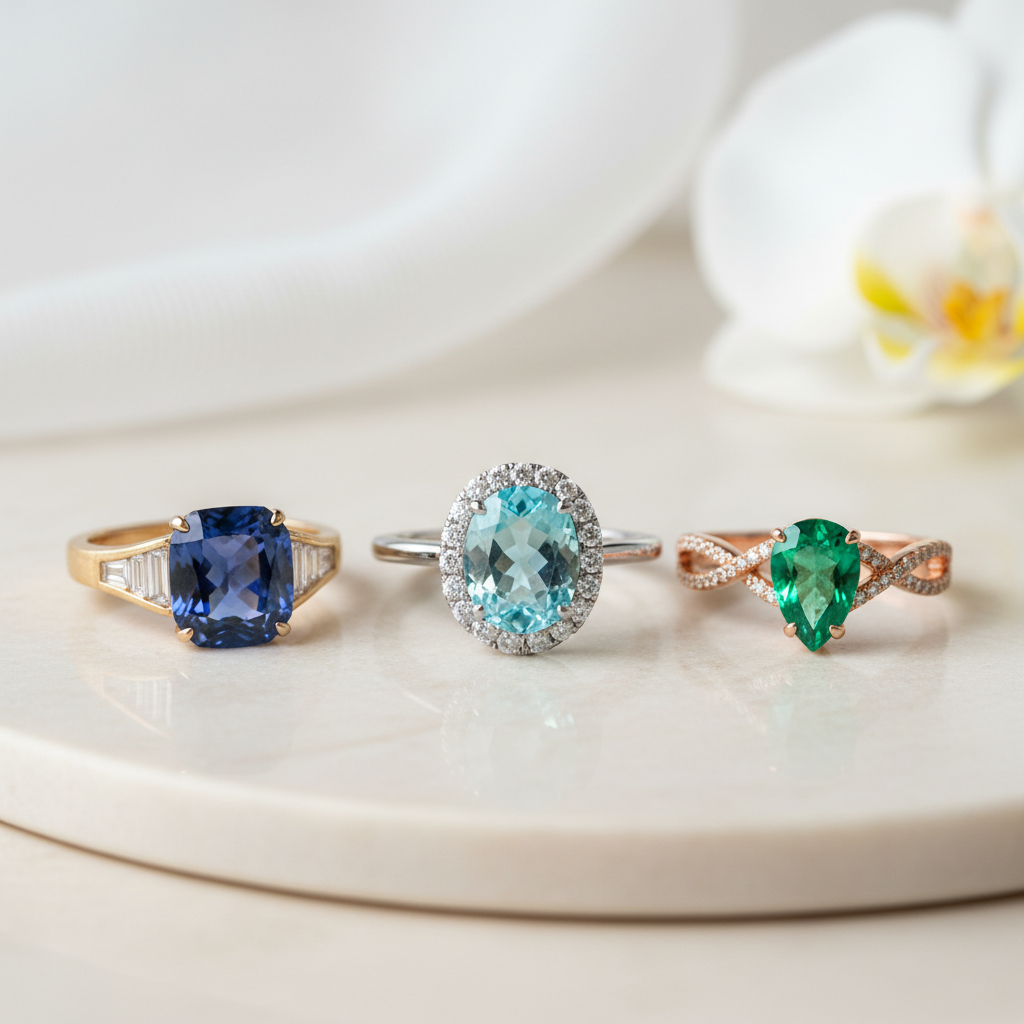
As we look toward 2026, the world of fine jewelry continues to embrace color, personality, and meaning. While diamonds remain a timeless classic, gemstone rings are capturing the hearts of more people than ever before. They offer a unique way to express individuality, often at a more accessible price point. From deep, regal blues to soft, romantic pinks, there's a gemstone to match every style and story. Below, we explore some of the top-rated gemstone rings expected to dominate the trends and wish lists in 2026.
1. The Majestic Sapphire Ring
Sapphire has long been associated with royalty, wisdom, and nobility, making it a perennial favorite for engagement rings and statement pieces. Its most famous hue is a deep, velvety blue, but sapphires actually come in a rainbow of colors, including pink, yellow, green, and the rare, pinkish-orange Padparadscha. One of the biggest advantages of sapphire is its exceptional durability. Ranking a 9 on the Mohs scale of hardness, it is second only to diamond, making it an excellent choice for a ring intended for everyday wear. This resilience means it can withstand the rigors of daily life without easily scratching or chipping.
In 2026, expect to see sapphires set in both vintage-inspired and modern minimalist designs. Classic three-stone settings, with a central sapphire flanked by two smaller diamonds, remain incredibly popular for their timeless elegance. At the same time, sleek bezel settings and simple solitaires are gaining traction, allowing the rich color of the sapphire itself to be the star of the show. Whether you're drawn to its royal history or its practical durability, a sapphire ring is a sophisticated and enduring choice.
2. The Enchanting Emerald Ring
The lush, vibrant green of an emerald is truly unmistakable. This beloved gemstone is a symbol of rebirth, love, and new beginnings. As a member of the beryl family of minerals, its deep green color is caused by trace amounts of chromium and vanadium. Unlike many other gems, emeralds are prized for their natural inclusions, often referred to as a "jardin" (garden). These tiny internal fractures and fissures create a unique, mossy appearance that is considered part of the stone's character and proof of its natural origin. A high-quality emerald will have a vivid, evenly distributed color that seems to glow from within.
When considering an emerald ring, it's important to understand its durability. Emeralds rank between 7.5 and 8 on the Mohs scale, which is quite hard. However, their natural inclusions can make them more susceptible to chipping if struck hard. For this reason, protective settings like bezel or halo designs are highly recommended for emerald rings. In 2026, "toi et moi" (you and me) rings featuring an emerald paired with another stone, like a diamond or pearl, are set to be a major trend, symbolizing the union of two souls.
3. The Romantic Morganite Ring
For those seeking a softer, more romantic alternative to traditional gemstones, morganite is a perfect choice. This stunning gem, which also belongs to the beryl family alongside emerald and aquamarine, is beloved for its delicate shades of pink, peach, and salmon. Its gentle color palette exudes femininity and warmth, making it an increasingly popular option for engagement rings. Morganite is often associated with love, compassion, and emotional healing, adding a layer of beautiful symbolism to any piece of jewelry.
One of morganite's biggest draws is its affordability, offering a significantly larger carat size for the price compared to a diamond. This allows for beautifully substantial and eye-catching rings without an exorbitant cost. Morganite pairs exceptionally well with rose gold settings, which enhance its warm, peachy tones. While it has good hardness (7.5-8 on the Mohs scale), it does require regular cleaning to maintain its brilliance, as it can get cloudy from lotions and oils. For 2026, oval and pear-cut morganites set in delicate, diamond-accented bands are leading the trend reports.
4. The Serene Aquamarine Ring
Named after the Latin words for "water" and "sea," aquamarine boasts a mesmerizing range of light blue and greenish-blue hues that evoke the tranquility of a calm ocean. This gemstone is believed to bring clarity, peace, and courage to its wearer. Its transparent, often flawless appearance gives it a crisp, brilliant sparkle that is both elegant and understated. Aquamarine is yet another member of the durable beryl family, sharing the same 7.5-8 Mohs hardness rating as morganite and emerald.
Aquamarine’s cool tones make it incredibly versatile, looking stunning in white gold, platinum, or yellow gold settings. It is often cut into emerald or oval shapes to maximize its clarity and color. In 2026, the trend leans toward larger, statement-making aquamarine rings, particularly in geometric Art Deco-inspired settings. Because high-quality aquamarines with excellent clarity are more readily available than other gems, you can acquire a breathtakingly beautiful and sizable stone for a reasonable investment.
5. The Phenomenal Alexandrite Ring
Alexandrite is one of the rarest and most fascinating gemstones in the world, renowned for its remarkable color-changing properties. It appears greenish-blue or emerald green in daylight but transforms to a reddish-purple or raspberry red under incandescent light. This dramatic shift is so unique to the stone that the phenomenon itself is called the "alexandrite effect." Discovered in Russia's Ural Mountains in the 1830s, this gem was named after the future Czar Alexander II. Its dual colors mirrored the red and green of Imperial Russia's military flag, making it a national treasure.
Due to its extreme rarity, natural alexandrite is one of the most expensive gemstones on the market. However, lab-created alexandrite offers the exact same chemical, physical, and optical properties—including the signature color change—at a much more accessible price point. With a hardness of 8.5 on the Mohs scale, alexandrite is very durable and suitable for all types of jewelry, including daily-wear rings. For 2026, alexandrite rings are seen as the ultimate expression of individuality for those who want a piece that is truly dynamic and unique.
6. The Dazzling Opal Ring
Opals are in a class of their own, celebrated for their unique "play-of-color"—a dazzling display of flashing, spectral colors that shift and dance as the stone is moved. This phenomenon is caused by the diffraction of light off of microscopic silica spheres within the stone's structure. Opals come in many varieties, from the common white opal with a pale background to the dramatic black opal with a dark body tone that makes its play-of-color appear even more vibrant. They are stones of inspiration, creativity, and spontaneity.
It is crucial to note that opals are a softer, more delicate gemstone, ranking between 5.5 and 6.5 on the Mohs scale. They also have a significant water content, which means they can be prone to cracking if exposed to sudden temperature changes or dry conditions. For this reason, opal rings are best suited for occasional wear or must be worn with great care. Protective settings, such as a bezel that encircles the entire stone, are highly recommended. Despite their delicacy, the otherworldly beauty of an opal ring makes it an irresistible choice for those who appreciate its unique magic.
Understanding Key Factors When Choosing a Gemstone
Beyond simply picking a stone you find beautiful, a few key factors can help you make a more informed decision. While the "4Cs" (Cut, Color, Clarity, and Carat) are famously associated with diamonds, they are just as important for colored gemstones, though they are often evaluated differently. For most colored gems, Color is the most critical factor. Look for stones with rich, vibrant, and evenly distributed hues. Clarity refers to the absence of inclusions, but as with emeralds, some inclusions are accepted as part of a stone's character.
The Cut of a gemstone is what gives it brilliance and life. A well-cut stone will reflect light evenly across its surface, maximizing its color and sparkle. Finally, Carat refers to the weight of the stone, which impacts its size. Remember that some gemstones are denser than others, so a one-carat sapphire will look smaller than a one-carat emerald. Considering these elements alongside the stone's durability will ensure you choose a ring that is not only beautiful but also well-suited to your lifestyle.
Common Questions About Gemstone Rings
How Do I Properly Care for My Gemstone Ring?
Proper care is essential to keeping your gemstone ring looking its best for years to come. For most hard stones like sapphires and rubies, the best method is simple: soak the ring in a bowl of warm water with a few drops of mild dish soap. Use a soft-bristled toothbrush to gently scrub behind the stone and around the setting where dirt and oils can accumulate. Rinse thoroughly and pat dry with a soft, lint-free cloth. This simple cleaning can be done every few weeks to maintain its sparkle.
For more delicate gemstones like opals, emeralds, and pearls, you must be more cautious. Avoid harsh chemicals, steamers, and ultrasonic cleaners, as they can damage the stone or its treatments. For these gems, simply wiping them with a damp, soft cloth is often the safest approach. When you're not wearing your ring, store it in a separate pouch or a lined jewelry box to prevent it from being scratched by harder stones like diamonds.
What Are Gemstone Treatments and Enhancements?
It's a common misconception that all gemstones come out of the ground looking perfect. In reality, the vast majority of gemstones available on the market today have undergone some form of treatment or enhancement to improve their color or clarity. These treatments are standard, accepted industry practices and make beautiful gems more widely available and affordable. For example, heat treatment is commonly used on sapphires and rubies to intensify their color and improve clarity, a permanent and stable process.
Another common treatment is oiling, which is used for emeralds. The natural fractures in emeralds are often filled with a clear oil or resin to make them less visible, thereby enhancing the stone's clarity. This treatment is not permanent and may need to be redone over time. Reputable jewelers will always disclose any known treatments a gemstone has undergone. This transparency is crucial, as it affects the stone's value and care requirements.
What is the Mohs Scale and Why is it Important for Rings?
The Mohs scale of mineral hardness is a qualitative scale from 1 to 10 that characterizes the scratch resistance of various minerals. It was created by German geologist Friedrich Mohs in 1812. The scale is based on the ability of one mineral to scratch another. For example, a diamond, which is a 10 on the scale, can scratch a sapphire (a 9), but a sapphire cannot scratch a diamond. This scale is incredibly important when choosing a gemstone for a ring, especially one that will be worn daily.
Rings are exposed to far more bumps, knocks, and abrasive surfaces than any other type of jewelry. Therefore, a harder stone is much more practical for an engagement or everyday ring. Gemstones with a Mohs hardness of 8 or higher, such as sapphire, ruby, and alexandrite, are excellent choices. Stones rated 7 to 8, like morganite and aquamarine, are also good options but require a bit more mindfulness. Softer stones, like opal (5.5-6.5) or moonstone (6-6.5), are better suited for pendants and earrings or rings worn only on special occasions.
Final Thoughts on Choosing Your Perfect Gemstone Ring
Choosing a gemstone ring is a deeply personal journey. Whether you are drawn to the timeless durability of a sapphire, the unique color-change of an alexandrite, or the soft romance of a morganite, the perfect ring is one that resonates with your personal style, lifestyle, and story. As we look to 2026, the trend is clear: individuality and color are paramount. By understanding the unique characteristics, durability, and meaning behind each stone, you can select a piece of jewelry that you will treasure for a lifetime.