Discover the Secrets to Choosing the Most Natural-Looking Wig
Finding a wig that looks completely natural is the ultimate goal, and you've come to the right place to get the answer. The secret isn't in a single wig type, but in understanding how hair fiber, cap construction, and hairline design work together to create a realistic look.
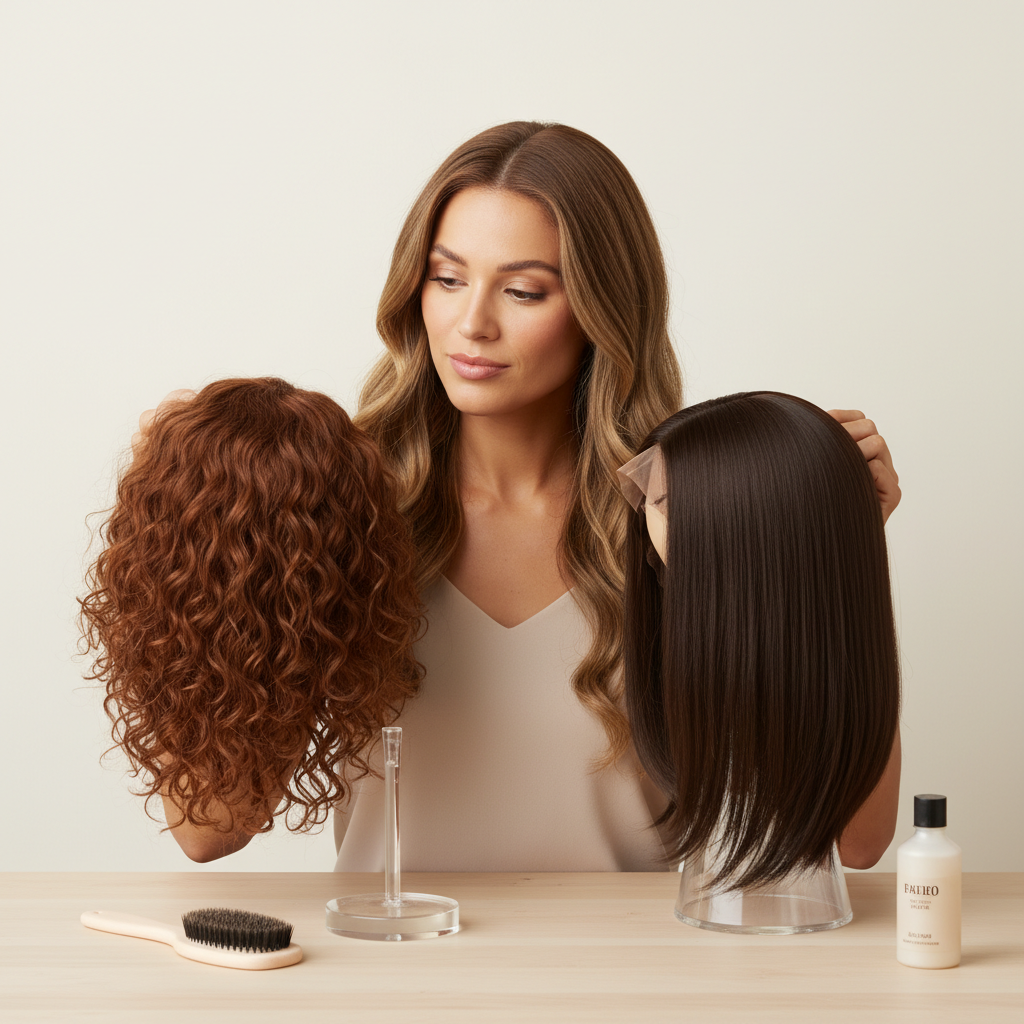
The Key Features That Create a Natural-Looking Wig
Finding a wig that looks completely natural is the ultimate goal for many wearers. It's not about a single "type" of wig but rather a combination of specific features and materials that work together to create an undetectable look. Understanding these components is the first step toward choosing a wig that boosts your confidence and looks just like your own hair. Let's break down the most important factors that contribute to a wig's realism.
1. Human Hair Wigs
When it comes to realism, nothing beats the look and feel of 100% human hair. Human hair wigs offer the most natural appearance because they are made from, well, real hair. The strands fall and move just like biological hair, they have a natural texture and sheen (unlike the sometimes-overly-shiny synthetic fibers), and they can be styled with heat tools like curling irons and straighteners. This versatility allows you to change your look just as you would with your own hair, which adds significantly to the believability factor.
Furthermore, human hair wigs can be professionally colored or highlighted to perfectly match your desired shade. The highest quality is often labeled as "Remy" human hair. This means the hair cuticles are kept intact and aligned in the same direction, which prevents tangling and matting, ensuring the wig remains smooth and natural-looking for much longer. While they are a significant investment and require more maintenance than synthetic options, their unparalleled realism makes them the top choice for a truly natural appearance.
2. Lace Front Wigs
A lace front is one of the most critical features for achieving a realistic hairline. These wigs have a small, sheer panel of lace along the front hairline where individual hairs are hand-tied. This clever construction creates the illusion that the hair is growing directly from your scalp. The lace is delicate and, when matched to your skin tone, becomes virtually invisible. This allows you to style the hair away from your face with confidence, something that is often a dead giveaway with traditional, hard-front wigs.
The transition from forehead to hairline is seamless with a quality lace front wig. It eliminates the abrupt, unnatural edge found on less expensive wigs. Many wearers trim the lace themselves to customize the fit perfectly to their hairline. For those who want to wear ponytails or part their hair in different ways near the face, a lace front is an absolute game-changer for achieving an undetectable look.
3. Monofilament Caps
The secret to a natural-looking scalp and versatile parting lies in the cap construction, and a monofilament cap is the gold standard. A "mono top" features a fine, flesh-toned mesh material at the crown or across the entire top of the wig. Each hair is individually hand-tied to this mesh, which allows the hair to move freely in any direction. This meticulous process mimics natural hair growth and allows you to part the hair anywhere you like—left, right, or center—and the illusion of a real scalp remains intact.
When you look down at the parting of a monofilament wig, you see the color of your own scalp through the sheer material, making it incredibly realistic. This feature is especially important for women with thinning hair on top or those who simply want the most styling freedom possible. Wigs with a double monofilament top have an extra layer of soft material for added comfort, which is ideal for those with sensitive scalps.
4. Fully Hand-Tied Caps
For the ultimate in luxury, comfort, and realism, a 100% hand-tied cap is unmatched. As the name suggests, every single hair on the entire cap is painstakingly tied by hand onto a soft mesh base. This process is labor-intensive and results in a higher price point, but the benefits are immense. The hair can move in any direction, providing the most natural movement possible. You can style it in updos, ponytails, and braids with a level of realism that is difficult to achieve with machine-wefted caps.
Because there are no wefts (strips of hair sewn together), hand-tied caps are also incredibly light, cool, and comfortable to wear. They conform perfectly to the shape of your head, providing a secure and custom-like fit. This construction is often recommended for individuals experiencing total hair loss due to medical conditions, as it is the gentlest and most comfortable option for sensitive scalps.
5. Realistic Hair Density
One common mistake that can make a wig look fake is having too much hair. While it might seem desirable to have a thick, full mane, most people's natural hair isn't uniformly dense all over. High-quality wigs are made with a realistic, natural density that is often lighter around the hairline and graduates to being fuller at the crown and back. This mimics the growth pattern of biological hair and prevents the bulky, "helmet" look that can scream "wig."
When shopping, look for terms like "natural density" or "light-to-medium density." A wig with a lower density will move more freely and look far more believable. It’s better to have a wig that looks like healthy, natural hair rather than one that is unnaturally voluminous. Many high-end wig makers focus intently on getting the density just right to ensure the most seamless and undetectable result.