Discover the True Benefits and Features of Quality Gym Treadmills
Ever wonder what truly separates the treadmill at your gym from a typical home model? It all comes down to a few key components built for heavy-duty use and performance.
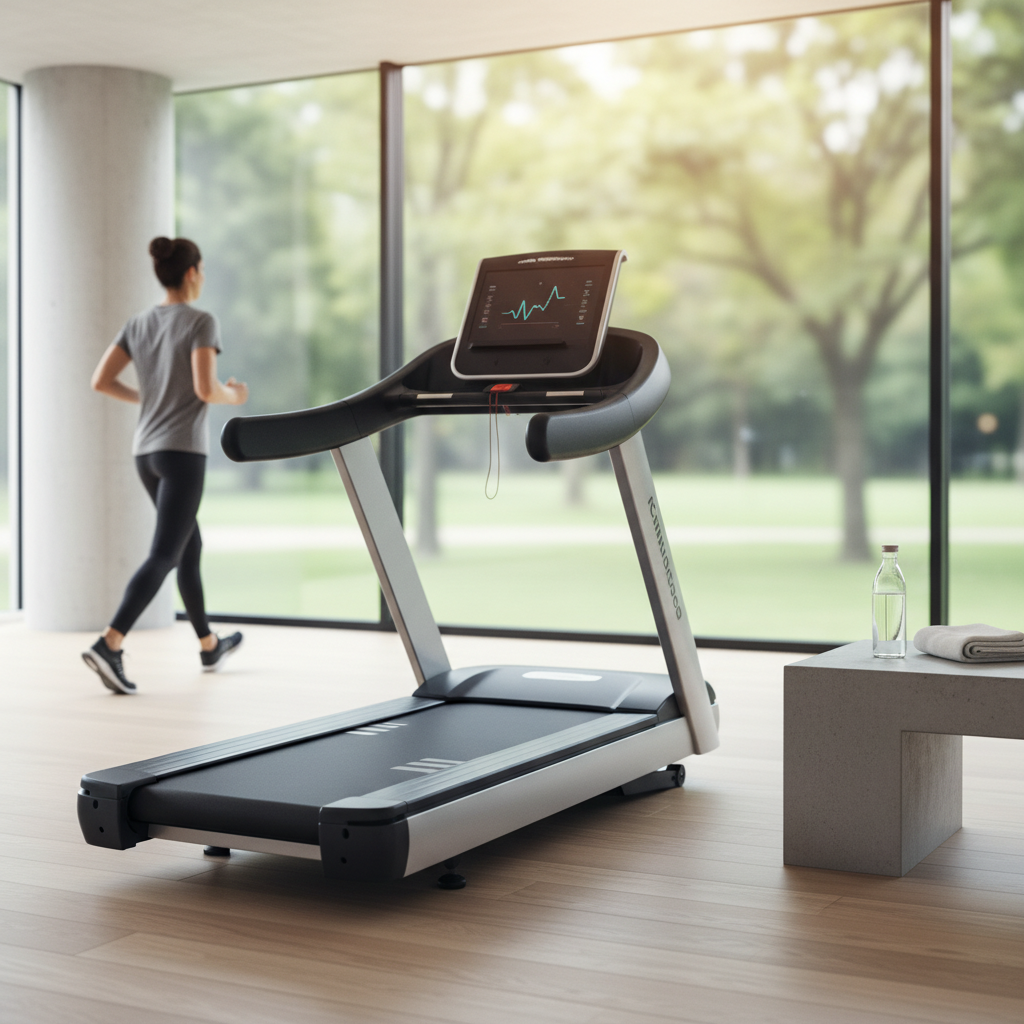
When you step onto a treadmill at a commercial gym, you immediately feel a difference. The machine feels sturdier, the motor hums with quiet confidence, and the entire experience is smoother than what you might find on a typical home-use model. These "gym quality" or commercial-grade treadmills are engineered for a completely different purpose: to withstand constant, heavy use by a wide variety of users, day in and day out. Understanding what sets them apart involves looking beyond the price tag and diving into the core components that define their durability, performance, and longevity.
From powerful motors designed for marathon sessions to advanced cushioning systems that protect joints, every part of a commercial treadmill is over-engineered for reliability. Let's break down the key features that truly define a gym-quality treadmill.
Key Features of a Gym Quality Treadmill
1. Motor Horsepower and Type (AC vs. DC)
The heart of any treadmill is its motor, and this is one of the most significant differentiators. Commercial treadmills almost exclusively use AC (Alternating Current) motors, while most home models use DC (Direct Current) motors. An AC motor is designed for continuous, high-intensity use without overheating. It offers superior durability, requires less maintenance, and can handle the constant starting and stopping common in a gym environment. They are known for their smooth acceleration and ability to maintain consistent speed under heavy loads.
In addition to the motor type, the horsepower rating is crucial. Gym-quality treadmills typically feature motors with 3.0 to 5.0 Continuous Horsepower (CHP). CHP is a measure of a motor's ability to maintain a certain power level over an extended period, which is far more relevant than a simple "peak horsepower" rating. This robust power ensures the treadmill belt doesn’t lag or slip, even when a heavy user is running at high speeds or on a steep incline.
2. Frame and Deck Construction
A commercial treadmill's frame is built like a tank. It is typically constructed from heavy-gauge, welded steel to provide maximum stability and eliminate any shaking or rattling, even during an all-out sprint. This robust construction contributes significantly to the machine's high user weight capacity, which often exceeds 400 or even 500 pounds. The stability gives users a sense of security and confidence that you simply don't get from a lighter, foldable home model.
The running deck is equally important. Commercial decks are usually at least 1-inch thick and are often phenolic-coated or reversible. A reversible deck means that when one side wears down from years of friction, a technician can simply flip it over, effectively doubling its lifespan. This focus on long-term serviceability is a hallmark of commercial-grade equipment.
3. Running Surface and Belt Quality
The running surface on a gym-quality treadmill is noticeably larger than on most residential models. A standard commercial belt is typically 22 inches wide by 60 inches long, providing ample space for users of all heights and stride lengths to run freely without feeling constrained. This extra room enhances safety and comfort, allowing for a more natural running motion.
The belt itself is also superior. It's usually a multi-ply belt (two-ply or four-ply) that is thicker and more durable than the single-ply belts found on cheaper machines. These belts are pre-lubricated or self-lubricating, drastically reducing the maintenance required to keep them running smoothly. This design prevents premature wear on both the belt and the deck, which are high-friction components.
4. Advanced Console and Technology
While home treadmills are catching up in the tech department, commercial consoles are built for simplicity, durability, and intuitive use. The buttons are often larger, more robust, and sealed to protect against sweat and cleaning solutions. The displays are bright and easy to read, providing clear metrics like speed, incline, distance, time, and heart rate without overwhelming the user with unnecessary features.
Many modern commercial treadmills also feature large, high-definition touchscreens that offer interactive workouts, virtual running courses, and entertainment apps. However, the underlying software is designed to be robust and reliable, minimizing the chances of crashes or glitches that could take the machine out of service. They also include advanced heart rate monitoring through both contact grips and wireless telemetry compatibility with chest straps.
5. Incline and Decline Capabilities
The ability to simulate hills is a standard feature, but commercial treadmills do it better. Their incline motors are powerful and responsive, allowing for smooth and swift adjustments, typically up to a 15% grade. This allows for intense hill training that puts significant stress on the machine, which is why a heavy-duty motor and frame are so essential.
Furthermore, many high-end commercial models offer decline functionality, allowing the deck to tilt downwards by -3% or more. This feature is excellent for simulating downhill running, which works different muscle groups (like the tibialis anterior) and better prepares runners for the varied terrain of a real-world race. This is a feature rarely found on residential treadmills.
6. Cushioning and Shock Absorption
Protecting a user's joints is a top priority for commercial manufacturers. They invest heavily in developing sophisticated cushioning systems that absorb a significant percentage of the impact from each foot strike. These systems often use a series of variable elastomers or shock absorbers placed strategically under the deck. The goal is to provide a landing zone that is soft and forgiving while offering a firmer push-off zone towards the back of the deck.
This advanced shock absorption reduces the stress on the ankles, knees, and hips, making running more comfortable and sustainable over the long term. It's a noticeable difference that can help prevent repetitive stress injuries, which is a major benefit for both casual walkers and serious marathon trainers.
The Evolution from Simple Track to High-Tech Fitness Hub
The treadmill's journey is a fascinating one, evolving from a rudimentary device used for punishment or manual labor in the 19th century to the sophisticated fitness equipment we see today. The earliest manual treadmills were simple "slat belt" designs, powered entirely by the user's own effort. They were purely mechanical and offered little more than a moving surface to walk or run on.
The major breakthrough came with the introduction of the electric motor in the mid-20th century, pioneered by individuals like Dr. Robert Bruce, who used it for cardiac stress testing. This transformed the treadmill into a viable piece of exercise equipment. Early motorized models were basic, offering simple speed controls. However, the fitness boom of the 1970s and 80s pushed manufacturers to innovate, adding features like incline adjustments, basic digital displays, and preset workout programs.
The modern era has seen the treadmill become a connected, interactive fitness hub. The integration of large touchscreens, Wi-Fi connectivity, and on-demand workout streaming has fundamentally changed the user experience. Today's gym-quality treadmills can transport you to virtual running trails around the world, connect you with live trainers, and track every aspect of your performance data, syncing it seamlessly with fitness apps. They have evolved from a simple tool for running in place into a comprehensive platform for health and entertainment.
Common Questions About Commercial Treadmills
Can You Put a Gym Quality Treadmill in Your Home?
Yes, it is entirely possible to put a commercial-grade treadmill in your home, but there are several important factors to consider. First is the sheer size and weight. These machines are significantly larger and heavier than residential models, often weighing 300 to 500 pounds. You'll need to measure your space carefully, including doorways and stairwells, to ensure you can get it into the desired room. Moving it is typically a job for professional installers.
Second, power requirements are a major consideration. Many commercial treadmills with AC motors require a dedicated 20-amp electrical circuit to handle the high power draw. Plugging one into a standard 15-amp circuit that is shared with other devices can lead to frequently tripped breakers or, in worse cases, damage the treadmill's electronics. It's wise to consult an electrician to ensure your home's wiring can support it.
Finally, you need to think about your flooring. The immense weight and impact from running can damage certain types of floors. It's highly recommended to place the treadmill on a high-quality, thick rubber equipment mat to protect the floor and help absorb vibrations and noise.
What is the Main Difference Between Commercial and Residential Treadmills?
The core difference boils down to the intended use and the engineering that supports it. Commercial treadmills are built for continuous, all-day operation by multiple users of varying weights and fitness levels. This requires superior components across the board: powerful AC motors, heavy-duty steel frames, thick multi-ply belts, and advanced cushioning. They are designed for durability and longevity, with a lifespan measured in years of heavy use.
Residential treadmills, on the other hand, are designed for use by one or two people for an hour or so per day. To meet a lower price point, they use lighter frames (often with folding capabilities), less powerful DC motors, and thinner, single-ply belts. While a high-end residential treadmill can be an excellent piece of equipment for home use, it simply doesn't have the internal components or structural integrity to withstand the relentless demands of a commercial gym setting.
How Much Do Gym Quality Treadmills Cost?
The investment for a new, gym-quality treadmill is substantial. You can generally expect prices to start around $3,000 for a light-commercial model and go up to $10,000 or even more for top-of-the-line machines from premium brands like Life Fitness, Precor, or Technogym. The price is influenced by several factors, including motor size, the sophistication of the console (e.g., a large HD touchscreen vs. a simple LED display), brand reputation, and additional features like decline capabilities.
While the upfront cost is high, it's often justified by the machine's incredible durability and minimal maintenance needs over its lifespan. For individuals who are very serious about their training or for households with multiple dedicated runners, the investment can pay off in the long run by avoiding the repairs or replacements often associated with less robust residential models.
Conclusion
A gym-quality treadmill is more than just a piece of exercise equipment; it's a meticulously engineered machine built for performance, safety, and unparalleled durability. From the powerful AC motor at its core to the spacious, cushioned running deck and reinforced steel frame, every component is designed to provide a stable and reliable experience under the most demanding conditions. Understanding these key features reveals why there is such a significant difference in feel and price between the treadmill you use at the gym and a standard model designed for home use. They represent the peak of treadmill technology, designed to perform flawlessly for years on end.
For further reading and to see examples of leading commercial equipment, you can visit: