Discovering the Truth: Can an App Really Identify Gemstones?
Yes, there are several apps designed to identify gemstones using nothing more than your phone's camera.
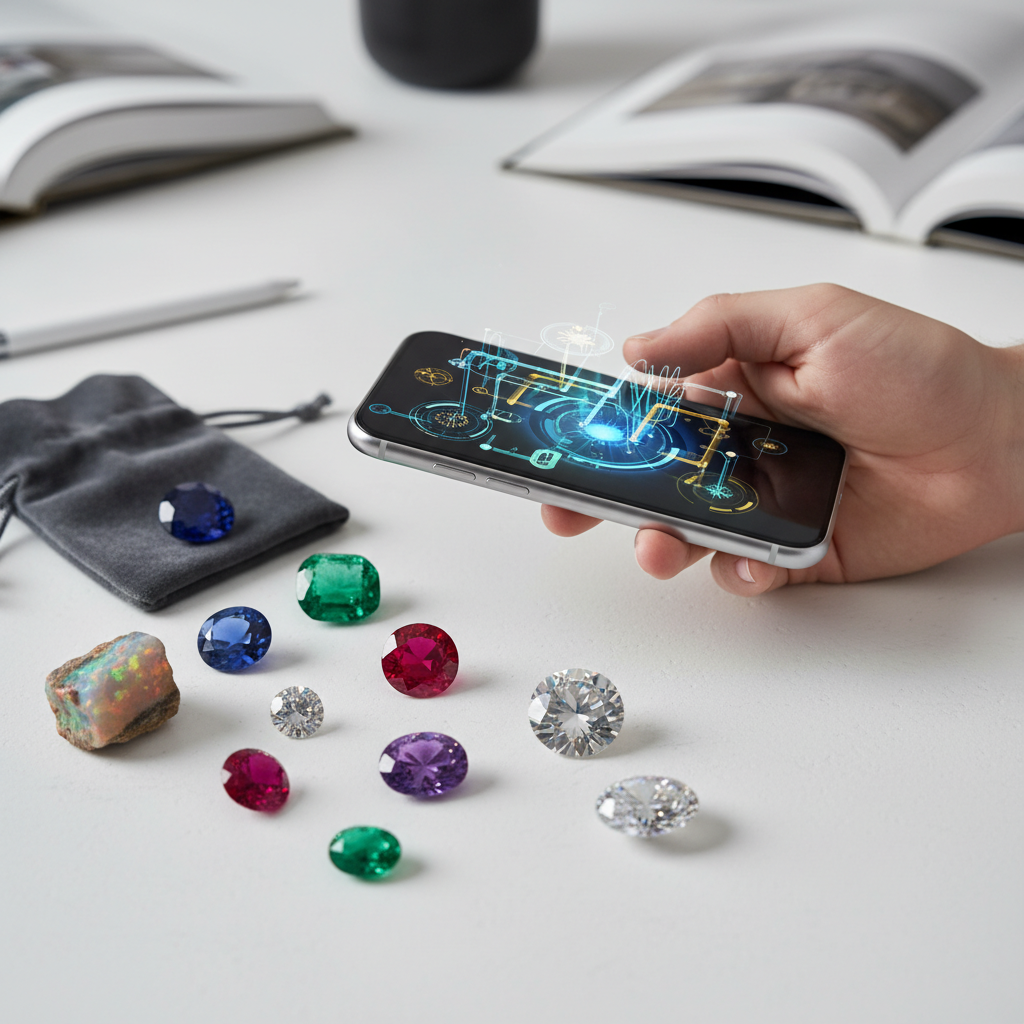
For collectors, hobbyists, and anyone who has ever stumbled upon a beautiful, mysterious stone, the question is a common one: can my smartphone tell me what this is? The answer is a resounding yes. Thanks to advancements in artificial intelligence and image recognition, a variety of mobile applications can now identify gemstones, minerals, and crystals with surprising accuracy, right from a simple photograph. These apps serve as powerful pocket guides, turning a casual curiosity into a rich learning experience.
Whether you're hiking a trail, browsing a flea market, or simply sorting through an old collection, these digital tools offer a convenient first step in the identification process. They leverage vast databases and sophisticated algorithms to analyze a stone's color, texture, and patterns, providing you with potential matches and a wealth of information in seconds. While they can't replace a professional gemologist, they are invaluable for on-the-spot identification and education.
Exploring Popular Gemstone Identification Apps
Several applications have emerged as leaders in the field of digital gem and rock identification. Each offers a unique set of features tailored to different users, from the casual rockhound to the serious crystal enthusiast. Here’s a look at some of the most popular options available.
1. Rock Identifier: Stone ID
Rock Identifier is one of the most comprehensive and widely used apps in this category. Its primary function is straightforward: you snap a clear photo of a rock, mineral, or gemstone, and the app’s AI-powered engine analyzes it almost instantly. It then provides a list of the most likely matches from its extensive database, which contains thousands of entries. The app doesn't just give you a name; it offers a detailed profile for each stone, including its geological characteristics, chemical formula, hardness, and common locations where it can be found.
Beyond simple identification, Rock Identifier serves as an educational hub. It allows users to create and manage their own digital collection, tracking their finds with photos and notes. The app also includes a wealth of articles and interactive content about geology, from the formation of igneous rocks to the properties of different crystal systems. While the app offers a robust free version, many of its advanced features and unlimited identifications are reserved for premium subscribers.
2. Gemstone Identifier: Crystal ID
As its name suggests, this app places a stronger emphasis specifically on gemstones and crystals, making it a favorite among collectors and enthusiasts of polished stones. The user interface is typically clean and intuitive, guiding you through the process of taking a high-quality photo for the best results. Once an image is submitted, the app cross-references it with a specialized database focused on gemological specimens, providing details on properties like luster, color variations, transparency, and Mohs hardness.
What sets Gemstone Identifier apart is its focus on the details that matter to gem lovers. It often includes information about a stone's historical significance, common uses in jewelry, and distinguishing features that help differentiate it from look-alikes. Some versions also have community features, allowing users to share their findings and get feedback from other enthusiasts. This makes it an excellent tool not just for identification, but for learning the finer points of gemology in a practical way.
3. Gemius: AI Gem & Crystal Guide
Gemius positions itself as a highly intelligent guide, leveraging advanced AI to provide accurate identifications for a wide range of specimens, including both rough and polished stones. Its strength lies in its sophisticated algorithm, which is trained to recognize subtle patterns, cleavage planes, and crystal structures that might be missed by less advanced apps. This makes it particularly useful for identifying stones that are not in their ideal, "textbook" form.
The information provided by Gemius is often presented in a highly scientific format, appealing to users with a deeper interest in the mineralogical aspects of their finds. You can expect detailed data on the stone's crystal system, chemical composition, refractive index, and specific gravity. The app aims to bridge the gap between a hobbyist tool and a professional reference, offering a level of detail that can be incredibly educational for anyone looking to move beyond surface-level identification.
4. Crystalize: Crystal Guide
Crystalize carves out a unique niche by blending geological identification with information about the metaphysical and healing properties associated with crystals. While it performs the standard function of identifying a stone from a photo, its true focus is on providing a holistic overview. After identifying a crystal like Amethyst or Rose Quartz, the app will provide the standard geological data alongside details about its purported use in wellness, meditation, and energy work.
This approach makes Crystalize particularly popular with a specific audience that is interested in crystals for more than just their scientific properties. The app often includes features like a searchable encyclopedia of crystals based on their spiritual attributes, chakras, or zodiac signs. For users who value this metaphysical context, Crystalize offers a more complete and engaging experience than apps that stick strictly to geology.
How Do Gemstone Identification Apps Actually Work?
The magic behind these apps isn't magic at all, but a sophisticated blend of technology. At their core, these applications rely on artificial intelligence, specifically machine learning and computer vision. The process begins when a developer feeds a machine learning algorithm a massive dataset containing tens of thousands, or even hundreds of thousands, of labeled images of rocks, minerals, and gemstones.
When you take a photo of your unknown stone, the app's algorithm gets to work. It breaks down the image into key data points, analyzing visual characteristics such as color, patterns, luster (how it reflects light), texture, and transparency. It may also try to identify the crystal's shape or habit if it's visible. This digital fingerprint of your stone is then rapidly compared against the vast library of images it was trained on.
By finding the closest statistical matches in its database, the app presents you with one or more potential identifications, often ranked by confidence level. The more high-quality, well-lit images the AI has been trained on, and the better your photograph, the more accurate the identification is likely to be. It's a powerful example of how AI can categorize complex visual information in the real world.
Answering Your Key Questions About Gem ID Apps
While these apps are incredibly useful, it's important for users to have realistic expectations. They are powerful tools, but they have inherent limitations. Understanding their capabilities and shortcomings will help you use them more effectively.
How Accurate Are Gemstone Identifier Apps?
The accuracy of gemstone identifier apps can be surprisingly high, especially for common specimens with distinct and recognizable features. For stones like amethyst, turquoise, malachite, or tiger's eye, which have unique colors and patterns, these apps often identify them correctly with a high degree of confidence. They excel when the subject is a good representation of the species and the photograph is clear and well-lit.
However, accuracy can decrease significantly with rarer stones, atypical color variations, or low-quality images. Factors like poor lighting, a blurry photo, or a dirty stone can confuse the algorithm. Furthermore, many different minerals can look remarkably similar. The app may provide a list of possibilities in such cases, but it should be considered a highly educated guess rather than a definitive statement. For casual identification, they are fantastic, but for anything requiring 100% certainty, they are only a starting point.
What Are the Limitations of Using an App?
The primary limitation of any identification app is that it can only analyze what it can see. Professional gemologists rely on a series of physical and optical tests that an app simply cannot perform. A gemologist uses tools to measure a stone's specific gravity (its density), its refractive index (how it bends light), and its hardness using the Mohs scale. These are definitive properties that help distinguish between stones that look identical to the naked eye.
For example, a red ruby and a red spinel can look virtually identical, but a gemologist can easily tell them apart using these tests. An app, relying only on a photo, would likely struggle to make that distinction. Similarly, these apps cannot reliably identify synthetic (lab-grown) stones or detect common treatments like heat or irradiation, which are crucial factors in a gem's identity and value.
Can These Apps Determine the Value of a Gemstone?
This is a critical point: no, these apps cannot and should not be used to determine the monetary value of a gemstone. While they can help identify a stone, appraisal is a far more complex process that goes well beyond simple identification. The value of a gemstone is determined by a combination of factors known as the "4 Cs": Carat (weight), Cut (the quality of the faceting), Clarity (the absence of internal flaws or inclusions), and Color (the specific hue, tone, and saturation).
An app has no way to assess a gem's internal clarity, judge the precision of its cut, or know its exact carat weight. It also cannot determine a gem's origin (a ruby from Burma is far more valuable than a similar one from Thailand) or whether it has been treated to enhance its appearance. Gemstone appraisal requires the trained eye and specialized equipment of a certified appraiser or gemologist.
The Final Word on Gemstone Identification Apps
So, is there an app that can identify gemstones? Absolutely. Mobile applications have opened up the world of gemology and geology to everyone, providing a powerful and educational tool that fits in your pocket. They are excellent for satisfying curiosity, helping hobbyists categorize their collections, and learning more about the beautiful stones found all around us.
However, it's essential to view them as a starting point, not a final authority. They are a supplement to, not a replacement for, professional expertise. For any stone of significant potential value or for identification that requires absolute certainty, the best course of action is always to consult a certified gemologist. Used with the right expectations, these apps can greatly enrich your appreciation for the fascinating world of gems and minerals.
For further reading and professional resources, you can visit: