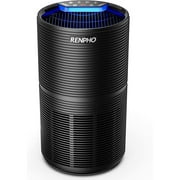
Don't Miss Out: Walmart's Big Discounts on Top Air Purifiers
If you've been waiting for the right moment to grab an air purifier, this is it. Walmart is clearing out several popular models, creating a perfect opportunity to snag one at a serious discount.
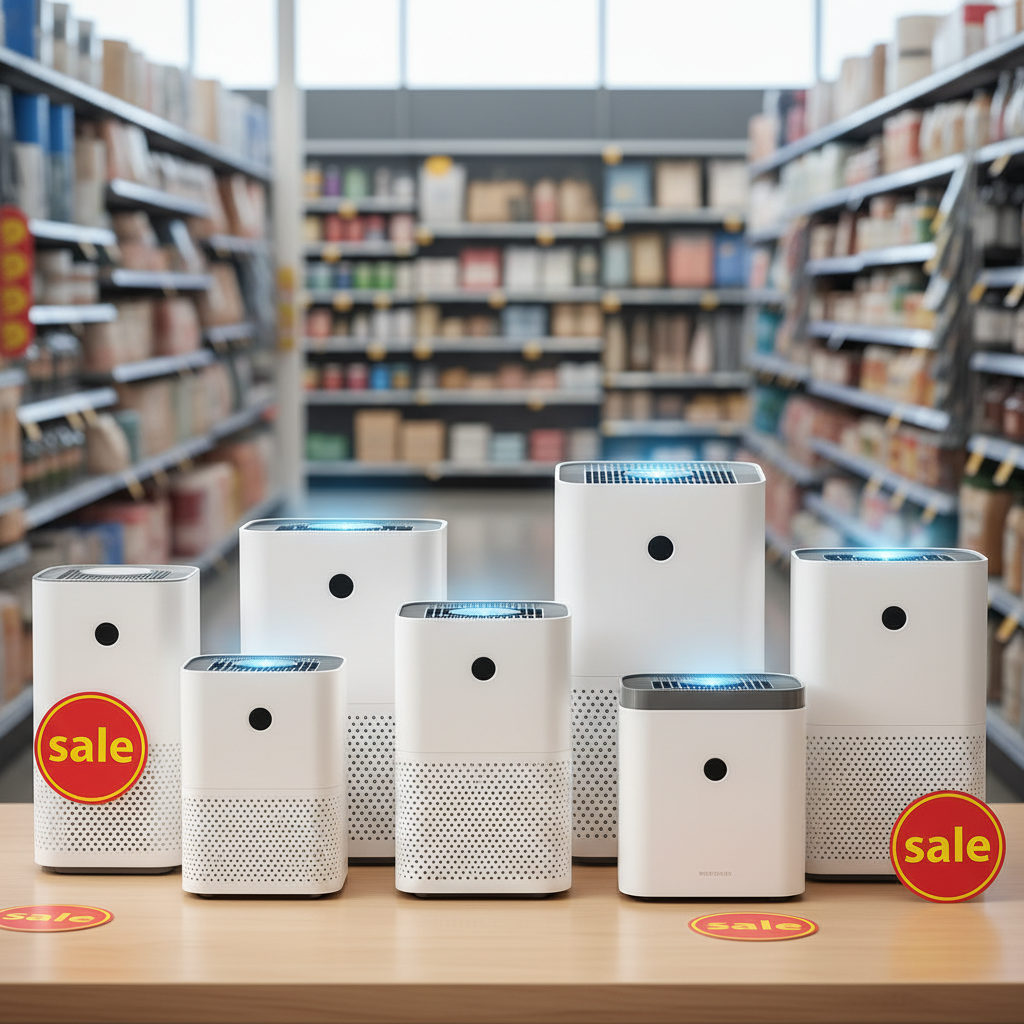
Finding a high-quality air purifier at a discount can significantly improve your home's air quality without breaking the bank. As retailers like Walmart clear out inventory to make way for new models, savvy shoppers can find excellent deals on devices designed to tackle dust, pollen, pet dander, and smoke. Understanding the features of these clearance models is key to choosing the right one for your specific needs, whether you're looking to purify a small bedroom or a large living area.
Below, we explore some of the top-rated air purifiers that are frequently spotted on clearance at Walmart. We'll break down their key features, ideal use cases, and what makes each one a compelling option when found at a reduced price.
Featured Air Purifiers on Clearance
1. Levoit Core 300S Smart True HEPA Air Purifier
The Levoit Core 300S is a popular choice for small to medium-sized rooms, often praised for its blend of powerful performance and smart technology. It features a three-stage filtration system that includes a pre-filter for large particles like hair and lint, a True HEPA filter that captures 99.97% of airborne particles as small as 0.3 microns, and an activated carbon filter that neutralizes household odors from pets, cooking, and smoke. This comprehensive approach makes it highly effective against a wide range of common indoor pollutants.
What sets the Core 300S apart, especially at a clearance price, is its smart functionality. It can be controlled via the VeSync app, allowing you to adjust settings, monitor air quality, and set schedules from your smartphone. It's also compatible with voice assistants like Amazon Alexa and Google Assistant for hands-free operation. Its ultra-quiet sleep mode, operating at a near-silent 22 decibels, makes it an excellent choice for bedrooms or nurseries where you need clean air without disruptive noise.
2. Honeywell HPA100 True HEPA Allergen Remover
Honeywell has long been a trusted name in home air quality, and the HPA100 model is a workhorse designed for effectiveness and simplicity. It’s specifically marketed toward allergy sufferers, boasting a True HEPA filter that captures up to 99.97% of microscopic allergens like pollen, pet dander, dust mites, and mold spores. The unit also includes an activated carbon pre-filter that helps reduce common household odors while capturing larger particles, which in turn helps extend the life of the main HEPA filter.
The HPA100 is ideal for small rooms up to 155 square feet, circulating the air up to 4.8 times per hour. Its control panel is straightforward and user-friendly, offering four cleaning levels (Germ, General Clean, Allergen, and Turbo), a filter change indicator, and a dimmer for the control panel lights. While it lacks the smart features of newer models, its proven performance and robust build make it a fantastic value when found on clearance.
3. Clorox Large Room True HEPA Air Purifier
For those needing to purify a larger space like a living room or open-concept area, the Clorox Large Room Air Purifier is a powerful contender. This unit is typically designed for rooms up to 320 square feet, providing a complete air change every 12.5 minutes. Its 360-degree filtration system pulls in air from all directions, ensuring more efficient cleaning. The filter combines True HEPA filtration with an activated carbon layer, making it effective at capturing both particulate matter and odors.
A key feature of the Clorox purifier is its real-time air quality sensor. An easy-to-read color-coded light indicates whether your air quality is good, moderate, or poor, and the auto mode will automatically adjust the fan speed to respond to changes in the environment. This "set it and forget it" functionality is perfect for busy households. Its larger capacity and smart sensing technology make it a premium choice that becomes much more accessible during a clearance sale.
4. Blueair Blue Pure 411i Max
The Blueair Blue Pure 411i Max is often sought after for its combination of sleek, minimalist Scandinavian design and highly efficient performance. It utilizes Blueair's proprietary HEPASilent™ technology, which combines electrostatic and mechanical filtration to capture 99.97% of airborne particles like allergens, mold, and viruses. This technology allows the purifier to use less dense filters, resulting in quieter operation and lower energy consumption without sacrificing performance.
This model is designed for small rooms and features a washable fabric pre-filter that comes in various colors to match your decor. It’s also a smart device, connecting to the Blueair app for remote control, scheduling, and air quality monitoring. The 411i Max includes an integrated particle sensor and an auto mode that adjusts performance based on real-time conditions. Its whisper-quiet operation and Energy Star certification for low power usage make it an eco-friendly and budget-conscious choice, especially when purchased at a discount.
Understanding the Technology Behind Modern Air Purifiers
To truly appreciate the value of a clearance deal, it helps to understand the core technologies that make these devices work. The most critical component in most high-quality air purifiers is the filter. The gold standard is the True HEPA (High-Efficiency Particulate Air) filter. This is a mechanical filter that works by forcing air through a fine mesh that traps tiny particles. To earn the "True HEPA" designation, a filter must be proven to remove at least 99.97% of airborne particles that are 0.3 microns in size—the size that is most difficult to trap.
Another crucial metric is the CADR (Clean Air Delivery Rate). This rating, measured by the Association of Home Appliance Manufacturers (AHAM), indicates how quickly the purifier can clean a room of a specific size. There are separate CADR ratings for three common pollutants: dust, pollen, and smoke. A higher CADR number means the unit can filter the air in a room more quickly and efficiently. When choosing a purifier, you should ensure its CADR is appropriate for your room's square footage.
Finally, many purifiers include an Activated Carbon Filter. Unlike HEPA filters that trap particles, activated carbon filters are designed to adsorb gases and odors. The carbon is treated with oxygen to open up millions of tiny pores between the carbon atoms. These pores create a massive surface area that traps volatile organic compounds (VOCs), smoke, cooking smells, and pet odors. A unit with both a True HEPA and an activated carbon filter offers the most comprehensive air cleaning solution.
Answering Common Questions About Air Purifiers
How Do I Choose the Right Size Air Purifier for My Room?
Choosing the correct size is arguably the most important factor for an air purifier to be effective. An undersized unit will struggle to clean the air, while an oversized one may be overkill. The key is to match the purifier's Clean Air Delivery Rate (CADR) to your room's square footage. A good rule of thumb is the "2/3 rule": the purifier's CADR rating (for smoke, which is the smallest particle and a good general indicator) should be at least two-thirds of your room's area in square feet. For example, for a 150-square-foot room, you would want a purifier with a CADR of at least 100.
Another important concept is Air Changes Per Hour (ACH). This tells you how many times the purifier can clean the entire volume of air in a room in one hour. For general use, 2-3 ACH is sufficient. However, for individuals with significant allergies or asthma, experts recommend a purifier that can achieve 4-5 ACH. Manufacturers often list the recommended room size based on a standard 8-foot ceiling and a specific ACH, so always check the product specifications to ensure it meets your needs.
What's the Difference Between a HEPA Filter and an Air Ionizer?
While both aim to clean the air, HEPA filters and ionizers use fundamentally different methods. A HEPA filter is a physical barrier. It's a dense, paper-like filter that traps particles as air is forced through it. It physically removes contaminants from the air circulating through the device. This is a proven, reliable method for capturing dust, pollen, dander, and other particulates without producing any byproducts.
An ionizer, on the other hand, works by emitting a cloud of negatively charged ions into the air. These ions attach to airborne particles like dust and pollen, giving them a charge. The charged particles are then attracted to surfaces in the room (like walls, furniture, and floors) or to a collection plate within the device, effectively removing them from the air you breathe. A significant concern with some ionizers is that they can produce small amounts of ozone, a lung irritant, as a byproduct. For this reason, many experts recommend choosing purifiers that rely on mechanical filtration like HEPA filters.
How Often Do I Need to Replace Air Purifier Filters?
Filter replacement is a crucial part of maintaining your air purifier's effectiveness and is an ongoing cost to consider. The replacement schedule varies widely depending on the type of filter, the specific model, how often you run the unit, and the level of pollution in your home. Most purifiers have multiple filters, each with a different lifespan.
Generally, washable pre-filters should be cleaned every 30 days. Activated carbon filters, which absorb odors, typically need to be replaced every 3 to 6 months as they become saturated. The main True HEPA filter usually has the longest lifespan, often lasting anywhere from 12 to 24 months. Many modern air purifiers come with a filter change indicator light that takes the guesswork out of maintenance, illuminating when a specific filter needs to be replaced.
Final Thoughts on Finding the Right Air Purifier Deal
Clearance events at stores like Walmart present a perfect opportunity to invest in your home's air quality. By focusing on reputable brands and understanding the core features—like True HEPA filtration, appropriate CADR ratings, and odor-reducing carbon filters—you can find a device that offers powerful performance at a fraction of its original cost. Whether you need a smart purifier for your bedroom or a robust unit for your main living space, keeping an eye out for these deals can lead to a healthier home environment.