Effective and Realistic Methods for Minimizing Acne Scars
If you’re looking for the fastest way to get rid of acne scars, you've come to the right place. The key is understanding the difference between powerful at-home ingredients and the professional treatments that deliver more significant results in less time.
What Is The Fastest Way To Get Rid Of Acne Scars?
Dealing with acne is frustrating enough, but the scars it can leave behind often feel like a permanent reminder. If you're looking for the quickest way to achieve smoother, more even-toned skin, the answer almost always lies in professional dermatological treatments. While over-the-counter products can help with mild discoloration, they lack the power to address the textural changes that define true scarring. The fastest methods work by either removing damaged layers of skin or stimulating the body's natural healing process to build new collagen.
It's crucial to understand that "fast" is a relative term when it comes to skin remodeling. Most effective treatments require a series of sessions spaced several weeks apart, followed by a healing period where your skin works to repair itself. However, compared to the years it might take for scars to fade slightly on their own (if at all), these procedures offer remarkably accelerated and more dramatic results. Consulting with a board-certified dermatologist is the essential first step to determine which approach is right for your specific scar type, skin tone, and goals.
Professional Treatments for Rapid Results
When speed and efficacy are the primary goals, in-office procedures performed by a qualified professional are unparalleled. These treatments are designed to deliver targeted, powerful results that you simply cannot replicate at home.
1. Laser Resurfacing (Ablative and Non-Ablative)
Laser resurfacing is often considered the gold standard for treating acne scars, particularly for widespread textural issues. This technology uses focused beams of light to create controlled damage to the skin, prompting a powerful healing response. There are two main categories of lasers used for this purpose: ablative and non-ablative. Ablative lasers, such as the CO2 or Erbium laser, are more aggressive. They work by vaporizing the outer layers of damaged skin, effectively removing the scarred surface and revealing smoother, newer skin underneath. This process also intensely heats the deeper layers, stimulating significant collagen production for long-term skin tightening and remodeling.
Non-ablative lasers, like Fraxel or Clear + Brilliant, are a gentler alternative. Instead of removing the skin's surface, they heat the underlying tissue without damaging the top layer. This heat kickstarts collagen synthesis, gradually improving the skin's texture and tone from within. While the downtime is significantly less with non-ablative lasers, they typically require more treatment sessions to achieve results comparable to a single ablative treatment. The best choice depends on the severity of the scarring, your skin type, and your tolerance for downtime.
2. Chemical Peels
Chemical peels involve applying a chemical solution to the skin, which causes it to exfoliate and eventually peel off. This process removes the damaged outer layers, allowing new, regenerated skin to emerge that is often smoother and less irregular in appearance. Peels come in various strengths, categorized as superficial, medium, and deep. For noticeable acne scars, medium to deep peels are generally required. Medium-depth peels, often using Trichloroacetic Acid (TCA), can effectively treat shallower atrophic scars and post-inflammatory hyperpigmentation.
Deep peels, typically using phenol, penetrate much further into the skin and can produce dramatic results for more severe scarring. However, they also come with a much longer and more intense recovery period and are not suitable for all skin tones due to the risk of pigmentation changes. A dermatologist can assess your scars and recommend the appropriate peel depth. While not as targeted as lasers, chemical peels are an excellent and often more affordable option for improving overall skin texture and tone quickly.
3. Microneedling (Collagen Induction Therapy)
Microneedling, also known as collagen induction therapy, is a minimally invasive procedure that has gained immense popularity for its effectiveness in treating atrophic acne scars. The treatment uses a device equipped with fine, sterile needles to create thousands of tiny micro-injuries in the skin. These controlled punctures trigger the body's natural wound-healing cascade, which involves the production of new collagen and elastin—the essential proteins that give skin its structure and elasticity. As the skin heals, this new collagen helps to fill in and plump up depressed scars, making them less noticeable.
For enhanced results, microneedling is often combined with Platelet-Rich Plasma (PRP) or radiofrequency energy. In PRP therapy, a sample of your own blood is processed to concentrate the platelets, which are rich in growth factors, and then applied to the skin during the procedure to supercharge the healing process. Radiofrequency microneedling devices deliver heat energy through the needles, further amplifying collagen stimulation. A series of 3 to 6 sessions is typically recommended for the best outcome.
4. Dermal Fillers
For certain types of depressed or "atrophic" scars, such as rolling or some boxcar scars, dermal fillers offer an immediate and noticeable improvement. This procedure involves injecting a substance, most commonly hyaluronic acid, directly beneath the scar. The filler works by physically lifting the indented scar tissue, bringing it level with the surrounding skin surface. The result is an instant smoothing effect, making it one of the absolute fastest ways to see a change.
It's important to note that this is a temporary solution. Most hyaluronic acid fillers last between 6 and 18 months before the body naturally absorbs them, at which point the treatment would need to be repeated to maintain the results. However, some studies suggest that the act of injection itself, along with the presence of the filler, can stimulate some long-term collagen production. For individuals with a few prominent indented scars, fillers are an excellent option for a quick fix before a major event or as part of a larger treatment plan.
5. Subcision
Subcision is a minor surgical technique specifically designed to treat rolling scars and other depressed scars that are "tethered" down by fibrous bands of tissue. These bands pull the surface of the skin downward, creating the indentation. During a subcision procedure, a dermatologist inserts a special hypodermic needle horizontally into the skin beneath the scar. The needle is then used to carefully break up and sever these fibrous bands that are anchoring the scar down.
By releasing the scar tissue, the skin's surface is freed, allowing it to rise and become level with the surrounding area. The procedure also creates a wound under the skin, which triggers the production of new collagen as it heals, further helping to fill the space where the tethered bands once were. Subcision is often combined with other treatments like laser resurfacing or fillers to achieve the best possible cosmetic outcome.
Understanding the Enemy: What Are Acne Scars?
Before seeking treatment, it's helpful to understand what acne scars are and how they form. A scar is the result of the skin's attempt to heal itself after an injury. In the case of acne, this injury is caused by an inflamed lesion, such as a papule, pustule, or cyst. When a pore becomes engorged with excess oil, dead skin cells, and bacteria, the follicle wall can break. If the rupture is deep within the dermis, the infected material can spill out into the surrounding tissue, causing further damage.
The body responds by producing new collagen fibers to repair this damage. However, this healing process is rarely perfect. If the body produces too little collagen, the result is a depressed or atrophic scar (like ice pick, boxcar, or rolling scars). If it produces too much collagen in its attempt to heal, it can lead to a raised or hypertrophic scar. Understanding the type of scar you have is critical because different types respond best to different treatments.
Exploring Your Options and Setting Expectations
Navigating the world of scar treatments can be overwhelming. Beyond the main professional procedures, many people have questions about other options and what to realistically expect from the treatment journey.
Can Topical Treatments and Home Remedies Really Work?
Topical treatments can play a supportive role, but they are not a fast track to eliminating textural scars. Ingredients like prescription-strength retinoids (e.g., tretinoin) can help speed up cell turnover and stimulate a modest amount of collagen production over many months, which can slightly improve the appearance of very shallow scars. Other ingredients like Vitamin C and alpha-hydroxy acids (AHAs) are excellent for fading the dark spots (post-inflammatory hyperpigmentation) often left behind after acne, but they have minimal effect on the actual texture of a scar.
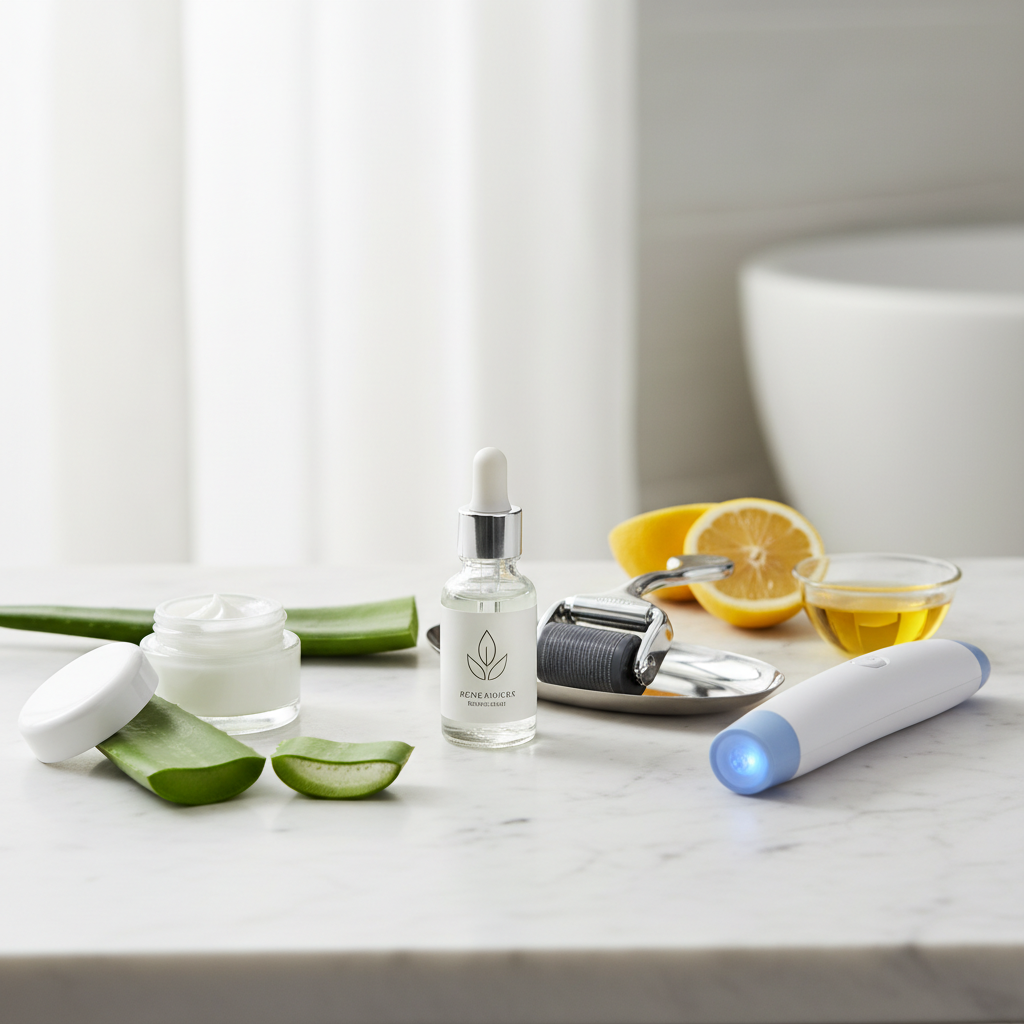
As for home remedies, it's best to be cautious. Many popular DIY solutions, such as applying pure lemon juice or baking soda scrubs, are highly irritating and can damage your skin's protective barrier, potentially worsening inflammation and pigmentation. While some natural ingredients may have soothing properties, they lack the potency to remodel collagen and repair indented scars. For true textural changes, relying on proven, professional treatments is the only effective path.
What Is the Difference Between Acne Scars and Dark Spots (PIH)?
This is one of the most common points of confusion. Post-Inflammatory Hyperpigmentation (PIH) appears as flat red, purple, or brown spots where a pimple used to be. PIH is not a true scar; it is a problem of pigmentation, not texture. It occurs when inflammation from the acne lesion triggers an overproduction of melanin (the pigment that gives skin its color). The good news is that PIH is not permanent and will typically fade on its own over several months to a year, a process that can be sped up with topical treatments like retinoids, vitamin C, and azelaic acid, as well as consistent use of sunscreen.
True acne scars, on the other hand, involve a change in the skin's texture. They are either indented (atrophic) or raised (hypertrophic) because of an abnormal amount of collagen being produced during the healing process. Unlike PIH, true scars are permanent unless treated with professional procedures that can physically alter the skin's structure. It's crucial to identify which you have, as the treatment for a dark spot is entirely different from the treatment for an indented scar.
How Long Does It Really Take to See Results?
Setting realistic expectations is key to a successful treatment journey. While professional procedures are the "fastest" way, results are not instantaneous. With treatments like laser resurfacing or deep chemical peels, you will have an initial recovery period of one to two weeks, followed by several months where the skin continues to heal and produce new collagen. The final results may not be fully visible for 3 to 6 months after the procedure.
For treatments that require multiple sessions, like microneedling or non-ablative lasers, you will typically see gradual improvement after each appointment. Most treatment plans involve sessions spaced 4 to 6 weeks apart, so a full course can take several months to complete. While fillers offer an immediate visual improvement, the other modalities work by harnessing your body’s own healing mechanisms, and that process simply takes time. The key is to be patient and consistent with the plan laid out by your dermatologist.
Final Thoughts on Treating Acne Scars
The fastest and most effective ways to get rid of acne scars are undoubtedly professional, in-office treatments. Procedures like laser resurfacing, chemical peels, and microneedling offer significant, lasting improvements by remodeling the skin's fundamental structure. The best approach for you will depend entirely on your specific type of scarring, your skin tone, and your personal goals.
The most important step you can take is to schedule a consultation with a board-certified dermatologist. They can accurately diagnose your scar types and create a customized treatment plan that is both safe and effective for your skin. Remember, patience is a virtue, and preventing new scars by effectively managing active acne is just as important as treating existing ones.