Effective Methods Hotels Use to Keep Glass Shower Doors Spotless
Ever wonder how hotels achieve that perfectly clear, streak-free shine on their glass shower doors? It's not just one secret product, but a specific combination of professional-grade cleaners and proven techniques that battle everything from soap scum to hard water stains.
The Professional Cleaning Arsenal: A Look at Hotel-Grade Solutions
The crystal-clear, spot-free glass shower doors in a hotel room are the result of a specific strategy that combines powerful cleaning agents with efficient techniques. Housekeeping staff are trained to tackle the two main culprits of dirty shower doors—soap scum and hard water stains—quickly and effectively. Unlike typical home cleaning, hotels rely on commercial-grade products and proven methods to maintain a high standard of cleanliness for every new guest. This professional approach can be broken down into the key products and tools they use.
1. Commercial-Grade, Non-Ammoniated Glass Cleaners
While you might reach for a standard blue window cleaner at home, hotels often opt for professional-strength, non-ammoniated glass cleaners. These formulas are specifically designed to be used in enclosed spaces like bathrooms where ventilation can be limited. Ammonia can be harsh and produce strong fumes, which is not ideal in a hospitality setting. Commercial cleaners are highly concentrated, allowing them to cut through grime, fingerprints, and water spots with minimal effort, leaving behind a streak-free shine that is crucial for guest satisfaction.
These products often contain solvents like glycol ethers that help dissolve residues and evaporate quickly, preventing streaks from forming. They are the final touch in the cleaning process, used after the heavier-duty work of removing soap scum and mineral deposits is complete. The goal is a perfectly transparent finish that makes the entire bathroom feel cleaner and more spacious. Using a professional squeegee in conjunction with this type of cleaner is the secret to that flawless, untouched look.
2. Heavy-Duty Acidic Cleaners for Limescale
Hard water is a significant challenge in many regions, leaving behind stubborn mineral deposits (limescale) that appear as chalky, white stains on glass. To combat this, hotel housekeeping departments use acidic cleaners formulated to dissolve calcium and magnesium buildup. These products typically contain mild acids like phosphoric acid or sulfamic acid, which are powerful enough to break down mineral stains without etching or damaging the glass itself when used correctly.
These cleaners are considered heavy-duty and are a critical part of a deep-cleaning routine. Staff are trained to apply the solution, let it dwell for several minutes to allow the chemical reaction to occur, and then scrub gently with a non-abrasive pad. Proper safety precautions, including wearing gloves and ensuring good ventilation, are mandatory when using these potent formulas. This step is what restores the glass to its original clarity, erasing any signs of hard water damage.
3. Alkaline Cleaners for Soap Scum
Soap scum is the other primary adversary. It's a grimy film composed of soap residue, body oils, and minerals. While acidic cleaners work on mineral deposits, alkaline (or high pH) cleaners are needed to break down these organic compounds and fatty acids. Commercial-grade alkaline bathroom cleaners are highly effective at saponifying the fats in soap scum, essentially turning the greasy mess into a soluble substance that can be easily wiped and rinsed away.
Hotels use these powerful degreasers to ensure every trace of residue is removed. A thorough application followed by a light scrub and a complete rinse with hot water is usually all it takes to lift the scum from the glass surface. By using both acidic and alkaline cleaners (at different times, never mixed), hotel staff can tackle the full spectrum of bathroom grime, ensuring the shower doors are not just clear but hygienically clean.
4. The Essential Tools of the Trade
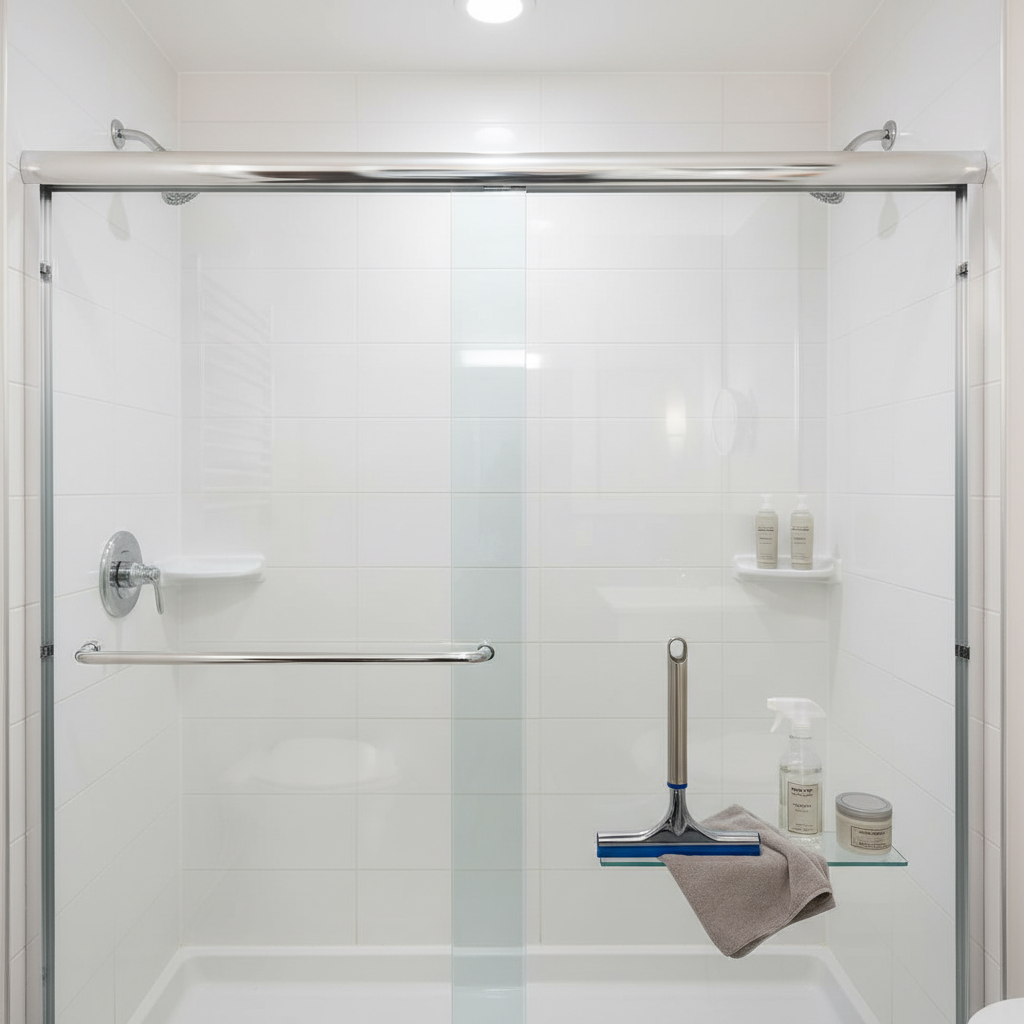
The right chemicals are only half the battle; the tools used by housekeeping staff are just as important for achieving a professional result. The most critical tool is a high-quality professional squeegee. Unlike cheaper models, these have a firm, sharp rubber blade that removes every drop of water and cleaner, which is the key to preventing streaks. Staff are trained to use an "S" pattern or a simple top-to-bottom pull with a slight overlap to achieve a perfect finish.
Alongside the squeegee, microfiber cloths are a must-have. They are used for applying cleaners, wiping down frames, and for a final polish. Their unique fiber structure traps dirt and absorbs moisture without leaving behind lint. For stubborn spots, non-abrasive scrubbing pads (often white or blue to signify their gentle nature) are used to agitate soap scum and mineral deposits without scratching the delicate glass surface. These three tools—squeegee, microfiber cloth, and non-abrasive pad—form the core of the physical cleaning arsenal.