Effective Solutions for a Broken Car Key Remote: What You Need to Know
A broken car key remote is more than just an inconvenience; it can completely disrupt your day. Before you panic or head straight to the dealership, it's important to know that you have several options.
Immediate Steps to Take When Your Key Fob Stops Working
The moment you realize your car key remote isn’t working can be incredibly frustrating. Whether you're locked out of your car or unable to start it, panic is a common first reaction. However, before you assume the worst, there are a few immediate and logical steps you can take to diagnose and potentially solve the problem right away.
Step 1: Use the Physical Key
This might sound obvious, but it's the most overlooked solution in a moment of stress. Nearly every modern car key fob, including smart keys for push-to-start vehicles, contains a hidden physical key. Look for a small release button or latch on the side of the fob. Pressing this will allow you to slide out a traditional metal key blade. You can use this key to manually unlock your driver's side door.
If you have a push-to-start ignition, this physical key won't start the engine, but it will get you inside the vehicle where you can safely assess the situation. Getting into your car is the most important first step, preventing you from being stranded and allowing you to try other troubleshooting methods in a secure environment.
Step 2: Check for Simple Fixes
Once you're inside, take a moment to consider the simplest explanations. Is it possible there's signal interference? Heavy-duty radio transmitters, certain types of commercial lighting, or even being parked directly under power lines can sometimes disrupt the signal between your fob and your car. Try walking a few feet away from your initial position and attempting to use the remote again.
Another simple check is to try your spare key fob if you have one readily available. If the spare key works perfectly, you've successfully isolated the problem to your primary remote. This immediately tells you that the issue is not with the car's receiver or electrical system, but with the fob itself, which significantly narrows down the potential causes.
Step 3: Assess the Type of Damage
Take a close look at the key fob. Is there any visible damage? Perhaps you dropped it recently, and the plastic casing is cracked. Are the rubber buttons worn through or completely missing? Did it accidentally go through a wash cycle or get dropped in a puddle? Physical and water damage are common culprits for a malfunctioning remote.
If there's no visible damage, the most likely issue is internal. This could range from a dead battery to a desynchronized programmer or a fried circuit board. Identifying whether the problem is external (broken case) or likely internal (dead battery) will guide your next steps for troubleshooting and repair.
Troubleshooting Common Car Key Remote Issues
After taking the initial steps, you can dive deeper into diagnosing the specific problem. Most key fob failures fall into one of a few common categories, many of which can be fixed without a trip to the dealership.
Problem: The Battery is Dead
This is, by far, the most common reason a car key remote stops working. The small coin-cell batteries inside have a finite lifespan, typically lasting between two and four years. Signs of a dying battery include a reduced signal range (you have to be closer to the car for it to work) or needing to press buttons multiple times.
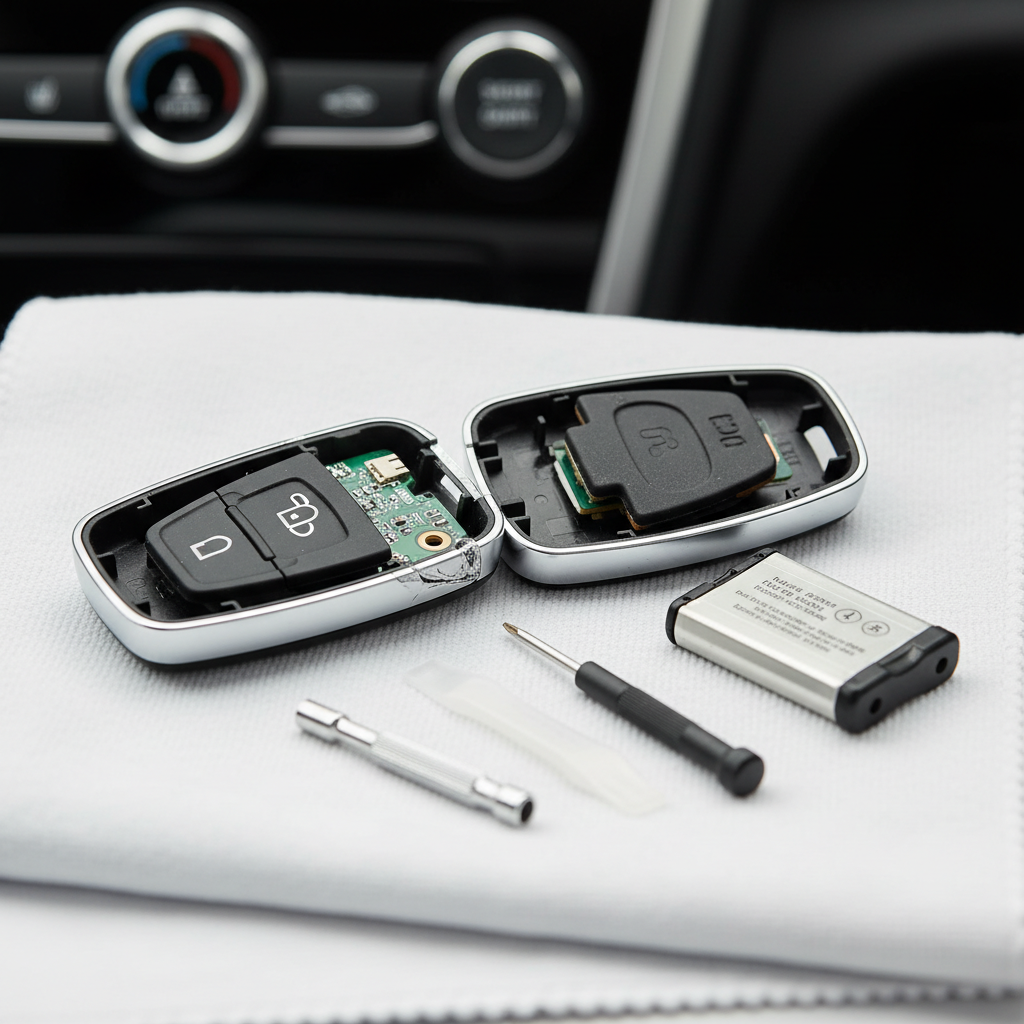
Replacing the battery is a simple DIY task. You can usually pry the fob's casing apart with a small flathead screwdriver or even a coin. Inside, you'll find a circular battery, most commonly a CR2032, CR2025, or CR1620. The battery type is always printed on the battery itself. You can find replacements at most grocery stores, pharmacies, or online for just a few dollars. Carefully pop the old one out and insert the new one, ensuring the positive (+) and negative (-) sides are correctly aligned. Snap the casing back together, and in most cases, your remote will work immediately.
Problem: The Remote Needs Reprogramming
Sometimes, a key fob can lose its synchronization with your vehicle. This can happen after a battery change, if the fob is dropped, or sometimes for no apparent reason at all. When this occurs, the fob is still transmitting a signal, but the car no longer recognizes it as a valid command.
For some older vehicle models, you can find DIY reprogramming instructions online, which often involve a specific sequence of turning the ignition on and off while pressing buttons on the remote. However, for most modern cars, reprogramming requires specialized diagnostic equipment. An automotive locksmith or a dealership will be able to resync your existing key to your vehicle in a matter of minutes.
Problem: Physical Damage to the Casing or Buttons
Years of being pressed, dropped, and jostled in a pocket can take a toll on the plastic shell and rubber buttons of a key fob. If the case is cracked or the buttons are so worn that you can't properly press the internal contacts, the remote will fail to work. The good news is that the internal electronics might still be perfectly fine.
You can often purchase an empty replacement shell or "case" online for your specific make and model. This is a very cost-effective solution. The process involves carefully opening your old, broken fob, transferring the internal circuit board and battery to the new shell, and snapping it shut. As long as the electronics weren't damaged, this will make your key fob look and function like new again.
Problem: Internal Circuitry Failure
This is the most serious type of key fob failure. It can be caused by significant water damage, a major impact from a fall, or simply an electronic component failing over time. If you've replaced the battery and tried reprogramming with no success, and there’s evidence of water ingress (corrosion on the circuit board) or a broken component, the fob is likely beyond repair.
In this scenario, a complete replacement is almost always necessary. The internal transponder chip and circuit board are highly specific to the vehicle, and repairing them is often more expensive and less reliable than simply getting a new unit programmed for your car.
Your Options for Repair or Replacement
When a simple fix doesn't work, you'll need to decide where to go for a repair or replacement. Your choice will depend on your budget, urgency, and the type of key you have.
Option 1: Automotive Dealership
Going to the dealership that represents your car's brand is the most straightforward, albeit usually the most expensive, option. They will provide you with an Original Equipment Manufacturer (OEM) key fob that is guaranteed to be compatible with your vehicle. The technicians have the exact equipment and codes needed for programming.
- Pros: Guaranteed compatibility, OEM quality, work is typically warrantied.
- Cons: Highest cost, may require an appointment and leaving your car for several hours.
Option 2: Automotive Locksmith
A certified automotive locksmith is often a more convenient and affordable alternative to the dealership. Many locksmiths offer mobile services, meaning they can come to your location to cut and program a new key on the spot. They have access to both OEM and high-quality aftermarket fobs, giving you more options.
- Pros: Generally cheaper than a dealer, mobile service is convenient, faster turnaround time.
- Cons: Quality of aftermarket parts can vary, ensure the locksmith is reputable and certified.
Option 3: DIY Replacement
For those who are tech-savvy and willing to take on a project, a DIY replacement is the cheapest route. You can order an uncut key and an unprogrammed fob online. However, this path is complex. You will still need a locksmith or dealer to cut the physical key blade and program the remote's transponder to your car's immobilizer system. While you save money on the hardware, you still have to pay for the programming service.
- Pros: Lowest cost for the physical key fob.
- Cons: High risk of buying the wrong or a low-quality part, still requires professional programming, no warranty.
The Evolution of Car Keys: From Metal Blades to Smart Fobs
The device in your pocket is the result of decades of automotive security evolution. Originally, a car key was just a simple piece of metal cut to match a specific lock cylinder, offering minimal security. Anyone with a similar key or basic lock-picking skills could gain access. The first major leap forward came in the 1990s with the introduction of the transponder key.
A transponder key contains a tiny microchip inside its plastic head. When the key is inserted into the ignition, the car's computer sends out a low-frequency radio signal. The transponder chip is energized by this signal and replies with a unique alphanumeric code. If the code matches the one stored in the car's immobilizer unit, the engine is allowed to start. This technology drastically reduced car theft, as simply copying the metal key's cuts was no longer enough to steal the vehicle.
Building on that foundation, automakers then integrated remote functions for locking and unlocking doors into the key head, creating the first key fobs. The final step in this evolution is the modern smart key or keyless entry fob. This device allows for passive entry—you can unlock the doors just by touching the handle as long as the fob is nearby—and push-button start. These advanced fobs use more complex, encrypted rolling codes to communicate with the car, making them incredibly secure but also more complex and expensive to replace when they break.
Frequently Asked Questions About Car Key Remotes
Even after solving your immediate problem, you may have other questions. Here are answers to some of the most common queries about car key fobs.
Can you reprogram a used car key fob?
The answer is generally no, but with some exceptions. Most modern key fobs are designed with a security feature that "locks" them to the Vehicle Identification Number (VIN) of the first car they are programmed to. This prevents a thief from grabbing a random fob and reprogramming it to steal a car. Once a fob is locked to a VIN, it usually cannot be wiped and reprogrammed for a different vehicle.
There are some specialized services and aftermarket fobs that claim to be "unlocked" or reprogrammable, but this is not the norm. If you buy a used key fob online from a site like eBay, there is a very high probability that a dealership or locksmith will be unable to program it for your car. It's often safer and ultimately cheaper to buy a new, unprogrammed remote that is guaranteed to be compatible.
How much does it typically cost to replace a car key remote?
The cost of replacing a car key remote varies dramatically based on the type of key and where you get it replaced. A basic remote without an integrated transponder chip might cost between $50 and $150. A standard transponder key with remote lock/unlock functions typically falls in the $100 to $300 range.
The most expensive are the modern smart keys for vehicles with keyless entry and push-to-start ignitions. These can cost anywhere from $250 to over $600, especially for luxury brands. These prices usually include the cost of the fob itself and the labor for programming. An automotive locksmith is often 20-40% cheaper than a dealership for the same service.
Can I still start my car if the key fob battery is dead?
Yes, absolutely. Automotive engineers have designed backup methods for this exact scenario. First, as mentioned earlier, you can use the hidden physical key to get inside your car. Once inside, you need a way to start the engine. Since the dead fob can't transmit its code to the push-to-start button, you have to use a short-range reader.
Most cars have a designated spot to place the dead fob that allows the car's immobilizer to read the transponder chip directly. Common locations include the steering column, a specific slot in the center console, or inside the glove box. Check your vehicle's owner's manual to find the exact location. By placing the dead fob in this spot, you can then press the start button, and the engine should turn on.
Final Thoughts on Handling a Broken Key Fob
A broken car key remote can disrupt your day, but it doesn't have to be a catastrophe. By staying calm and following a logical troubleshooting process, you can often identify the problem yourself. Always start with the simplest solution: checking the physical key and replacing the battery. If those steps don't work, assess the damage to determine if you need a simple case replacement or a more complex reprogramming service.
When professional help is needed, remember that you have options. While a dealership offers guaranteed OEM quality, an automotive locksmith can often provide a faster, more affordable, and equally effective solution. Understanding the type of key you have and the potential costs involved will empower you to make the best decision for your situation.