Effective Ways to Safeguard Your Home from Intruders
Securing your home against intruders is a top priority, and you’ve come to the right place for straightforward, effective solutions.
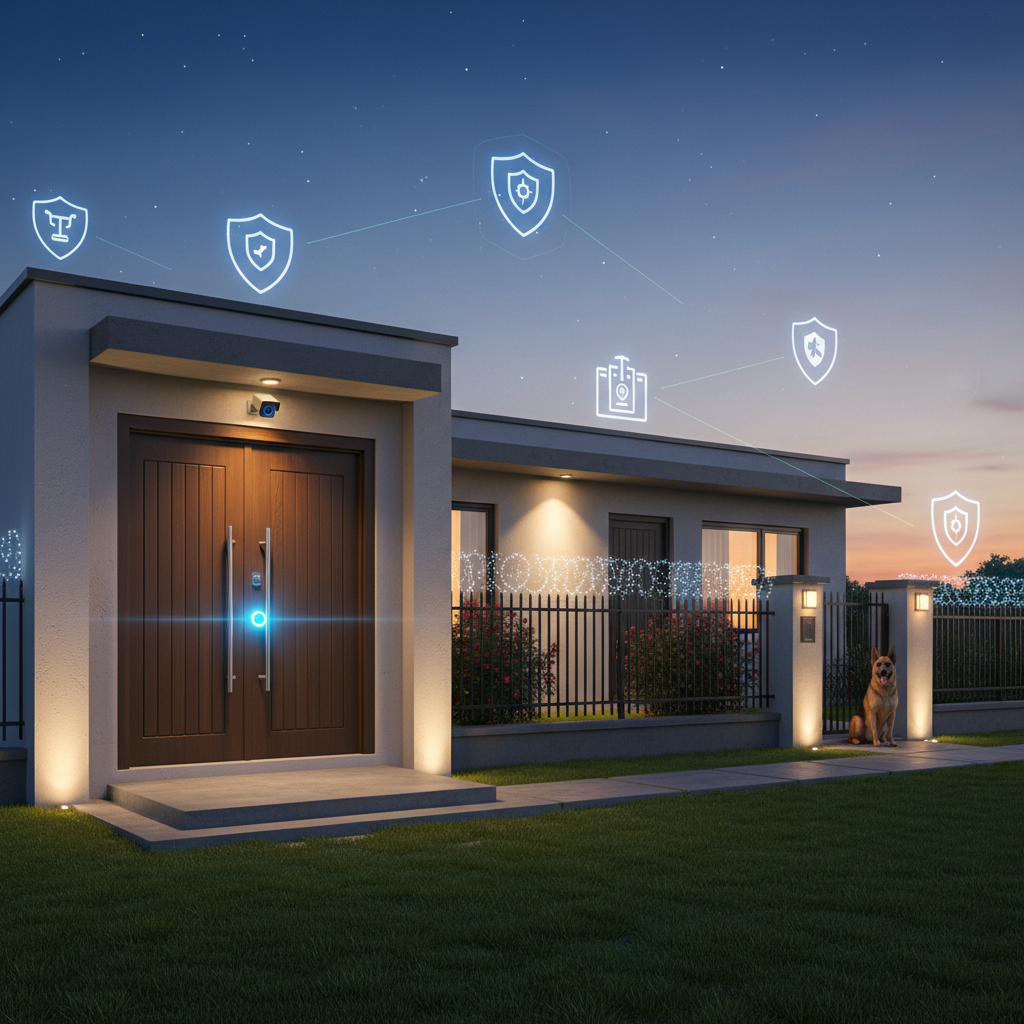
How To Protect Your Home From Intruders
1. Secure All Doors and Windows
Your home's primary points of entry are also its most vulnerable. Start by reinforcing your doors. The main entry doors should be made of solid core wood, metal, or fiberglass and equipped with a high-quality deadbolt lock with a throw bolt of at least one inch. Many intruders gain entry by kicking in doors, so reinforcing the door frame and hinges is just as crucial. You can install a heavy-duty strike plate with longer screws that go deep into the wall stud, not just the flimsy door jamb. For sliding glass doors, a security bar placed in the track is a simple yet highly effective deterrent. Don't forget the door leading from an attached garage into your home; it should be as secure as any exterior door.
Windows are another common target. Ensure all windows have working locks, and use them consistently. For added protection on the ground floor, consider installing secondary blocking devices like window wedges or Charley bars. You can also apply a security film to the glass. This transparent film holds the glass in place even if it's shattered, making it significantly harder for an intruder to create an opening and enter quickly. This delay can be enough to deter them or give you time to react.
2. Install a Comprehensive Security System
A modern home security system is one of the most powerful deterrents available. The mere presence of visible cameras or a sign from a security company can persuade many potential burglars to move on to an easier target. These systems come in two primary types: professionally monitored and self-monitored. A professionally monitored system will automatically contact a central station when an alarm is triggered, and they will then dispatch emergency services. A self-monitored system will send an alert directly to your smartphone, putting the responsibility on you to contact the police.
A complete system typically includes several key components. Door and window sensors trigger an alarm when a point of entry is breached. Motion detectors can cover larger areas like living rooms or hallways, detecting movement when the system is armed. Glass break sensors listen for the specific frequency of shattering glass. Pairing these sensors with security cameras, especially those with night vision and two-way audio, provides a comprehensive shield for your property, allowing you to both detect and document any unauthorized activity.
3. Leverage Smart Home Technology
The rise of smart home technology has revolutionized home security, making it more accessible and integrated than ever before. A video doorbell is an excellent starting point, as it allows you to see and speak to anyone at your front door from your smartphone, whether you're at home or away. Many potential intruders will ring the doorbell first to see if anyone is home; being able to answer remotely creates the impression of occupancy and can scare them off.
Beyond the doorbell, smart locks allow you to lock and unlock your doors remotely and grant temporary access to guests without sharing a physical key. Smart lighting is another powerful tool. You can program lights to turn on and off at random intervals, simulating activity within the house even when you're on vacation. Integrating these devices allows them to work in concert—for example, you can have your lights turn on automatically when your video doorbell detects motion, further startling a potential intruder.
4. Illuminate Your Property Adequately
Intruders thrive in darkness, as it provides cover for them to approach your home undetected. A well-lit exterior is a simple and effective security measure. Walk around your property at night to identify any dark spots, particularly near doors, windows, and the garage. These are the areas that need illumination the most. Motion-activated floodlights are an excellent choice for these key areas. The sudden burst of light is often enough to startle a would-be burglar and send them running, while also alerting you or your neighbors to the activity.
In addition to motion-activated lights, consider using low-voltage landscape lighting along walkways and near shrubbery. This not only enhances your home's curb appeal but also eliminates potential hiding spots. Solar-powered options are easy to install and cost-effective. The goal is to create an environment where an intruder would feel exposed and visible from the street and from neighboring homes.
5. Reinforce Your Garage Security
Garages are a frequently overlooked weak point in home security. Intruders often target them because they may contain valuable tools and provide a covered, hidden entry point into the main house. Start by securing the garage door itself. Keep the garage door opener remote out of sight in your car, or better yet, use a keychain remote you take with you. Never leave a remote clipped to the visor of a car parked in the driveway. Consider installing a smart garage door opener that alerts you whenever the door is opened and allows you to control it remotely.
If your garage is attached, the interior door leading into your home is a critical security layer. This door should be treated like any exterior door—it needs to be a solid-core door with a quality deadbolt. Many homeowners forget to lock this door, giving an intruder who breaches the garage free access to the rest of the house. Also, cover any windows on your garage door to prevent people from peering inside to see if you have expensive tools, bikes, or cars.
6. Use Landscaping for Security
Your yard and landscaping can either help or hinder your security efforts. Strategic planting can create a natural barrier around your home. Planting dense, thorny bushes like barberry, holly, or roses beneath ground-floor windows can make them very unappealing entry points. No one wants to crawl through a prickly hedge to break into a home. This concept, known as "defensive planting," is a low-cost, effective deterrent.
Conversely, overgrown landscaping can provide perfect hiding places for intruders. Keep trees and shrubs trimmed, especially around windows and doors. Large bushes can offer cover for someone trying to pry open a window, and low-hanging tree branches can provide access to second-story windows or balconies. Maintaining a clear line of sight from the street to your front door and windows makes your home a less attractive target, as there's nowhere for a potential intruder to hide while they attempt to gain entry.
7. Don't Advertise Your Absence
One of the biggest signals to a burglar is a home that is obviously unoccupied. When you go on vacation, take steps to make your home look lived-in. Use smart plugs or automatic timers to have lights, a radio, or a television turn on and off at various times throughout the evening. Ask a trusted neighbor or friend to collect your mail, newspapers, and any packages that are delivered, as an overflowing mailbox is a dead giveaway that no one is home.
In the age of social media, it's also wise to be cautious about what you share. Avoid posting real-time updates about your vacation plans or announcing that you're away from home. Wait until you return to share photos and stories from your trip. Burglars have been known to monitor social media feeds to identify empty homes, so broadcasting your absence can make your property a prime target.
Understanding Intruder Psychology: How Burglars Choose a Target
To effectively protect your home, it helps to think like a burglar. Most residential burglars are not master criminals; they are opportunists looking for the path of least resistance. Their primary goal is to get in and out quickly with valuable items without being seen or confronted. They conduct a subconscious risk-versus-reward analysis when selecting a target. A home that appears difficult, risky, or time-consuming to enter will often be passed over for an easier one down the street.
Several factors make a home attractive to an intruder. They look for signs of vacancy, such as piled-up mail, an overgrown lawn, or complete darkness at night. They scan for easy access points, like unlocked windows, weak doors, or an open garage. They also assess the potential for being seen. A house with poor lighting, tall hedges blocking the view from the street, or a lack of visible security measures like cameras presents a much lower risk. Understanding this mindset clarifies why the security measures discussed—from installing deadbolts to trimming shrubs—are so effective. Each step you take adds a layer of difficulty and risk, making your home a less appealing target.
Common Questions About Home Protection
What Should You Do If You Suspect a Break-In Is in Progress?
Your personal safety is the absolute highest priority. If you arrive home and see a broken window, a forced door, or any other sign of a break-in, do not go inside. The intruder could still be in the house, and confronting them could be dangerous. Your belongings are not worth risking your life.
The correct course of action is to immediately retreat to a safe location, such as a neighbor's house or even your car parked down the street. Once you are safe, call 911 immediately. Provide the dispatcher with your address and calmly explain what you saw and why you believe someone is in your home. Let law enforcement handle the situation. Do not re-enter your home until the police have arrived and declared it clear.
Are 'Beware of Dog' Signs Actually Effective?
The effectiveness of a "Beware of Dog" sign is a topic of debate. On one hand, it can be a significant deterrent. Most burglars want to avoid any kind of complication, and a potentially loud, aggressive dog is a major one. The sound of barking can draw unwanted attention from neighbors and make a stealthy entry impossible. For this reason, many opportunistic intruders will simply skip a house that advertises a dog.
However, the sign can also have unintended consequences. To a more determined or experienced criminal, it might signal that the homeowners are relying solely on the dog for security and may not have a modern alarm system. It also tells them what to expect, allowing them to potentially come prepared with distractions like food. While a real, barking dog is an excellent deterrent, the sign by itself has mixed results. Combining the presence of a dog with other security layers like an alarm system offers the most robust protection.
How Important is Securing Second-Story Windows?
While the vast majority of break-ins occur on the ground floor, second-story windows should not be ignored. Intruders can be surprisingly resourceful and will use any available means to find a weak point. An accessible second-story window can be reached using a variety of methods.
Ladders left unsecured in the yard are a common tool for burglars. They might also use sturdy trees, trellises, or drainpipes located near a window to climb up. In some cases, a lower roof over a porch or garage can provide a convenient platform to access upstairs windows. For this reason, it's crucial to ensure all windows, regardless of their floor, are kept locked when not in use. You don't necessarily need bars on them, but ensuring the factory locks are engaged is a simple, no-cost step that closes a potential security gap.
A Layered Approach to Home Security
Protecting your home from intruders is not about finding a single, magic solution. Instead, the most effective strategy involves creating multiple layers of security. Each layer—from a strong deadbolt and a well-lit yard to a modern alarm system and an alert neighborhood—works together to make your home a more difficult and less appealing target. By combining physical security, electronic surveillance, and smart, preventative habits, you can build a comprehensive defense that provides peace of mind and significantly reduces your risk of a break-in.
For more information on crime prevention strategies, you can visit the National Crime Prevention Council or review resources from the Bureau of Justice Statistics.