Enhancing Senior Mobility: The Best Home Gym Equipment for Safe Exercise
If you're searching for the best home gym equipment to improve mobility and support healthy aging, you've come to the right place. Maintaining strength, balance, and flexibility is crucial for staying active and independent.
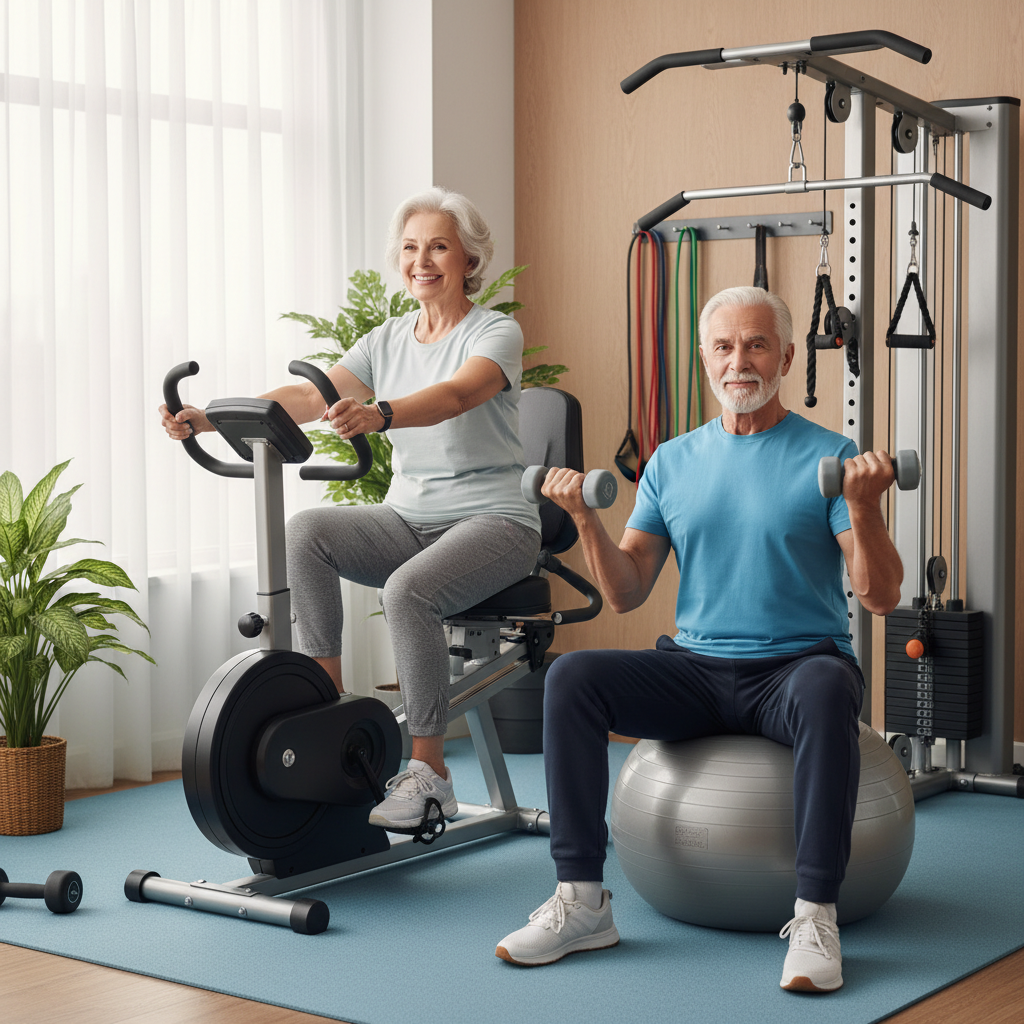
Essential Equipment for Enhancing Mobility at Home
Maintaining mobility is a cornerstone of healthy aging, directly impacting independence and quality of life. The ability to move freely and without pain allows for participation in daily activities, from walking up the stairs to reaching for items in a cupboard. Creating a safe and effective home gym environment doesn't require large, expensive machinery. Instead, focusing on a few key pieces of equipment can provide a comprehensive toolkit for improving strength, balance, and flexibility.
1. Resistance Bands
Resistance bands are perhaps one of the most versatile and senior-friendly pieces of exercise equipment available. These simple elastic bands come in various resistance levels, typically color-coded from light to heavy, allowing users to start gently and progressively increase the challenge as their strength improves. They are incredibly low-impact, meaning they place minimal stress on the joints, which is a critical consideration for older adults who may be dealing with arthritis or other joint sensitivities. Bands can be used for a wide range of exercises that target every major muscle group.
For mobility, resistance bands are exceptional for strengthening the muscles that support key joints like the hips, shoulders, and knees. Exercises like seated leg presses, rows, and shoulder external rotations can be performed easily from a chair. This helps improve the functional strength needed for everyday tasks, enhancing the body's ability to move through a full and controlled range of motion. Their portability and low cost make them an accessible starting point for any home fitness routine.
2. Stability Balls
A stability ball, also known as an exercise or physio ball, is an excellent tool for improving core strength and balance—two essential components of overall mobility. The unstable surface of the ball requires the user to constantly engage their core muscles to maintain balance, even when performing simple movements. Simply sitting on the ball instead of a chair for short periods can help activate and strengthen the deep stabilizing muscles of the abdomen and lower back, which are fundamental for posture and preventing falls.
Beyond core work, a stability ball can be used to support the body during stretches, allowing for a greater and more controlled range of motion. For example, lying with your back over the ball provides a gentle stretch for the chest and shoulders. It can also be used for supported exercises like wall squats, where the ball is placed between the lower back and a wall, reducing strain on the knees while still effectively strengthening the leg muscles.
3. Light Dumbbells or Ankle/Wrist Weights
While heavy weightlifting is not the goal, incorporating light resistance is crucial for combating age-related muscle loss (sarcopenia). Strong muscles provide better support for joints, which in turn improves stability and mobility. Light dumbbells, typically ranging from 1 to 5 pounds, are perfect for seated or standing exercises like bicep curls, overhead presses, and lateral raises. These movements help maintain upper body strength for lifting groceries, carrying grandchildren, or pushing open a heavy door.
Ankle and wrist weights offer another way to add gentle, continuous resistance to movements. Wearing ankle weights during leg lifts can help strengthen the hip flexors and quadriceps, muscles vital for walking and climbing stairs. The key is to start with the lightest weight possible to ensure proper form and avoid straining the joints. This gradual addition of resistance helps build functional strength that directly translates to easier, more confident movement in daily life.
4. Recumbent Exercise Bike
For cardiovascular health that also supports lower body mobility, a recumbent exercise bike is an outstanding choice for seniors. Unlike traditional upright bikes, a recumbent bike features a wider, chair-like seat with full back support. This design reduces stress on the lower back, hips, and knees, making it a comfortable and safe option for those with joint pain or balance concerns. The cycling motion helps to lubricate the knee and hip joints while strengthening the surrounding muscles without high impact.
Regular use of a recumbent bike improves blood circulation, stamina, and leg strength. The smooth, repetitive motion is excellent for maintaining and even increasing the range of motion in the lower body. Users can easily control the resistance and speed, allowing for a workout that is perfectly tailored to their fitness level. It provides an effective way to stay active and mobile, even on days when weather or other factors prevent outdoor walks.
5. Treadmill with Full-Length Handrails
Walking is one of the best exercises for overall health, but safety can be a concern for many seniors. A treadmill equipped with sturdy, full-length handrails provides a secure environment for walking at home. These handrails offer crucial support for balance, reducing the fear and risk of falling. This allows the user to focus on their gait and endurance, building confidence along with physical strength.
Using a treadmill helps improve cardiovascular fitness, strengthens leg muscles, and enhances endurance for daily activities. The ability to control the speed and incline allows for a highly customized workout. Starting with a slow, flat walk and gradually increasing the pace or incline can significantly improve lower body mobility and overall stamina. The controlled, predictable surface is often safer than uneven sidewalks or paths outdoors.
6. Stretching Strap
Flexibility is a critical component of mobility, and a stretching strap can make it much easier to achieve. These non-elastic straps, often with loops for your hands or feet, help you hold stretches for longer and reach deeper into the stretch in a controlled manner. For seniors who may have difficulty reaching their toes or pulling their leg into a quadriceps stretch, a strap acts as an extension of their arms.
Using a strap for hamstring, calf, and shoulder stretches can help release muscle tightness that often restricts joint movement. For example, lying on your back and using the strap to gently pull your leg toward you provides a safe and effective hamstring stretch, which can alleviate lower back tension and improve walking gait. Regular, gentle stretching with a strap helps maintain and restore the flexibility necessary for a full range of motion.
7. Foam Roller
Muscle tightness and knots can significantly impede mobility by restricting how far a joint can move. A foam roller is a tool used for self-myofascial release, which is essentially a form of self-massage. By slowly rolling over different muscle groups, you can help break up adhesions and release tension, improving flexibility and reducing soreness. Softer, low-density foam rollers are generally recommended for beginners and older adults.
Focusing on areas like the upper back, quadriceps (front of the thighs), and calves can provide immense relief. For instance, rolling the upper back can help counteract the slouched posture that often develops with age, opening up the chest and improving shoulder mobility. While it can be slightly uncomfortable at first, consistent use of a foam roller can lead to significant improvements in how your muscles feel and how your body moves.