Essential Ladles to Elevate Your Kitchen in 2026
It might seem like a simple tool, but the right ladle can make a world of difference in your kitchen. From serving the perfect bowl of soup to mess-free pouring, the design is everything.
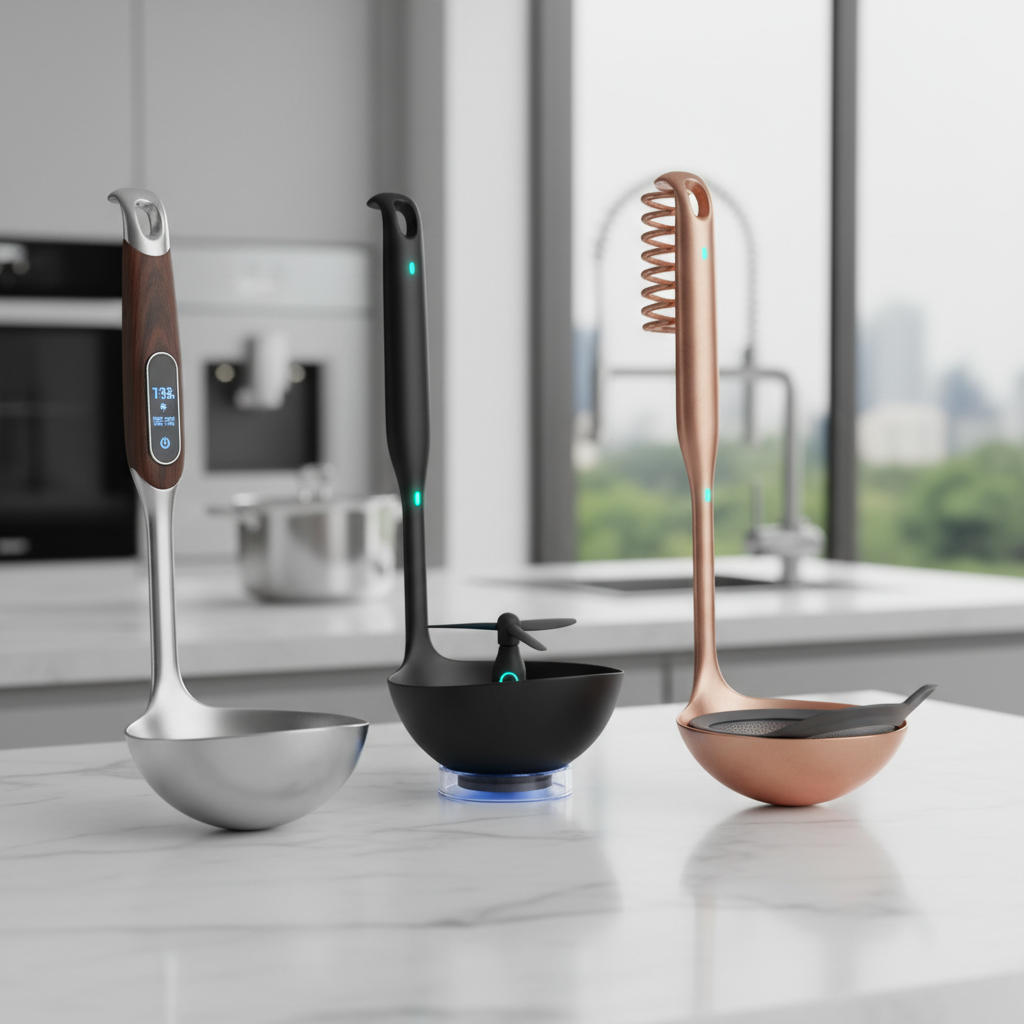
Must-Have Ladles For Your Kitchen In 2026
The ladle is one of the most fundamental tools in any kitchen, yet its importance is often overlooked. More than just a simple scoop, the right ladle can make serving soups, stews, sauces, and gravies effortless and clean. As kitchenware technology and design evolve, the variety of ladles available has expanded to meet specific culinary needs. Having a well-rounded collection ensures you are prepared for any task, from delicately drizzling a sauce to serving a hearty chili. Here are the must-have ladles to consider for a well-equipped kitchen in 2026.
1. The Classic Stainless Steel Soup Ladle
When you picture a ladle, the classic stainless steel soup ladle is likely what comes to mind. This is the workhorse of the kitchen, renowned for its durability, longevity, and non-reactive properties. Made from high-quality stainless steel, it won't rust, stain, or absorb odors and flavors from your food. This makes it a perfect choice for serving anything from acidic tomato-based soups to rich, savory beef stews. Its deep, rounded bowl is designed to scoop and serve generous portions of liquid-heavy dishes with minimal spilling.
Look for a model with a comfortable, long handle that provides a secure grip and keeps your hands safely away from the heat of the pot. Many modern designs feature a hooked or curved end, allowing you to rest the ladle on the rim of the pot without it sliding in. Because of its robust construction, a stainless steel ladle can last for decades, making it a sustainable and cost-effective investment for any home cook. Its sleek, professional appearance also fits seamlessly into any kitchen aesthetic.
2. The Silicone Ladle for Non-Stick Cookware
The rise of non-stick pots and pans has made the silicone ladle an indispensable kitchen tool. Using a metal utensil on a non-stick surface can easily cause scratches, permanently damaging the coating and rendering it less effective. A silicone ladle solves this problem entirely. The material is soft and flexible, allowing you to scrape the bottom and corners of your pot to get every last drop of soup or sauce without fear of damaging your valuable cookware.
Beyond protecting your pans, silicone offers several other key benefits. It is highly heat-resistant, often able to withstand temperatures up to 500°F (260°C), so you don't have to worry about it melting if you accidentally leave it resting in a hot pot. Silicone is also non-porous, meaning it won't harbor bacteria or absorb strong smells from foods like garlic or curry. Cleaning is a breeze, as most silicone ladles are dishwasher-safe and food particles don't cling to the smooth surface.
3. The Perforated or Slotted Ladle
A perforated or slotted ladle, sometimes called a skimmer, is a specialized tool designed for separating solids from liquids. Its bowl is filled with small holes or slots that allow broths, water, or oil to drain away, leaving only the solid food items behind. This makes it incredibly useful for a variety of tasks, such as lifting poached eggs from water, retrieving blanched vegetables from a pot, or skimming foam and fat from the surface of stocks and soups.
This type of ladle is a game-changer when making clear broths or consommé, as it allows for the precise removal of impurities that can cloud the final product. It's also perfect for serving dishes where you want to control the amount of liquid on the plate, like a chunky stew or fruit cocktail. While it may not be used as frequently as a standard soup ladle, its unique function makes it a must-have for cooks who enjoy making stocks from scratch or often prepare poached or boiled foods.
4. The Angled Sauce Ladle
Precision is key when it comes to saucing a dish, and the angled sauce ladle is designed specifically for this purpose. Unlike a traditional soup ladle with a deep, symmetrical bowl, a sauce ladle typically has a smaller, shallower bowl with a pointed spout on one side. The handle is often angled to provide better control and maneuverability, allowing you to pour sauces with accuracy and grace. This design prevents messy drips and allows you to create elegant presentations on the plate.
This tool is invaluable for drizzling pan sauces over a steak, nappaging a piece of fish with a delicate beurre blanc, or even pouring a perfect pool of crème anglaise for dessert. Its smaller capacity ensures you don't accidentally overload the dish with sauce. While a regular spoon can suffice in a pinch, the dedicated design of an angled sauce ladle provides a level of control that elevates your plating from home-style to restaurant-quality, making it a worthy addition for anyone who takes pride in their food presentation.
5. The Nylon Ladle for Everyday Use
Similar to silicone, a nylon ladle is another excellent option for use with non-stick cookware. Nylon is a durable, lightweight, and affordable material that is gentle on sensitive surfaces. While it may not have the same high heat resistance as premium silicone, a quality nylon ladle is more than capable of handling the temperatures of typical stovetop cooking. This makes it a fantastic, budget-friendly choice for everyday tasks like serving chili, scooping pancake batter, or dishing out macaroni and cheese.
Nylon ladles are often sold in sets with other utensils and come in a wide variety of colors, allowing you to coordinate them with your kitchen decor. They are easy to clean and generally dishwasher-safe. Due to their lightweight nature, they are comfortable to handle for extended periods. For cooks who need a reliable, no-fuss ladle that can be used for a wide range of daily cooking without the risk of scratching pans, the nylon ladle is an excellent and practical choice.
The Evolution of the Humble Ladle
The ladle is one of humanity's oldest culinary tools, with its origins tracing back to prehistoric times. Early versions were far from the polished steel and silicone instruments we know today. The first ladles were likely made from natural objects that had a convenient cup shape, such as hollowed-out gourds, large seashells, or carved pieces of wood. The primary function was simple: to transfer liquids, whether it was water from a stream, a communal stew from a fire pit, or a medicinal broth.
As civilizations advanced and metallurgy was developed, ladles began to be crafted from bronze, iron, and later, silver and pewter for the wealthy. The design remained fundamentally the same—a long handle attached to a deep bowl—but the materials reflected the technology and status of the era. The Industrial Revolution brought about mass production, making metal kitchenware, including stainless steel ladles, accessible to the general public. In the 20th and 21st centuries, the focus shifted toward material innovation and specialization. The invention of plastics, nylon, and silicone introduced new properties like heat resistance and non-scratch surfaces, leading to the diverse range of specialized ladles we see today, each tailored for a specific purpose in the modern kitchen.
Understanding Ladle Materials and Care
What's the best material for a kitchen ladle?
The "best" material for a ladle truly depends on your cookware and cooking habits. There is no single answer that fits every kitchen. For durability and versatility with stainless steel or cast iron pots, nothing beats stainless steel. It is non-reactive, dishwasher-safe, and will last a lifetime. However, it should never be used on non-stick surfaces.
For those who primarily use non-stick pots and pans, silicone is the premium choice. It has a very high heat resistance, is completely non-scratch, and won't absorb odors or flavors. Nylon is a more budget-friendly alternative to silicone for non-stick cookware; it is also non-scratch but typically has a lower heat tolerance. Finally, wooden ladles offer a traditional, aesthetic appeal and are also safe for non-stick pans. However, they require more maintenance—they must be hand-washed and oiled periodically to prevent them from drying out and cracking.
How do you properly clean and maintain your ladles?
Proper cleaning and maintenance will significantly extend the life of your ladles. For stainless steel, silicone, and nylon ladles, cleaning is straightforward. Most are dishwasher-safe, but washing by hand with warm, soapy water is always a gentle and effective option. For stubborn food residue on a stainless steel ladle, you can use a non-abrasive scrubber. For silicone and nylon, avoid abrasive cleaners or steel wool, as they can damage the surface.
Wooden ladles require special care. They should never be soaked in water or put in the dishwasher, as this can cause the wood to swell, warp, and crack. Wash them by hand with mild soap and warm water immediately after use, and dry them thoroughly with a towel. To keep the wood from drying out, it's a good practice to periodically rub it with a food-grade mineral oil. This will preserve its finish and prevent it from absorbing strong flavors or stains.
What is the difference between a ladle and a serving spoon?
While both are used for serving, a ladle and a serving spoon are designed for very different purposes, distinguished primarily by their shape and function. A ladle is characterized by its deep, cup-like bowl and a long handle that is often set at a steep angle to the bowl. This design is optimized for scooping and serving liquids, such as soups, stews, and sauces, from a deep pot with minimal spillage.
A serving spoon, on the other hand, has a much shallower, more oval-shaped bowl and a handle that is less angled. Its design is better suited for lifting and serving solid or semi-solid foods, such as roasted vegetables, casseroles, or potato salad. While you could technically serve soup with a large spoon, its shallow bowl would make the process inefficient and messy. Conversely, trying to serve roasted potatoes with a deep ladle would be awkward. Each tool is specifically engineered to perform its primary task effectively.
Conclusion
Choosing the right ladle can significantly enhance your cooking and serving experience. While a single, all-purpose ladle might get you by, building a small collection of specialized ladles ensures you are always equipped for the task at hand. From the robust and durable stainless steel soup ladle to the gentle and protective silicone model, each type offers unique benefits. By understanding the different materials and designs available, you can outfit your kitchen with the tools you need to serve every meal with ease and precision, making your time in the kitchen more efficient and enjoyable.
For further reading on kitchen tools and culinary techniques, you can explore resources like: