Everything You Need to Know About Using Indoor Bike Trainers for Effective Weight Loss
An indoor bike trainer can be a fantastic tool for weight loss, but knowing where to start can be tricky. In this guide, we’ll break down the crucial differences between trainer types, from simple wheel-on models to immersive smart trainers.
Understanding the Main Types of Indoor Bike Trainers
When considering an indoor bike trainer for weight loss, it's essential to understand the different types available. Each category offers a unique experience, price point, and set of features that can influence the effectiveness and enjoyment of your workouts. The right choice depends on your budget, your existing bike, and your long-term fitness goals. Let's explore the primary options on the market.
1. Wheel-On Trainers
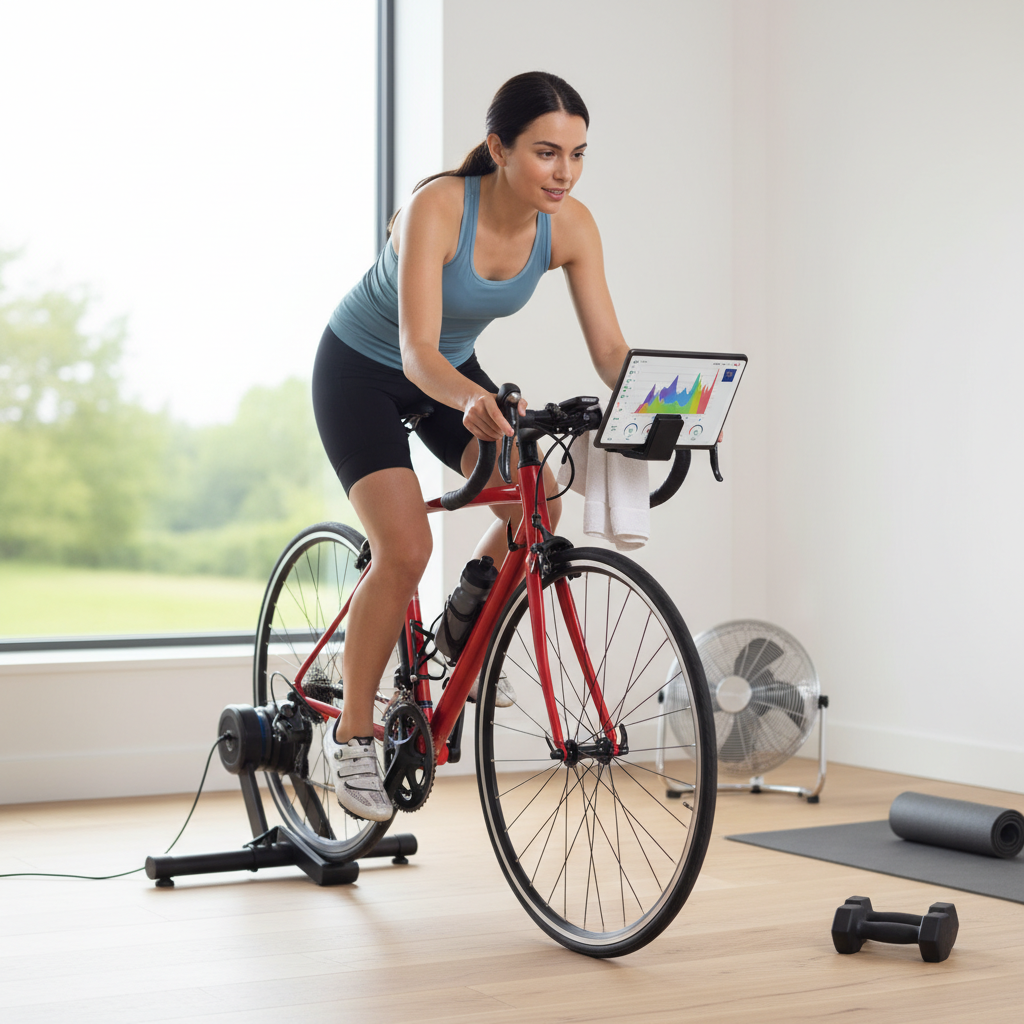
Wheel-on trainers are often the entry point for many cyclists looking to bring their riding indoors. The mechanism is straightforward: you attach your complete bicycle to the trainer frame, and a roller presses against your rear tire to create resistance. This resistance can be generated through various means, most commonly magnetic or fluid-based systems. Magnetic trainers use adjustable magnets to control the difficulty, while fluid trainers contain an impeller spinning in viscous fluid, which naturally increases resistance as you pedal faster, providing a more road-like feel.
For weight loss, wheel-on trainers are a highly accessible option. They are generally the most affordable and easiest to store. However, they do have some drawbacks. The contact between the roller and your tire can cause wear over time, and it's often recommended to use a specific, hard-compound "trainer tire" to mitigate this. They can also be noisier than other types and may require periodic calibration to ensure accurate power readings if you're using a "smart" version that connects to training apps.
2. Direct-Drive Trainers
Direct-drive trainers represent a significant step up in performance, accuracy, and user experience. With this setup, you remove the rear wheel from your bicycle and mount the bike's frame directly onto the trainer, where a pre-installed cassette is located. Your chain engages with this cassette, just as it would with your wheel. This direct connection eliminates the tire-to-roller interface, which immediately resolves issues of tire wear, slippage, and the noise associated with wheel-on models. The result is a much quieter and smoother ride.
From a weight-loss perspective, direct-drive trainers offer superior benefits. They typically feature heavier flywheels, which create a more realistic road feel and inertia, making long workouts more engaging. More importantly, nearly all direct-drive trainers are "smart," meaning they contain built-in power meters that provide highly accurate data on your effort. This data is crucial for structured workouts designed for weight loss, allowing you to train in specific heart rate or power zones to maximize calorie burn and fat metabolism. The precise resistance control also enables seamless integration with apps like Zwift or TrainerRoad, which can automatically adjust the difficulty during a workout.
3. Full Smart Bikes
A full smart bike is an all-in-one, dedicated indoor cycling machine. It is not a trainer that you attach your outdoor bike to; it is the entire bike itself. These machines are engineered from the ground up for indoor use, offering maximum stability, adjustability, and a whisper-quiet riding experience, often using belt-drives instead of chains. They are highly adjustable to replicate the exact fit of your outdoor bike, and multiple users in a household can easily change the settings to fit their own proportions.
For someone purely focused on weight loss and fitness without the interest in outdoor cycling, a smart bike can be an excellent investment. They are the quietest option available, making them ideal for apartment living or early morning workouts. They incorporate all the benefits of a direct-drive smart trainer, including precise power measurement and automatic resistance control. Many also include extra features like built-in fans, gear shifters that mimic real-world groupsets, and even mechanisms that simulate gradients by tilting the bike up and down. The main considerations are their higher cost and larger physical footprint, as they cannot be easily folded away and stored.
The Science Behind Cycling for Calorie Burn
Using an indoor bike trainer is an incredibly effective tool for weight loss because it taps directly into the principles of cardiovascular exercise and energy expenditure. At its core, weight loss occurs when you burn more calories than you consume, creating a caloric deficit. Indoor cycling provides a controlled, low-impact, and highly efficient way to burn a significant number of calories in a relatively short amount of time.
The number of calories burned during a session is influenced by factors like intensity, duration, and your own body weight. A 155-pound individual, for example, can burn over 600 calories in an hour of vigorous cycling. The controlled environment of an indoor trainer allows you to precisely manage this intensity. You can follow structured workouts that target specific heart rate zones. For instance, moderate-intensity rides in "Zone 2" are excellent for building an aerobic base and primarily use fat for fuel, making them ideal for longer fat-burning sessions. On the other hand, high-intensity interval training (HIIT) involves short bursts of maximum effort followed by recovery periods, which can elevate your metabolism for hours after the workout is over, a phenomenon known as the afterburn effect or EPOC (excess post-exercise oxygen consumption).
Furthermore, because cycling is a low-impact activity, it puts minimal stress on your joints—knees, hips, and ankles. This makes it a sustainable form of exercise for people of all fitness levels, including those who are overweight or recovering from injuries. The ability to exercise consistently without risking joint pain is a critical factor in achieving long-term weight loss success.
Related Topics and Common Questions
As you begin your indoor cycling journey for weight loss, several other questions are likely to come to mind. Addressing these can help you create a more effective and enjoyable training environment.
What Kind of Workouts Are Most Effective for Weight Loss?
Variety is key when it comes to workout effectiveness. Relying on a single type of ride can lead to plateaus. The two most popular and effective workout structures are High-Intensity Interval Training (HIIT) and Low-Intensity Steady-State (LISS) training. HIIT workouts involve short, all-out efforts (e.g., 30 seconds to 2 minutes) followed by brief recovery periods. These are incredibly time-efficient and fantastic for boosting your metabolism and improving cardiovascular health. A typical HIIT session might only last 20-30 minutes but can be as effective as a much longer, less intense workout.
LISS, on the other hand, involves riding at a steady, moderate pace (often called "Zone 2" or a conversational pace) for a longer duration, typically 45 minutes or more. These workouts are less stressful on the body and are excellent for burning fat as the primary fuel source. A balanced weekly plan should include both. For example, you might incorporate two HIIT sessions and two or three longer LISS sessions per week. This combination helps maximize calorie burn, improve different aspects of your fitness, and prevent burnout.
How Often Should You Use an Indoor Trainer to See Results?
Consistency is more important than intensity when you're first starting. Aiming for a sustainable schedule will yield better long-term results than overdoing it and burning out. For noticeable weight loss, a good starting point is to aim for 3 to 5 sessions per week. The total duration can be around 150 minutes of moderate-intensity exercise, a benchmark recommended by many health organizations.
It's also crucial to listen to your body and incorporate rest days. Recovery is when your muscles repair and get stronger. Pushing yourself too hard every single day can lead to overtraining, fatigue, and potential injury, which will ultimately hinder your progress. A typical schedule could be exercising on Monday, Tuesday, and Thursday, with a longer session on Saturday, and taking Wednesday, Friday, and Sunday as rest or active recovery days (like a light walk or stretching).
What Other Gear Helps Create a Good Indoor Training Setup?
While the trainer and your bike are the core components, a few additional items can dramatically improve the quality of your indoor workouts. The most important is a powerful fan. When you ride indoors, there's no wind to help cool you down and evaporate sweat. Overheating can quickly cut a workout short. A good floor fan (or two) aimed at your body is non-negotiable.
A trainer mat is also highly recommended. This is a heavy-duty rubber mat that goes under your bike and trainer. It protects your floor from sweat, which can be corrosive over time, and also helps dampen vibrations and noise. A towel to drape over your handlebars is essential for managing sweat, and having a water bottle within easy reach is critical for staying hydrated throughout your session. Finally, some form of entertainment, whether it's a TV, tablet, or just music, can help the time pass more quickly and keep you motivated during longer rides.
Conclusion
Indoor bike trainers offer a powerful and convenient solution for individuals looking to lose weight. By providing a controlled, low-impact, and highly effective way to burn calories, they remove many common barriers to consistent exercise, such as bad weather or limited daylight. Understanding the differences between wheel-on, direct-drive, and full smart bike models allows you to choose a system that aligns with your budget and fitness goals. By combining the right equipment with a consistent routine that includes a mix of workout intensities, you can build a sustainable fitness habit that leads to significant and lasting weight loss results.