Explore the Best Car Smartphone Holders: Top Picks for Every Driver
Choosing the right smartphone holder for your car means navigating a sea of options—from vent clips and dashboard mounts to models with wireless charging. To make it simple, we've compiled a list of the top contenders, breaking down the pros and cons of each style.
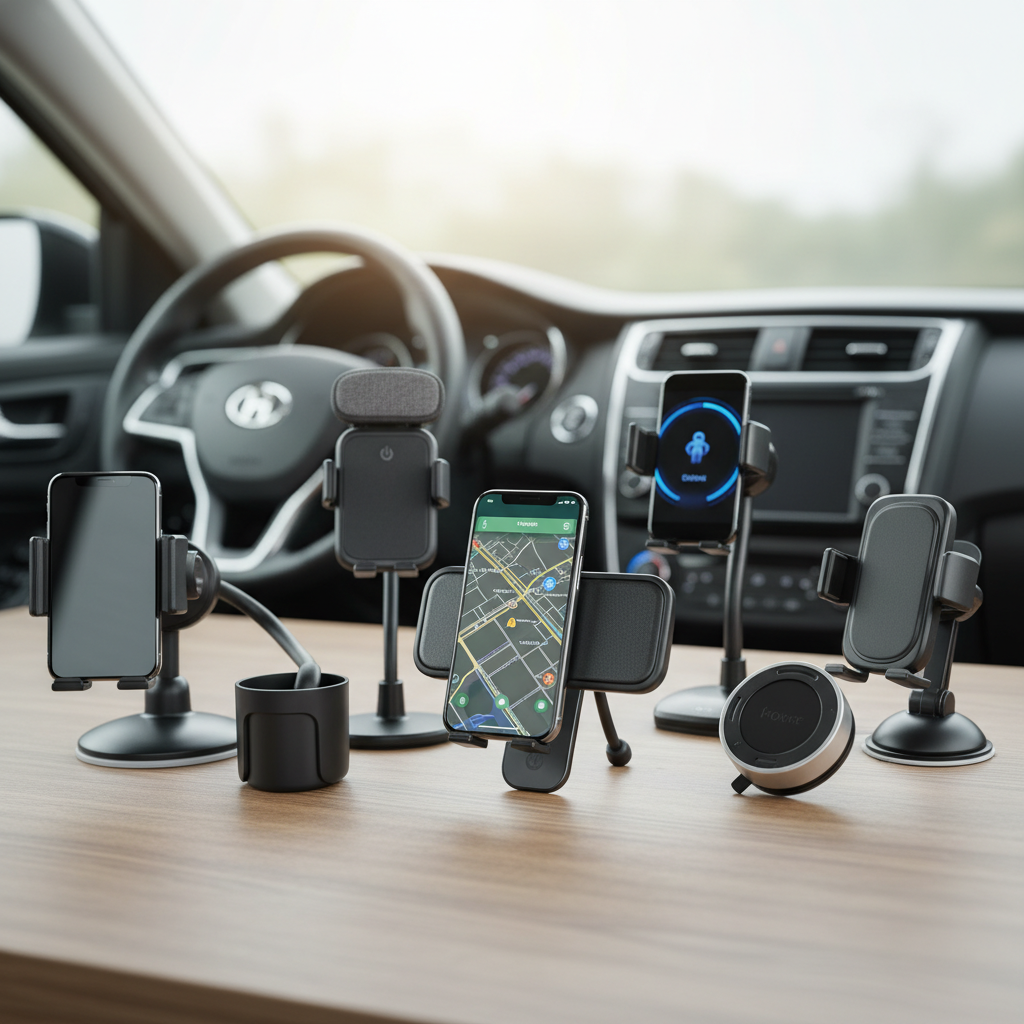
Top Smartphone Holders to Consider for Your Car
A Breakdown of Popular Car Phone Holder Types
Navigating the world of car phone holders can be overwhelming, with countless designs all promising the perfect blend of stability, convenience, and safety. Understanding the fundamental types is the first step toward finding the one that best suits your vehicle and driving habits. Each design uses a different mounting mechanism, offering a unique set of advantages and disadvantages based on your car's interior and your personal preferences.
1. Dashboard & Windshield Suction Cup Mounts
Suction cup mounts are among the most versatile and common types of car phone holders available. They typically feature a powerful suction cup at the base, often enhanced with a sticky gel pad, that adheres firmly to a car's windshield or a smooth dashboard surface. These mounts usually have an adjustable arm and a rotating head, allowing for a wide range of positioning options. This flexibility means you can place your phone at the perfect height and angle for optimal visibility without significantly obstructing your view of the road.
The primary benefit of this design is its strong hold and adaptability. You can easily move it between different vehicles or adjust the viewing angle for different drivers. However, they do have some drawbacks. In extreme heat, the suction can sometimes fail, causing the mount to fall. On textured dashboards, they may not be able to create a secure seal. Furthermore, mounting anything on the windshield is subject to local laws, as some jurisdictions have strict rules about obstructing the driver's line of sight, making it crucial to check regulations in your area.
2. Air Vent Mounts
Air vent mounts are a popular choice for their simplicity and minimalist design. These holders feature clips or prongs on the back that slide onto the slats of your car's air conditioning vents. They are typically lightweight and compact, positioning your phone in a central, easy-to-see location without cluttering the dashboard or windshield. Installation is incredibly straightforward—just push it onto a vent slat, and it’s ready to use. This design keeps your phone within easy reach for navigation and hands-free calls.
While convenient, air vent mounts are not without their limitations. Their stability can depend heavily on the design of your car's vents; they may not work well with circular or uniquely shaped vents. The weight of heavier, larger smartphones can sometimes cause the vent slats to sag downwards, altering the viewing angle. Another consideration is that the mount will block airflow from that particular vent. In winter, blowing hot air directly onto the back of your phone for an extended period could potentially cause the device to overheat.
3. Cup Holder Mounts
For drivers who prefer to keep their dashboard and vents completely clear, the cup holder mount is an excellent solution. This type of holder features a base that is designed to fit snugly into one of your car's cup holders. The base is often adjustable, allowing it to expand to fit different-sized holders securely. From this base extends a flexible or rigid neck that holds your smartphone, which can be positioned for easy viewing. This design is particularly favored in larger vehicles like trucks and SUVs that often have extra cup holders to spare.
The main advantage of a cup holder mount is its exceptional stability. Since it's anchored in a deep, secure part of the console, there's very little chance of it wobbling or falling, even on bumpy roads. However, it requires you to sacrifice a cup holder, which can be an issue in cars with limited storage. Additionally, depending on the layout of your car's console, the phone's position might be lower than eye level, requiring you to glance further down from the road than you would with a dash or vent mount.
4. CD Slot Mounts
As in-car CD players have become increasingly obsolete, CD slot mounts have emerged as a clever way to repurpose this unused feature. These mounts have a flat, fin-like piece that slides into the CD slot. A tightening mechanism, often a small screw or lever, expands the fin to secure the mount firmly in place. This places your phone in a central, stable, and easily accessible location, often just below the main infotainment screen, which is a natural place for a driver to look.
The stability and ideal positioning are major benefits of CD slot mounts. They don't obstruct your view through the windshield or block an air vent. Of course, the most obvious downside is that you cannot use your CD player while the mount is installed. Depending on your vehicle's dash layout, the mount and phone might also block access to some buttons, knobs, or even a portion of your car's built-in screen, so it's important to consider the placement before choosing this option.
5. Magnetic Mounts
Magnetic mounts offer unparalleled convenience and a sleek, minimalist aesthetic. The system consists of two parts: a mount with a powerful magnet that attaches to your dash, vent, or another surface, and a thin metal plate that you stick to the back of your phone or slip inside its case. To mount your phone, you simply bring it close to the holder, and the magnet snaps it securely into place. Removing it is just as easy, making this design perfect for people who are frequently getting in and out of their car.
The ease of one-handed operation is the key selling point. There are no clamps or brackets to fuss with. However, the main consideration is the need to attach a metal plate to your device, which some users may not like aesthetically. While the magnets used are generally considered safe for modern smartphones, they can sometimes temporarily interfere with the phone's digital compass or impact wireless charging if the plate is placed directly over the charging coil. Most users find these minor issues are outweighed by the sheer convenience.
6. Wireless Charging Mounts
Combining the function of a secure holder with the convenience of a charger, wireless charging mounts are a modern, high-tech solution. These mounts, which can come in dashboard, vent, or other styles, have a built-in Qi wireless charging coil. When you place a compatible smartphone in the holder, it automatically begins to charge without the need to plug in a cable. This is a fantastic way to reduce cabin clutter and ensure your phone is always topped up, especially during long drives using power-intensive navigation apps.
The primary benefit is obvious: you get a secure mount and a charger in one device, eliminating the hassle of fumbling with cables while driving. These mounts are especially useful for commuters and road trippers. The main drawbacks are cost and compatibility. They are generally more expensive than their non-charging counterparts and require a power source, meaning you will still have one cable running from the mount to your car's USB port or 12V outlet. Your phone must also be compatible with Qi wireless charging to take advantage of the feature.
The Evolution of In-Car Navigation and Phone Mounting
The need for car phone holders is a direct result of the incredible technological shift in how we navigate and stay connected on the road. For decades, the glove compartment was home to a collection of folded paper maps, and navigating a new city meant relying on a co-pilot to read directions or pulling over to study the route. This era was defined by pre-planning and a certain amount of guesswork.
The first major revolution came with the rise of dedicated GPS units from brands like Garmin and TomTom. These devices brought turn-by-turn voice directions into the mainstream, changing road trips forever. They came with their own suction cup mounts, introducing drivers to the concept of having a screen for navigation. However, they were single-purpose devices that required map updates and were eventually overshadowed by the next great leap: the smartphone.
With the advent of the iPhone and Android devices, powerful GPS capabilities were suddenly in everyone's pocket. Apps like Google Maps and Waze offered real-time traffic updates, rerouting, and a user interface that was constantly improving. The smartphone became the all-in-one device for navigation, music, and communication, making dedicated GPS units largely redundant. This consolidation of technology created a brand-new problem: how to safely and legally use these features while driving. The car phone holder industry was born out of this necessity, evolving from simple cradles into the diverse and sophisticated range of products we see today.
Common Questions About Car Phone Holders
Are Magnetic Phone Mounts Safe for Your Smartphone?
A common concern among consumers is whether the powerful magnets used in magnetic mounts can damage a smartphone. It's a valid question, rooted in older technologies where magnets could wreak havoc on things like CRT monitors and floppy disks. Fortunately, modern smartphones are built differently and are incredibly resilient to the small neodymium magnets found in car mounts.
Key components like the flash storage (memory), processor, and LCD or OLED screens are not affected by magnetic fields of this strength. Your GPS signal also won't be impacted. The only component that can be temporarily affected is the magnetometer, which is the internal digital compass. The magnet can interfere with its reading, but the effect is temporary and resolves as soon as the phone is removed from the mount. For most users, who rely on GPS for navigation (which is unaffected), this is a non-issue. The biggest practical concern is ensuring the metal plate doesn't block your phone's wireless charging coil if you use that feature.
What Are the Legal Regulations for Mounting a Phone in a Car?
The legality of where you can mount your phone in a car is not universal; it varies significantly by state and country. The core principle behind these laws is ensuring the driver has an unobstructed view of the road. The most common point of legal contention is the windshield. Many states have specific laws that prohibit drivers from mounting any object on the windshield that obstructs their view.
For example, some states completely ban windshield mounts, while others, like California and Minnesota, permit them only in designated small areas in the bottom corners or top center of the windshield. Other mounting locations, such as the air vent, CD slot, or cup holder, are generally considered legal everywhere because they do not interfere with the driver's field of vision. Before installing any mount, especially a windshield or dash mount, it is highly advisable to check the specific traffic laws for your local jurisdiction to ensure you remain compliant and avoid a potential ticket.
How Do I Choose the Right Car Phone Holder?
Selecting the perfect car phone holder depends on three key factors: your car, your phone, and your personal habits. First, take a close look at your vehicle's interior. Do you have sturdy, horizontal air vents that could support a vent mount? Is your dashboard smooth and flat, making it ideal for a suction cup, or is it heavily textured and curved? Do you have a spare cup holder you're willing to use? Answering these questions will immediately narrow down your options.
Next, consider your phone. If you have a large, heavy device like a "Max" or "Ultra" model, you'll need a sturdier mount, such as a cup holder or a high-quality suction cup mount, to handle the weight. The thickness of your phone case can also be a factor, as some spring-loaded clamps may not open wide enough for bulky cases. Finally, think about how you use it. If you're constantly grabbing your phone as you get in and out of the car, the effortless attachment of a magnetic mount might be best. If your phone is primarily used for long-distance navigation, the stability and charging capability of a wireless charging mount could be the ideal choice.
Conclusion
Choosing the right smartphone holder for your car is a crucial step in promoting safer driving habits. With your device securely mounted, you can easily view navigation and manage hands-free calls without compromising your attention on the road. The best choice ultimately comes down to a personalized assessment of your vehicle's design, the size and weight of your phone, and your local regulations. By considering options like vent, dashboard, cup holder, and magnetic mounts, every driver can find a solution that offers the perfect balance of convenience, stability, and safety.
For more information, consider these resources: