Explore the Top 10 Nursing Schools on the East Coast
Choosing the right nursing school is a monumental decision, and the East Coast is home to some of the nation's most prestigious programs.
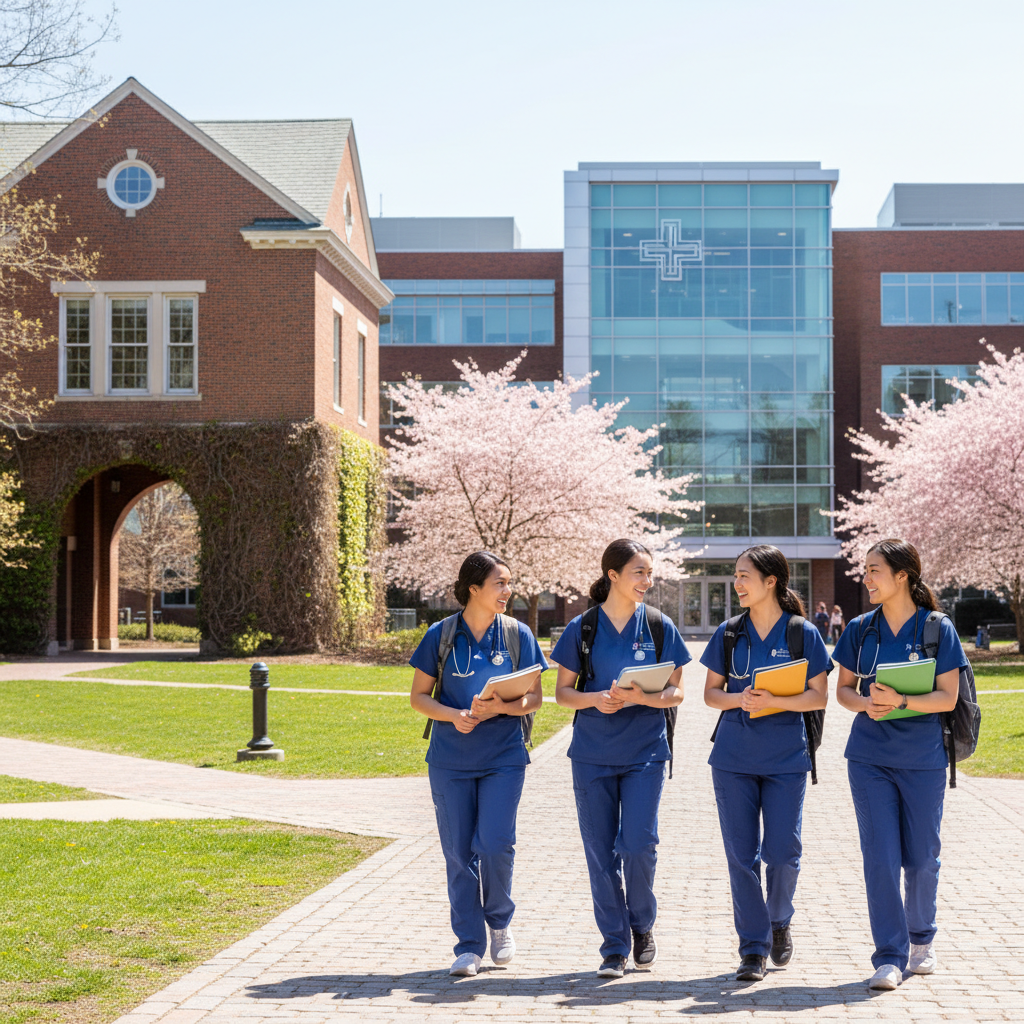
These Are The Top 10 Nursing Schools On The East Coast
The East Coast of the United States is home to some of the world's most prestigious universities and advanced medical centers. For aspiring nurses, this region offers an unparalleled concentration of high-caliber nursing programs. These institutions are known for their rigorous academics, groundbreaking research, and extensive clinical opportunities in diverse settings. Whether you're seeking a Bachelor of Science in Nursing (BSN) to start your career or an advanced degree like a Master of Science in Nursing (MSN) or a Doctor of Nursing Practice (DNP), the East Coast provides a wealth of top-tier options. Let's explore ten of the most distinguished nursing schools that consistently set the standard for nursing education and practice.
A Look at the Premier Nursing Programs
1. Johns Hopkins University School of Nursing (Baltimore, MD)
Consistently ranked among the top nursing schools in the nation, the Johns Hopkins University School of Nursing is a global leader in nursing education and research. Located in Baltimore, the school benefits from its close ties to the world-renowned Johns Hopkins Hospital, providing students with exceptional clinical placements. The school is particularly celebrated for its graduate programs, including its Doctor of Nursing Practice (DNP) and Ph.D. in Nursing. Students are immersed in an environment of inquiry and evidence-based practice from day one.
The curriculum at Johns Hopkins emphasizes leadership, interdisciplinary collaboration, and community health. Students have opportunities to participate in research projects that address complex health challenges both locally and globally. The school's commitment to innovation is evident in its state-of-the-art simulation labs, which allow students to hone their clinical skills in a safe, controlled environment before entering real-world patient care settings. This focus on both research and hands-on practice prepares graduates to be leaders and change-makers in the healthcare field.
2. University of Pennsylvania School of Nursing (Philadelphia, PA)
As an Ivy League institution, the University of Pennsylvania School of Nursing (Penn Nursing) offers a powerful combination of academic rigor and clinical excellence. Located in Philadelphia, a major healthcare hub, Penn Nursing provides students with access to top-tier hospitals and community clinics. The school offers a comprehensive range of programs, from its traditional BSN and accelerated BSN programs to a wide variety of MSN specialties and doctoral degrees. Penn Nursing is also a research powerhouse, receiving significant funding from the National Institutes of Health (NIH).
One of the hallmarks of Penn Nursing is its emphasis on integrating theory with practice. Students learn from faculty who are not only expert educators but also active clinicians and researchers shaping the future of healthcare. The school's unique sub-matriculation programs allow ambitious undergraduate students to begin coursework for their master's degree while completing their bachelor's, providing a streamlined path to advanced practice roles. This forward-thinking approach ensures graduates are well-prepared for the evolving demands of the nursing profession.
3. Duke University School of Nursing (Durham, NC)
The Duke University School of Nursing in Durham, North Carolina, is renowned for its innovative educational programs and its strong focus on advanced nursing practice. While it offers a highly respected Accelerated Bachelor of Science in Nursing (ABSN) program for students who already hold a bachelor's degree in another field, its primary strength lies in its graduate-level education. Duke's MSN, DNP, and Ph.D. programs are consistently ranked among the best in the country, with specialties ranging from nurse practitioner roles to nursing informatics and healthcare leadership.
Duke's integration within the Duke University Health System provides students with unparalleled clinical experiences in a variety of settings, including a world-class academic medical center. The school is a pioneer in using technology and distance-based learning to make its top-tier education accessible to a wider audience. This commitment to flexibility and innovation, combined with a low student-to-faculty ratio, ensures a personalized and supportive learning environment that fosters critical thinking and clinical expertise.
4. Columbia University School of Nursing (New York, NY)
Located in the heart of New York City, the Columbia University School of Nursing offers a dynamic and immersive educational experience. As one of the oldest nursing schools in the country, it has a long history of preparing nursing leaders. The school is particularly known for its direct-entry master's program, which allows individuals with a non-nursing bachelor's degree to become registered nurses and earn an MSN. This pathway is a popular option for career changers looking to enter advanced practice roles.
Columbia Nursing places a strong emphasis on clinical practice, research, and health policy. Its affiliation with NewYork-Presbyterian Hospital provides students with access to a diverse patient population and complex clinical cases. The school is a leader in precision health and symptom management research, giving students opportunities to work alongside faculty on cutting-edge studies. Graduates from Columbia are well-positioned to assume leadership roles in clinical practice, administration, and research in one of the world's most vibrant healthcare landscapes.
5. Yale University School of Nursing (New Haven, CT)
The Yale School of Nursing (YSN) stands out for its exclusive focus on graduate nursing education. Located in New Haven, Connecticut, YSN is dedicated to preparing advanced practice nurses, nurse-midwives, researchers, and leaders. The school's Graduate Entry Prespecialty in Nursing (GEPN) program is a popular entry point for students with a non-nursing background, providing an accelerated path to an RN license and an MSN degree. This model fosters a diverse student body with a wide range of life experiences.
YSN's educational philosophy is rooted in providing holistic, patient-centered care. The curriculum strongly emphasizes primary care and serving vulnerable populations, with extensive clinical experiences in community-based settings. Students benefit from small class sizes and close mentorship from a distinguished faculty. The school's commitment to social justice and health equity is woven throughout its programs, preparing graduates to advocate for patients and work towards a more equitable healthcare system.
6. New York University Rory Meyers College of Nursing (New York, NY)
Situated in New York City, the NYU Rory Meyers College of Nursing offers a vibrant urban setting for nursing education. The college provides a full range of programs, from a traditional BSN for first-year students to accelerated pathways, master's specializations, and doctoral degrees. NYU Meyers is a major center for nursing research, with a focus on areas such as aging, chronic disease management, and health disparities. This research-intensive environment enriches the learning experience for all students.
A key advantage of studying at NYU is the vast network of clinical placement sites across the city's diverse boroughs. Students gain experience in leading academic medical centers, community health clinics, and public hospitals, exposing them to a wide spectrum of patient needs and care delivery models. The college also has a strong global focus, offering numerous study abroad and global health opportunities that prepare students to practice nursing in an interconnected world.
7. Emory University Nell Hodgson Woodruff School of Nursing (Atlanta, GA)
Located in Atlanta, a major public health hub, the Emory University Nell Hodgson Woodruff School of Nursing is a leader in both clinical practice and research. The school offers a variety of pathways to a nursing degree, including a BSN for traditional and transfer students, an accelerated BSN, and numerous MSN and DNP tracks. Its close relationship with Emory Healthcare, one of the most comprehensive academic health systems in the Southeast, provides students with exceptional clinical training opportunities.
Emory's nursing school is particularly distinguished by its commitment to service learning and global health. Students have the opportunity to participate in programs that serve vulnerable populations both locally in Atlanta and abroad in locations like the Caribbean and Latin America. The school is also home to the Lillian Carter Center for Global Health & Social Responsibility, further cementing its role as a leader in preparing nurses to address worldwide health challenges.
8. University of North Carolina at Chapel Hill School of Nursing (Chapel Hill, NC)
As one of the top public university nursing schools in the country, the UNC School of Nursing in Chapel Hill offers an outstanding education at a great value. The school provides a full spectrum of academic programs, from BSN to DNP and Ph.D., all grounded in a commitment to excellence in practice, research, and public service. Its location within the Research Triangle area provides a rich environment for innovation and interdisciplinary collaboration.
The school is known for its strong clinical partnerships with the UNC Health system, a leading academic medical center. Students benefit from hands-on experience in a variety of specialty areas. UNC's faculty are recognized leaders in their fields, conducting influential research in areas such as chronic illness management, health promotion, and gerontology. The school's mission to improve the health of North Carolinians and the nation is reflected in its focus on preparing nurses who can provide high-quality care in diverse communities.
9. Boston College Connell School of Nursing (Chestnut Hill, MA)
The Connell School of Nursing at Boston College integrates a rigorous scientific education with a humanistic approach rooted in Jesuit values. Located just outside of Boston, a city renowned for its healthcare and biotech industries, the school provides students with access to some of the best clinical facilities in the world. The curriculum emphasizes social justice, ethics, and compassionate care for the whole person.
Boston College offers a highly-regarded undergraduate BSN program as well as graduate programs, including a direct-entry MSN for non-nursing graduates. A unique aspect of the Connell School is its strong emphasis on clinical experience from the very beginning of the curriculum. Undergraduates begin clinical placements as early as their sophomore year, gaining exposure to a wide range of practice settings, from world-class hospitals to community health centers. This early and consistent clinical immersion helps students build confidence and competence.
10. University of Maryland School of Nursing (Baltimore, MD)
The University of Maryland School of Nursing (UMSON) is one of the oldest and largest nursing schools in the nation. With a main campus in Baltimore and a satellite campus at the Universities at Shady Grove, UMSON has a significant presence in the state. The school is a leader in nursing education, offering a wide array of programs and pioneering new models of clinical education. It is known for its robust BSN, MSN, and DNP programs, with a particularly strong reputation for its Clinical Nurse Leader (CNL) track.
UMSON's location in Baltimore provides students with diverse clinical experiences at the University of Maryland Medical Center and other top-tier healthcare facilities. The school is deeply committed to community engagement and improving health outcomes in its surrounding urban and rural communities. Its state-of-the-art simulation labs are among the most advanced in the country, providing students with realistic, hands-on training for a variety of clinical scenarios.
What Makes an East Coast Nursing School Stand Out?
The concentration of top-tier nursing schools on the East Coast is no accident. Several key factors contribute to their collective reputation for excellence. First and foremost is the proximity to a high density of world-class academic medical centers and specialized hospitals. This provides nursing students with an unparalleled variety and quality of clinical placements. Whether it's a major trauma center in New York City, a leading cancer institute in Boston, or a renowned research hospital in Baltimore, students get hands-on experience in settings that are at the forefront of medical innovation.
Another defining characteristic is the research-intensive environment. Many of these universities are powerhouses in biomedical and health sciences research, receiving substantial federal funding. This culture of inquiry means that nursing students are taught by faculty who are actively generating new knowledge and shaping evidence-based practice. Students often have opportunities to participate in research projects, which develops their critical thinking skills and prepares them to be discerning consumers and contributors to nursing science throughout their careers.
Answering Common Questions for Aspiring Nurses
How Do I Choose the Right Nursing Program for Me?
Choosing the right nursing program is a highly personal decision that goes beyond rankings. First, consider the degree path you want to pursue. Are you a high school graduate looking for a traditional four-year BSN? Or do you have a degree in another field and are interested in an accelerated BSN or a direct-entry MSN program? Each path has different prerequisites and timelines. Next, evaluate the school's culture and educational philosophy. Do you thrive in a large, bustling public university or a smaller, more intimate private college setting? Some schools emphasize research, while others focus more on clinical practice or community health.
Location and clinical opportunities are also critical. Look at the hospitals and clinics where the school has partnerships. Will you get experience in the specialty areas that interest you, such as pediatrics, critical care, or mental health? Finally, consider practical factors like tuition cost, financial aid opportunities, and the NCLEX pass rate. The NCLEX is the national licensing exam all graduates must pass to become a registered nurse, so a high pass rate is a strong indicator of a program's quality and its ability to prepare students for professional practice.
What is the NCLEX and Why is it Important?
The National Council Licensure Examination (NCLEX) is the standardized exam that every nursing school graduate must pass to become a licensed registered nurse (RN) or a licensed practical/vocational nurse (LPN/LVN). The exam is not designed to test rote memorization of facts but rather your ability to apply nursing knowledge to make safe, sound clinical judgments in real-world scenarios. It is administered using computerized adaptive testing (CAT), meaning the difficulty of the questions adjusts based on your previous answers.
The NCLEX is critically important because it serves as the gatekeeper to the nursing profession. It ensures that every newly licensed nurse, regardless of where they went to school, has met a minimum standard of competency required for safe and effective entry-level practice. State boards of nursing use the results of the NCLEX as a basis for granting licensure. Therefore, a nursing school's first-time NCLEX pass rate is one of the most significant metrics for evaluating its success. A consistently high pass rate suggests that the school's curriculum is effective, its faculty are strong, and its students are well-prepared for the rigors of the profession.
Conclusion
The East Coast is home to an impressive collection of nursing schools that are shaping the future of healthcare. Institutions like Johns Hopkins, Penn, Duke, and Columbia offer rigorous academic programs backed by world-class clinical opportunities and groundbreaking research. From the urban energy of New York City to the research hubs of North Carolina and Maryland, each school provides a unique environment for aspiring nurses. Choosing any of these top-tier programs means investing in an education that prepares graduates not just for a job, but for a leadership role in a dynamic and rewarding profession.