Exploring America's Leading Medical Schools: A Guide to Top-Ranked Institutions
So, you’re searching for the top-rated medical schools in the USA? You’ve landed in the right spot. Choosing where to earn your M.D. is a monumental decision, and we've broken down the absolute best programs to help guide you.
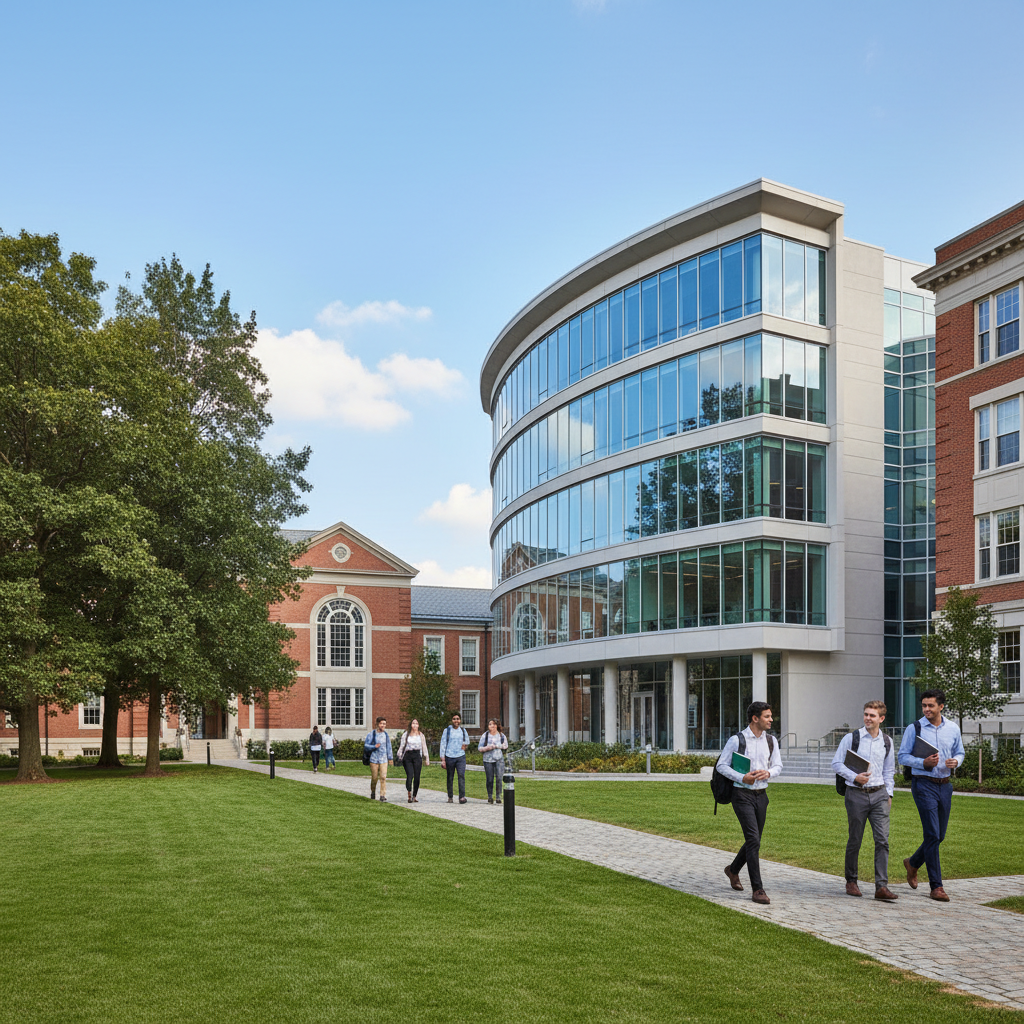
What Are The Top Rated Medical Schools In Usa
Choosing a medical school is one of the most significant decisions an aspiring doctor will make. The United States is home to many of the world's most prestigious medical institutions, each offering unique programs, research opportunities, and clinical training environments. Rankings, often based on factors like research activity, faculty resources, and student selectivity, provide a valuable starting point for prospective students. Below is a detailed look at some of the consistently top-rated medical schools in the USA, recognized for their academic rigor, groundbreaking research, and commitment to shaping the future of medicine.
Harvard University
Harvard Medical School (HMS) is almost always at the top of any list of premier medical institutions, and for good reason. Located in Boston’s Longwood Medical Area, it offers unparalleled access to some of the world's best teaching hospitals, including Massachusetts General Hospital and Brigham and Women's Hospital. The curriculum at HMS is known for its innovative approach, emphasizing small-group, case-based learning from the very beginning. This method encourages students to think critically and solve complex clinical problems collaboratively, mirroring the real-world environment of a medical team.
Beyond its core M.D. program, Harvard is a global powerhouse in biomedical research. Students have extensive opportunities to engage in cutting-edge research alongside leading scientists, with many pursuing dual degrees like the M.D./Ph.D. The school's vast resources, global health initiatives, and distinguished faculty create an environment where students are not just trained to be physicians but are groomed to become leaders in medicine, policy, and research. The prestige of a Harvard degree opens doors globally, but the true value lies in the rigorous training and exposure to a network of medical pioneers.
Johns Hopkins University
The Johns Hopkins University School of Medicine in Baltimore, Maryland, has a storied history of revolutionizing medical education and practice. It is credited with establishing the model of the American teaching hospital, where education, research, and patient care are seamlessly integrated. This tradition continues today, with students receiving clinical training at the world-renowned Johns Hopkins Hospital. The school's "Genes to Society" curriculum provides a comprehensive understanding of human health and disease, from the molecular level to societal factors, preparing students to treat the whole patient.
Research is a cornerstone of the Johns Hopkins experience. The university consistently ranks among the top institutions for National Institutes of Health (NIH) funding, giving students access to a vast array of research projects across numerous disciplines. This emphasis on discovery and innovation means students learn in an environment where new medical knowledge is constantly being created. The school’s commitment to community health and its location in a diverse urban setting also provide invaluable experience in addressing health disparities and complex public health challenges.
University of Pennsylvania (Perelman)
The Perelman School of Medicine at the University of Pennsylvania is one of the oldest and most respected medical schools in the nation. Located in Philadelphia, it is deeply integrated with the top-tier Hospital of the University of Pennsylvania (HUP) and the Children's Hospital of Philadelphia (CHOP). Penn's curriculum is known for its flexibility and modular structure, allowing students to customize their education by pursuing certificates in areas like clinical neuroscience, global health, or medical education. This personalized approach empowers students to develop expertise in fields they are passionate about early in their training.
A key strength of Penn Medicine is its collaborative and interdisciplinary research environment. It is a leader in groundbreaking fields like cell and gene therapy, and its campus brings together experts from medicine, engineering, and business to solve complex health problems. M.D. students are encouraged to participate in this vibrant research culture, with many taking a year to conduct in-depth research. The combination of a flexible curriculum, pioneering research, and outstanding clinical facilities makes Penn a top choice for students aiming for leadership roles in academic medicine.
Stanford University
Situated in the heart of Silicon Valley, the Stanford University School of Medicine is uniquely positioned at the intersection of medicine, technology, and innovation. Its curriculum reflects this, with a strong emphasis on scientific discovery and the translation of research into clinical practice. Stanford’s "Discovery Curriculum" allows for significant flexibility, enabling students to explore their interests through scholarly concentrations, dual-degree programs, and extensive research opportunities. The school fosters a culture of curiosity and encourages students to think beyond traditional medical boundaries.
The proximity to a world-class university and a global hub of technological innovation provides students with unique interdisciplinary opportunities. Many students collaborate on projects with the engineering, business, or law schools. Stanford Medicine is a leader in fields like precision medicine, stem cell research, and biomedical data science. Its relatively small class sizes contribute to a close-knit, collaborative community where students receive personalized mentorship from world-class faculty, preparing them to be innovative leaders in a rapidly evolving healthcare landscape.
University of California, San Francisco (UCSF)
The UCSF School of Medicine is unique among top-tier institutions as it is solely focused on the health sciences. This singular focus creates an incredibly rich and collaborative environment for medical students, who are immersed in a community dedicated to advancing health worldwide. Located in a vibrant and diverse city, UCSF provides exceptional clinical training through its own medical centers as well as affiliate hospitals like the Zuckerberg San Francisco General Hospital and Trauma Center. The school is renowned for its excellence in both primary care and research.
UCSF's "Bridges Curriculum" is designed to prepare students for 21st-century medicine by integrating foundational sciences with clinical experience from the first week of school. It emphasizes inquiry, teamwork, and systems improvement, training students to not only treat patients but also improve the healthcare systems in which they work. UCSF is a leading recipient of NIH funding, and its research in areas like HIV/AIDS, neuroscience, and genetics is world-renowned. For students passionate about public health, health equity, and biomedical research, UCSF offers an unparalleled training experience.
Columbia University
The Vagelos College of Physicians and Surgeons at Columbia University, located in New York City, offers an extraordinary medical education experience in one of the world's most dynamic urban settings. Students train at the top-ranked NewYork-Presbyterian Hospital, gaining exposure to an incredibly diverse patient population and a wide spectrum of diseases. Columbia’s curriculum is known for its strong foundation in the basic sciences coupled with early clinical exposure. The school’s pass/fail grading system for the preclinical years is designed to foster collaboration and reduce competitive stress among students.
Columbia is a major center for biomedical research, with particular strengths in neuroscience, cancer biology, and genetics. The university’s location in New York City also provides unique opportunities for students interested in global health, health policy, and public health, with access to organizations like the United Nations and numerous non-profits. Columbia is also notable for being the first medical school to offer a scholarship program that meets 100% of demonstrated financial need with grants instead of loans, making this elite education accessible to students from all economic backgrounds.
Mayo Clinic Alix School of Medicine
The Mayo Clinic Alix School of Medicine offers a truly unique educational model centered around the Mayo Clinic’s patient-first philosophy. With campuses in Minnesota, Arizona, and Florida, students have the opportunity to train within one of the most integrated and renowned healthcare systems in the world. The school is known for its small class sizes, which allows for a highly personalized and mentorship-driven education. From day one, students are integrated into the Mayo Clinic’s team-based model of care, learning alongside world-class physicians and scientists.
The curriculum emphasizes the science of health care delivery, preparing students to improve patient safety, quality, and value in healthcare. Students benefit from an exceptional faculty-to-student ratio and direct access to cutting-edge technology and research facilities. A key feature is the selectives—customizable blocks of time that allow students to explore clinical subspecialties, conduct research, or pursue experiences in global health. This student-centered approach, combined with the unparalleled clinical resources of the Mayo Clinic, creates physicians who are not only excellent clinicians but also leaders in healthcare innovation.
How Are Medical Schools Ranked and What Do Rankings Mean?
Understanding how medical schools are ranked is crucial for interpreting lists of "top" institutions. The most widely cited rankings, such as those from U.S. News & World Report, use a complex methodology that evaluates schools based on multiple criteria. These rankings are typically divided into two main categories: Research and Primary Care. The Research rankings heavily weigh factors like the total amount of research funding received from the National Institutes of Health (NIH), as this is seen as a strong indicator of an institution's research intensity and impact.
Other key metrics include student selectivity, measured by the median MCAT scores and GPA of incoming students, and the school's acceptance rate. Faculty-to-student ratio is another important component, as a lower ratio often suggests more personalized attention and mentorship opportunities. Finally, peer assessment scores, where deans and senior faculty from other medical schools rate the academic quality of a program, play a significant role. While these rankings are a useful tool for comparison, they don't capture everything. They may not fully reflect the quality of teaching, student culture, or the strength of specific specialty programs. Therefore, prospective students should use rankings as one of many tools to guide their research, not as the sole determinant of where they apply.
Exploring Key Aspects of Medical School Admissions
What is the Difference Between an M.D. and a D.O.?
When exploring medical schools, you will encounter two types of degrees for physicians in the United States: M.D. (Doctor of Medicine) and D.O. (Doctor of Osteopathic Medicine). Both M.D.s and D.O.s are fully licensed physicians who can practice in any medical specialty, prescribe medication, and perform surgery. The training for both degrees is largely similar, involving four years of medical school followed by a residency program. Both are required to pass comprehensive national licensing exams.
The primary distinction lies in the philosophy of care. Osteopathic medicine (D.O.) takes a more holistic approach, emphasizing the interconnectedness of the body's systems and the importance of preventive care. D.O. training includes all the same medical subjects as M.D. training but adds hundreds of hours of hands-on training in a technique called osteopathic manipulative treatment (OMT). OMT involves using the hands to diagnose, treat, and prevent illness or injury. While M.D. programs also teach the importance of treating the whole patient, the D.O. curriculum formalizes this through the principles of osteopathic medicine.
The Importance of Research and Extracurriculars in Applications
Gaining admission to a top-rated medical school requires more than just excellent grades and a high MCAT score. Admissions committees are looking for well-rounded candidates who have demonstrated a genuine commitment to medicine and science. Research experience is highly valued, especially for applicants targeting research-intensive institutions. Participating in research shows that you are curious, understand the scientific method, and are dedicated to advancing medical knowledge. It doesn't have to be groundbreaking; the key is to be meaningfully involved in a project and be able to discuss your role and what you learned from the experience.
Similarly, clinical experience is non-negotiable. Admissions committees want to see that you have spent time in a clinical setting (like a hospital or clinic) and understand the realities of patient care. This can be achieved through volunteering, shadowing physicians, or working as a medical scribe or EMT. Beyond clinical and research activities, other extracurriculars matter. Leadership roles, community service, and sustained commitment to a hobby or skill demonstrate qualities like teamwork, empathy, and resilience—all of which are essential for a successful career in medicine.
Navigating the MCAT: What Scores Do Top Schools Look For?
The Medical College Admission Test (MCAT) is a critical component of the medical school application. It is a standardized, multiple-choice exam designed to assess problem-solving, critical thinking, and knowledge of scientific concepts and principles. The exam is scored on a scale from 472 to 528, with the median score typically around 500. For top-rated medical schools, the competition is fierce, and successful applicants almost always have very high MCAT scores.
For the schools listed in this article, the median MCAT score for matriculating students is typically 520 or higher. This places them in the top few percentiles of all test-takers. However, it's important to view the MCAT score as one part of a holistic review process. A slightly lower score can potentially be offset by an exceptional GPA, compelling research experience, or a unique personal story. Conversely, a high score alone does not guarantee admission. Applicants should aim for the best score they can achieve but also focus on building a strong, well-rounded application that showcases their unique strengths and commitment to medicine.
Conclusion
The top-rated medical schools in the United States share a common commitment to excellence in education, research, and patient care. Institutions like Harvard, Johns Hopkins, and Stanford offer unparalleled resources, distinguished faculty, and a rigorous training environment that prepares students to become leaders in the field. However, the "best" school is ultimately a personal choice that depends on an applicant's career goals, learning style, and personal interests. While rankings provide a valuable guide, prospective students should look beyond them to explore the unique culture, curriculum, and opportunities that each institution offers to find the perfect fit for their journey into medicine.