Exploring Needle-Free Alternatives for Monitoring A1C Levels
If you’re tired of finger pricks and wondering if there's a better way to check your A1C, you're in the right place. The answer is yes—new needle-free technologies are emerging that aim to make monitoring easier and less painful.
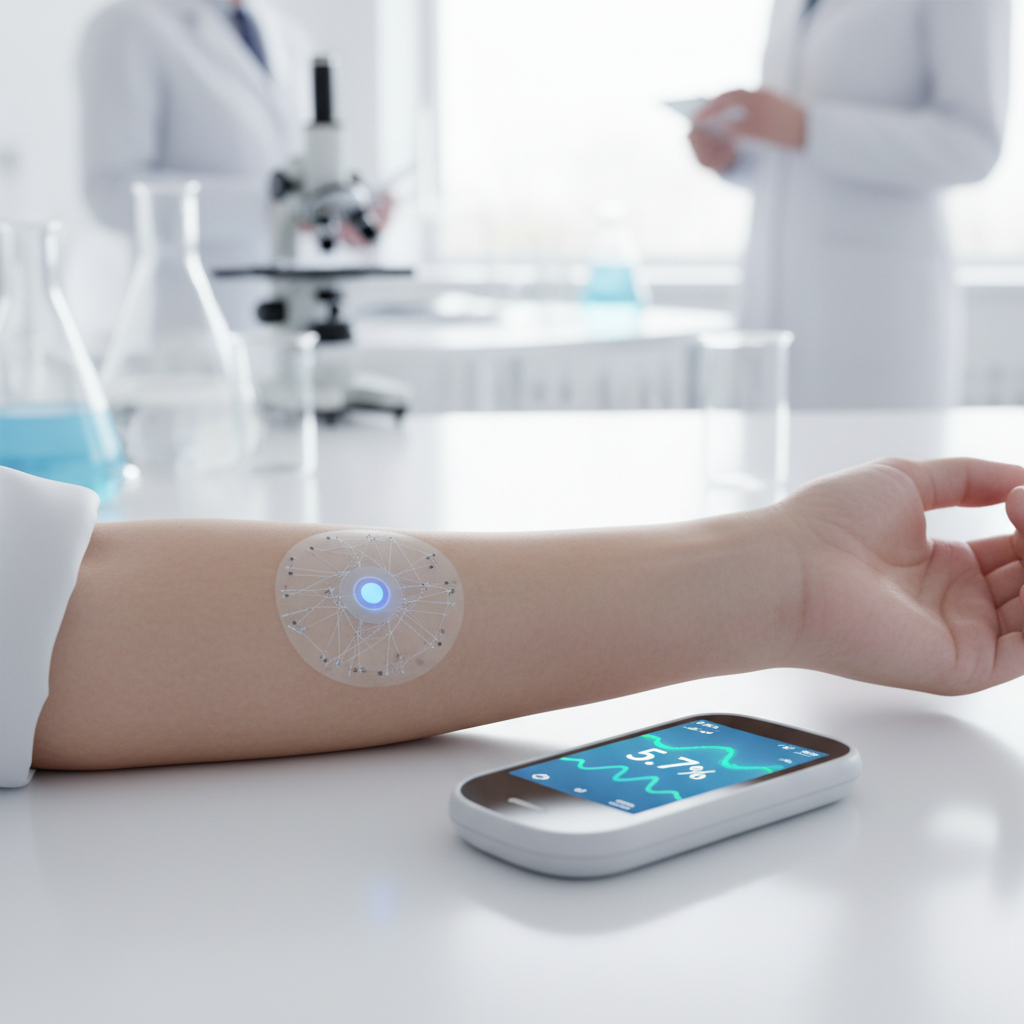
The Current State of A1C Testing
For millions of people managing diabetes or monitoring their risk for the condition, the A1C test is a critical tool. It provides a vital snapshot of average blood sugar levels over the past two to three months. However, the standard method for getting this crucial number has always involved a needle—either through a blood draw from a vein in a lab or a finger prick for an at-home kit. This reliance on blood samples has long pushed researchers and technology companies to ask a compelling question: Can we get the same information without the pain, inconvenience, and needle-phobia associated with traditional methods?
As of today, the definitive answer is that a commercially available, FDA-approved, completely non-invasive A1C test is not yet a reality for the general public. The gold standard remains a blood test. While this may be disappointing news for many, it's not the end of the story. The quest for a needle-free future in diabetes management is one of the most active and exciting fields in medical technology, with numerous promising avenues being explored.
The Search for a Needle-Free A1C Test
The challenge in creating a needle-free A1C test is immense. The test measures "glycated hemoglobin," which is the amount of sugar attached to hemoglobin proteins inside your red blood cells. To measure this accurately without accessing the blood itself requires incredibly sophisticated technology capable of detecting minuscule biochemical signals through other means. Despite the difficulty, several innovative approaches are currently in various stages of research and development.
Emerging Technologies and Research
Scientists are exploring the body's other fluids and signals to find reliable proxies for what's happening in the bloodstream. Here are some of the most promising areas of research in needle-free A1C monitoring.
Breath Analysis
It might sound like science fiction, but your breath contains more than just air. It’s filled with hundreds of volatile organic compounds (VOCs) that are byproducts of your body's metabolic processes. Researchers have discovered that the concentration of certain VOCs, like acetone, can correlate with blood glucose levels. The goal is to develop a highly sensitive "breathalyzer" that can analyze these compounds and use complex algorithms to translate that data into an accurate A1C estimate. The primary hurdles are creating sensors sensitive enough to detect these trace amounts and accounting for variables like diet, exercise, and other health conditions that can also affect VOC levels.
Tears and Saliva
Just as glucose is present in the blood, trace amounts can also be found in other bodily fluids like tears and saliva. This has led to groundbreaking research into devices like smart contact lenses. These lenses are designed with tiny, flexible biosensors that can continuously measure glucose levels in the tear film of the eye. While primarily focused on real-time glucose monitoring (like a CGM), the data collected could potentially be used to estimate A1C over time. Similarly, research is underway to develop saliva-based tests, but accurately correlating the low concentrations of glucose markers in saliva with blood A1C remains a significant scientific challenge.
Transdermal Monitoring (Through the Skin)
This is arguably one of the most active areas of needle-free research. Transdermal technology aims to measure biomarkers directly through the skin without piercing it. One of the leading methods is spectroscopy, particularly near-infrared spectroscopy. This technique involves shining a safe, low-energy light into the skin and analyzing the light that is reflected back. Different molecules, including glycated hemoglobin, absorb and reflect light in unique ways. By interpreting this light signature, a device could theoretically calculate A1C levels. The main challenges are ensuring accuracy across different skin types, pigmentations, and hydration levels, which can all affect how light travels through the tissue.
Wearable Sensors and AI-Driven Estimates
While not a direct measurement, the data from Continuous Glucose Monitors (CGMs) offers a needle-free way to estimate A1C. A CGM uses a tiny filament inserted just under the skin to measure glucose in the interstitial fluid. While the initial insertion involves a needle, the subsequent monitoring is passive. The device collects hundreds of glucose readings per day, and this vast dataset can be fed into an algorithm to calculate an "estimated A1C" or eA1C, also known as a Glucose Management Indicator (GMI). This gives a very clear picture of blood sugar management without requiring a separate A1C blood test.