Exploring the Best Medical Colleges in the United States
If you’re aspiring to become a doctor, choosing the right medical school is the first monumental step on your journey. To help simplify your decision, we’ve analyzed the leading institutions across the country, comparing them on the factors that truly matter.
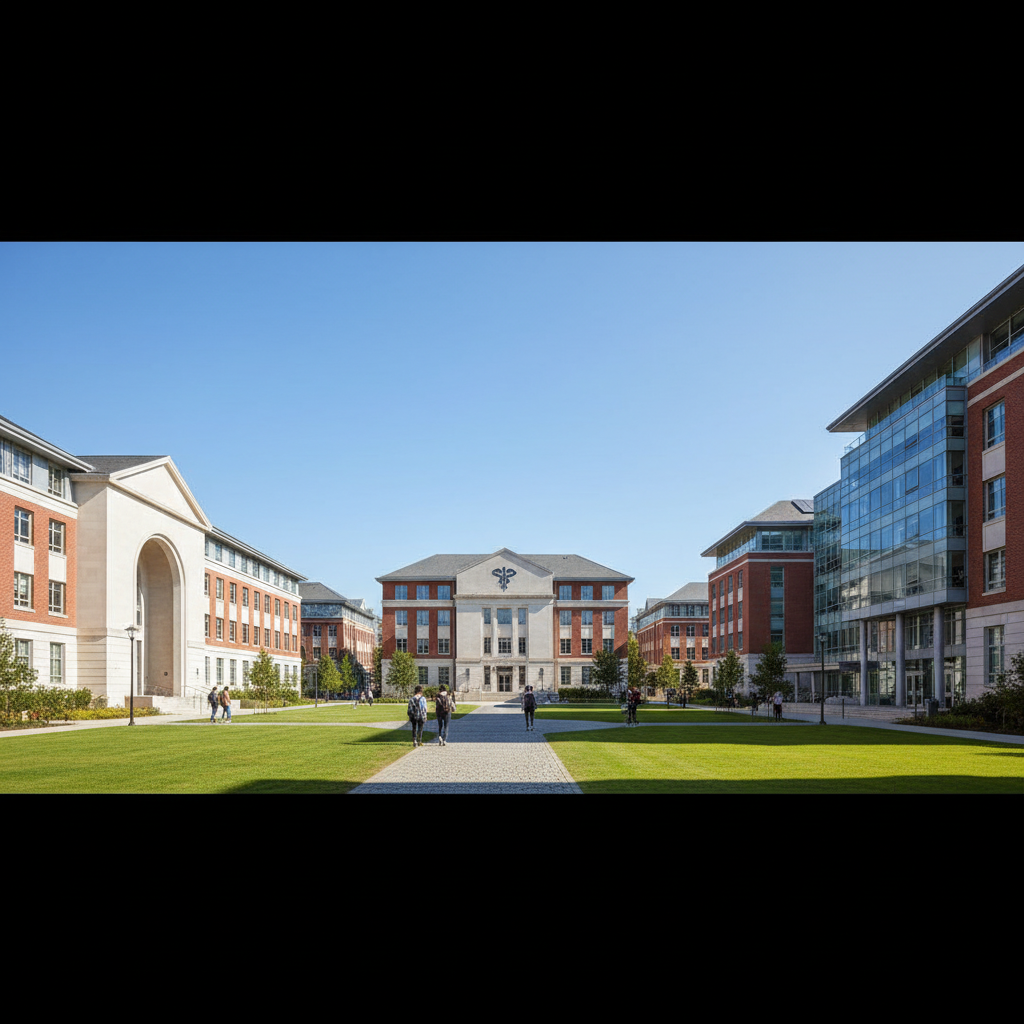
America's Premier Institutions for Medical Education
Choosing a medical school is one of the most significant decisions an aspiring physician will make. The United States is home to some of the world's most prestigious and advanced medical institutions, each offering unique strengths in research, clinical training, and specialized care. These top-rated colleges are renowned for their rigorous curriculum, distinguished faculty, and groundbreaking contributions to medical science. Rankings, such as those published by U.S. News & World Report, provide a valuable benchmark by evaluating schools on factors like research activity, student selectivity, and peer assessment.
Below is a detailed look at some of the most consistently top-rated medical colleges in America. These institutions are not just centers of learning; they are epicenters of medical innovation that shape the future of healthcare globally.
1. Harvard University
Located in Boston, Massachusetts, Harvard Medical School (HMS) is consistently ranked among the very best in the world. Its reputation is built on a foundation of pioneering research, an unparalleled faculty roster of leaders in their fields, and a vast network of affiliated teaching hospitals, including Massachusetts General Hospital and Brigham and Women's Hospital. The curriculum at HMS emphasizes a problem-based learning approach, encouraging students to think critically and collaboratively from day one. The school is particularly dominant in research, attracting more National Institutes of Health (NIH) funding than nearly any other institution.
Students at Harvard benefit from immense resources, including opportunities for global health initiatives, dual-degree programs (such as an MD/PhD or MD/MBA), and access to cutting-edge laboratory facilities. The "Pathways" curriculum integrates foundational science with early clinical experience, ensuring that students develop a deep understanding of both the molecular basis of disease and the humanistic aspects of patient care. Admission is extraordinarily competitive, seeking candidates who demonstrate not only academic excellence but also a profound commitment to leadership and service in medicine.
2. Johns Hopkins University
The Johns Hopkins School of Medicine in Baltimore, Maryland, is synonymous with the rise of modern American medicine. It established the model of the academic medical center, integrating patient care, research, and education. The school is famous for its groundbreaking discoveries and the establishment of many medical specialties. Its close integration with the world-renowned Johns Hopkins Hospital provides students with an immersive clinical experience, exposing them to a diverse patient population and a wide spectrum of complex medical cases.
Johns Hopkins' curriculum, known as "Genes to Society," provides a comprehensive framework that connects the basic science of molecules and genes to the broader societal and environmental factors that impact health. The school is a powerhouse in research across numerous fields, particularly in genetics, immunology, and neuroscience. It also places a strong emphasis on residency placement, with its graduates being highly sought after by top residency programs nationwide.
3. University of Pennsylvania (Perelman)
The Perelman School of Medicine at the University of Pennsylvania in Philadelphia is the oldest medical school in the United States and continues to be a leader in medical education and research. Penn Med is known for its innovative, integrated curriculum that breaks down the traditional barriers between preclinical and clinical training. Students begin interacting with patients early in their first year, allowing them to apply their scientific knowledge in a real-world context almost immediately.
A major strength of Penn is its unified, single-campus setting, which places its top-ranked hospitals, research labs, and medical school facilities in close proximity, fostering a highly collaborative environment. The school is a formidable research institution, with particular strengths in cancer research, gene therapy, and cardiovascular medicine. Students are encouraged to pursue their unique interests through various certificate programs, dual-degree options, and scholarly research projects.
4. Stanford University
Situated in the heart of Silicon Valley, the Stanford University School of Medicine in California benefits from a unique culture of innovation and interdisciplinary collaboration. Stanford emphasizes a deep integration of medical science with technology and engineering, preparing its graduates to be leaders in a rapidly evolving healthcare landscape. The school's curriculum is known for its flexibility, allowing students to pursue in-depth scholarly concentrations in areas ranging from bioengineering to clinical research and community health.
Stanford's relatively small class sizes foster a close-knit and supportive community. Students have unparalleled access to faculty and research opportunities, not only within the medical school but also across the entire university, including its world-class engineering and business schools. The school's proximity to a thriving biotech industry provides unique opportunities for students interested in entrepreneurship and translational medicine—bringing discoveries from the lab to the patient's bedside.
5. Columbia University
The Vagelos College of Physicians and Surgeons at Columbia University, located in New York City, offers an exceptional medical education in one of the world's most dynamic and diverse urban environments. Its affiliation with the NewYork-Presbyterian Hospital system exposes students to a vast range of clinical scenarios and patient populations. Columbia is a major academic medical center known for its excellence in both research and clinical care, particularly in areas like neurology, psychiatry, and surgery.
A distinctive feature of Columbia is its scholarly projects program, which requires every student to conduct a mentored research project during their time at the school. This ensures that all graduates have a strong foundation in scientific inquiry. In 2017, the school became the first in the nation to offer a debt-free education to all students who qualify for financial aid, a landmark decision that has made it possible for talented students from all economic backgrounds to pursue a medical career without the burden of overwhelming debt.
6. University of California, San Francisco (UCSF)
The UCSF School of Medicine is unique in that it is the only school on this list that is exclusively focused on health sciences. This singular focus has allowed it to become a world leader in biomedical research, public health, and patient care. UCSF is highly regarded for its commitment to social justice, health equity, and serving underserved populations. Its curriculum, known as the "Bridges Curriculum," emphasizes inquiry, continuous improvement, and collaboration, preparing students to be lifelong learners and leaders in healthcare systems.
UCSF is a dominant force in NIH funding and is particularly renowned for its research in HIV/AIDS, cancer, and neuroscience. Students benefit from clinical training at a variety of sites, including the UCSF Medical Center, the Zuckerberg San Francisco General Hospital and Trauma Center, and the San Francisco VA Medical Center. This provides a comprehensive view of healthcare, from high-tech academic medicine to community-based public health.
How Are Medical Schools Ranked? Understanding the Methodology
Understanding how medical schools are ranked is crucial for interpreting lists of "top" institutions. The most widely cited rankings, like those from U.S. News & World Report, use a complex formula based on a variety of qualitative and quantitative indicators. These rankings are typically split into two main categories: Research and Primary Care, recognizing that different schools have different missions.
For the Research rankings, significant weight is given to the total amount of research funding an institution receives from the National Institutes of Health (NIH), as this is a key indicator of a school's research intensity and output. Other major factors include peer assessment scores, where deans and senior faculty from other schools rate the academic quality of their peers, and the selectivity of the student body, measured by median MCAT scores and undergraduate GPAs. A favorable faculty-to-student ratio also plays a role, as it suggests greater access to mentorship and instruction.
Exploring Key Aspects of Your Medical School Journey
Beyond rankings, prospective students need to consider several other crucial factors that will define their medical education and future careers.
M.D. vs. D.O.: What's the Difference?
In the United States, physicians can hold one of two degrees: an M.D. (Doctor of Medicine) or a D.O. (Doctor of Osteopathic Medicine). Both M.D.s and D.O.s are fully licensed physicians who undergo similar rigorous training, including four years of medical school followed by a residency. They can practice in any specialty and have the same rights and responsibilities. The primary difference lies in their philosophy and approach to care.
M.D. programs follow an allopathic approach, which focuses on diagnosing and treating diseases, often with medications or surgery. D.O. programs, while also teaching allopathic medicine, incorporate an osteopathic or "whole-person" approach to care. This philosophy emphasizes the interconnectedness of the body's systems and the importance of the musculoskeletal system in overall health. D.O. students receive additional training in a technique called Osteopathic Manipulative Treatment (OMT), a hands-on method for diagnosing and treating issues.
The Importance of Research vs. Primary Care Focus
Medical schools often have distinct institutional missions that shape their curriculum and training opportunities. Research-intensive schools, like many of the institutions listed above, are typically large academic medical centers with a heavy focus on biomedical discovery and innovation. They provide extensive opportunities for students to engage in laboratory or clinical research and are ideal for those aspiring to careers in academic medicine, specialized surgery, or biomedical science.
Conversely, other excellent schools have a primary care focus. These programs are dedicated to training physicians in specialties like family medicine, internal medicine, pediatrics, and obstetrics/gynecology. Their curriculum often includes more robust training in community health, preventative medicine, and managing chronic conditions in outpatient settings. Students considering a career serving in rural or underserved areas, or those passionate about building long-term patient relationships, may find a primary care-focused program to be a better fit for their goals.
Conclusion
Choosing the right medical school is a deeply personal decision that goes beyond a simple ranking. While elite institutions like Harvard, Johns Hopkins, and Stanford offer unparalleled resources and prestige, the best fit for any individual depends on their career aspirations, learning style, and personal values. By understanding what makes these top colleges unique, how they are evaluated, and the different paths available within medicine, prospective students can make a well-informed choice that sets them on a path toward a successful and fulfilling career as a physician.