Exploring the Differences: Pink Himalayan Salt vs. Table Salt
That beautiful pink Himalayan salt is everywhere, but is it really better for you than regular table salt? It's a great question, and the answer isn't as simple as you might think.
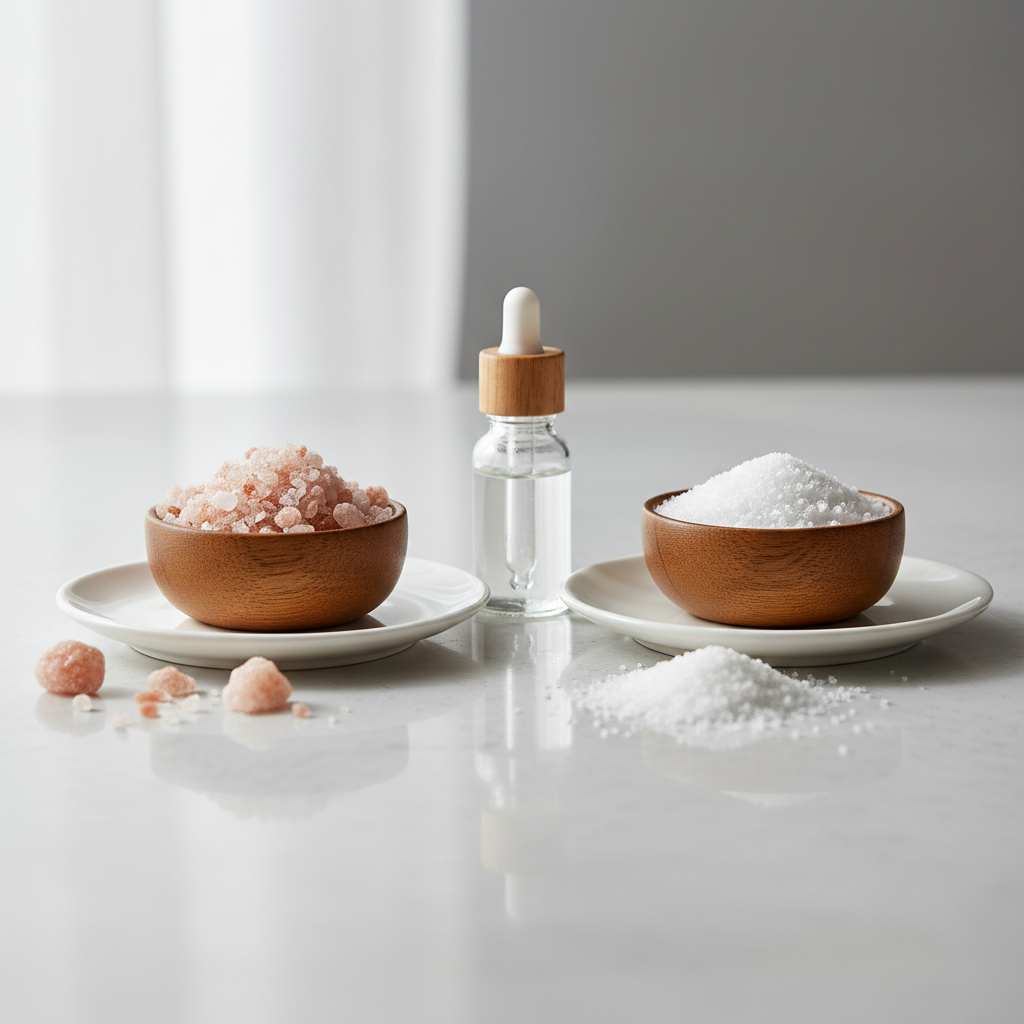
What is Pink Himalayan Salt?
Pink Himalayan salt is a type of rock salt harvested primarily from the Khewra Salt Mine in Pakistan, located near the foothills of the Himalayas. This mine is one of the oldest and largest in the world. The salt's characteristic pink, reddish, or off-white hue comes from trace minerals, particularly iron oxide. Unlike heavily processed salts, Himalayan salt is often marketed as a more natural and pure alternative.
The harvesting process is typically manual, with large blocks of salt being extracted from the mine, crushed, and packaged. This minimal processing means that the salt retains its natural mineral content. Besides iron, it contains trace amounts of dozens of other minerals, including calcium, potassium, and magnesium. It's sold in various forms, from fine grains for shakers to coarse crystals for grinders and large blocks used for cooking and serving food.
What is Table Salt?
Table salt, also known as iodized salt, is the standard, highly refined salt found in most kitchens and on restaurant tables. It is typically sourced from underground salt deposits or by evaporating seawater. Once harvested, it undergoes extensive processing to remove impurities and any trace minerals. This refining process results in a pure sodium chloride product (about 97-99% pure).
During this processing, anti-caking agents like sodium aluminosilicate or magnesium carbonate are often added to prevent the fine grains from clumping together, ensuring it flows freely from a shaker. The most significant addition to most table salt is iodine, a crucial nutrient for thyroid health. This fortification began in the 1920s as a public health measure to combat widespread iodine deficiency, which can lead to conditions like goiter and developmental issues.
Pink Himalayan Salt vs. Table Salt: A Side-by-Side Comparison
When you place these two popular salts next to each other, the differences become clear. While they are both primarily sodium chloride, their journey from the earth to your kitchen is vastly different, impacting their composition, texture, and use. The following table breaks down the key distinctions.
| Feature | Pink Himalayan Salt | Table Salt |
|---|---|---|
| Source & Origin | Primarily from the Khewra Salt Mine in Pakistan. It is a form of rock salt. | Sourced from underground salt mines or through the evaporation of seawater. |
| Processing | Minimally processed. Hand-mined, crushed, and packaged, retaining its natural minerals. | Heavily processed and refined to remove minerals and impurities. Often bleached for a pure white color. |
| Mineral Content | Contains up to 84 different trace minerals, including iron oxide (which gives it its pink color), calcium, potassium, and magnesium. About 98% sodium chloride. | Almost entirely pure sodium chloride (97-99%). Most minerals are removed during the refining process. |
| Additives | Generally free from additives like anti-caking agents. | Typically contains anti-caking agents to prevent clumping and is fortified with iodine. |
| Iodine Content | Contains only trace amounts of natural iodine, not enough to meet dietary needs. | Fortified with iodine, an essential nutrient for thyroid function. |
| Texture & Flavor | Often has a coarser, crunchier texture. Some users report a milder, more complex flavor due to the minerals. | Fine, uniform grains that dissolve quickly. Has a sharp, straightforward salty taste. |
| Common Uses | Used as a finishing salt for texture and color, in grinders, and for decorative purposes like salt lamps or cooking blocks. | All-purpose salt for baking (where its fine grain is ideal), cooking, and seasoning at the table. |
| Cost | Significantly more expensive than table salt due to its sourcing and marketing. | Very inexpensive and widely available. |
The Journey of Salt: From Ancient Mines to Your Table
Salt has been a cornerstone of human civilization for thousands of years. Its importance went far beyond flavoring food; it was a critical preservative, allowing people to store meat and fish for long periods. This made it an incredibly valuable commodity, so much so that Roman soldiers were sometimes paid in salt—a payment known as a "salarium," the origin of our modern word "salary."
The history of Pink Himalayan salt is rooted in ancient geology. The salt beds of the Khewra mine were formed millions of years ago when an inland sea evaporated, leaving behind vast deposits of crystalline salt. These deposits were protected by layers of rock and earth, preserving their purity over millennia. The mine itself has been in operation since the time of Alexander the Great. In contrast, the story of modern table salt is one of industrialization. In the 19th and 20th centuries, new technologies allowed for the mass production of highly refined salt, stripping it of its mineral content to create a standardized, pure white product. The subsequent decision to add iodine in the 1920s transformed this common condiment into a powerful tool for public health.
Exploring Common Questions About Salt
Beyond a direct comparison, many people have follow-up questions about the health implications and practical uses of different salts. Understanding these nuances can help you make a more informed choice.
Do the Trace Minerals in Himalayan Salt Offer Real Health Benefits?
This is perhaps the most debated point in the salt discussion. Pink Himalayan salt is often praised for containing up to 84 different trace minerals. While this is factually correct, the health impact of these minerals is often overstated. The reality is that these minerals make up only about 2% of the salt, with the other 98% being sodium chloride—just like table salt. The quantities of beneficial minerals like potassium, magnesium, and calcium are so minuscule that they are nutritionally insignificant.
To get a meaningful amount of these minerals from Himalayan salt, you would need to consume a dangerously high quantity of sodium, which would far outweigh any potential benefits. Health experts agree that you should rely on a balanced diet of fruits, vegetables, nuts, and whole grains for your mineral intake, not your salt shaker. The primary benefit of the minerals in pink salt is aesthetic—they provide its beautiful color and may contribute to a subtler flavor profile.
Why is Iodine Added to Table Salt?
Iodine is an essential micronutrient that the human body cannot produce on its own. It is critical for the proper functioning of the thyroid gland, which produces hormones that regulate metabolism, growth, and development. A lack of iodine can lead to serious health issues, most notably goiter (a swelling of the thyroid gland) and, in pregnant women, can cause severe developmental problems in the fetus.
In the early 20th century, iodine deficiency was a major public health crisis in many parts of the world, including the United States. Fortifying a commonly used staple like salt with iodine proved to be a simple, inexpensive, and incredibly effective strategy to eliminate this deficiency on a mass scale. While people who eat a diet rich in seafood, dairy, and eggs may get enough iodine, many still benefit from using iodized salt to ensure they meet their daily requirements.
Are There Other Types of Salt I Should Know About?
The world of salt extends far beyond just pink and white. Exploring other varieties can add new textures and flavors to your cooking. Sea salt, for instance, is harvested from evaporated seawater and can come in fine or coarse flakes like Maldon salt, which is prized for its delicate crunch. Fleur de sel ("flower of salt" in French) is a rare and expensive type of sea salt that is hand-raked from the top layer of salt ponds and is used as a finishing salt.
Kosher salt is popular among chefs for its coarse, flaky texture that makes it easy to pinch and sprinkle evenly. Its larger crystals also draw out moisture from meat effectively. It typically does not contain iodine or anti-caking agents. Another interesting variety is black salt (Kala Namak), a volcanic rock salt with a pungent, sulfurous aroma and taste, often used in South Asian cuisine to add a savory, egg-like flavor to dishes.
Final Thoughts: Choosing the Right Salt for You
So, is Pink Himalayan salt better than table salt? The answer isn't a simple yes or no. From a purely nutritional standpoint, the differences are minimal. Both are primarily sodium chloride, and the much-hyped mineral content in pink salt is too low to offer significant health benefits.
The "better" choice ultimately depends on your priorities. If you are concerned about iodine intake and want an affordable, all-purpose seasoning, iodized table salt is an excellent and practical choice. If you prefer a less processed product, enjoy a coarser texture, and appreciate the subtle flavor and beautiful color for finishing dishes, Pink Himalayan salt is a great option. In the end, the most important health consideration for any salt is moderation.