Exploring the Effectiveness and Outcomes of Robotic Knee Surgery
If you're considering robotic knee surgery, its success rate is probably the first thing on your mind. While studies show patient satisfaction rates are incredibly high—often over 95%—that single number doesn't tell the full story.
Understanding the Success Rate of Robotic Knee Surgery
When considering a significant medical procedure like a knee replacement, one of the most pressing questions is, "How successful will it be?" With the rise of advanced technologies, robotic-assisted knee surgery has become a popular option, promising greater precision and better outcomes. But what do the numbers and clinical data actually say? The "success rate" isn't a single number but a combination of several crucial factors, including patient satisfaction, implant longevity, surgical accuracy, and functional recovery. Let's break down what success looks like in the context of this modern surgical approach.
Patient Satisfaction Rates
Perhaps the most important measure of success is how the patient feels after the procedure. High patient satisfaction is a hallmark of successful knee replacement surgery. Studies consistently show that patient satisfaction rates for robotic-assisted knee arthroplasty are exceptionally high, often reported to be in the range of 90-95%. This high level of satisfaction is largely attributed to improved outcomes such as reduced postoperative pain, a more natural-feeling knee, and a quicker return to daily activities.
The precision of the robotic system allows surgeons to place the implant in a way that is uniquely tailored to the patient's anatomy. This customized fit can lead to better joint mechanics and balance, which patients often describe as the knee "feeling like their own." When a patient can walk, climb stairs, and engage in recreational activities without the chronic pain they experienced before surgery, their overall quality of life improves dramatically, directly contributing to these high satisfaction scores.
Implant Longevity and Revision Rates
A successful knee replacement is one that lasts for a long time. The longevity of the prosthetic implant is a critical factor in the long-term success of the surgery. The goal is to avoid the need for a future "revision" surgery, which is often more complex than the initial replacement. While traditional knee replacements have an excellent track record, with over 82% of implants still functioning well after 25 years, robotic surgery aims to improve this even further.
The enhanced precision of robotic assistance plays a key role here. By ensuring the implant components are perfectly aligned and balanced, the technology minimizes uneven wear and tear on the prosthetic materials. This optimal positioning is believed to contribute to a longer lifespan for the implant. Although robotic knee surgery is a newer technology and long-term (20+ year) data is still being collected, early and mid-term studies indicate significantly lower revision rates compared to manual techniques. The data suggests that the improved accuracy directly translates to better durability.
Accuracy and Precision of Component Placement
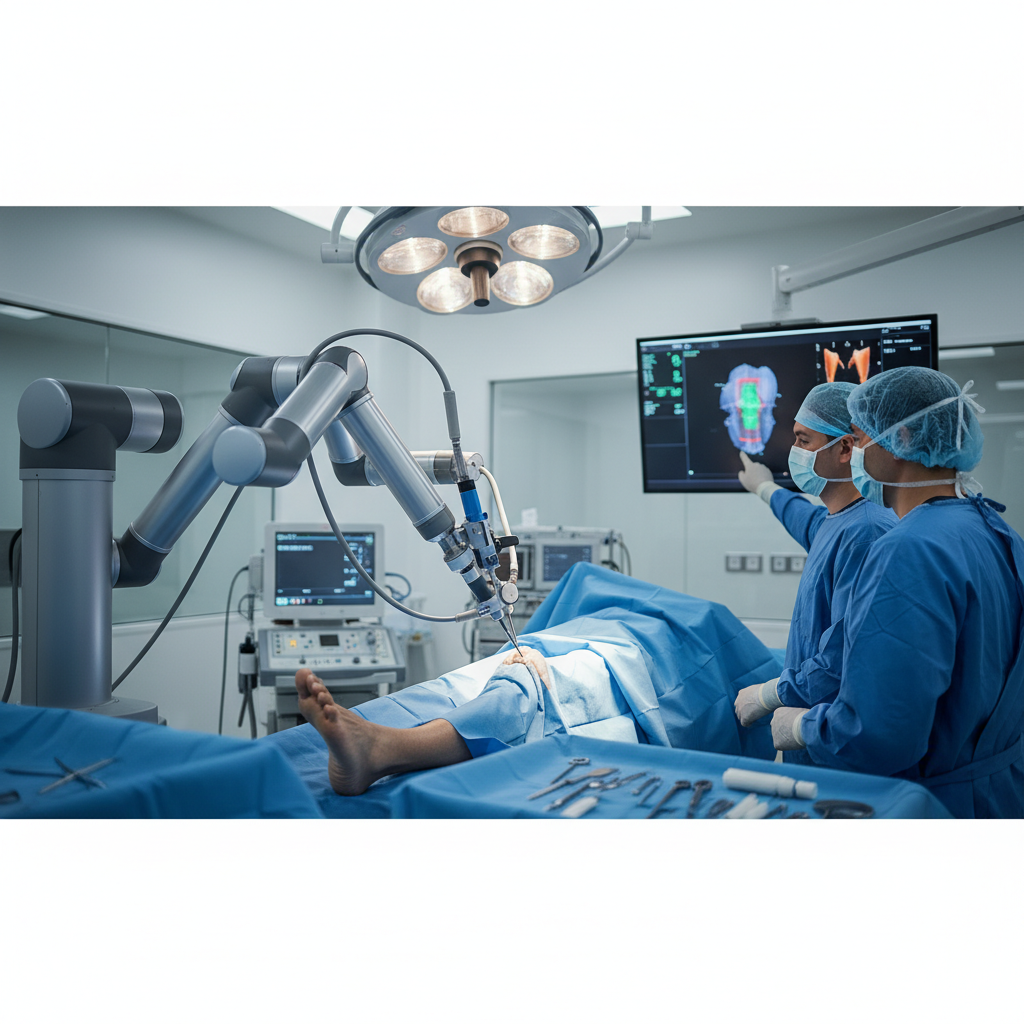
This is where robotic surgery truly shines and sets itself apart. The core benefit of using a robotic system is the sub-millimeter accuracy it provides. Before the surgery, a 3D model of the patient's knee is created from a CT scan. This model allows the surgeon to plan the exact size and position of the implant down to the fraction of a degree. During the operation, the robotic arm, guided by the surgeon, executes this plan with a level of precision that is difficult to replicate with the human hand alone.
Numerous studies have compared the accuracy of robotic-assisted versus manual knee replacements. The results consistently demonstrate that robotic systems achieve more accurate and reproducible implant positioning and alignment. This accuracy is vital because even minor misalignments can lead to instability, premature wear, and patient discomfort. By virtually eliminating these variables, robotic surgery helps ensure the biomechanics of the new knee are as close to a natural knee as possible, forming the foundation for all other measures of success.
Functional Outcomes and Recovery Speed
For patients, success is often defined by how quickly they can get back on their feet and resume their normal lives. Robotic knee surgery has shown promising results in accelerating this process. The precision of the robotic arm often allows for a less invasive procedure, with smaller incisions and less disruption to the surrounding soft tissues, such as muscles and ligaments. This preservation of healthy tissue is a key factor in reducing postoperative pain and swelling.
Clinical evidence suggests that patients who undergo robotic-assisted surgery may experience a faster initial recovery. They often report lower pain scores, require less pain medication, and are discharged from the hospital sooner—sometimes even on the same day. Furthermore, many patients achieve physical therapy milestones, like bending the knee to 90 degrees and walking without a cane, more quickly than those who undergo traditional surgery. This faster return to function is a significant advantage and a clear indicator of a successful short-term outcome.
Complication Rates
While all surgeries carry some level of risk, minimizing complications is a primary goal. The success of a procedure is also measured by a low rate of adverse events. Robotic-assisted knee surgery has been associated with lower rates of certain complications. For instance, the improved accuracy helps reduce the risk of issues like implant malpositioning, instability, and leg length discrepancy.
The pre-operative 3D planning also helps the surgeon anticipate and navigate potential challenges specific to the patient's anatomy. The haptic feedback and "safe zones" programmed into many robotic systems prevent the surgeon from accidentally damaging surrounding nerves, blood vessels, and healthy bone. This added layer of safety contributes to lower rates of intraoperative and postoperative complications, making the procedure a highly reliable and successful option for suitable candidates.
The Evolution of Knee Replacement: From Manual to Robotic-Assisted
Knee replacement surgery has been one of the most successful orthopedic procedures for decades, providing life-changing pain relief for millions suffering from severe arthritis. The journey to today's advanced techniques began in the mid-20th century, with early designs and materials that were revolutionary for their time. For many years, the standard procedure involved a surgeon using manual guides, jigs, and their own expertise to remove damaged bone and position the prosthetic components.
While this traditional method has a long and proven track record of success, surgeons have always sought ways to improve accuracy and reproducibility. The challenge with the manual technique is that it relies heavily on the surgeon's line of sight and feel, which can have slight variations from one procedure to the next. The introduction of computer navigation in the 1990s was the first major technological leap, providing surgeons with real-time digital feedback on their instrument placement. This was the precursor to the more integrated and sophisticated systems we see today.
The dawn of the 21st century brought true robotic assistance into the operating room. These systems took computer navigation a step further by integrating a robotic arm that the surgeon controls. This technology doesn't perform the surgery on its own; rather, it acts as an incredibly precise and steady assistant. By using patient-specific 3D models and enforcing pre-planned boundaries, robotic technology helps surgeons execute their surgical plan with a level of accuracy that was previously unattainable, representing a significant evolution in the pursuit of the perfect knee replacement.
Common Questions About Robotic Knee Surgery
How Does Robotic Surgery Differ from Traditional Knee Replacement?
The fundamental goal of both robotic-assisted and traditional knee replacement surgery is the same: to replace a damaged knee joint with a prosthetic implant to relieve pain and restore function. The key difference lies in the tools and technology used to achieve that goal. In a traditional procedure, the surgeon uses handheld instruments and alignment guides to make bone cuts and position the implant based on their experience and visual assessment. It is a technique that has been refined over decades and has excellent long-term results.
Robotic-assisted surgery, on the other hand, incorporates a layer of advanced technology. It begins with a pre-operative CT scan that creates a detailed 3D digital model of the patient's unique knee anatomy. The surgeon uses this model to create a precise, personalized surgical plan before ever entering the operating room. During the surgery, the robotic arm, which is controlled by the surgeon, helps execute that plan with sub-millimeter accuracy. The system provides real-time data and haptic feedback, creating a "safe zone" that prevents the surgeon from cutting outside the planned boundaries, thereby protecting surrounding soft tissues. This results in a more customized and accurately placed implant compared to what is typically achievable with manual methods.
Who is an Ideal Candidate for Robotic Knee Surgery?
Most individuals who are candidates for a traditional knee replacement are also excellent candidates for a robotic-assisted procedure. The decision is typically based on the severity of knee arthritis, the level of pain, and the impact on the patient's quality of life. Ideal candidates are often those who have not found relief from more conservative treatments like medication, injections, or physical therapy. The technology is beneficial for a wide range of patients, from younger, more active individuals to older adults.
However, robotic surgery can be particularly advantageous in certain complex cases. For example, patients with significant bone deformities from a previous injury or those who have unusual anatomy may benefit greatly from the detailed 3D planning and precision offered by the robotic system. It allows the surgeon to plan for these complexities in advance. Ultimately, the best way to determine candidacy is through a thorough evaluation with an orthopedic surgeon who can assess the patient's specific condition, review their imaging, and discuss the most appropriate surgical options.
What is the Recovery Timeline Like?
While the recovery timeline varies for every individual, patients undergoing robotic knee surgery often report a smoother and faster initial recovery period. Because the procedure can be less invasive and more protective of the surrounding soft tissues, many patients experience less pain and swelling immediately following surgery. Physical therapy typically begins within 24 hours of the operation, with a focus on regaining motion and strength. Many patients are able to walk with the help of a walker or crutches on the same day as the surgery.
Most patients are discharged from the hospital within one to three days. The first few weeks at home involve dedicated physical therapy and a gradual return to light activities. By six weeks, many patients can walk without an assistive device and have regained significant range of motion. A return to more strenuous activities, such as sports or heavy labor, typically takes longer, often between three to six months. The overall goal is a full return to an active lifestyle, and the precision of robotic surgery helps lay a strong foundation for a successful and complete recovery.
Conclusion
The success rate of robotic knee surgery is exceptionally high when viewed through multiple lenses. Patients report high levels of satisfaction due to reduced pain and a more natural-feeling joint. From a clinical perspective, the technology delivers unparalleled accuracy in implant placement, which is believed to contribute to lower revision rates and greater implant longevity. Furthermore, many patients benefit from a faster initial recovery and a quicker return to their daily lives. While traditional knee replacement remains a highly successful procedure, robotic assistance represents a significant advancement, offering a more personalized, precise, and reproducible approach to restoring mobility and quality of life.