Exploring the Impact of AI in Education: Can It Enhance or Replace Teaching?
It's the big question on everyone's mind, and you're in the right place to explore it. While the idea of a robot at the head of the class is compelling, the reality is far more nuanced.
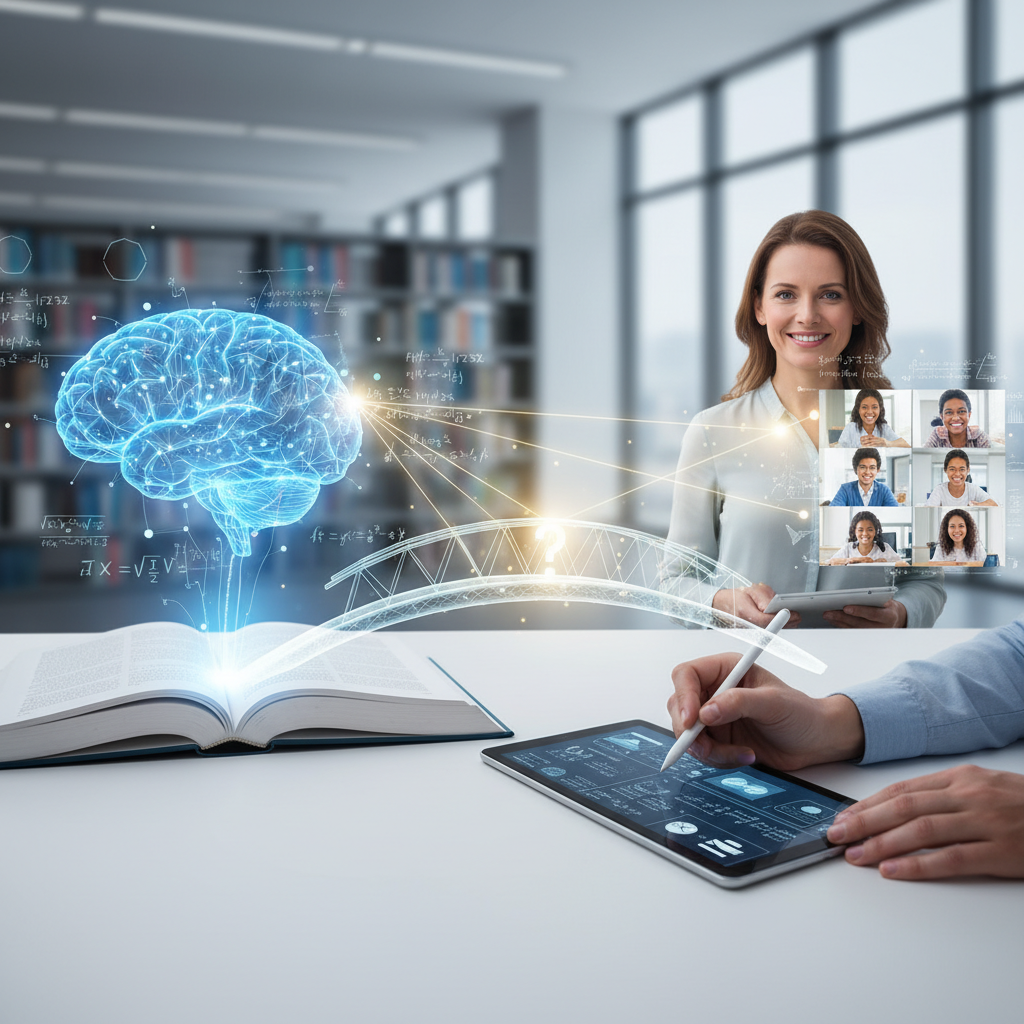
The Case for AI: Where Technology Shines in the Classroom
The conversation about artificial intelligence replacing teachers isn't about a robot standing at the front of a classroom. Instead, it's about AI-powered tools handling specific tasks with a level of efficiency and personalization that humans can't always match. Understanding where AI excels is key to seeing its true potential role in the future of education.
Personalized Learning Pathways
One of the most significant advantages of AI is its ability to create truly personalized learning experiences. Traditional classrooms often move at a single pace, which can leave some students behind while boring others who grasp concepts more quickly. AI-driven platforms can assess a student's knowledge in real-time, identifying their specific strengths and weaknesses.
Based on this data, the AI can then generate customized lesson plans, practice problems, and learning materials. If a student is struggling with algebra, the system can provide more foundational exercises and video tutorials on that specific topic. Conversely, if a student masters a concept quickly, the AI can introduce more advanced challenges to keep them engaged. This level of individual tailoring ensures that every student is learning at a pace and level that is optimal for them.
Automating Administrative Tasks
A significant portion of a teacher's time is spent on non-teaching activities. This includes grading papers, tracking attendance, creating lesson plans, and managing communications with parents. These administrative burdens can lead to burnout and take away valuable time that could be spent on direct student interaction and mentorship. This is an area where AI can be a revolutionary assistant.
AI tools can instantly grade multiple-choice quizzes and even provide initial feedback on written assignments by checking for grammar, spelling, and structure. They can manage attendance records, send automated reminders to parents about upcoming events, and help teachers find and organize educational resources for their lesson plans. By offloading these repetitive tasks, AI frees up teachers to focus on the more human aspects of their job.
Providing Universal Access to Information
AI can break down barriers to learning for students around the world and for those with different learning needs. AI-powered translation tools can provide real-time captions and translations, making educational content accessible to students who speak different languages. For students with visual impairments, AI can describe images and read text aloud. For those with hearing impairments, it can generate accurate transcripts of lectures.
Furthermore, intelligent tutoring systems can provide 24/7 support, allowing students to get help with their homework or review a difficult concept anytime they need it, not just during school hours. This creates a more equitable learning environment where access to help isn't limited by a teacher's availability or a family's resources.