Exploring the Potential of Tesla Stock for Long-Term Growth in 2026
So, you're looking ahead and wondering if Tesla stock is the right move for your portfolio by 2026. To get a clear picture, we need to look past the daily hype and focus on the fundamental factors that will shape its long-term value.
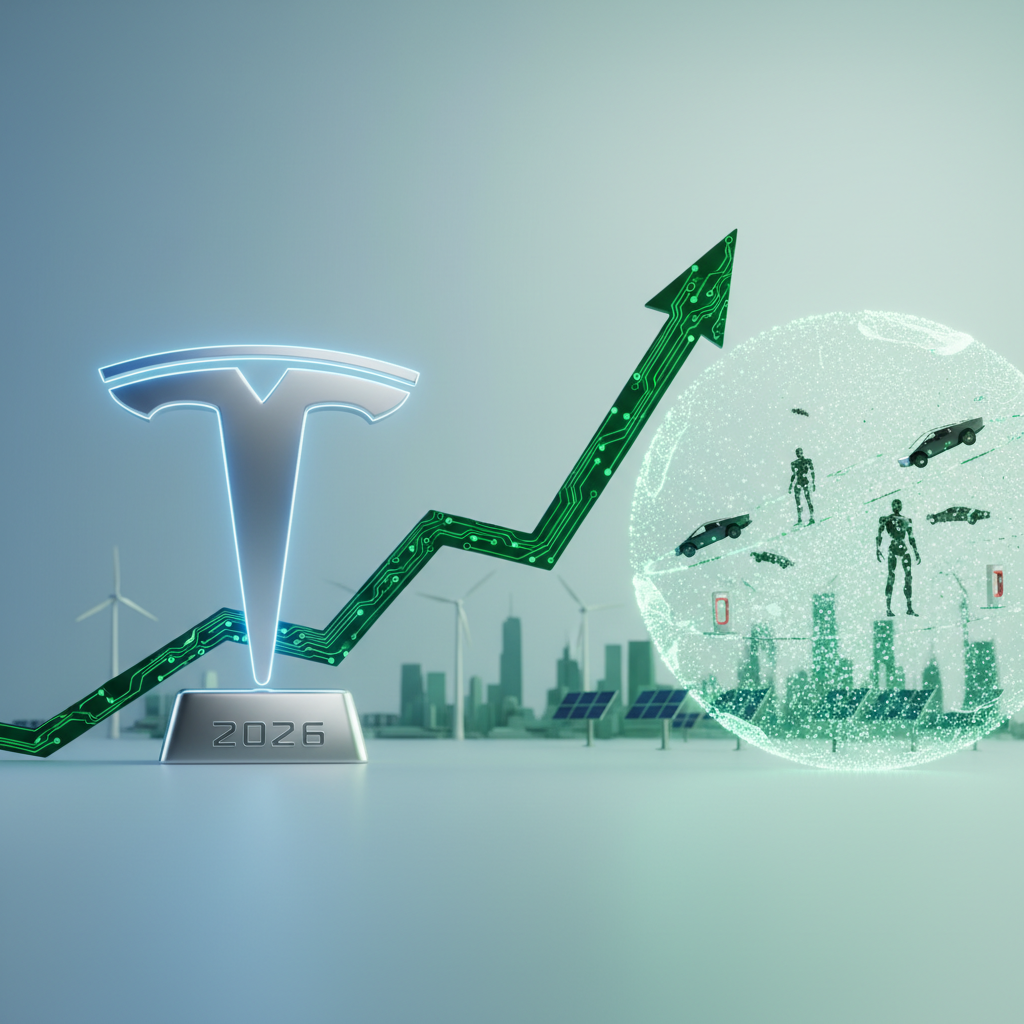
What Makes Tesla Stock A Good Investment For 2026?
The Expanding Electric Vehicle (EV) Market
One of the most significant factors underpinning the investment case for Tesla is the global, accelerating shift toward electric vehicles. Governments around the world are implementing stricter emissions regulations and offering incentives for consumers to switch from internal combustion engine (ICE) vehicles to EVs. This secular trend creates a massive, growing market that is expected to continue expanding well into the next decade. By 2026, the adoption of EVs is projected to be substantially higher than it is today, providing a strong tailwind for the entire industry.
Tesla has long been the trailblazer in this space, establishing itself not just as a car manufacturer but as a technology brand synonymous with electric mobility. Its early entry gave it a powerful first-mover advantage, allowing it to build significant brand recognition, a loyal customer base, and a deep understanding of EV manufacturing at scale. While competition from legacy automakers and new EV startups is intensifying, Tesla's established position and dedicated focus on electrification give it a powerful competitive edge in capturing a significant share of this expanding market.
Diversification Beyond Automobiles
Viewing Tesla solely as a car company is to miss a huge part of its potential value by 2026. The company is actively diversifying into other high-growth sectors, most notably energy generation and storage. The Tesla Energy division is a key component of this strategy. Products like the Powerwall (a home battery system) and the Megapack (a utility-scale energy storage solution) are designed to solve the intermittency problems of renewable energy sources like solar and wind.
As the world transitions to a more sustainable energy grid, the demand for large-scale battery storage is expected to skyrocket. Tesla is uniquely positioned to capitalize on this demand, leveraging its battery technology and manufacturing expertise. The Solar Roof and traditional solar panels further integrate this ecosystem, allowing consumers to generate, store, and use their own clean energy. By 2026, the energy division could represent a much larger portion of Tesla's overall revenue, transforming it into a decentralized electric utility and a diversified technology conglomerate.
Technological Leadership and Innovation
At its core, Tesla is driven by engineering and innovation. This technological leadership is a primary reason many investors are optimistic about its long-term prospects. The company's continuous improvements in battery technology—focusing on increased energy density, longer lifespan, and lower costs—are crucial for making EVs more affordable and practical for the mass market. The development of new battery chemistries and manufacturing processes, like the 4680 cell, aims to solidify this lead.
Furthermore, Tesla has revolutionized automotive manufacturing with concepts like the Giga Press, which drastically simplifies the vehicle assembly process, reduces costs, and improves structural integrity. This focus on manufacturing efficiency allows Tesla to achieve industry-leading profit margins. Looking ahead to 2026, the continued refinement of these processes and the potential rollout of a more affordable, next-generation vehicle platform could unlock another major phase of growth.
The Supercharger Network Advantage
A reliable and widespread charging infrastructure is one of the biggest hurdles to mass EV adoption. Tesla addressed this challenge early on by building its own proprietary Supercharger network. This network is widely regarded as a significant competitive moat. It offers a seamless, fast, and reliable charging experience that third-party networks have struggled to match consistently. For many potential EV buyers, the quality and availability of the Supercharger network are major factors in choosing a Tesla over a competing brand.
Looking toward 2026, this advantage is poised to evolve. Tesla has begun opening its network to other EV manufacturers, turning a key competitive advantage into a new, high-margin revenue stream. By serving as the "gas station" for a growing fleet of non-Tesla EVs, the company can generate significant income from its established infrastructure. This move positions Tesla not just as a vehicle maker but as a critical player in the broader energy and transportation ecosystem.
The Long-Term Bet on AI and Robotics
Perhaps the most forward-looking, and therefore most speculative, part of the investment thesis for Tesla is its deep investment in artificial intelligence and robotics. The most prominent project in this area is its work on autonomous driving, specifically Full Self-Driving (FSD). While true Level 5 autonomy remains a complex challenge, progress by 2026 could unlock immense value. A future where Tesla operates a fleet of autonomous robotaxis could generate software-as-a-service (SaaS) level recurring revenue, completely reshaping the company's financial profile.
Beyond FSD, Tesla is also developing the Optimus humanoid robot. The vision is for Optimus to eventually perform repetitive or dangerous tasks in manufacturing and other industries, addressing labor shortages and dramatically improving productivity. While still in its early stages, the potential market for a capable humanoid robot is enormous. The development of the Dojo supercomputer, designed to train the AI models for FSD and robotics, further underscores Tesla's ambition to be a leader in real-world artificial intelligence.
The Journey of Tesla: From Niche Automaker to Tech Giant
Understanding Tesla's potential future requires a look at its transformative past. Founded in 2003, the company's initial mission was to prove that electric cars could be better, quicker, and more fun to drive than gasoline-powered cars. The first step was the Tesla Roadster, a high-performance sports car that shattered the stereotype of EVs as slow, uninspiring "golf carts." While produced in low volumes, the Roadster demonstrated the viability of Tesla's battery technology and electric powertrain.
The true turning point came with the Model S in 2012. This premium sedan won numerous awards and proved that an EV could be a desirable, long-range, and practical primary vehicle. It was followed by the Model X, Model 3, and Model Y. The Model 3 was particularly pivotal, as it was Tesla's first attempt at a mass-market vehicle, bringing the brand to a much wider audience. Throughout this journey, the company has faced and overcome immense production, financial, and logistical challenges, evolving from a niche startup constantly on the brink of failure into one of the world's most valuable companies.
Exploring Key Considerations and Potential Risks
What are the biggest risks facing Tesla?
Despite the optimistic outlook, investing in Tesla is not without significant risks. Intense competition is one of the largest. Nearly every major legacy automaker, from Ford and GM to Volkswagen and Hyundai, is investing billions into their own EV lineups. Additionally, new, well-funded EV startups from China and the US are entering the market, increasing price pressure and fighting for market share. A global economic downturn could also dampen consumer demand for new vehicles, which are high-cost discretionary purchases.
Another major consideration is regulatory risk. Changes in government subsidies or emissions mandates could impact the pace of EV adoption. Furthermore, the company's autonomous driving ambitions face strict scrutiny from regulators worldwide, and any setbacks on that front could impact sentiment. Finally, there is a "key person risk" associated with CEO Elon Musk. His focus is split among several major companies (including SpaceX and X), and his often-controversial public persona can lead to stock price volatility that is not always tied to the company's fundamental performance.
How does Tesla's valuation compare to other automakers?
One of the most debated topics surrounding Tesla stock is its valuation. Traditionally, the company has traded at a much higher price-to-earnings (P/E) ratio and market capitalization than established automakers like Toyota or General Motors, even when producing far fewer vehicles. The reason for this discrepancy lies in how the market perceives the company. While legacy automakers are largely valued based on their current vehicle sales and profits, Tesla is often valued more like a high-growth technology company.
Investors who are bullish on Tesla are not just paying for its current car business. They are pricing in the future potential of its other ventures: the high-margin software revenue from Full Self-Driving, the exponential growth of the Tesla Energy division, the long-shot potential of the Optimus robot, and the continued innovation in manufacturing and AI. In essence, the valuation reflects a belief that Tesla's total addressable market extends far beyond just selling cars. Conversely, skeptics argue that this valuation is overly optimistic and does not adequately account for the execution risks involved in these future projects.
What is the significance of Full Self-Driving (FSD) for the future?
Full Self-Driving is arguably the single most important catalyst for Tesla's long-term growth story. The current FSD Beta is a driver-assistance system, but the ultimate goal is to achieve full autonomy, where the car can drive itself without human oversight. If and when this is achieved, it would fundamentally transform Tesla's business model. Instead of a one-time sale of a car, the company could license FSD software for a high-margin monthly subscription.
The even larger vision is the creation of a "Robotaxi" network. A Tesla owner could allow their autonomous car to operate as a ride-hailing vehicle when they are not using it, generating passive income for the owner and a cut of the revenue for Tesla. This would turn every Tesla car into a potential revenue-generating asset, dramatically increasing its utility and value. Achieving this would make Tesla a dominant player in the transportation-as-a-service industry, a market potentially worth trillions of dollars. However, the technical and regulatory path to full autonomy is incredibly challenging, making it a high-risk, high-reward endeavor.
Conclusion
Evaluating Tesla as a potential investment for 2026 involves looking beyond its current status as an electric vehicle manufacturer. The case for its potential rests on several pillars: the continued global adoption of EVs, its expansion into the massive energy storage market, its relentless pace of innovation in both technology and manufacturing, and its long-term, ambitious bets on artificial intelligence and robotics. While these factors present a compelling vision for the future, potential investors must also weigh the significant risks, including fierce competition, high valuation, and the challenges of executing on its most ambitious goals.