Exploring the Potential Upgrades: Will the 2026 Mazda 3 Feature a New Infotainment System?
If you're wondering whether the 2026 Mazda 3 will finally get an infotainment upgrade, you've landed in the right spot.
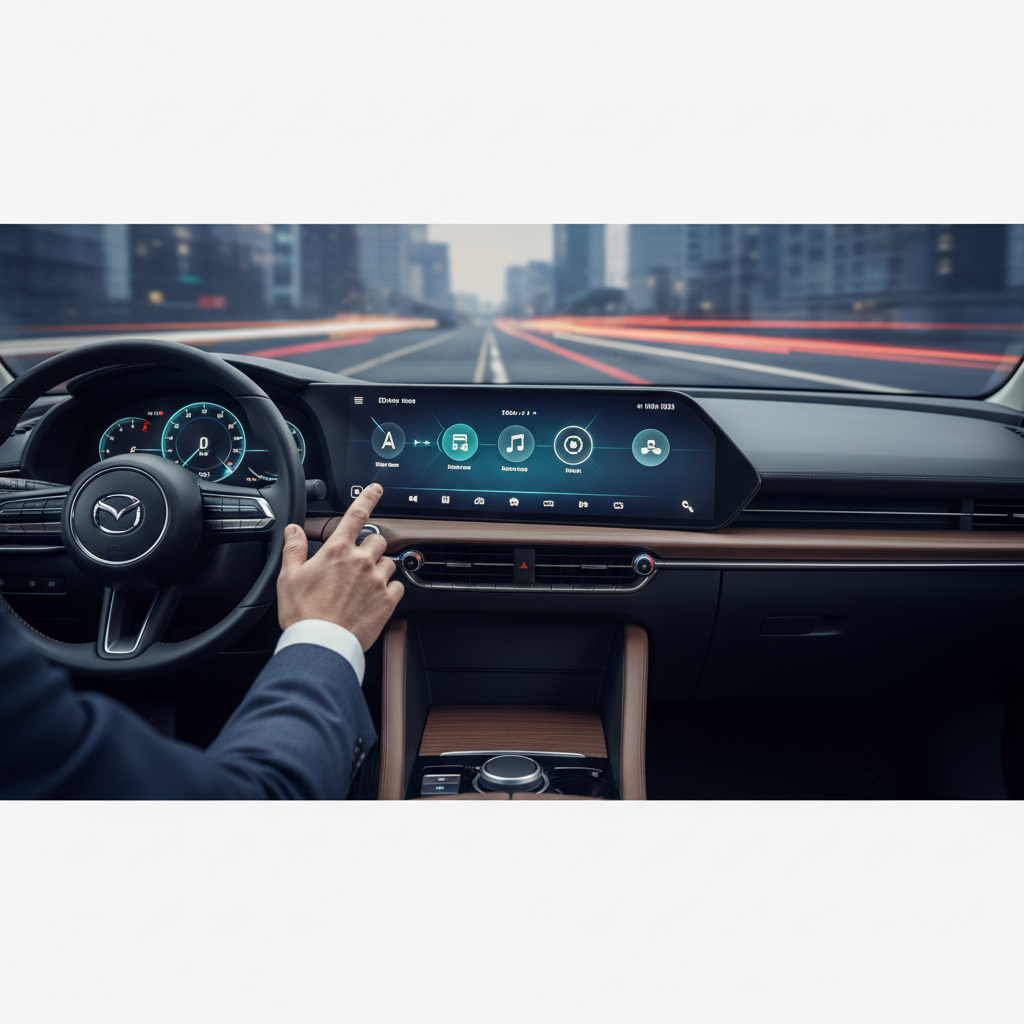
Understanding the Current Mazda Connect System
Before we can look forward to what the 2026 Mazda 3 might offer, it's essential to understand the system it currently uses. For the past several years, the Mazda 3 has been equipped with the Mazda Connect infotainment system. This system is known for its unique approach, prioritizing driver safety and minimizing distraction. Unlike many competitors who have embraced large, tablet-style touchscreens, Mazda has deliberately opted for a non-touchscreen interface while the vehicle is in motion.
The centerpiece of the current setup is a widescreen display, typically 8.8 or 10.25 inches, set deep into the dashboard. This placement is intentional, designed to be within the driver's line of sight without requiring them to look down and away from the road. Instead of touch inputs, the system is controlled primarily by a rotary commander knob located on the center console, right where the driver's hand would naturally rest. This tactile, physical control allows for "blind operation," meaning you can navigate menus, change songs, or adjust settings without taking your eyes off the road.
While this system is lauded for its safety-first philosophy, it does have its critics. Users accustomed to the immediate, intuitive nature of smartphone touchscreens sometimes find the commander knob to have a steeper learning curve. Furthermore, while Apple CarPlay and Android Auto are standard, their touch-based designs can feel slightly awkward when navigated solely with a rotary dial. This tension between safety-focused design and modern user expectations is at the heart of the speculation surrounding a potential update for 2026.
Rumors and Speculation: What's on the Horizon for 2026?
The automotive world is rife with rumors, and the next-generation Mazda 3 is a hot topic. While Mazda has not made any official announcements regarding the 2026 model's infotainment system, industry trends and subtle hints provide a basis for educated speculation. The current generation of the Mazda 3 launched in 2019, and a 2026 model year would place it deep into its lifecycle, a common time for significant technology refreshes or a full redesign.
One of the most persistent rumors is that Mazda will finally introduce a full-touchscreen system, or at least a hybrid system that incorporates touch functionality alongside the beloved commander knob. This speculation is fueled by recent updates in other Mazda vehicles. For instance, newer models like the CX-50 and CX-90 feature larger screens with limited touchscreen capabilities, primarily for Apple CarPlay and Android Auto. This suggests Mazda is testing the waters and acknowledging the consumer demand for touch interaction.
Another area of speculation involves a complete software overhaul. The current Mazda Connect interface, while functional, is seen by some as visually dated compared to the slick, customizable interfaces offered by competitors like Hyundai and Kia. A new system for 2026 could feature a more modern graphical user interface (GUI), faster processing speeds for quicker responses, and enhanced connectivity features, potentially including over-the-air (OTA) software updates. This would allow Mazda to improve the system over time without requiring a visit to the dealership.
Potential Features of a New Mazda Infotainment System
If Mazda does roll out a new system for the 2026 Mazda 3, we can expect it to be a significant leap forward. Based on technology seen in other new Mazda models and general automotive trends, here are some features that could be on the table:
- Larger, Higher-Resolution Display: The most likely upgrade would be a move to a larger screen, possibly in the 12.3-inch range, similar to what's found in the CX-90. This would provide more screen real estate for maps, media, and vehicle settings, all rendered in a much higher resolution for crisp, clear graphics.
- Hybrid Touch and Rotary Control: A new system would almost certainly retain the commander knob for safety, but it would likely add touchscreen functionality. This would be a "best of both worlds" approach, allowing for tactile control while driving and easy touch input for passengers or when the vehicle is parked.
- Wireless Apple CarPlay and Android Auto: While currently available on some higher trims, making wireless smartphone integration standard across the board would be a major quality-of-life improvement. This eliminates the need for cables, creating a cleaner, more seamless connection experience.
- Enhanced Voice Commands: The next generation of infotainment will likely feature a more advanced, natural-language voice assistant. Instead of needing to use rigid, specific commands, drivers could simply say things like, "I'm cold," to have the system turn up the heat, or "Take me to the nearest coffee shop."
- Over-the-Air (OTA) Updates: This is a game-changer for vehicle ownership. OTA updates would allow Mazda to push new features, bug fixes, and even map updates directly to the car over its built-in cellular connection, ensuring the system stays modern and secure throughout the car's life.
- Greater Customization and User Profiles: A new system could allow for multiple user profiles, where each driver's settings for seating position, climate control, radio presets, and app layout are saved. When the car recognizes the driver (perhaps via their key fob or phone), it automatically adjusts to their preferences.
The Evolution of Mazda's Infotainment Philosophy
To understand where Mazda might be going, it’s crucial to look at where they’ve been. For over a decade, the company has adhered to a principle they call the "Jinba Ittai," which translates to "horse and rider as one." This philosophy extends beyond just handling and performance; it deeply influences the interior design and technology. The goal is to create a harmonious connection between the driver and the car, eliminating anything that could break that bond.
This is precisely why Mazda resisted touchscreens for so long. Their internal research concluded that reaching for and operating a touchscreen requires a driver to shift their posture and, more importantly, take their eyes off the road for a dangerous length of time. The commander knob, placed ergonomically on the center console, was their solution. It allows the driver to keep their eyes up and their focus forward while navigating menus through muscle memory. It’s a philosophy rooted in cognitive science and driver safety, one that has earned them praise from safety advocates.
However, the industry and consumer expectations have shifted dramatically. Smartphones have trained an entire generation of drivers to expect responsive, touch-based interfaces. The pressure from competitors, who are marketing ever-larger and more capable touchscreens, is immense. Mazda's recent introduction of limited touch functionality in its newer SUVs indicates a softening of their hardline stance. They seem to be searching for a middle ground—a way to integrate the convenience of touch that customers demand without completely abandoning their core principles of safety and driver focus.
Answering Your Questions About Mazda Infotainment
As drivers consider their next vehicle, many questions arise about the technology inside. Here are answers to some common queries related to Mazda's infotainment systems and future upgrades.
Can you upgrade an older Mazda 3 to a new system?
This is a frequent question, and the answer is generally no, at least not with an official Mazda-provided solution. Infotainment systems are deeply integrated into a vehicle's core electronics, controlling everything from climate to vehicle safety settings. A new system designed for a 2026 model would have different hardware, wiring harnesses, and software that would not be compatible with the architecture of an older car, like a 2020 or 2022 model.
While the aftermarket community is creative, attempting such a swap would be incredibly complex, expensive, and would almost certainly void the vehicle's warranty. The most significant official upgrade Mazda has offered in the past was a hardware/software update that allowed older Mazda Connect systems to support Apple CarPlay and Android Auto, but swapping an entire generation of hardware is not something dealerships typically support.
What other tech upgrades can we expect in the 2026 Mazda 3?
Beyond the infotainment screen, a next-generation or significantly refreshed Mazda 3 would likely see a host of other tech improvements. One major area could be the driver's digital instrument cluster. We may see a fully configurable digital display replace the current combination of analog and digital gauges, allowing drivers to customize the information they see.
We can also anticipate advancements in Mazda's i-Activsense safety suite. This could include more sophisticated driver-assist features like a more advanced lane-centering system, intersection turn assistance, and potentially a hands-free driving assist for highway conditions, similar to systems offered by competitors. Enhanced connectivity through the MyMazda app, offering more remote functions like remote climate start or advanced vehicle tracking, is also a strong possibility.
How does Mazda's system compare to Honda's or Toyota's?
Historically, Mazda's infotainment has been praised for its premium feel and safety-oriented design but criticized for its lack of touch functionality. In contrast, recent systems from Honda and Toyota have fully embraced touchscreens. The latest Honda infotainment system, found in the new Civic and Accord, is fast, simple, and features a physical volume knob, addressing a major complaint from previous generations. It's considered one of the more user-friendly systems on the market.
Toyota's new Audio Multimedia system is also a massive improvement over its old Entune system, featuring a large screen, crisp graphics, and excellent voice commands powered by Google. Both Honda and Toyota offer a more conventional, smartphone-like experience. Mazda's current system, therefore, appeals to a driver who prioritizes tactile control and minimal distraction, while Honda and Toyota appeal to those who want a straightforward touchscreen experience. If Mazda moves to a hybrid touch system, it could potentially offer the best of both worlds, rivaling its main competitors more directly on user experience.
Conclusion
While nothing is confirmed, the evidence strongly suggests that the 2026 Mazda 3 is a prime candidate for a significant infotainment overhaul. A move towards a larger, touch-capable screen with faster software and enhanced connectivity seems not just possible, but probable. Such an update would address one of the few common criticisms of an otherwise stellar compact car, blending Mazda's renowned commitment to driver engagement and safety with the modern technological convenience that today's buyers expect. For now, prospective buyers and Mazda fans will have to wait for the official word, but the future of the Mazda 3's cabin technology looks bright.