Exploring the Top 10 Ranked Universities in New York According to UniRank
New York is home to some of the world's most prestigious universities, but how do they stack up against each other? To help you navigate your options, we've compiled the definitive top 10 list for the state based on the latest data from UniRank.
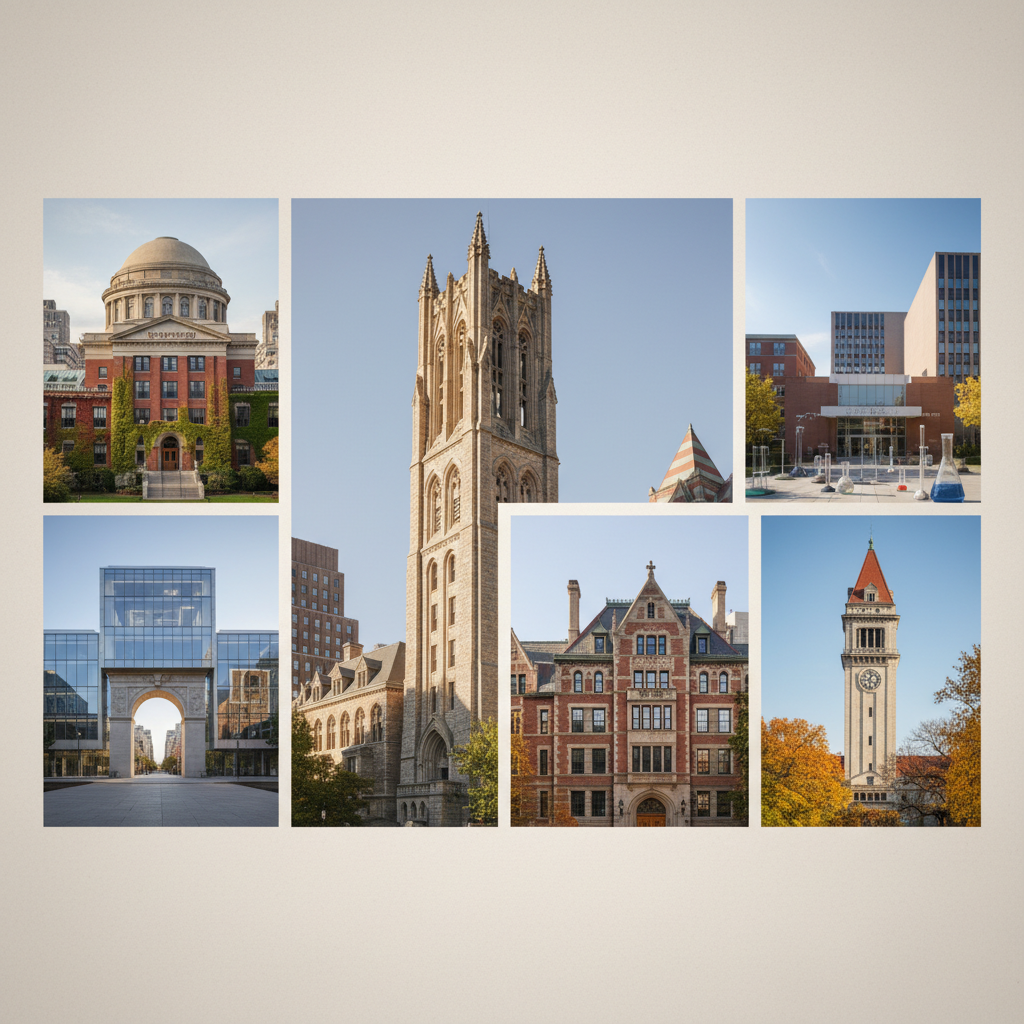
Top 10 Universities In New York Ranked By UniRank
New York is home to some of the most prestigious and diverse institutions of higher learning in the world. From sprawling research universities to intimate liberal arts colleges, the Empire State offers something for every student. To help navigate this vast educational landscape, UniRank provides a unique ranking system based on web presence and popularity. This list explores the top 10 universities in New York according to their 2024 rankings, offering a glimpse into what makes each institution special.
1. Cornell University
Located in the picturesque city of Ithaca, Cornell University is a private Ivy League institution with a unique public mission as New York's land-grant university. This dual identity gives it an exceptionally broad range of academic programs, from agriculture and life sciences to hotel administration and industrial labor relations. The campus is renowned for its stunning natural beauty, featuring gorges, waterfalls, and panoramic views of Cayuga Lake, providing an inspiring backdrop for rigorous academic pursuits.
Cornell is a hub of groundbreaking research and innovation, fostering a vibrant intellectual community where students can engage with world-class faculty. Its decentralized structure includes seven undergraduate colleges and seven graduate divisions, each with its own academic standards and faculty. This allows for a specialized, small-college feel within a large, resource-rich university, offering students the best of both worlds.
2. Columbia University
As one of the oldest and most esteemed universities in the United States, Columbia University in the City of New York is a global leader in education and research. Situated in the Morningside Heights neighborhood of Manhattan, its urban campus provides unparalleled access to the cultural, financial, and professional opportunities of one of the world's great cities. Columbia is celebrated for its Core Curriculum, a set of common courses for all undergraduates that fosters a shared intellectual experience and critical thinking skills.
The university is home to numerous prestigious graduate and professional schools, including the Columbia Law School, the Vagelos College of Physicians and Surgeons, and the Pulitzer Prize-administering Graduate School of Journalism. Its commitment to academic excellence and its location in a global hub attract a diverse and ambitious student body from all over the world, creating a dynamic and competitive learning environment.
3. New York University (NYU)
New York University is a private research university with a campus that is deeply intertwined with the fabric of Manhattan's Greenwich Village. Famously known as a "university without walls," NYU's academic buildings, residence halls, and student centers are spread throughout the neighborhood, offering a truly immersive urban experience. This unique setup encourages students to engage with the city as an extension of their campus, leveraging its vast resources for internships, research, and cultural enrichment.
NYU is particularly renowned for its Tisch School of the Arts, Stern School of Business, and its strong programs in law, medicine, and the social sciences. With a global network of academic centers and campuses in places like Abu Dhabi and Shanghai, NYU emphasizes an international perspective, preparing students to become leaders in an interconnected world.
4. University of Rochester
The University of Rochester is a private research university known for its distinctive "Rochester Curriculum." This flexible academic structure eliminates general education requirements, allowing undergraduate students the freedom to study what they love. Students choose a major in one of three broad divisions of learning (humanities, social sciences, or natural sciences and engineering) and then complete "clusters" of related courses in the other two divisions, promoting both depth and breadth in their education.
Located in Rochester, a city with a rich history of innovation, the university is a major center for research, especially in optics, music, and medicine. The Eastman School of Music is consistently ranked among the best in the country, and the university's Medical Center is a leading institution for patient care and biomedical research. This focus on interdisciplinary study and research creates a collaborative and intellectually stimulating environment.
5. Syracuse University
Syracuse University is a private research institution known for its spirited campus life and a powerful combination of academic programs. It offers a classic residential college experience on its picturesque campus in Central New York. The university is recognized for its excellence in several fields, most notably the S.I. Newhouse School of Public Communications, which is widely considered one of the top communications schools in the nation.
Beyond communications, Syracuse boasts strong programs in information studies, architecture, and public affairs through its Maxwell School of Citizenship and Public Affairs. The university's strong school spirit, epitomized by its passionate support for its Division I athletics teams, and its vast network of dedicated alumni contribute to a vibrant and supportive community that lasts long after graduation.
6. Rensselaer Polytechnic Institute (RPI)
As the oldest technological research university in the English-speaking world, Rensselaer Polytechnic Institute (RPI) in Troy has a long and storied history of innovation. RPI is focused on the intersection of science, technology, and the arts, preparing students to tackle complex global challenges. Its hands-on, interdisciplinary approach to education is exemplified by core initiatives like "The New Polytechnic," which emphasizes collaboration across diverse fields.
RPI is a leader in areas such as engineering, computing, biotechnology, and data science. The university's state-of-the-art research facilities, including the Center for Biotechnology and Interdisciplinary Studies and the IBM-powered supercomputer, provide students with unparalleled opportunities for undergraduate research. This focus on practical application and discovery makes RPI a top choice for aspiring scientists, engineers, and innovators.
7. University at Buffalo (SUNY)
The University at Buffalo (UB) is a flagship institution of the State University of New York (SUNY) system and a premier public research university. As a member of the prestigious Association of American Universities (AAU), UB is recognized for its high level of research activity and academic excellence. With comprehensive programs spanning from medicine and law to engineering and management, UB offers a top-tier education at a public university value.
UB provides a diverse and international environment, attracting students and scholars from over 100 countries. Its three distinct campuses offer varied settings, from a traditional suburban campus in Amherst to a growing medical campus in downtown Buffalo. This extensive scale allows for a wide array of resources, research opportunities, and extracurricular activities for its large student body.
8. Binghamton University (SUNY)
Binghamton University is another premier public university within the SUNY system, often referred to as a "Public Ivy." It has built a reputation for providing a rigorous, Ivy League-caliber education at an affordable price. The university is known for its strong undergraduate programs, particularly in the liberal arts, management, and nursing, and it places a strong emphasis on undergraduate research opportunities.
Located in the rolling hills of New York's Southern Tier, Binghamton offers a vibrant campus life with a strong sense of community. The university's commitment to academic excellence, combined with its focus on sustainability and global engagement, creates a well-rounded and challenging educational experience for high-achieving students.
9. Stony Brook University (SUNY)
Stony Brook University, located on Long Island, is another flagship of the SUNY system and a member of the AAU. It is particularly distinguished for its strengths in STEM fields and its close affiliation with the nearby Brookhaven National Laboratory, a U.S. Department of Energy facility that Stony Brook helps manage. This partnership provides extraordinary research opportunities for both students and faculty.
The university is also home to Stony Brook Medicine, a leading academic medical center that includes a hospital, five health sciences schools, and major research centers. This focus on health and science, combined with strong programs in the arts and humanities, makes Stony Brook a powerhouse for discovery and a major engine for economic development in the region.
10. Yeshiva University
Yeshiva University is a private research university in New York City with a unique dual curriculum that combines Jewish studies and traditions with a comprehensive secular education. This mission infuses education with ethical values, preparing students to be successful professionals and informed citizens who can make a positive impact on the world. The university has multiple campuses across Manhattan and the Bronx.
While rooted in Jewish values, Yeshiva University welcomes students of all backgrounds to its undergraduate and graduate programs. It is highly regarded for its programs in law (Benjamin N. Cardozo School of Law), social work, and psychology. This distinctive educational model provides a rich, multifaceted experience that nurtures both intellectual and personal growth.
Understanding the UniRank Methodology
It's important for prospective students and their families to understand how different ranking systems work. Unlike traditional rankings like U.S. News & World Report, which heavily weigh factors like peer assessment, graduation rates, and faculty resources, UniRank takes a very different approach. Its primary goal is to rank universities based on their web presence and popularity. This is a measure of how well-known and visible an institution is in the digital space.
The UniRank algorithm uses web metrics sourced from several independent intelligence providers, such as Moz Domain Authority and SimilarWeb Global Rank. It assesses factors like the volume and quality of traffic to a university's website and its overall online footprint. The methodology favors institutions that are accredited, offer at least four-year undergraduate or postgraduate degrees, and primarily deliver courses in a traditional, face-to-face format. Therefore, a UniRank score is less about academic rigor in the traditional sense and more about a university's digital influence and reach, which can be an interesting proxy for its global reputation and brand recognition.
Answering Your Top Questions About New York Universities
Choosing a university is a major life decision, and rankings are just one piece of the puzzle. Here are answers to some common questions students have when considering higher education in New York.
What's the Difference Between Public and Private Universities in New York?
The most significant difference between public and private universities lies in their funding and, consequently, their tuition costs. Public universities, like those in the SUNY (State University of New York) and CUNY (City University of New York) systems, receive substantial funding from the state government. This allows them to offer significantly lower tuition rates, especially for in-state residents. They are often larger institutions with very large student bodies and a wide array of academic programs.
Private universities, such as Cornell, Columbia, and NYU, rely primarily on tuition, endowments, and private donations for their funding. As a result, their sticker price for tuition is typically much higher. However, they often have larger endowments that can be used to provide generous financial aid packages, sometimes making them more affordable than a public university for certain students. Private schools are often smaller and may offer a more specialized academic focus or a unique campus culture.
How Do I Choose the Right University for Me?
The "right" university is a highly personal choice that goes beyond any single ranking. Start by considering your academic interests. Look for schools that have strong programs in your potential field of study. Think about the learning environment you prefer—do you thrive in large lecture halls or small, discussion-based seminars? Campus setting is another crucial factor. Do you want the excitement of an urban campus like NYU or the scenic, traditional college town feel of Ithaca where Cornell is located?
Don't forget to consider financial fit. Research both the sticker price and the average financial aid packages offered by each school. Finally, think about campus culture. If possible, visit the campuses, talk to current students, and try to get a feel for the student life, extracurricular opportunities, and overall atmosphere. Choosing a university is about finding a place where you will be happy, challenged, and supported for four years.
Are Ivy League Schools Always the Best Choice?
Ivy League schools like Cornell and Columbia certainly carry immense prestige and offer world-class resources, incredible networking opportunities, and a globally recognized degree. For many students, they represent the pinnacle of higher education. However, they are not automatically the "best" choice for everyone. The academic pressure at these institutions is intense, and the environment can be highly competitive, which may not suit every learning style.
New York is filled with exceptional non-Ivy institutions that may be a better fit for a student's specific academic goals or personal preferences. For instance, a student passionate about communications might find an unparalleled education at Syracuse's Newhouse School. An aspiring engineer could thrive in the hands-on, tech-focused environment of RPI. Furthermore, "Public Ivies" like Binghamton and Stony Brook offer an outstanding education and research opportunities at a fraction of the cost. The best choice is the university that provides the right academic program, environment, and opportunities for an individual student to succeed.
Conclusion
New York State presents an incredibly rich and varied higher education landscape. The UniRank list provides a fascinating snapshot of the digital presence and popularity of the state's top institutions, from world-renowned Ivy Leagues like Cornell and Columbia to premier public research universities like Buffalo and Stony Brook. Each university offers a unique blend of academic strengths, campus culture, and opportunities.
While rankings can be a helpful starting point, they are just one tool in the college search process. Prospective students should delve deeper into the specific programs, environments, and values that make each institution distinct. By aligning their personal and academic goals with what these excellent universities have to offer, students can find the perfect place to launch their future.