Exploring the Upcoming Mobile Innovations: Unveiling the Most Awaited Smartphones of 2026
The year 2026 is already shaping up to be a landmark for smartphones, and you've landed in the right place for an exclusive preview. We're cutting through the noise to bring you the most credible leaks and rumors surrounding the next generation of devices from Apple, Samsung, and Google.
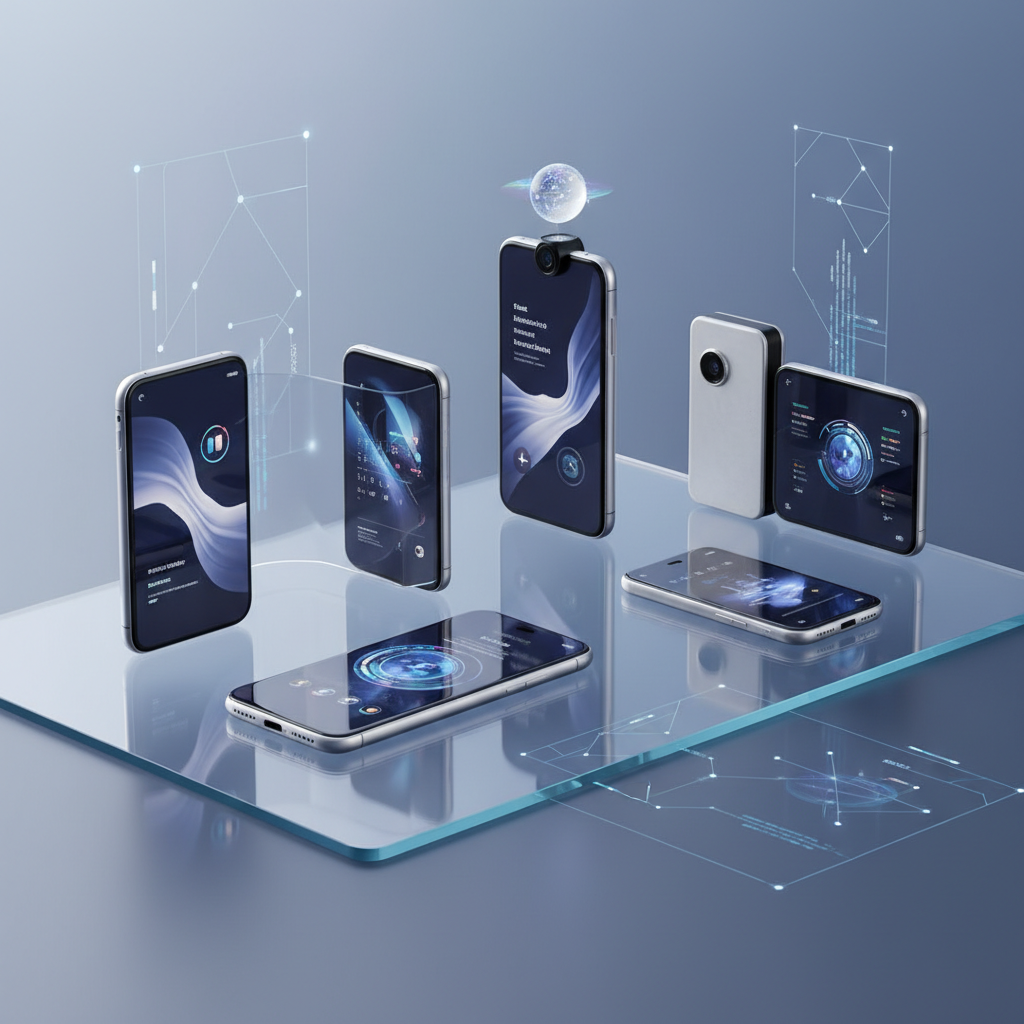
A Glimpse into the Future: The Most Anticipated Phones of 2026
While the world of technology moves at a breakneck pace, the roadmap for future smartphones often leaves clues years in advance. By looking at current trends, technological advancements, and industry whispers, we can paint a compelling picture of what our pocket companions will look like in 2026. From artificial intelligence woven into the very fabric of the operating system to displays that are brighter and more efficient than ever, the next generation of devices promises significant leaps forward. Here’s a detailed look at the most anticipated phones we expect to see in 2026.
1. Apple iPhone 18 Series
The iPhone remains the benchmark for many, and the iPhone 18 series in 2026 is expected to be a major milestone. Rumors suggest this could be the year Apple finally achieves a truly “all-screen” design. This would involve moving the remaining Face ID components and the front-facing camera completely under the display, eliminating any form of notch or Dynamic Island. The result would be a seamless, uninterrupted sheet of glass offering an incredibly immersive viewing experience for content consumption and gaming. This under-display technology has been in development for years, and 2026 could be the year it meets Apple's stringent quality standards.
Internally, the A20 Bionic chip will likely power the Pro models, pushing the boundaries of mobile performance and efficiency. The real story, however, will be its deep integration with AI. Expect iOS 20 to feature predictive AI that learns your habits, automates complex tasks, and offers a level of personalization that feels almost prescient. Camera technology is also poised for an upgrade, with potential for a more advanced periscope zoom lens across more models, further enhancements in computational photography for low-light situations, and perhaps even the introduction of a custom-designed Apple modem for superior 5G connectivity.
2. Samsung Galaxy S26 Series
Samsung is never one to rest on its laurels, and the Galaxy S26 series will be its flagship response to the competition. The focus will likely be on a twofold strategy: refining its industry-leading display technology and doubling down on AI features through its "Galaxy AI" initiative. The Dynamic AMOLED display on the S26 Ultra is expected to reach new peaks in brightness, making it even more usable in direct sunlight, while also incorporating next-generation power-saving technology to extend battery life. We also anticipate a more durable design, potentially using new formulations of Gorilla Glass and a stronger armor aluminum or titanium frame.
On the software front, Galaxy AI will be more deeply integrated than ever. Imagine a virtual assistant that can not only transcribe meetings but also summarize them and create action items in real-time, or a camera that uses generative AI to intelligently edit photos in ways that were previously only possible with desktop software. Samsung will likely push its camera hardware further as well, potentially upgrading its primary 200MP sensor with larger pixels for better light gathering and introducing new video capabilities, such as seamless zoom and AI-powered stabilization that rivals professional gimbals.
3. Google Pixel 11 Series
By 2026, Google's Pixel line will have fully matured into a powerhouse of computational prowess, with the Pixel 11 series showcasing the zenith of its software-first philosophy. The star of the show will undoubtedly be the next-generation Google Tensor G6 chip. This custom-designed processor won't compete on raw benchmark scores but on its AI and machine learning capabilities. This will enable even more sophisticated photo and video processing, such as an "AI Director" for video that automatically suggests the best cuts and angles, and a Magic Eraser so powerful it can convincingly remove complex objects from a moving video.
The Pixel 11 will also serve as the ultimate vessel for the purest and smartest version of Android. Expect AI to be woven into every corner of the OS, from a more predictive Google Assistant that anticipates your needs to enhanced security features that can proactively identify and neutralize threats. While the hardware design will likely remain minimalist and distinct, Google may introduce upgrades like a brighter, more color-accurate display and significant improvements to battery longevity, addressing a long-standing pain point for many users. The Pixel 11’s promise isn’t just about having a great phone, but having the smartest phone in your pocket.
4. The Foldable Innovator (e.g., Samsung Galaxy Z Fold 8 / Z Flip 8)
Foldable phones are no longer a niche experiment, and by 2026, they are expected to be more mainstream, durable, and perhaps even more affordable. The Samsung Galaxy Z Fold 8 and Z Flip 8 will likely lead this charge. For the Z Fold 8, the biggest anticipation revolves around a thinner, lighter design that makes it feel less like two phones fused together and more like a single, cohesive device. A key development will be a significantly less noticeable crease on the inner display and an integrated S Pen slot, finally bringing the full Note experience to the foldable form factor without compromise.
The Z Flip 8 will continue its focus on style and convenience, with expectations for a much larger and more functional cover screen that allows users to perform nearly all essential tasks without opening the phone. Both devices will benefit from more robust hinge mechanisms and stronger ultra-thin glass, increasing user confidence in their long-term durability. These devices represent the future of mobile multitasking and portability, and the 2026 iterations could be the tipping point that convinces a much larger audience to make the switch from traditional slab phones.
The Technological Leaps Driving 2026 Smartphones
The advancements we anticipate in 2026 aren't happening in a vacuum. They are the result of years of research and development across several key technological sectors. The primary driver is the evolution of on-device Artificial Intelligence. The next generation of mobile processors, like Apple's A-series and Google's Tensor, are being built with increasingly powerful Neural Processing Units (NPUs). These specialized cores are designed specifically for AI tasks, allowing phones to perform complex machine learning operations instantly without needing to send data to the cloud. This enables real-time language translation, advanced photographic enhancements, and predictive user interfaces that learn and adapt to you.
Another critical area of innovation is battery technology. While lithium-ion has served us well, the industry is actively pushing towards new solutions like solid-state batteries. While a full commercial rollout by 2026 might be optimistic, we will certainly see hybrid versions or significant improvements in silicon-anode technology. These advancements promise higher energy density, meaning more battery life in the same physical space, and faster charging speeds that are also safer and cause less long-term battery degradation. Combined with more efficient displays and processors, this could finally lead to phones that comfortably last two full days on a single charge, even with heavy use.
Answering Your Top Questions About Future Phones
What Role Will AI Play Beyond Just Photos and Assistants?
While AI-powered cameras and smarter assistants are the most visible applications, the role of artificial intelligence in 2026 smartphones will be far more pervasive and fundamental. One of the biggest areas of growth will be in personalized performance and battery management. The phone's AI will learn your app usage patterns, intelligently allocating processing power and RAM to the apps you're about to open while throttling background processes that you rarely use. This creates a smoother user experience and can significantly extend battery life by preventing unnecessary power drain.
Furthermore, AI will revolutionize on-device security and privacy. Future AI systems will be able to detect malware and phishing attempts in real-time by analyzing app behavior and network traffic, neutralizing threats before they can cause harm. It will also power more sophisticated biometric authentication that goes beyond a fingerprint or a face scan, potentially analyzing your unique gait or typing rhythm as a secondary layer of security. AI will also make our devices more accessible, offering real-time audio descriptions of the world for the visually impaired or creating personalized user interfaces for those with motor challenges.
Will Foldable and Rollable Phones Become Mainstream and Durable?
The journey of foldable phones from a fragile novelty to a viable consumer product has been rapid, and by 2026, we expect them to be firmly in the mainstream conversation. The primary barriers to entry—price and durability—are steadily being overcome. Manufacturing processes are becoming more efficient, which will lead to a significant reduction in cost, bringing flagship foldables closer in price to their traditional counterparts. Some analysts even predict the emergence of mid-range foldable options from various manufacturers by this time.
Durability is the other major piece of the puzzle. Advancements in ultra-thin glass (UTG) are making foldable screens more scratch-resistant and resilient. Hinge mechanisms are being re-engineered to be dust and water-resistant, with simpler, more robust designs containing fewer moving parts. By 2026, the perception of foldables as "fragile" will have largely dissipated, replaced by confidence in their ability to withstand the rigors of daily life. We may even see the first consumer-ready "rollable" or "slidable" phones, which offer a different approach to expanding screen real estate without a crease.
Conclusion
Looking ahead to 2026, the smartphone landscape is poised for exciting evolution rather than a complete revolution. The focus is shifting from raw specification wars to a more integrated and intelligent user experience. The devices we'll see from Apple, Samsung, Google, and others will be smarter, more seamless, and more deeply woven into our daily lives. With advancements in on-device AI, next-generation display technology, and more resilient form factors, the phones of 2026 promise to be powerful tools that are not only more capable but also more intuitive and helpful than ever before.
For more insights into upcoming mobile technology and expert analysis, you can visit sites like: