Exploring Top Medical Schools: Where Student Success is a Priority
Choosing the right medical school is a monumental decision, and while traditional rankings are helpful, true success is measured by student outcomes.
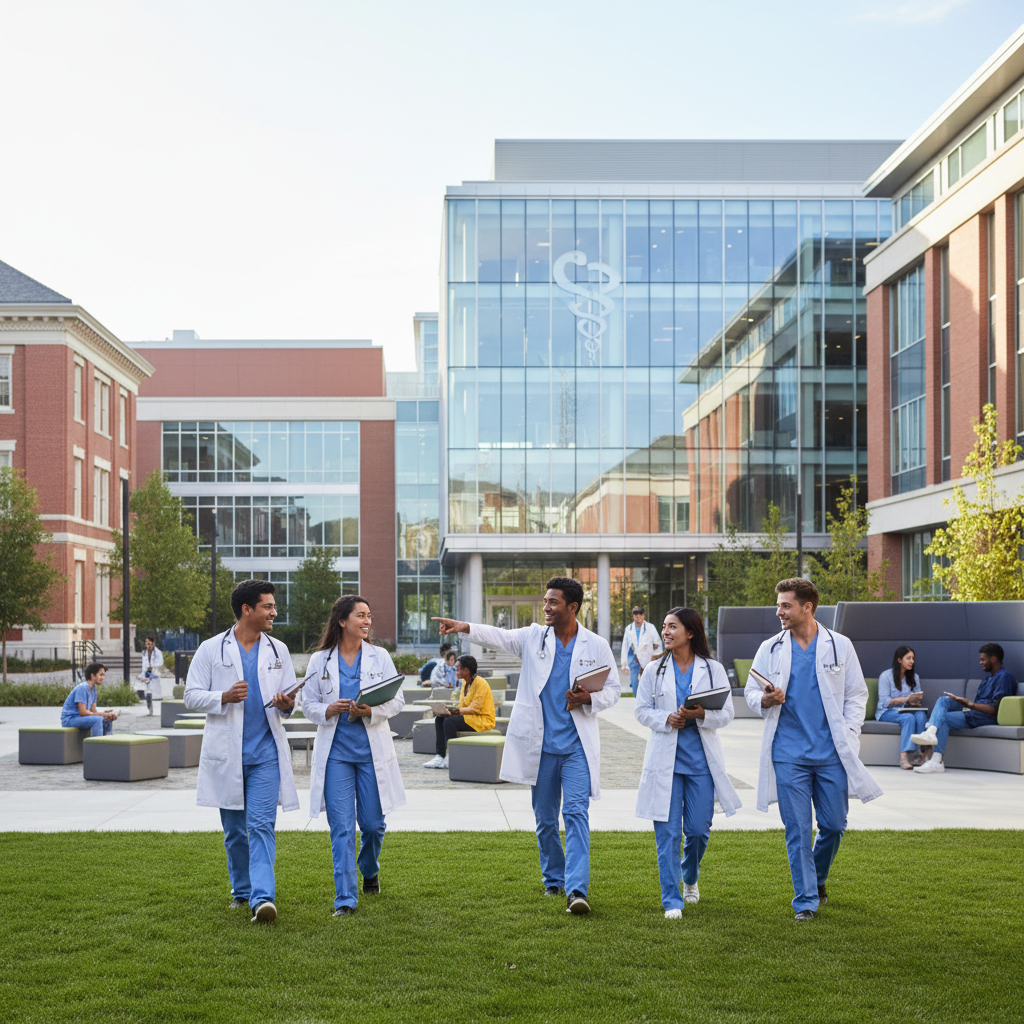
Top Medical Schools Renowned for Student Success
Choosing a medical school is one of the most significant decisions an aspiring physician will make. While rankings from publications like U.S. News & World Report provide a valuable snapshot, true student success is a multifaceted concept. It encompasses not only prestigious residency placements but also research opportunities, student satisfaction, and preparation for a lifelong career in medicine. The following institutions are consistently recognized for creating an environment where students thrive and emerge as leaders in their fields.
Harvard Medical School (Harvard University)
Consistently ranked at the very top, Harvard Medical School (HMS) defines excellence in medical education. Its success is rooted in a combination of unparalleled resources, a flexible curriculum, and access to some of the world's most renowned teaching hospitals, including Massachusetts General Hospital and Brigham and Women's Hospital. The "Pathways" curriculum at HMS encourages students to engage in active learning and early clinical experience, moving away from traditional lecture-based formats. This approach fosters critical thinking and problem-solving skills from day one.
Student success at Harvard is also driven by its immense research enterprise. Students have virtually unlimited opportunities to work alongside Nobel laureates and pioneers in biomedical research, leading to significant publications and presentations even before graduation. This deep integration of clinical training and cutting-edge science prepares graduates to not only be exceptional clinicians but also to push the boundaries of medicine. The Harvard name carries significant weight, helping graduates secure top-tier residency positions across every specialty.
Johns Hopkins University School of Medicine
The Johns Hopkins School of Medicine is synonymous with the history of modern American medicine. Its success model is built upon the tight integration of education, research, and patient care, centered around the world-famous Johns Hopkins Hospital. The "Genes to Society" curriculum provides a comprehensive framework that connects basic science principles to their real-world application in patient care and public health. This holistic view ensures students understand the biological, social, and environmental factors that influence health and disease.
A key factor in student success at Johns Hopkins is the sheer volume and quality of its research programs. It is a perennial leader in NIH funding, which translates into incredible opportunities for students to engage in groundbreaking discovery. The school's culture of mentorship is also a significant asset, with a structured advisory system that guides students through their academic journey, research pursuits, and the highly competitive residency match process. Graduates are highly sought after for their rigorous training and ability to handle complex clinical challenges.
Stanford University School of Medicine
Located in the heart of Silicon Valley, the Stanford University School of Medicine offers a unique environment where medicine, technology, and innovation intersect. Student success here is often defined by the school's forward-thinking approach to medical education and its emphasis on discovery. The curriculum is known for its flexibility, allowing students to pursue their interests deeply, whether in bioengineering, global health, or medical humanities. Many students take advantage of the opportunity to pursue dual degrees, combining their M.D. with a Ph.D., MBA, or other advanced degrees from Stanford's top-ranked graduate schools.
Stanford encourages a spirit of inquiry and entrepreneurship, preparing students to become leaders who can leverage technology to solve complex healthcare problems. The school's proximity to a vibrant biotech industry provides unique research and career opportunities. With a strong emphasis on student wellness and a collaborative, rather than competitive, atmosphere, Stanford fosters a supportive community that helps students manage the rigors of medical training and achieve their personal and professional goals.
University of California, San Francisco (UCSF) School of Medicine
UCSF stands out as one of the few institutions in the country exclusively focused on the health sciences. This singular focus creates a powerful, immersive environment for medical students. UCSF is a powerhouse in both biomedical research and primary care training, reflecting its commitment to advancing science and serving the community. Its location in a diverse, urban setting provides students with exposure to a wide range of patient populations and health challenges, offering an unparalleled clinical education.
The "Bridges" curriculum at UCSF is designed to prepare physicians for the 21st century by integrating clinical and basic sciences and emphasizing skills like leadership, teamwork, and systems improvement. Students are embedded in clinical settings early and work in teams to care for patients over time, providing a deep understanding of continuity of care. UCSF's strong reputation for social justice and health equity attracts students passionate about making a difference, and its graduates are well-prepared for leadership roles in academic medicine, public health, and patient advocacy.
Mayo Clinic Alix School of Medicine
The Mayo Clinic Alix School of Medicine offers a truly unique educational experience, as it is fully integrated with the world-renowned Mayo Clinic patient care system. With campuses in Minnesota, Arizona, and Florida, students learn within a model that prioritizes the patient above all else. A defining feature of this school is its small class size, which fosters an incredibly supportive and personalized learning environment. This allows for close relationships with faculty and extensive one-on-one mentorship.
Student success is facilitated by immediate immersion into the clinical setting. The curriculum is structured in blocks, allowing students to focus on one subject at a time before moving on. A significant benefit is that tuition is subsidized and living expense stipends are often available, which helps reduce the financial burden on students. Graduates from the Mayo Clinic are known for their exceptional clinical skills, professionalism, and patient-centered approach, making them highly desirable candidates for residency programs nationwide.
What Defines 'Student Success' in Medical Education?
While the prestige of an institution is important, a more granular look at what constitutes "student success" can help prospective applicants find the right fit. These metrics go beyond simple rankings and speak to the quality of the education and the career outcomes of graduates.
- Residency Match Rate: This is perhaps the most critical outcome metric. It measures the percentage of graduating students who successfully secure a residency position. Top schools consistently report match rates near 100%. More importantly, the quality of these matches—placing students into their preferred specialty and at highly competitive programs—is a key indicator of a school's success.
- USMLE Performance: The United States Medical Licensing Examination (USMLE) series is a mandatory set of exams for medical licensure. While Step 1 has shifted to a pass/fail system, a school's overall pass rate remains a benchmark for the quality of its foundational science curriculum. Strong performance on Step 2 CK, which remains scored, is crucial for residency applications.
- Research Output: For students interested in academic medicine, a school's research environment is paramount. Success can be measured by the opportunities available for students to participate in meaningful research, get published in peer-reviewed journals, and present at national conferences. The level of NIH funding is often a proxy for the robustness of a school's research programs.
- Student Well-being and Support: The rigors of medical school can take a toll on mental health. Leading institutions recognize this and have invested heavily in wellness programs, mental health services, and academic support systems. A school that produces successful graduates without burning them out is a hallmark of a truly great program.
Answering Your Key Questions About Medical School
How Important Are Medical School Rankings?
Medical school rankings, such as those published by U.S. News & World Report, are a popular starting point for many applicants, and they do provide a useful overview of a school's reputation, research activity, and selectivity. They can be a helpful tool for identifying top-tier programs and understanding the general landscape of medical education. However, relying solely on rankings can be misleading and may cause you to overlook a school that is a perfect fit for your individual goals and learning style.
It's crucial to look beyond the numbers. Consider factors like school culture, location, curriculum structure, and cost. A school with a collaborative, supportive environment might be better for one student, while another might thrive in a more competitive setting. Furthermore, rankings are often heavily weighted toward research funding, which might not be the top priority for a student passionate about primary care in a rural setting. Use rankings as one of many tools in your research, not as the final determinant of where you apply.
What is the Difference Between an M.D. and a D.O. Program?
Both Doctor of Medicine (M.D.) and Doctor of Osteopathic Medicine (D.O.) degrees qualify individuals to become licensed physicians in the United States, with the ability to practice in any specialty. The training for both is largely identical, involving four years of medical school followed by a residency. The core difference lies in their guiding philosophies. M.D. programs follow an allopathic approach, which focuses on diagnosing and treating diseases, often with medication or surgery.
D.O. programs follow an osteopathic approach, which takes a more holistic view of the patient, emphasizing the interconnectedness of the body's systems and the importance of preventive care. In addition to all standard medical training, D.O. students learn Osteopathic Manipulative Treatment (OMT)—a hands-on technique used to diagnose, treat, and prevent illness or injury. While both M.D.s and D.O.s are fully qualified physicians, students interested in a more hands-on, whole-body approach to patient care may find D.O. programs particularly appealing.
Conclusion
The journey to becoming a physician begins with choosing a medical school that aligns with your career aspirations and personal values. The leading institutions renowned for student success—like Harvard, Johns Hopkins, Stanford, UCSF, and the Mayo Clinic—do more than just teach medicine. They cultivate environments of discovery, provide unparalleled clinical opportunities, and offer robust support systems that empower students to become leaders. Ultimately, the "best" medical school is a subjective choice. Success is not just about the name on the diploma, but about finding a program that will challenge, support, and prepare you for a fulfilling and impactful career in medicine.
For more information on medical school admissions and programs, you can visit these official resources: