How Sealing Your Windows Can Reduce Energy Costs
It’s not just a myth—properly sealed windows are one of the quickest ways to reduce your energy costs. Those barely-noticeable gaps and drafts are often the primary culprits for heat loss in the winter and heat gain in the summer, forcing your HVAC system to work overtime.
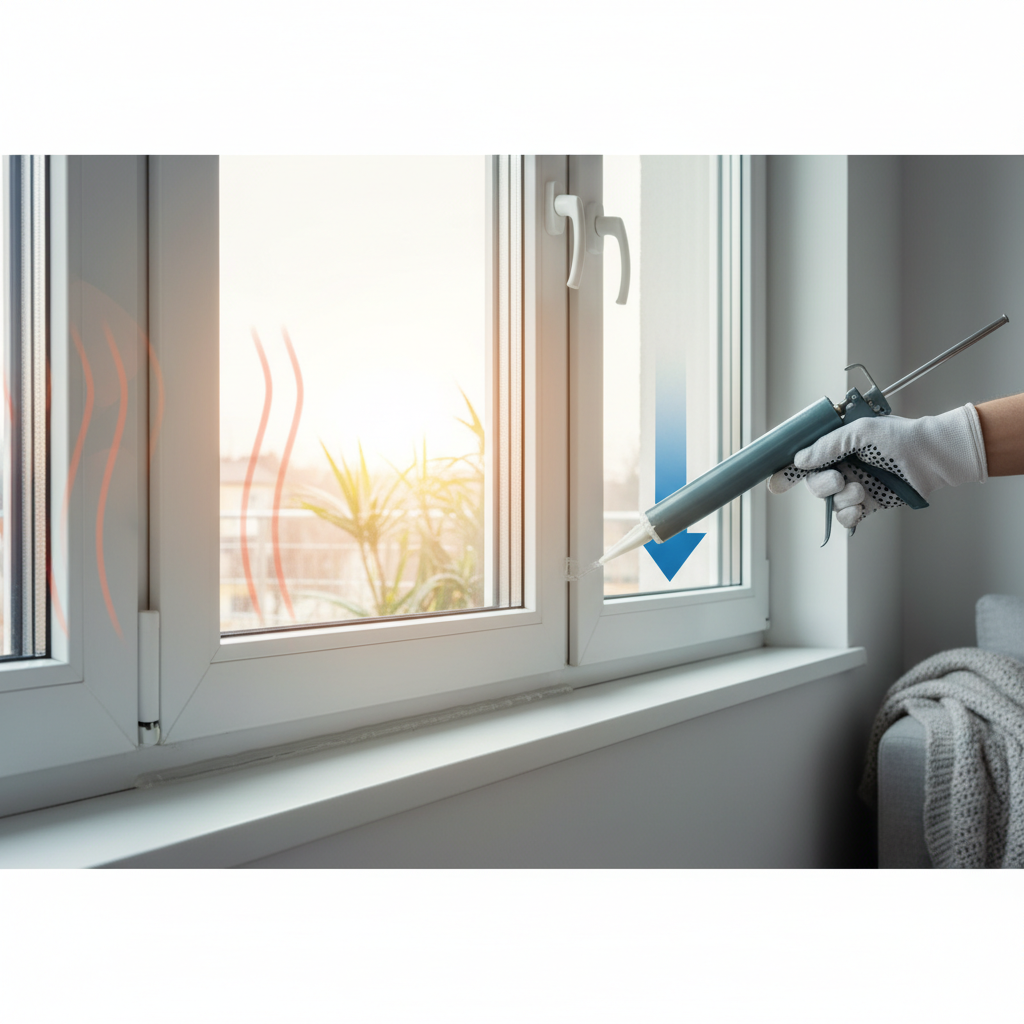
Why Sealing Your Windows Can Drastically Lower Your Energy Bills
Windows are a beautiful feature in any home, letting in natural light and offering views of the outside world. However, they can also be a significant source of energy loss. When windows aren't properly sealed, they allow conditioned air to escape and outside air to enter, forcing your heating and cooling systems to work overtime. This constant battle against air leakage leads to surprisingly high energy bills. Sealing your windows is one of the most cost-effective ways to improve your home's energy efficiency and comfort. Let's explore the specific ways this simple home improvement project translates into real savings.
1. Eliminating Air Leakage (Convection)
The most direct way unsealed windows waste energy is through air leakage, also known as infiltration or drafts. This process is driven by convection, the transfer of heat through the movement of fluids like air. Tiny cracks and gaps around the window frame, sash, or where the glass meets the frame act as open invitations for air to pass through. In the winter, cold outside air seeps in, while the warm, heated air you're paying for escapes. Your furnace or heater then has to run longer and harder to maintain the desired temperature, consuming more fuel or electricity.
The reverse happens in the summer. Hot, humid air from the outside infiltrates your home, while the cool, conditioned air from your air conditioner leaks out. This forces your AC unit to work continuously to remove both heat and humidity, a process that is incredibly energy-intensive. By applying caulk to stationary cracks and weatherstripping to moving parts (like the sash), you create an airtight barrier that stops this cycle of air exchange, keeping your conditioned air inside where it belongs and significantly reducing the workload on your HVAC system.
2. Enhancing Thermal Resistance (Conduction)
Conduction is the transfer of heat through direct contact. Window materials, including the glass and the frame, can conduct heat. During a cold day, the warmth inside your home can be conducted directly through the window pane to the chilly exterior. While sealing doesn't change the inherent conductivity of the glass itself, it plays a crucial role in the overall thermal performance of the window unit.
Gaps in the window assembly create what are known as "thermal bridges." These are spots where there is a direct, uninsulated path from the inside to the outside. A gap in the caulk, for example, allows the cold exterior frame to come into closer contact with the warm interior wall, creating a superhighway for heat to escape. Sealing these gaps ensures the entire window unit acts as a more cohesive barrier, improving its overall resistance to conductive heat loss and helping to keep your home's temperature stable without constant HVAC intervention.
3. Reducing Moisture Intrusion and Improving Comfort
Beyond air temperature, unsealed windows can allow moisture to enter your home. This is particularly problematic in humid climates during the summer. As humid air enters through gaps, your air conditioner has a dual job: not only must it cool the air, but it must also work to dehumidify it. Removing moisture from the air is an energy-intensive process. A properly sealed window prevents this moisture infiltration, lightening the load on your AC and lowering its energy consumption.
Furthermore, drafts and cold spots near windows create an uncomfortable living environment. You might find yourself cranking up the thermostat just to feel comfortable in a specific room, even if other parts of the house are warm enough. This leads to inefficient heating and wasted energy. By sealing drafts, you create a more uniform and comfortable temperature throughout your home, allowing you to set your thermostat at a more energy-efficient level while still feeling cozy.
4. Protecting Your HVAC System from Overwork
A home with leaky windows puts constant, unnecessary strain on its heating, ventilation, and air conditioning (HVAC) system. When the system has to run almost continuously to compensate for constant energy loss, it leads to increased wear and tear on all its components, from the compressor to the fan motor. This can result in more frequent breakdowns, costly repairs, and a shorter overall lifespan for one of the most expensive appliances in your home.
By sealing your windows, you create a more stable and efficient indoor environment. Your HVAC system will run in shorter, less frequent cycles to maintain the set temperature. This reduced workload not only saves a significant amount of energy day-to-day but also extends the life of your equipment, saving you money on premature replacements and maintenance down the line. It's an investment in both your energy bills and the longevity of your home's core systems.
The Science of Heat Transfer: Why Windows are Weak Points
To truly understand why sealing windows is so effective, it helps to know a little about thermodynamics. Heat naturally moves from a warmer area to a cooler area, always seeking equilibrium. This transfer happens in three primary ways: conduction, convection, and radiation. Windows, unfortunately, are susceptible to all three, making them the weakest link in your home's thermal envelope.
- Conduction: As mentioned earlier, this is heat transfer through solid materials. The glass panes and frame conduct heat directly. Double- or triple-pane windows slow this by using gas-filled gaps as an insulator.
- Convection: This is heat transfer through the movement of air or liquid. Drafts are a perfect example of convective heat loss, where air currents carry heat out of or into your home through gaps.
- Radiation: This is heat transfer via electromagnetic waves. The sun's energy radiates through your windows, heating your home (which can be good in winter but bad in summer). Low-E coatings are designed to reflect this infrared radiation.
Sealing primarily tackles convection by stopping air leaks. However, by doing so, it supports the entire window system's ability to resist conduction and helps maintain a stable indoor environment, making it a foundational step in managing all forms of heat transfer through your windows.
Common Questions About Sealing Windows
Once homeowners understand the benefits, a few practical questions often come to mind. Addressing these can help you take the next steps toward a more efficient home.
How Can I Tell If My Windows Are Leaking Air?
Detecting air leaks is simpler than you might think. The easiest method is a visual inspection. Look for cracked or peeling caulk on the exterior and interior of the window frame. Check the condition of the weatherstripping on movable sashes; if it's compressed, cracked, or brittle, it's likely not doing its job. Another common method is the "smoke test." On a windy day, safely light a stick of incense or a candle and hold it near the edges of your windows. If the smoke wavers, flickers, or is blown horizontally, you have a draft.
For a more low-tech approach, you can simply use your hand. On a very cold day, move your hand slowly around the perimeter of the window frame. You will often be able to physically feel the cold air seeping in. These tests help you identify the exact spots that need attention, whether it's a need for new caulk along the frame or replacement weatherstripping along the sash.
What Are the Best Materials for Sealing Windows?
The right material depends on which part of the window you are sealing. For stationary gaps, cracks, and joints between the window frame and the wall, caulk is the best solution. Look for a high-quality acrylic latex caulk labeled for "windows and doors." For a more durable, flexible, and waterproof seal, especially on the exterior, 100% silicone caulk is an excellent choice. Ensure the surface is clean and dry before application for the best adhesion.
For the moving parts of a window, such as between the sash and the frame, you'll need weatherstripping. There are several types available. V-strip or tension seal weatherstripping is a durable plastic or metal strip that springs open to block gaps. Adhesive-backed foam tape is an inexpensive and easy-to-install option, though it may not last as long. Choose the material that best fits the type of gap and window you have.
Is Window Sealing a DIY Project?
For the most part, yes. Sealing windows with caulk and weatherstripping is one of the most accessible and cost-effective DIY home improvement projects. The materials are readily available at any hardware store, and the tools required are minimal—typically just a caulk gun, a utility knife, and a putty knife for removing old caulk. There are countless online tutorials and videos that can walk you through the process step-by-step. It requires more patience than skill.
However, if your windows are very old, show signs of rot, or have fogging between the panes (a sign of a broken seal in a double-pane unit), the problem might be more complex than simple air leaks. In these cases, it might be wise to consult with a professional window contractor. They can assess whether a simple sealing job is sufficient or if a more extensive repair or even a full window replacement is the more energy-efficient and cost-effective solution in the long run.
Conclusion
The connection between properly sealed windows and lower energy bills is direct and undeniable. By creating an airtight barrier, you prevent the constant exchange of air with the outdoors, a process known as convection. This simple act stops drafts, reduces the workload on your HVAC system, enhances indoor comfort, and even extends the lifespan of your heating and cooling equipment. Whether you do it yourself or hire a professional, taking the time to seal the gaps and cracks around your windows is a small investment that pays significant dividends in energy savings and comfort year after year.
For further reading on home energy efficiency, you can visit these resources: