How to Calculate the Right Solar Panel System Size to Power Your Air Conditioner
Figuring out the right solar panel system to power your air conditioner is a crucial step, and the answer isn't a simple one-size-fits-all number. The system you need depends heavily on your AC unit's size and efficiency, how many hours a day you run it, and even your geographic location.
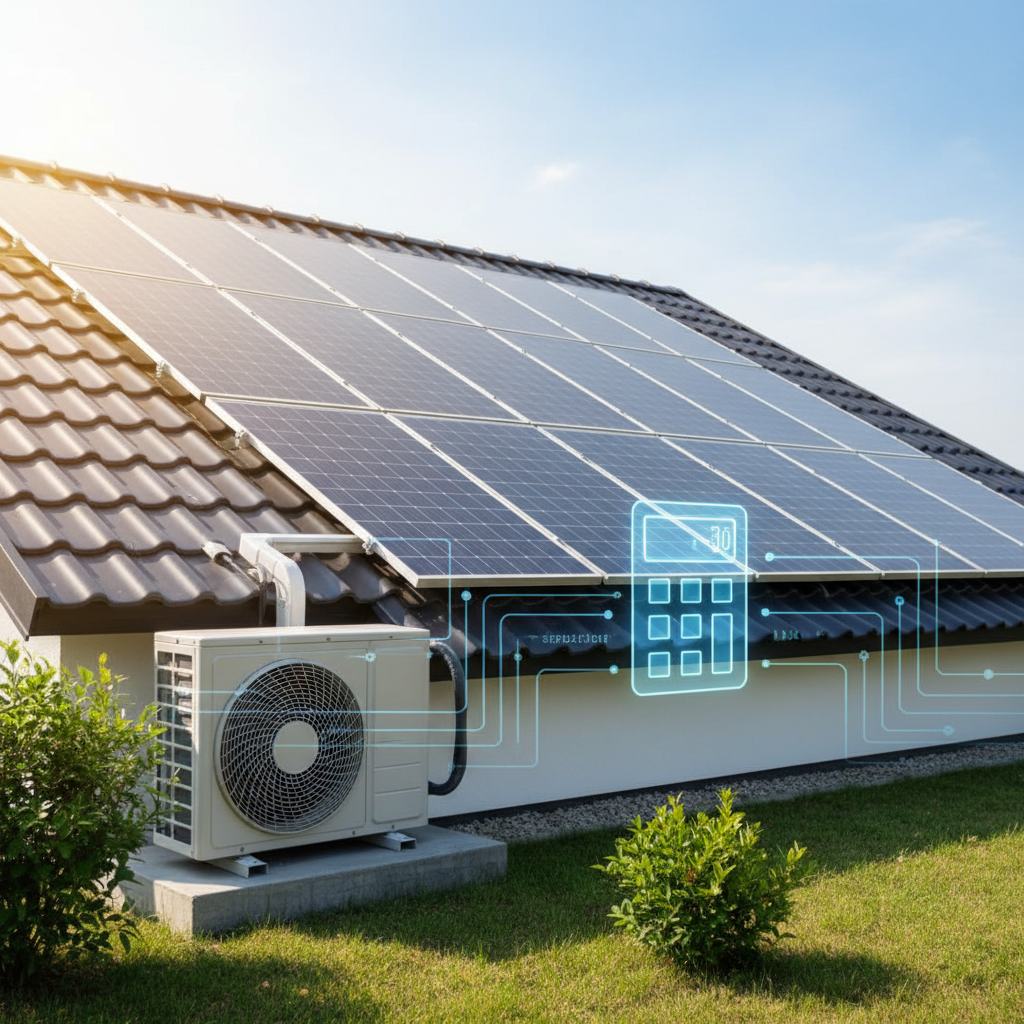
As summer temperatures climb, so do electricity bills, largely thanks to one of the home's most power-hungry appliances: the air conditioner. Harnessing the power of the sun to run your AC seems like a perfect solution, but it raises a critical question: just how many solar panels do you actually need? The answer isn't a simple number; it's a calculation based on your specific AC unit, your usage habits, and your geographic location. Understanding these factors is the key to correctly sizing a solar system that can handle the load without fail.
This guide breaks down the process into manageable steps, helping you estimate the solar panel system size required to keep your home cool and comfortable using clean, renewable energy.
Key Factors That Determine Your Solar Needs for AC
Determining the right size for your solar panel system involves more than just counting the panels on a roof. You need to become an energy detective, investigating your air conditioner's power demands and the solar resources available to you. Let's walk through the essential steps.
Step 1: Determine Your Air Conditioner's Power Consumption
The first piece of the puzzle is understanding how much electricity your specific AC unit consumes. Air conditioners come in various sizes and efficiencies, and their power draw can differ significantly. You'll need to find its wattage rating.
- Check the Label: Most air conditioners have a specification label or sticker on the side of the unit (both indoor and outdoor units for central air). This label typically lists the voltage (V), amperage (A), or direct wattage (W). If it only lists volts and amps, you can calculate the running wattage using the formula: Watts = Volts x Amps.
- BTUs and SEER Ratings: AC capacity is often measured in British Thermal Units (BTUs). A higher BTU means more cooling power, which also means higher energy consumption. Another crucial factor is the SEER (Seasonal Energy Efficiency Ratio) rating. A higher SEER rating indicates a more efficient unit that uses less electricity to produce the same amount of cooling. An older unit with a SEER of 10 will use far more power than a modern unit with a SEER of 20 or higher.
- Running Watts vs. Starting Watts: Air conditioners, like many appliances with motors, require a large surge of power to start up (starting or surge watts) before settling into a lower, consistent power draw (running watts). Your solar system's inverter must be able to handle this initial surge. For this calculation, however, we are primarily focused on the running watts for calculating daily energy usage. A typical window AC unit might use 500 to 1,500 watts, while a central AC system can draw anywhere from 3,000 to 5,000 watts.
Step 2: Calculate Your Daily AC Energy Usage (kWh)
Once you know your AC's running wattage, you need to estimate how many hours you use it each day. This is the most variable part of the equation, as it depends on your climate, personal comfort preferences, and how well-insulated your home is. Be realistic with your estimate.
The formula to find your daily energy consumption in kilowatt-hours (kWh) is:
(AC Running Watts / 1,000) x Daily Hours of Use = Daily kWh Consumption
For example, let's say you have a large window AC unit that consumes 1,400 watts and you run it for an average of 8 hours per day during the summer.
(1,400 Watts / 1,000) x 8 Hours = 11.2 kWh per day
This 11.2 kWh is the amount of energy your solar panels need to generate each day just to cover your air conditioner's usage.
Step 3: Factor in Your Location's Peak Sun Hours
Not all daylight is created equal when it comes to solar power generation. "Peak sun hours" refers to the average number of hours per day when the sunlight is intense enough to generate peak power from your solar panels. It's not simply the number of hours from sunrise to sunset.
A sunny location like Arizona might get 6-7 peak sun hours per day, while a cloudier region in the Northeast might only get 3-4. This is one of the most critical factors in determining your system size. A system in a location with fewer peak sun hours will need to be larger to generate the same amount of total energy as a system in a sunnier location.
You can easily find the average peak sun hours for your specific area by searching online or consulting a solar installation professional. For our example, let's assume our location gets an average of 5 peak sun hours per day.
Step 4: Putting It All Together: Sizing Your Solar Array
Now we have all the numbers needed to calculate the required size of your solar panel array. The goal is to determine the total wattage of the solar panels needed to produce your target daily kWh.
The formula is:
(Daily kWh Consumption / Peak Sun Hours) = Required Solar Panel System Size in kW
Using our ongoing example:
11.2 kWh / 5 Peak Sun Hours = 2.24 kW
This means you need a 2.24 kilowatt (or 2,240-watt) solar panel system. However, we're not quite done. Real-world systems are not 100% efficient. You lose some power during the conversion from DC (from the panels) to AC (for your home), through wiring, and due to factors like panel heat. It's standard practice to oversize the system by about 20-25% to account for these inefficiencies.
2,240 Watts x 1.25 (for 25% oversizing) = 2,800 Watts
So, you would need a 2.8 kW solar system. To figure out how many panels that is, you divide the total system wattage by the wattage of the individual panels you choose. If you use 400-watt panels:
2,800 Watts / 400 Watts per panel = 7 panels
In this scenario, you would need at least seven 400-watt solar panels dedicated solely to running your air conditioner for 8 hours a day.
The Bigger Picture: Why Powering Your AC with Solar Makes Sense
Running an air conditioner is often the single largest contributor to a home's summer electricity bill. When a heatwave hits, utility grids can become strained, leading to peak demand charges and, in extreme cases, brownouts or blackouts. By dedicating a portion of a solar energy system to this high-demand appliance, homeowners can directly combat these issues and achieve significant benefits.
The beauty of solar for air conditioning is that the resource (sunshine) is most abundant precisely when the need for cooling is greatest. This perfect alignment means your panels are producing their maximum output right when your AC is working its hardest. This synergy not only slashes your utility bills but also provides a level of energy independence. With a properly sized system, especially one that includes battery storage, you can maintain a cool and comfortable home even if the local power grid goes down.
Common Questions About Solar and Air Conditioning
Venturing into solar power for heavy appliances like an AC unit naturally brings up some practical questions. Understanding the nuances of different system types and capabilities is essential for making an informed decision.
Can You Run an Air Conditioner on Solar Panels at Night?
This is a very common and important question. Solar panels generate electricity only when they are exposed to sunlight. Therefore, a standard solar panel system without any storage solution cannot power your air conditioner after the sun goes down. If you want to run your AC at night or on heavily overcast days using solar power, you will need to add a battery storage system.
A solar battery, such as a Tesla Powerwall or Enphase IQ Battery, stores the excess solar energy your panels generate during the day. When your panels stop producing power in the evening, your home's electrical system automatically switches to draw power from the battery. Sizing a battery for overnight AC use requires careful calculation, as you need enough stored capacity (measured in kWh) to run the AC for the desired number of hours in addition to powering your other essential nighttime loads.
What’s the Difference Between Off-Grid and Grid-Tied Systems?
When setting up a solar system, you have two primary options: grid-tied or off-grid. A grid-tied system is connected to the public utility grid. During the day, your solar panels power your home, including the AC. If you produce more energy than you consume, the excess is sent back to the grid, often earning you a credit on your bill through a process called net metering. If you need more power than your panels are producing (like at night), you simply draw it from the grid. This is the most common and cost-effective setup for residential homes.
An off-grid system is completely independent of the utility grid. This type of system is a necessity for remote cabins or homes where grid access is unavailable or prohibitively expensive. To be viable, an off-grid system must be large enough to meet 100% of the home's energy needs and must include a substantial battery bank to store power for nights and cloudy days. Sizing an off-grid system to run an air conditioner is a significant undertaking, as it requires a large solar array and a very robust battery bank to handle the high-power demand.
Are There Special Solar-Powered Air Conditioners?
Yes, the market now includes air conditioners designed specifically to work efficiently with solar power. These are often called solar hybrid or DC air conditioners. Standard AC units run on AC (Alternating Current) power, which is what the utility grid provides. Solar panels, however, produce DC (Direct Current) power. In a typical solar setup, an inverter converts the DC power from the panels into AC power for your home's appliances. This conversion process results in some energy loss.
DC air conditioners are designed to run directly on DC power, bypassing the need for an inverter and thus operating more efficiently. Many of these are "hybrid" units, meaning they can intelligently switch between solar DC power when the sun is shining and standard grid AC power when it's not, ensuring you always have cooling available while maximizing your use of free solar energy.
Final Thoughts on Sizing Your System
Ultimately, the size of the solar panel system needed to run your AC depends entirely on three variables: the power consumption of your AC unit, your daily usage patterns, and the amount of sun your location receives. A small, efficient window unit used for a few hours a day in a sunny climate might only require a handful of panels, while a large central air system running all day in a less sunny region could demand a much larger, more substantial array.
By following the steps to calculate your specific needs, you can get a reliable estimate and make an informed decision. For a precise and professional assessment, it is always recommended to conduct a full energy audit of your home and consult with a qualified solar installer who can account for all the unique factors of your property.