How to Donate Your Car to Charity: A Clear and Honest Guide
Thinking about donating your car to charity? It's a generous act that can provide you with a significant tax benefit, but it's important to navigate the process correctly.
A Step-by-Step Guide to Donating Your Vehicle
Donating a car to charity can be a rewarding experience. It allows you to support a cause you care about, clear space in your driveway, and potentially receive a tax deduction. However, the process involves several important steps to ensure your donation is handled correctly and you receive the maximum legal benefit. Following a structured approach can simplify the process and protect you from potential pitfalls.
1. Choose a Legitimate and Qualified Charity
The first and most crucial step is selecting the right charity. Not all organizations that solicit car donations are legitimate, and some are for-profit companies that give only a small fraction of the vehicle's value to the actual charity. To ensure your donation makes a real impact, look for a "qualified organization," which the IRS defines as a 501(c)(3) public charity. You can verify an organization's status using the IRS's Tax Exempt Organization Search tool online. This step is non-negotiable if you plan to claim a tax deduction.
Beyond its legal status, consider how the charity uses car donations. Some charities use the vehicles directly in their operations, such as for delivering meals or transporting people. Others sell the car at auction and use the proceeds to fund their programs. It's also wise to research the charity's efficiency and reputation using watchdog sites like Charity Navigator or GuideStar. These resources provide insight into how effectively a charity uses its funds, helping you choose an organization where your donation will have the greatest impact.
2. Understand Your Vehicle's Fair Market Value
Before you donate, it’s a good idea to have a rough estimate of your car's Fair Market Value (FMV). This is the price a willing buyer would pay for it on the open market. You can use online resources like Kelley Blue Book (KBB) or Edmunds to get an estimate based on your car's make, model, year, mileage, and overall condition. Be honest in your assessment of the car's condition—dents, mechanical issues, and rust will all lower the value.
It's important to understand that this initial FMV is often just a starting point. The actual amount you can deduct on your taxes will depend on how the charity uses the vehicle and how much it sells for. We'll explore the specifics of the tax deduction later, but knowing the FMV helps you understand the potential value of your donation from the outset.
3. Gather and Prepare the Necessary Paperwork
Proper paperwork is essential for a smooth donation process. The single most important document you will need is the vehicle's title. This legal document proves you are the rightful owner. If you have a loan on the car, you must pay it off and have the lienholder release their claim on the title before you can donate it. If you've lost the title, you will need to apply for a duplicate from your state's Department of Motor Vehicles (DMV) before proceeding.
When you're ready to donate, you will need to sign the title over to the charity or its authorized agent. Be extremely careful when doing this. Read the instructions on the back of the title and fill out only the required sections. Do not leave the buyer's name blank, and make sure the mileage (odometer reading) is recorded accurately. An improperly signed title can create significant legal and logistical headaches for both you and the charity.
4. Schedule the Vehicle Pickup or Drop-Off
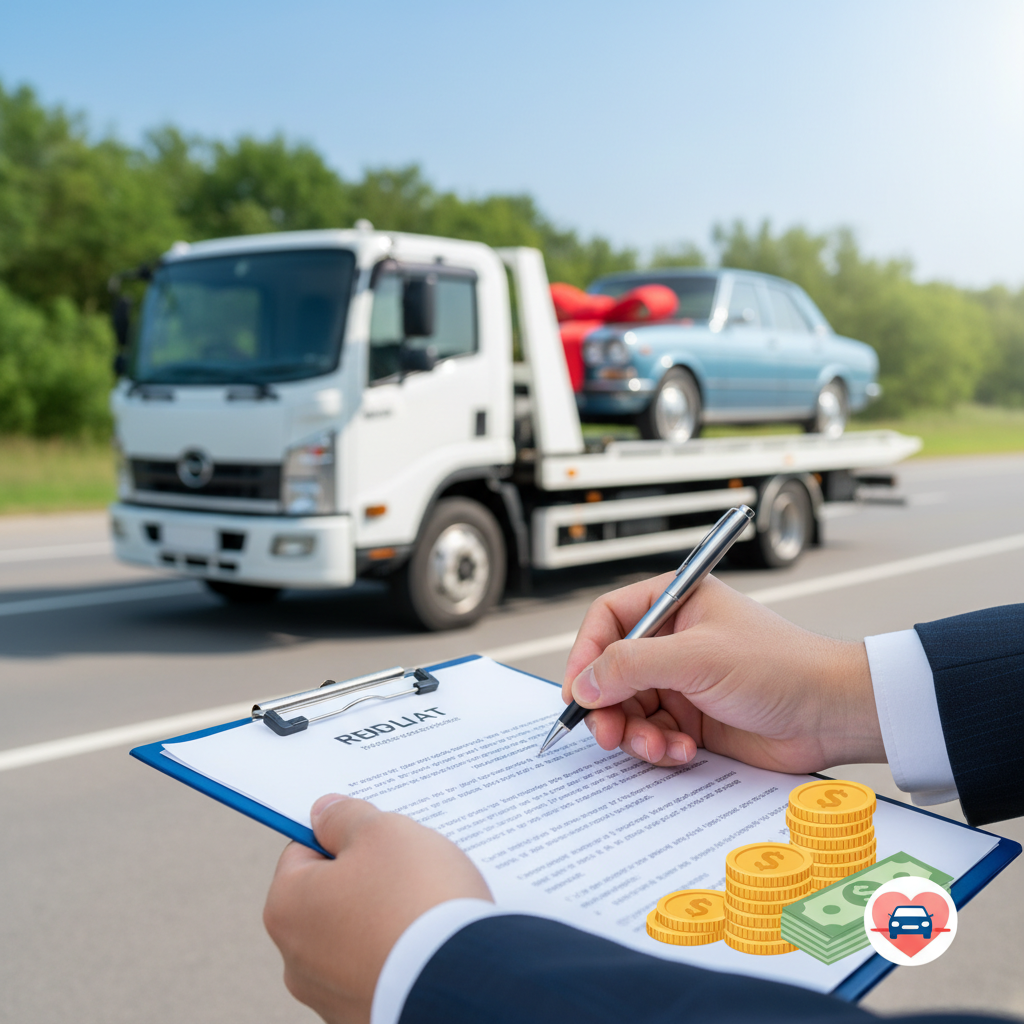
Once you've chosen a charity and prepared your title, the next step is to arrange for the vehicle to be transferred. Most national car donation programs and many local charities offer free towing services. You will typically fill out a form online or call the charity to provide details about your car and its location. They will then coordinate with a local towing company to schedule a convenient pickup time.
During the pickup, the tow truck driver will likely have some simple paperwork for you to sign, and you will hand over the keys and the signed title. Make sure you remove all personal belongings from the car beforehand, including items in the glove compartment, trunk, and under the seats. It's also a good practice to take photos of the car and the signed title for your records. Before the tow truck leaves, you should receive an initial donation receipt from the driver.
5. Obtain a Proper Donation Receipt
You will receive two important documents from the charity. The first is the initial pickup receipt provided by the tow truck driver, which serves as proof that the vehicle has been taken. However, this is not the document you will use for tax purposes. The critical document is the formal written acknowledgment you receive from the charity after your car has been processed—usually after it has been sold.
If your car is sold for more than $500, the charity is required to send you IRS Form 1098-C, Contributions of Motor Vehicles, Boats, and Airplanes, within 30 days of the sale. This form will state the gross proceeds from the sale, which is the amount you are allowed to deduct. If the car sells for less than $500, or if the charity intends to use the car in its operations, you'll receive a different written acknowledgment. No matter the value, ensure the receipt includes the charity's name, a description of the vehicle, and a statement about whether any goods or services were provided in exchange for the donation.
6. Claiming Your Tax Deduction Correctly
The final step is to claim the deduction on your federal income tax return. To do this, you must itemize your deductions on Schedule A of Form 1040. The rules for how much you can deduct depend on the vehicle's value and how it was used. If the car sold for less than $500, you can generally deduct the Fair Market Value up to $500. If it sold for more than $500, your deduction is limited to the exact amount the charity received from the sale.
For donations valued over $500, you must attach Form 1098-C (provided by the charity) to your tax return. You will also need to complete Section A of IRS Form 8283, Noncash Charitable Contributions. If you are claiming a deduction of more than $5,000, you will need to get a formal written appraisal of the vehicle and complete Section B of Form 8283. Tax laws can be complex, so if you have any doubts, consulting with a tax professional is always a wise decision.
Understanding the Impact and Process Behind Car Donations
Have you ever wondered what actually happens to a car after you donate it? The journey your old vehicle takes is often the key to how it generates value for the charity. The vast majority of donated vehicles are sold at auction. Charities partner with auction houses that specialize in processing and selling these cars to dealers, scrapyards, and individuals. The proceeds from this sale, minus any administrative or towing fees, are then sent to the charity to fund its mission.
In some cases, a charity might use the vehicle directly. For example, a food bank might use a donated van for deliveries, or a social services organization might use a reliable sedan to transport clients to appointments. In these situations, the donor may be able to claim a deduction for the car's full Fair Market Value. In other instances, particularly with older, non-running vehicles, the car might be sold directly to a salvage yard for parts and scrap metal. Even in this scenario, the funds generated can provide valuable resources for the charity's programs.
Common Questions About Donating a Car
What if my car doesn't run? Can I still donate it?
Yes, absolutely. The vast majority of car donation programs accept vehicles in any condition, whether they run or not. Cars that are no longer roadworthy still have value. These vehicles are typically sold to auto salvage or scrap yards. The value is derived from their reusable parts and the weight of their scrap metal. While the monetary return to the charity—and therefore your potential tax deduction—will be lower than for a running vehicle, it can still provide meaningful funds for the organization.
When you contact the charity, be upfront about the car's condition. Let them know if it doesn't start, has significant mechanical issues, or has been in an accident. This information helps them determine the best course of action and ensures the tow truck that comes for the pickup is properly equipped. Even a car that seems worthless to you can be turned into funding for a good cause, and the charity will still handle the towing for free.
How is the value of my tax deduction actually calculated?
The calculation for your tax deduction is governed by specific IRS rules that can seem confusing at first. It primarily depends on the sale price of the vehicle. Here’s a simple breakdown:
- If the car sells for $500 or less: In this common scenario, you can claim the lesser of two amounts: the vehicle's Fair Market Value on the date of donation, or $500. For example, if your car's FMV is $800 but it sells at auction for $350, you can claim a deduction of $500. If the car's FMV is only $400 and it sells for $250, you can claim $400.
- If the car sells for more than $500: Your deduction is limited to the exact gross proceeds the charity receives from the sale. For example, if your car sells for $1,200, your deduction is exactly $1,200. You cannot claim its higher Kelley Blue Book value. The charity is required to report this sale price to you and the IRS on Form 1098-C.
- Exceptions: There is an important exception. If the charity decides to make "significant intervening use" of the vehicle (i.e., use it in its programs for an extended period) or makes material improvements to it before selling, you may be able to claim the car's full Fair Market Value. The charity must certify this intended use on your donation receipt.
Are there any hidden costs or fees I should be aware of?
For the most part, donating a car should be a cost-free process for the donor. Reputable charities and their car donation program partners offer free towing nationwide. This should be a standard, non-negotiable part of the service. If an organization tries to charge you for pickup, it's a major red flag, and you should consider donating elsewhere.
That said, you should clarify who is responsible for any potential title transfer fees required by your state's DMV. In most cases, the charity or its agent handles this. The primary "cost" to the donor is the loss of the vehicle's cash value, but this is offset by the charitable contribution and potential tax benefit. Be wary of for-profit intermediaries that may take a large percentage of the sale price for "administrative fees," as this reduces the amount that actually goes to the charity. Working directly with a well-regarded non-profit is the best way to avoid these issues.
Conclusion
Donating a car to charity is a generous act that can provide significant support to causes you believe in. By following a clear process—from vetting the charity and preparing your paperwork to understanding the tax implications—you can ensure your contribution is effective and rewarding. It's a fantastic way to give a significant gift without writing a check, turning an unused asset into a valuable resource for others. Always remember to complete your due diligence and keep detailed records to make the process smooth from start to finish.