How Using Planners and Tools Can Transform Your Daily Routine
A good planner is more than just a calendar; it's a powerful tool for transforming your daily routine. But not all planners are created equal, and finding the right system is key to making new habits stick.
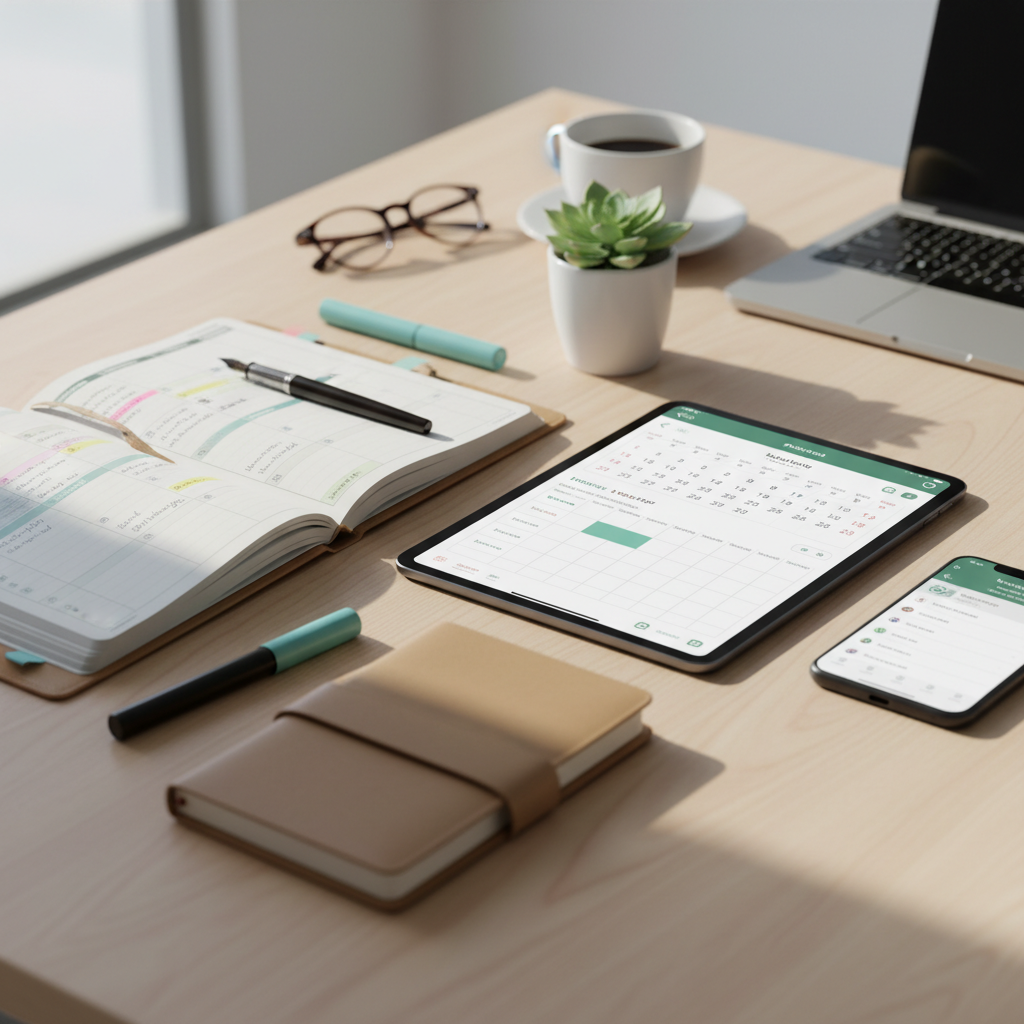
Key Planner Tools That Revolutionize Routine Building
Moving beyond a simple calendar, modern planners are equipped with specialized tools designed to target specific areas of your life. These built-in features provide structure and guidance, making it easier to deconstruct old habits and build new, positive routines. By engaging with these tools, you transform your planner from a passive schedule-keeper into an active partner in your personal development. Let's explore some of the most impactful tools and how they can systematically help you change your daily life for the better.
The Power of a Habit Tracker
A habit tracker is one of the most effective tools for creating lasting change. It's typically a grid where you list the habits you want to build (like "drink 8 glasses of water," "read for 15 minutes," or "go for a walk") and check them off each day you complete them. The psychological principle behind this is powerful. Seeing an unbroken chain of checkmarks creates a sense of accomplishment and motivation, a phenomenon known as "don't break the chain." This visual feedback makes you more accountable to yourself.
By using a habit tracker, you are no longer relying on memory or willpower alone. The simple act of tracking makes you mindful of your actions and decisions throughout the day. It gamifies the process of routine building, turning it from a chore into a challenge. Over time, these small, consistently tracked actions compound, solidifying into automatic behaviors that form the foundation of a new and improved routine.
Goal-Setting Spreads for Long-Term Vision
While daily tasks are important, a successful routine is often one that aligns with your larger life goals. This is where goal-setting spreads come in. These sections of a planner prompt you to think about what you want to achieve in the next quarter, year, or even five years. They often provide space to break down a large goal into smaller, actionable steps. For example, a goal to "run a 5k" can be broken down into weekly milestones like "run 1 mile three times this week" or "sign up for a race."
This tool helps bridge the gap between your daily actions and your long-term aspirations. It ensures that the routine you're building is purposeful and moving you in a direction you consciously choose. By regularly reviewing your goals within your planner, you keep them top-of-mind and can adjust your daily and weekly plans to ensure they are contributing to the bigger picture, preventing the common problem of getting lost in busywork that doesn't lead anywhere meaningful.
Weekly and Daily Layouts for Time Blocking
The layout of a planner itself is a powerful tool. Many are designed to facilitate time blocking, a productivity method where you schedule every part of your day. Instead of a simple to-do list, you assign specific tasks to specific time slots. This approach forces you to be realistic about how much you can accomplish and helps protect your time from distractions. By scheduling tasks like "work on project X" from 9 AM to 11 AM, you create a commitment that is harder to break.
Using a planner for time blocking can fundamentally change your relationship with time. It helps you identify where your hours are actually going and allows you to intentionally carve out space for new habits and priorities. If you want to build a routine of exercising in the morning, blocking out 7 AM to 8 AM for a workout makes it a non-negotiable appointment with yourself. This structure is essential for anyone who feels their days are chaotic and unproductive.
Financial Planning and Budgeting Pages
Financial stress can derail any attempt to build a stable, positive routine. Many modern planners include dedicated tools for budgeting and financial tracking to address this. These sections might include pages for tracking monthly income and expenses, setting savings goals, or monitoring debt repayment. Engaging with these tools regularly makes you more aware of your financial habits and empowers you to take control.
Incorporating financial management into your weekly planning session creates a powerful routine. It helps you make more conscious spending decisions throughout the week, reducing impulsive purchases and aligning your financial behavior with your long-term goals, such as saving for a vacation or building an emergency fund. A stable financial foundation reduces anxiety and frees up mental energy that you can then devote to other aspects of your routine.
Monthly Review and Reflection Prompts
A routine isn't something you set once and forget; it requires regular maintenance and adjustment. This is why reflection prompts are such a valuable planner tool. At the end of a week or month, these sections encourage you to look back and assess what worked and what didn't. Prompts might include questions like, "What was my biggest win this month?" "What challenges did I face?" and "What will I do differently next month?"
This structured reflection is crucial for sustainable change. It allows you to learn from your experiences and make intelligent adjustments to your routine rather than giving up when something doesn't go perfectly. It fosters a mindset of continuous improvement and self-awareness, ensuring that the routines you build are flexible and evolve with you over time.
The Psychology of Planning: Why Writing Things Down Works
The effectiveness of using a planner to change your routine isn't just about organization; it's deeply rooted in cognitive psychology. The simple act of writing down your goals, tasks, and habits engages a part of your brain called the Reticular Activating System (RAS). The RAS acts as a filter for information, helping you notice things in your environment that are relevant to what you're focused on. When you write down "go to the gym at 5 PM," your brain is more likely to notice the time and remind you of that commitment throughout the day.
Furthermore, planning helps to externalize your memory. Our brains have a limited capacity for holding information in active memory. Trying to remember every task, appointment, and goal creates mental clutter and decision fatigue. By offloading this information into a planner, you free up cognitive resources. This mental space can then be used for creative thinking, problem-solving, and focusing on the task at hand, rather than worrying about what you might be forgetting. The feeling of checking an item off a list also provides a small dopamine hit, creating a positive feedback loop that reinforces productive behavior and makes you more likely to stick with your new routine.
Common Questions About Using Planners for Routine Change
Even with the best tools, integrating a planner into your life can bring up some questions. Understanding these common hurdles can help you navigate the process more effectively and ensure your planner becomes a long-term ally.
How Do You Stick With Your Planner Consistently?
One of the biggest challenges is maintaining the habit of using the planner itself. The key is to start small and integrate it into an existing routine. This technique is called "habit stacking." For instance, you could decide to fill out your planner for five minutes every morning while you drink your coffee. Attaching the new behavior (planning) to an established one (drinking coffee) makes it much easier to remember and execute.
It's also important not to be a perfectionist. You will miss days, and that's perfectly okay. The goal is not to have a perfectly filled-out planner but to have a functional tool. If you skip a few days, don't abandon the whole thing. Simply open it to the current date and start again. Making your planning sessions enjoyable also helps. Use colored pens, stickers, or simply take pride in creating a neat and organized page. The more you associate the activity with a positive feeling, the more likely you are to continue doing it.
Digital vs. Paper Planners: Which Is Better for Building Routines?
The choice between a digital and a paper planner is highly personal, and each has distinct advantages for routine building. Digital planners, accessible on your phone or computer, are excellent for sending reminders and notifications, which can be crucial for time-sensitive tasks. They are easily editable, searchable, and can be synced across multiple devices, making them convenient for a busy, on-the-go lifestyle.
However, many people find paper planners more effective for deep, intentional routine change. The physical act of writing stimulates the brain differently than typing, which can lead to better memory retention and a stronger psychological commitment to what you've written down. Paper planners are also free from the distractions inherent in digital devices. There are no notifications or temptations to check social media. This distraction-free zone can be more conducive to the reflective and focused mindset needed to thoughtfully design and commit to a new routine.
Conclusion
A planner is much more than a book of dates; it is a comprehensive system filled with tools designed to foster self-awareness, accountability, and intentionality. By utilizing features like habit trackers, goal-setting spreads, and structured layouts, you can methodically deconstruct counterproductive habits and build positive, lasting routines. The process of physically engaging with a planner helps to externalize thoughts, clarify priorities, and provide the visual feedback necessary for motivation. Whether you choose a digital or paper format, consistently using these tools provides the structure needed to turn your abstract intentions into concrete daily actions, paving the way for meaningful personal change.