Launching Your Home Fitness Journey: Essential Equipment That Truly Matters
Starting a fitness routine at home is exciting, but figuring out which equipment you *actually* need can feel overwhelming. Forget the sea of expensive, oversized machines and complicated gadgets for a moment.
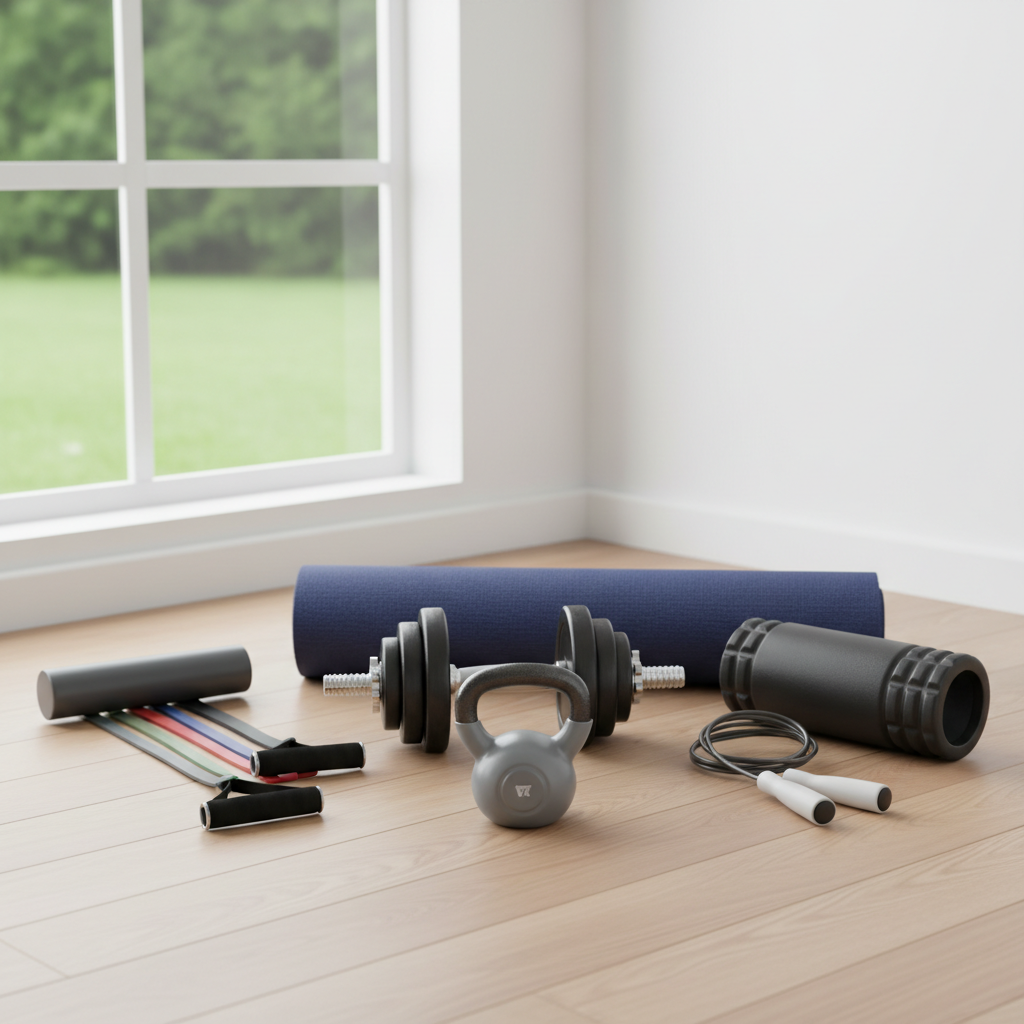
Essential Home Gym Equipment That Truly Delivers
Stepping into the world of home fitness can feel overwhelming. With endless gadgets and machines marketed as the next big thing, it's easy to get lost in the noise—and spend a fortune on equipment that ends up as a fancy clothes rack. The truth is, an effective and well-rounded fitness routine can be built with just a few versatile, space-saving, and budget-friendly items. The key is to focus on equipment that offers a wide range of uses, targeting different muscle groups and fitness goals, from strength and endurance to flexibility.
This guide cuts through the clutter to focus on the core pieces of equipment that provide the most bang for your buck. These are the foundational tools that will support you as you begin your journey and continue to challenge you as you grow stronger. Forget the single-use gimmicks; let's explore what actually matters for a sustainable home workout setup.
1. A High-Quality Exercise Mat
Before you even think about weights or bands, the most fundamental piece of equipment is a good exercise mat. It might not seem as exciting as a kettlebell, but it’s the foundation for nearly every home workout. A quality mat provides a comfortable, stable, and clean surface for floor exercises like push-ups, planks, sit-ups, and stretching. It protects your joints—especially your knees, spine, and tailbone—from the hard floor during core work and yoga poses. It also helps protect your floor from sweat and the occasional dropped weight.
When choosing a mat, look for one with adequate thickness (at least 1/4 inch or 6mm) for cushioning and a non-slip surface to prevent it from sliding around during more dynamic movements. A good mat defines your workout space, mentally preparing you to exercise every time you unroll it. It’s a small investment that makes a massive difference in comfort and consistency.
2. A Set of Resistance Bands
Resistance bands are arguably the most versatile and portable pieces of fitness equipment you can own. They are perfect for beginners because they provide variable resistance, meaning the tension increases as you stretch them. This helps engage stabilizing muscles and is often gentler on the joints than free weights. They come in two main types: large loop bands (great for squats, glute bridges, and assisted pull-ups) and smaller tube bands with handles (ideal for mimicking gym machine movements like bicep curls, chest presses, and rows).
These lightweight bands take up virtually no space and can be used for a full-body workout, targeting everything from your legs and glutes to your arms, chest, and back. They are also invaluable for warm-ups, mobility work, and physical therapy exercises. A set usually includes multiple bands with varying levels of resistance, allowing you to progress and challenge yourself as you get stronger without needing to buy new equipment.
3. Dumbbells (Adjustable or a Few Fixed Sets)
When it comes to building strength, nothing beats the classics. Dumbbells are a cornerstone of resistance training, allowing you to perform hundreds of exercises that build muscle and improve bone density. They force each side of your body to work independently, which helps identify and correct muscle imbalances. For a beginner, starting with a light to a medium set is recommended. For example, a pair of 5-pound, 10-pound, and 15-pound dumbbells can cover a wide range of exercises.
If space or budget is a major concern, adjustable dumbbells are a fantastic investment. A single pair can replace an entire rack of weights, allowing you to change the weight by simply turning a dial or moving a pin. While the initial cost is higher, they save a significant amount of space and are more cost-effective in the long run as you progress to heavier weights. Whether you choose fixed or adjustable, dumbbells are essential for foundational strength exercises like squats, lunges, overhead presses, and rows.
4. A Kettlebell
While similar to a dumbbell, a kettlebell offers unique benefits due to its off-center mass. The cannonball shape with a handle on top is designed for dynamic, swinging movements that combine strength, cardio, and flexibility into one workout. Exercises like the kettlebell swing, goblet squat, and Turkish get-up are full-body movements that can elevate your heart rate quickly, making it a highly efficient tool for burning calories and building functional strength.
For a beginner, a single kettlebell is all you need to get started. The recommended starting weight is typically between 15-25 pounds for women and 30-45 pounds for men, depending on current fitness levels. Because it engages so many muscles at once, a 20-minute kettlebell workout can be as effective as a much longer traditional workout. Its versatility and efficiency make it a must-have for any minimalist home gym.
5. A Jump Rope
Looking for an inexpensive, simple, and incredibly effective cardio tool? Look no further than the jump rope. Often overlooked, jumping rope is a high-intensity workout that burns a significant number of calories in a short amount of time. It improves cardiovascular health, agility, coordination, and bone density. Plus, it’s a full-body workout that engages your legs, core, and shoulders simultaneously.
Unlike a treadmill or stationary bike, a jump rope takes up almost no space and can be used anywhere with a high enough ceiling. It’s perfect for quick cardio blasts, warm-ups, or as part of a high-intensity interval training (HIIT) circuit. A few minutes of jumping rope can be more challenging and effective than a longer, slower-paced cardio session, making it the perfect tool for busy schedules.
6. A Foam Roller
Fitness isn't just about the work; it's also about the recovery. A foam roller is an essential tool for self-myofascial release, which is essentially a form of self-massage. It helps relieve muscle tightness, soreness, and inflammation, and can improve your range of motion. Using a foam roller before a workout can help increase blood flow and prepare your muscles for activity, while using it afterward can aid in recovery and reduce muscle soreness.
Rolling out major muscle groups like your quads, hamstrings, calves, and upper back can make a significant difference in how you feel day-to-day. It’s a proactive way to manage minor aches and pains, prevent injuries, and improve your overall flexibility. For the small price and space it requires, a foam roller provides immense value for your long-term fitness and well-being.