Maximize Your Productivity: Calendar Planner Layouts for a Focused Year
Choosing the right calendar planner layout is the secret to actually sticking with your goals all year long. But with so many options, how do you know which one is right for you? We’re breaking down the pros and cons of the most popular formats—from daily vs.
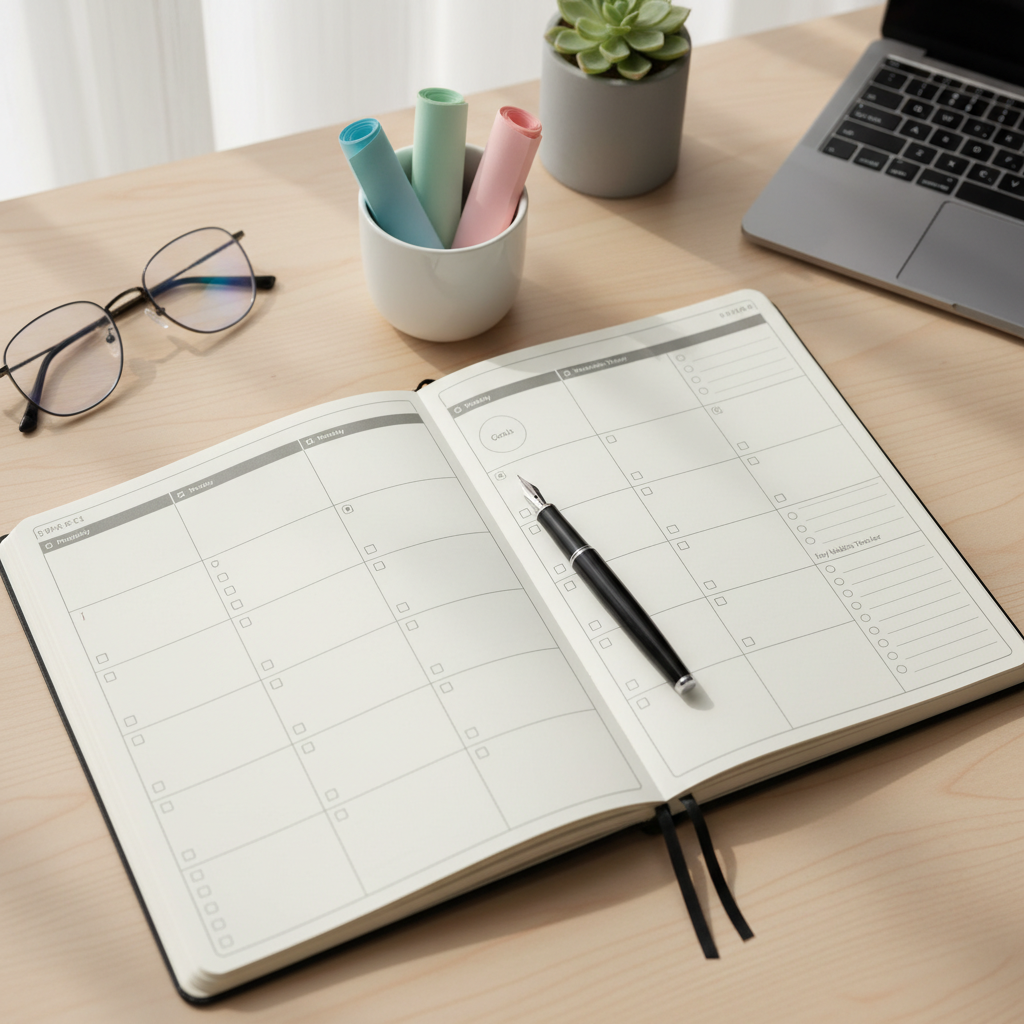
Choosing the right planner layout can be the difference between a year of focused productivity and a year of feeling overwhelmed. The structure of your calendar directly impacts how you visualize your time, prioritize tasks, and track your goals. With so many options available, from detailed daily pages to broad monthly overviews, it's essential to understand which layout aligns with your personal and professional needs. A layout that works wonders for a student with a fluctuating class schedule might not be suitable for a project manager juggling multiple long-term deadlines.
This guide breaks down the most common and effective calendar planner layouts. We'll explore the unique features of each, discuss their pros and cons, and help you identify the perfect system to keep you organized and focused throughout the entire year. By matching a layout to your lifestyle, you can transform your planner from a simple appointment book into a powerful tool for achieving your goals.
1. The Daily Layout
The daily layout is the most granular and detailed option available. Each page is dedicated to a single day, providing ample space to break down your schedule, often by the hour or half-hour. This layout typically includes sections for a to-do list, top priorities, notes, and sometimes even meal planning or a gratitude practice. It’s the ultimate tool for micromanagers of their own time, allowing for meticulous planning and tracking of every commitment.
This style is ideal for incredibly busy individuals, such as executives, freelancers with multiple clients, or parents managing complex family schedules. If your days are packed with appointments, calls, and a long list of varied tasks, the daily layout prevents anything from slipping through the cracks. However, it can feel overwhelming for those with more routine schedules, as the large blank spaces can seem daunting to fill. It also requires a daily commitment to planning, which may not suit everyone.
2. The Weekly Horizontal Layout
A classic and widely popular option, the weekly horizontal layout presents the entire week across a two-page spread. Each day is represented by a rectangular box, with days typically arranged from Monday to Sunday. This format provides a clean, open space for each day, making it perfect for list-makers and those who think in terms of daily to-do lists rather than timed appointments. The lined or unlined boxes give you the freedom to jot down tasks, reminders, and key events without the constraint of a time-based schedule.
The horizontal layout excels for students tracking homework assignments, writers planning content, or anyone whose daily tasks are more important than their specific timing. It offers a great balance between seeing the week at a glance and having enough space for daily details. Its main drawback is for people with many timed meetings, as it can be challenging to visualize an hourly schedule without manually writing in the times for each appointment.
3. The Weekly Vertical Layout
The weekly vertical layout also shows the full week on a two-page spread, but it organizes each day into a vertical column. These columns are almost always broken down by time, typically from around 7 AM to 7 PM or later. This structure is essentially a condensed version of a daily planner, allowing you to see your appointment-heavy schedule for the entire week in one view. It’s perfect for time-blocking, where you allocate specific blocks of time to certain tasks or activities.
This layout is a favorite among professionals who live by their appointment calendar, such as therapists, consultants, hairstylists, and sales representatives. It allows for quick scanning of availability and helps prevent double-booking. The vertical format clearly visualizes how your commitments flow throughout the day and week. For those who don't have many timed appointments, however, the pre-printed hourly slots can feel restrictive and lead to a lot of wasted space.
4. The Weekly Dashboard Layout
A more modern and versatile option, the weekly dashboard layout combines a structured weekly schedule with flexible spaces for other organizational needs. Typically, one page of the spread features the days of the week in smaller boxes (often in a vertical or grid format), while the facing page acts as a "dashboard." This dashboard area is divided into sections for things like a master to-do list, habit trackers, weekly goals, shopping lists, or important notes.
This layout is fantastic for holistic life planners who want to manage more than just appointments. It's perfect for goal-oriented individuals, project managers, and anyone trying to build new habits. The dashboard provides a central hub for the week's most important information, while the calendar side handles the day-to-day scheduling. It offers a great blend of structure and flexibility, making it one of the most adaptable layouts available for a wide range of lifestyles.
5. The Monthly Layout
The monthly layout presents the entire month on a two-page spread in a traditional grid format. This provides the ultimate bird's-eye view of your commitments, making it incredibly easy to see deadlines, holidays, travel dates, and recurring events all at once. Each daily box is relatively small, so this layout isn't designed for detailed daily planning. Instead, its strength lies in long-term organization and tracking major milestones.
This layout is rarely used as a standalone planner but is an essential component of most daily and weekly planners. It’s perfect for strategic planning, project deadline tracking, and managing birthdays and anniversaries. Many people use the monthly view to map out the "big rocks" of their schedule and then use a weekly or daily section to plan the finer details. For someone with very few appointments, a simple monthly planner might be all that's needed to stay organized.
6. The Bullet Journal (BuJo) Style
The Bullet Journal method is less of a pre-printed layout and more of a flexible framework. It uses a simple dot-grid notebook, allowing you to create your own layouts from scratch. The system, developed by Ryder Carroll, relies on a series of symbols (or "keys") to log tasks, events, and notes in a rapid, streamlined fashion. You can design your own daily, weekly, and monthly "spreads" tailored precisely to what you need at any given moment.
This system is perfect for creative and highly organized individuals who find standard planners too restrictive. It gives you complete control over the structure, allowing you to integrate habit trackers, goal pages, reading lists, and anything else you can imagine. The downside is the initial setup time; you have to create the layouts yourself, which can be time-consuming. However, for those who stick with it, the BuJo method offers unparalleled customization and can become a powerful tool for productivity and self-reflection. For more information on the official method, you can visit the Bullet Journal website.
The Evolution of Personal Planning: From Ledgers to Life Organizers
The concept of keeping a personal planner is not a modern invention. Its roots can be traced back centuries to simple diaries and ship's logs used for record-keeping. In the 17th and 18th centuries, almanacs became popular, providing pre-printed information about calendars, weather, and astronomical data, with blank pages for personal notes. These were the precursors to the modern planner, combining useful information with space for personal scheduling.
The 20th century saw the commercialization of the planner as a business tool. Companies began producing "executive diaries" and appointment books with structured daily and weekly layouts designed for the professional world. The focus was purely on time management and scheduling. However, the late 1980s and 1990s brought a significant shift with the rise of systems like the Franklin Planner, which promoted a more holistic approach. These planners integrated goal-setting, values clarification, and long-term planning, transforming the planner from a simple appointment book into a comprehensive "life management system." This evolution continues today with hyper-specialized layouts and digital apps that cater to every possible organizational need.
Answering Your Top Planner Questions
Digital vs. Paper Planners: Which Is Better?
The debate between digital and paper planners is a long-standing one, with passionate advocates on both sides. Digital planners, such as Google Calendar or dedicated apps like Todoist, offer unparalleled convenience. They are accessible from any device, send automatic reminders, and make it effortless to share events or reschedule appointments. They are searchable, take up no physical space, and can integrate with other digital tools, making them a powerful choice for tech-savvy users and those who need to collaborate with others.
On the other hand, paper planners offer a unique tactile experience that many find more engaging and effective. The physical act of writing things down has been shown to improve memory and retention. Paper planners are free from digital distractions like notifications and the temptation to browse the internet. They also offer complete creative freedom for decoration, color-coding, and customization. The choice ultimately comes down to personal preference. If you value convenience, collaboration, and automation, digital is likely your best bet. If you find value in the physical act of writing and want a distraction-free, customizable space, a paper planner is the way to go.
How Do I Choose the Right Planner Size?
Planner size significantly impacts its usability and portability, so it's a crucial factor to consider. The most common sizes are A5 (5.8" x 8.3"), which is large enough for detailed planning but still portable, and A4 or US Letter (8.5" x 11"), which offers maximum writing space but is better suited for a desk. For those who need to carry their planner everywhere, smaller sizes like B6 (5" x 7") or A6 (4.1" x 5.8") are excellent choices, fitting easily into a purse or small bag.
To choose the right size, think about where and how you will use your planner. If it will live on your desk at home or in the office, a larger size provides the comfort of ample space. If you are a student, a field worker, or someone constantly on the move, a smaller, more portable size is essential. It can also be helpful to consider your handwriting. If you have large handwriting, a compact A6 planner will likely feel cramped. A good compromise for many is the A5 size, which balances portability with a comfortable amount of writing room for most people.
Conclusion
Finding the right calendar planner layout is a deeply personal journey. The perfect system is one that adapts to your brain's way of organizing information and aligns with the demands of your daily life. Whether you thrive on the meticulous detail of a daily layout, the big-picture overview of a monthly spread, or the creative freedom of a bullet journal, there is a structure designed to help you stay focused. By understanding the core strengths of each layout, you can confidently choose a planner that serves as a reliable partner in achieving your goals all year long.
For additional resources on productivity systems, you can explore articles on websites like Lifehacker.