Maximize Your Productivity: Inspiring Calendar Planner Ideas for Achieving Your Goals
If you're a goal-driven person, your planner is more than just a calendar—it's your command center for making things happen. But to truly be effective, you need a system that matches your workflow.
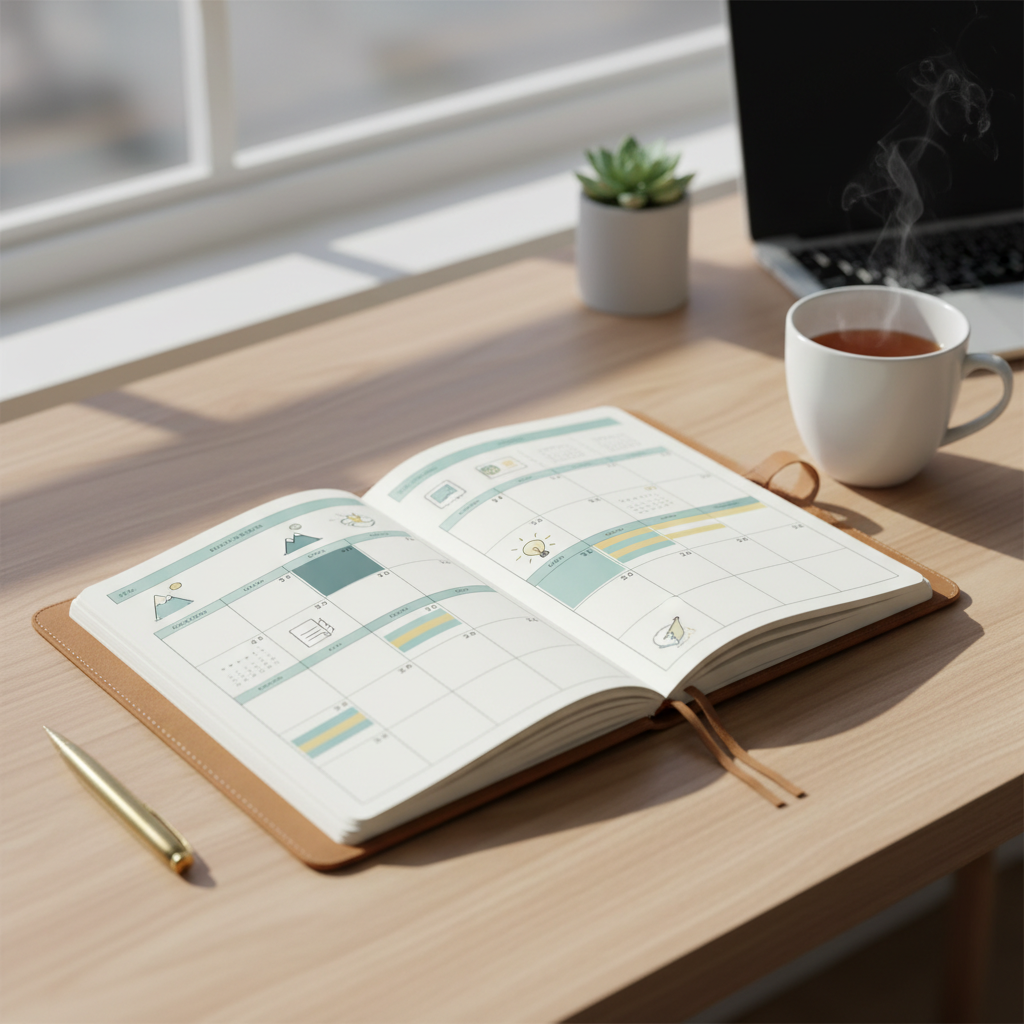
Top 7 Calendar Planner Ideas For Goal-Driven People
For individuals driven by ambition and a clear vision of their goals, a simple to-do list often falls short. What's needed is a dynamic system—a calendar planner that not only tracks appointments but actively propels you toward your objectives. A well-structured planner becomes a command center for your aspirations, breaking down lofty goals into manageable, daily actions. The key is finding a method that aligns with your unique workflow and cognitive style. Below are seven powerful calendar planner ideas designed specifically for goal-oriented individuals who want to transform their ambitions into reality.
1. The Bullet Journal (BuJo) Method
The Bullet Journal method, created by Ryder Carroll, is less of a pre-formatted planner and more of a flexible framework. Its power lies in its adaptability. At its core, the system uses "rapid logging"—a simple shorthand of symbols to categorize entries as tasks, events, or notes. This allows you to quickly capture thoughts and responsibilities without getting bogged down in lengthy descriptions. For the goal-driven person, the true magic is in its modular design. You can create custom "collections" or pages dedicated entirely to your specific goals. This might include a habit tracker for daily routines, a project timeline for a major work initiative, or a savings log for a financial target.
This method encourages a monthly "migration" process where you review all unfinished tasks from the previous month. You consciously decide whether to move a task forward, schedule it for the future, or eliminate it entirely. This regular review is a powerful tool for goal alignment, forcing you to assess what is truly important and preventing your planner from becoming a graveyard of forgotten tasks. It keeps your focus sharp and ensures your daily actions are always in service of your bigger picture.
2. Time Blocking
Time blocking is a time management technique where you schedule every part of your day, assigning a specific "block" of time to each task or activity. Instead of working from a simple to-do list, you allocate dedicated, uninterrupted periods in your calendar for focused work. For a goal-driven individual, this is incredibly effective because it forces you to prioritize. If your goal is to write a book, you don't just add "write chapter" to a list; you block out 9 AM to 11 AM on Tuesday specifically for that activity. This treats your goal-related tasks with the same importance as a client meeting or a doctor's appointment.
This method also helps combat procrastination and decision fatigue. You no longer have to wonder what to work on next; your calendar makes the decision for you. It’s also a fantastic diagnostic tool. If you consistently fail to complete tasks within their allocated blocks, it provides valuable data. You may be underestimating the time required for certain activities or over-scheduling your day. By analyzing your time blocks, you can make realistic adjustments and create a more sustainable and productive schedule that moves you closer to your goals every single day.
3. Themed Weekly Spreads
This idea is about structuring your week around specific themes or areas of focus, which is perfect for individuals balancing multiple large goals. For example, you could designate "Focus Mondays" for deep work on your most critical project, "Finance Fridays" for budgeting and financial planning, and "Wellness Wednesdays" for meal prep and exercise. By assigning a theme to each day, you create a rhythm and reduce the mental friction of switching between vastly different types of tasks. Your brain knows that on Monday, all energy is directed toward one primary objective.
Within your calendar planner, each day's section would be structured to support its theme. On "Finance Friday," your planner might include a checklist for paying bills, reviewing investments, and updating your budget spreadsheet. This approach ensures that all major areas of your life receive consistent attention. It prevents important long-term goals, like health or financial security, from being constantly pushed aside by more urgent but less important daily tasks. It’s a strategic way to guarantee balanced progress across all your ambitions.
4. The 1-3-5 Rule
The 1-3-5 Rule is a simple yet powerful daily planning method that helps you prioritize with laser focus. Each day, you commit to accomplishing a specific number of tasks: one big thing, three medium things, and five small things. The "big thing" should be a significant task that directly contributes to one of your major goals. The "medium things" are still important but less demanding, while the "small things" are quick administrative or routine tasks like answering emails or making a phone call.
By using this rule in your calendar planner, you start each day with a clear, achievable plan. It forces you to be realistic about what you can accomplish and prevents you from creating an overwhelming, endless to-do list. For the goal-oriented person, this ensures that you make meaningful progress every single day. Even if you only complete your one big task, you know you have moved the needle on what matters most. It builds momentum and a sense of accomplishment, which are crucial for staying motivated during the long journey of pursuing ambitious goals.
5. Goal-Specific Planner Sections
Instead of trying to fit everything into a standard daily or weekly layout, this idea involves creating dedicated sections or even separate planners for your most important goals. This is particularly useful for complex, multi-faceted objectives like starting a business, training for a marathon, or learning a new language. A dedicated section allows you to build a custom planning system tailored to the unique needs of that specific goal.
For example, a "Marathon Training" section in your planner could include a running log, a meal tracker, weekly mileage goals, and notes on your performance. A "New Business" section might have pages for brainstorming, tracking expenses, a content calendar for marketing, and a list of networking contacts. This compartmentalization helps you focus deeply on one area at a time without the distraction of your other responsibilities. It provides a comprehensive, all-in-one resource for each major pursuit, making it easier to track progress, identify obstacles, and stay organized.
6. The Kanban Method
Originally developed for manufacturing, the Kanban method is a visual workflow management tool that is incredibly effective for personal goal planning. The simplest form involves three columns: "To Do," "In Progress," and "Done." You write each task on a sticky note or card and move it across the board as you work on it. This system provides a clear, at-a-glance overview of your entire workload and your progress.
Goal-driven people can adapt this method for their planners by dedicating a two-page spread to their Kanban board. It's especially powerful for managing large projects with many moving parts. By limiting the number of items allowed in the "In Progress" column, you can prevent yourself from multitasking inefficiently and encourage a focus on completing tasks before starting new ones. Seeing tasks physically move from "To Do" to "Done" provides a powerful psychological boost and visual confirmation of your progress, which is highly motivating.
7. Digital and Analog Hybrid System
This approach combines the strengths of both digital calendars and physical planners to create a comprehensive goal-management system. Digital calendars (like Google Calendar or Outlook) are unparalleled for scheduling appointments, setting reminders, and managing collaborative events. Use your digital calendar for the "hard landscape" of your day—the meetings, appointments, and deadlines that are fixed in time.
Your physical planner, in contrast, is used for the "soft landscape"—the intentional, goal-oriented work. This is where you use methods like Time Blocking or the 1-3-5 Rule to plan how you will use the flexible time between your fixed appointments. The physical act of writing down your goals and daily tasks has been shown to improve memory and commitment. This hybrid system gives you the convenience and reminder features of digital tools while retaining the focus, intentionality, and tactile satisfaction of a paper planner.
The Psychology Behind Planning for Success
The act of using a calendar planner for goal setting is more than just an organizational habit; it's a powerful psychological tool. When you write down a goal and break it into actionable steps, you are engaging in a process known as "implementation intention." Research shows that you are significantly more likely to follow through on a goal if you create a specific plan for when, where, and how you will perform the task. A planner is the perfect medium for creating these intentions, turning vague aspirations like "get in shape" into concrete actions like "go to the gym Monday, Wednesday, and Friday at 6 PM."
Furthermore, planning helps to reduce cognitive load and decision fatigue. Our brains have a finite amount of mental energy for making decisions each day. By front-loading those decisions during a planning session, you free up mental resources to focus on execution. Instead of wasting energy in the moment deciding what to do next, you simply consult your planner and get to work. This process also provides a powerful feedback loop. Reviewing your planner allows you to see your progress, celebrate small wins, and identify what is and isn't working, enabling you to adjust your strategy and maintain momentum over the long term.
Common Questions About Effective Planning
How Do I Stick to My Planner Consistently?
Consistency is the biggest challenge for many people. The key is to integrate planning into your daily routine and make the process enjoyable. Start by "habit stacking"—linking your planning session to an existing habit. For example, you could plan your day for 10 minutes every morning while you drink your coffee. It's also crucial not to be a perfectionist. If you miss a day, don't abandon the system. Simply pick it up the next day. The goal is progress, not perfection.
Make your planner a space you want to visit. Use pens you enjoy, add stickers, or keep it clean and minimal—whatever aesthetic appeals to you. Most importantly, ensure your system is realistic. If you consistently over-schedule and end the day feeling defeated, you will learn to associate your planner with failure. Start with a few manageable tasks and build from there. When your planner becomes a source of accomplishment rather than a list of failures, you will be naturally motivated to use it.
What's the Difference Between a Planner and a To-Do List?
While they may seem similar, a planner and a to-do list serve fundamentally different purposes, especially for goal-driven individuals. A to-do list is simply a collection of tasks you want to accomplish, often without any context of time or priority. It’s a reactive tool for capturing responsibilities as they arise. While useful, a simple list can quickly become overwhelming and doesn't provide a strategic path forward.
A planner, on the other hand, is a proactive and strategic tool. It allocates tasks to specific times and dates, forcing you to consider your available capacity and prioritize what is most important. It connects your daily actions to your weekly, monthly, and long-term goals. A planner provides the "when" and "where" for your tasks, transforming a passive list of wishes into an active, time-bound plan for achieving your objectives.
Should I Use a Digital or Physical Planner?
The choice between digital and physical planners is highly personal and depends on your lifestyle, preferences, and goals. Digital planners, such as apps like Todoist, Trello, or Google Calendar, excel at accessibility, collaboration, and automated reminders. They are searchable, sync across all your devices, and are perfect for managing a life with many appointments and shared schedules. If your work is highly collaborative or you need constant access to your schedule on the go, a digital system might be more efficient.
Physical planners, however, offer unique cognitive benefits. The act of writing by hand has been shown to improve memory retention and conceptual understanding. A paper planner is a finite, distraction-free space, free from the notifications and temptations of a digital device. This can lead to more mindful and intentional planning. Many goal-driven people find that a physical planner allows for greater creativity and a more tangible sense of progress. As mentioned in the hybrid system idea, the most powerful solution for many is to use both, leveraging each for its unique strengths.
Conclusion
Finding the right calendar planner system is a crucial step for any goal-driven person looking to translate ambition into tangible results. Whether you prefer the infinite flexibility of a Bullet Journal, the rigid structure of Time Blocking, or a hybrid digital-analog approach, the most effective system is the one you will use consistently. By intentionally planning your days and weeks, you create a direct link between your daily actions and your ultimate aspirations. This transforms your planner from a simple organizational tool into a personalized roadmap for success, ensuring that every day is a step in the right direction.