Maximize Your Space: Creative Closet Organizer Ideas for Every Style
Ready to transform your cluttered closet into a beautifully organized space? We've broken down the most effective and popular ideas to help you get there.
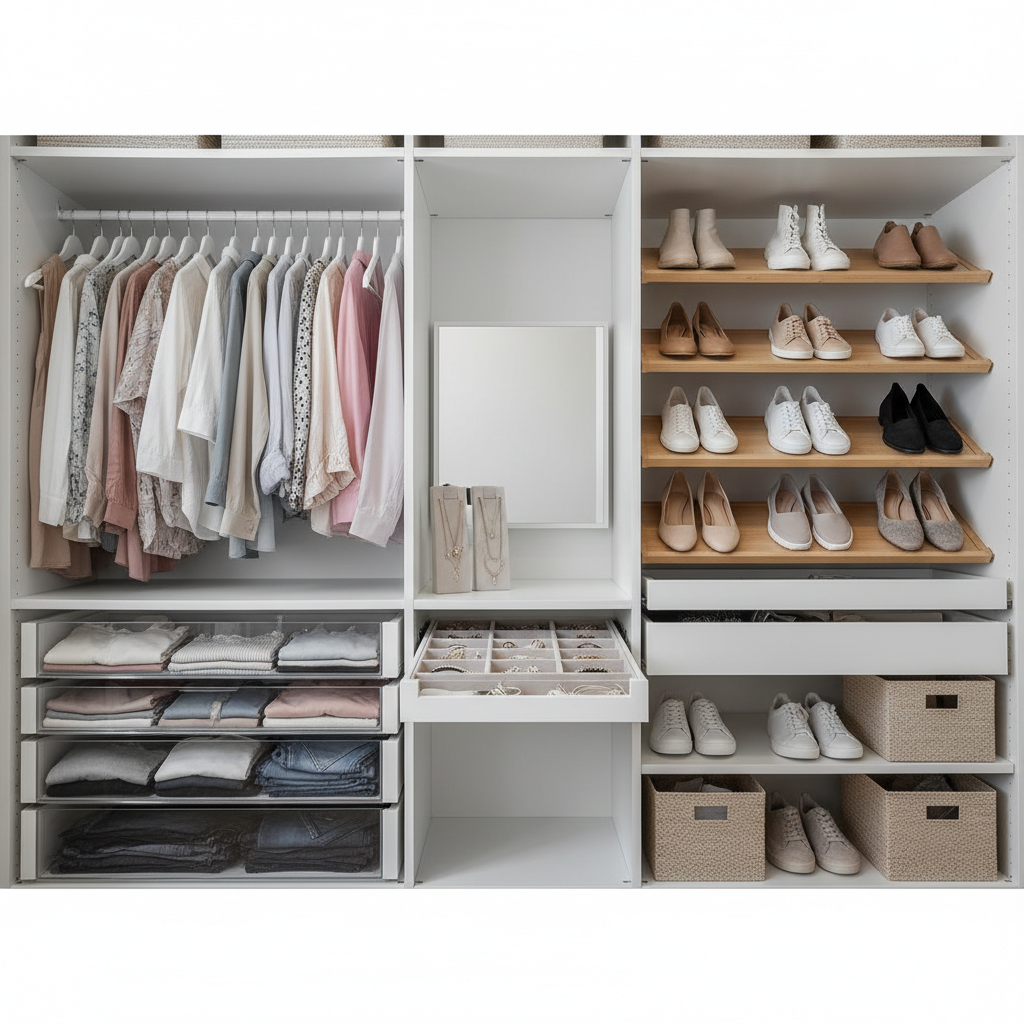
12 Genius Closet Organizer Ideas
A cluttered closet can make starting your day feel chaotic. The right organization system not only saves you time but also reduces stress and helps you take better care of your belongings. Transforming your closet from a source of frustration to a functional and peaceful space is achievable with a few clever ideas. Here are some of the most effective closet organizer ideas to help you get started.
1. Utilize Vertical Space with Hanging Shelves
Many closets have a lot of unused vertical space, typically between a high shelf and the hanging rod, or below shorter hanging clothes. Fabric hanging shelves are an excellent, no-installation-required solution to instantly create storage for folded items like sweaters, t-shirts, and jeans. These organizers simply hang from the closet rod and provide multiple cubbies, effectively turning air into usable shelf space. They are lightweight, affordable, and come in various sizes to fit different closet dimensions.
When choosing hanging shelves, consider the weight of the items you plan to store. Heavier items like denim or bulky sweaters may require a more robust organizer with reinforced shelves. Lighter items like t-shirts, scarves, or hats are perfect for standard models. This method is especially useful in closets that lack built-in shelving and provides a flexible way to categorize clothing without permanent modifications.
2. Double Your Hanging Room with a Double Rod
If your closet primarily consists of a single high rod, you're likely wasting the entire bottom half of your closet. A double hang closet rod is a simple yet revolutionary addition that can instantly double your hanging capacity. These are often adjustable and can be hung from the existing rod, requiring no tools to install. They are ideal for separating shorter garments like shirts, blouses, skirts, and folded trousers.
Before adding a double rod, assess your wardrobe. This solution works best if the majority of your clothes are shorter items. If you have many long dresses, coats, or robes, you'll want to leave a portion of your closet with a single rod to accommodate them. You can create a "long hang" section on one side and a "double hang" section on the other for a highly efficient and customized layout.
3. Tame Your Drawers with Dividers
For those who have a dresser or drawer system within their closet, drawer dividers are non-negotiable for maintaining order. They prevent small items like socks, underwear, and accessories from becoming a jumbled mess. Dividers create designated compartments, making it easy to see everything you own at a glance. You can find adjustable dividers that expand to fit the exact dimensions of your drawer or opt for honeycomb-style organizers perfect for small, rolled items.
This organizational method encourages a more mindful approach to putting things away. Instead of just tossing items in, you place them in their designated spot. This not only keeps the drawer tidy but also helps you quickly find what you need in the morning rush. Dividers are also fantastic for organizing scarves, belts, and ties, preventing them from tangling.
4. Use Clear Bins for Easy Visibility
Storing items in bins on high shelves is a great way to keep less frequently used items dust-free and out of the way. However, opaque boxes can create a "mystery box" problem where you have no idea what's inside without pulling it down. The solution is to use clear storage bins. This allows you to see the contents instantly, saving you the time and effort of searching through multiple containers.
For a clean aesthetic, you can also use uniform, opaque bins but add clear label holders to the front. This achieves a tidy look while still providing the crucial information you need. Clear bins are perfect for storing seasonal clothing, extra bedding, handbags, or special occasion shoes. Stacking similar-sized bins can maximize shelf space even further.
5. Maximize Floor Space with Shoe Racks
A pile of shoes on the closet floor is one of the quickest ways to make a space feel messy and disorganized. A dedicated shoe rack is an essential organizer that reclaims this valuable real estate. There are countless styles to choose from, including multi-tiered standing racks, stackable units that can be customized to your needs, and cubby organizers that keep each pair neatly separated. Choosing the right one depends on the size of your collection and the layout of your closet.
When selecting a shoe rack, consider the types of shoes you own. Racks with flat shelves are more versatile and can accommodate everything from heels to ankle boots. Slanted racks are great for low-profile shoes like sneakers and flats. For a larger collection, consider modular, stackable racks that can grow with your needs, ensuring your closet floor stays clear for good.
6. Embrace Slim Velvet Hangers
Mismatched hangers—a collection of plastic, wire, and bulky wooden ones—can create visual clutter and take up unnecessary space. Switching to uniform, slim hangers is one of the most impactful changes you can make. Velvet-flocked hangers are a popular choice because their non-slip surface keeps silky blouses and wide-neck tops from falling to the floor. Their ultra-slim profile allows you to fit significantly more clothing on the rod compared to traditional hangers.
Making this switch creates a streamlined, boutique-like feel in your closet. While it may seem like a small detail, the visual consistency makes the entire space look more organized and high-end. It also encourages you to hang items properly, which helps maintain their shape and reduce wrinkles, saving you time on ironing.
7. Install Over-the-Door Organizers
The back of your closet door is prime, often-overlooked storage real estate. An over-the-door organizer is a perfect tool for leveraging this space without any drilling or permanent installation. These come in various styles, from clear-pocketed shoe holders (which are also great for scarves, belts, and cleaning supplies) to wire racks ideal for storing handbags, hats, or toiletries.
This is an especially valuable solution for small closets where every inch counts. By moving accessories or shoes to the door, you free up shelf and rod space for your clothing. It's a simple, affordable, and highly effective way to add a significant amount of storage capacity to any closet.
8. Add Custom-Fit Shelving
While off-the-shelf organizers are fantastic, sometimes the most effective solution is to add shelving tailored to your specific closet dimensions and needs. This doesn't have to mean a full, expensive remodel. You can install simple floating shelves or adjustable track shelving to create storage that perfectly fits your space. Use these shelves for folded clothes, storage bins, or displaying accessories like hats and purses.
Adding a low shelf just above the floor can create a perfect spot for shoes or flat bins, while a high shelf installed near the ceiling is ideal for long-term storage of out-of-season items. Taking the time to add shelving that works for your specific inventory of belongings can be a game-changer in achieving long-term organization.
9. Use Hooks for Accessories
Hooks are one of the most versatile and underutilized organizing tools. They can be placed on any available wall space or on the back of the door to create a home for items that often get lost or tangled. Use a row of hooks for necklaces and long jewelry to prevent tangles. Install larger, decorative hooks for hanging robes, frequently-worn handbags, or tomorrow's planned outfit.
Small, adhesive hooks can be placed strategically to hold belts, scarves, or even hats. They keep these items visible and easily accessible, preventing them from getting buried in a drawer or on a shelf. This small addition can make a big difference in how easily you can find and use your favorite accessories.
10. Incorporate a Closet System
For a complete overhaul, a full closet system is the ultimate solution. These systems combine rods, shelves, and drawers into one cohesive unit, designed to maximize every square inch of space. They can be customized to your exact needs, with options for double-hang sections, long-hang areas, shoe shelves, and built-in drawers. While this is a more significant investment, it provides a permanent and highly efficient structure.
Modern closet systems are often modular, allowing you to design a layout that perfectly matches your wardrobe. You can choose the number of shelves, the placement of drawers, and the height of the rods. If you're struggling with a poorly designed closet layout, installing a system can completely transform its functionality and make organization effortless to maintain.
11. Store Out-of-Season Items with Vacuum Bags
Bulky winter coats, comforters, and sweaters can consume a massive amount of closet space. Vacuum-sealed storage bags are an ingenious solution for this problem. By placing items inside and using a vacuum cleaner to suck out the air, you can compress them to a fraction of their original size. This allows you to store them neatly on a high shelf or under the bed, freeing up valuable real estate for your in-season wardrobe.
These bags also protect your clothing from dust, moisture, and pests during their off-season storage. When the seasons change again, simply open the bag, and your items will fluff back up to their original state. This is an essential strategy for anyone dealing with limited storage space and distinct seasonal wardrobes.
12. Create Zones for Different Categories
One of the most fundamental principles of organization is grouping like items together. Apply this logic to your closet by creating distinct "zones." Designate specific areas for different categories of clothing: all work blouses together, casual t-shirts in another section, dresses in their own space, and so on. You can take this a step further by color-coding within each zone.
This method transforms your closet into a personal store, making it incredibly easy to put together outfits. You'll know exactly where to look for a specific item, saving you time and mental energy. Creating zones doesn't require any special equipment—just a thoughtful arrangement of your existing clothes. It brings a sense of logic and order that is simple to maintain over time.