Maximize Your Space: Practical Closet Organization Tips for Small Bedrooms
Struggling to fit your wardrobe into a small bedroom closet isn't just frustrating—it's a daily battle against clutter. You've come to the right place for a solution. In this guide, we’re sharing our most effective, easy-to-implement tips for maximizing every single inch of your space.
1. Embrace Vertical Space to Maximize Storage
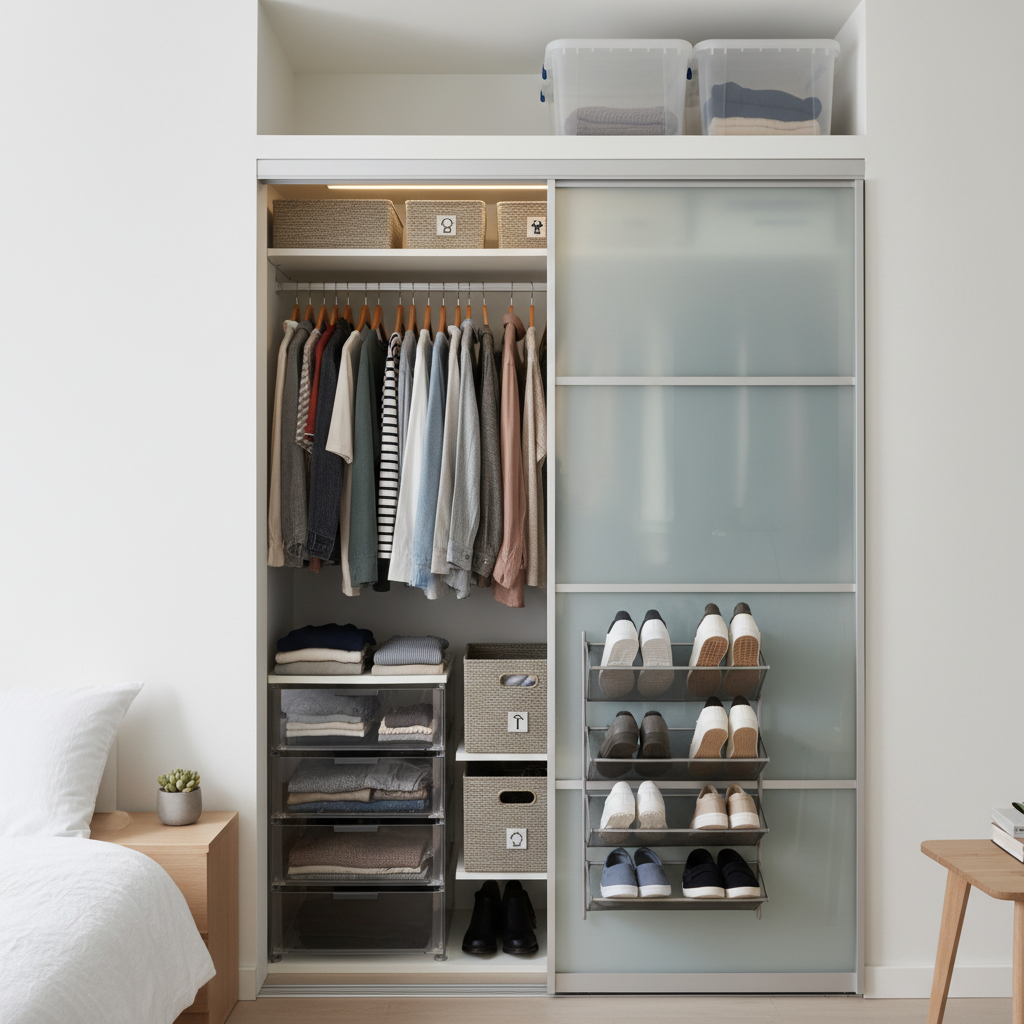
In a small closet, the most underutilized real estate is often the vertical space. Most closets come with a single rod and perhaps one shelf above it, leaving a significant gap between the shelf and the ceiling, as well as below your hanging clothes. To reclaim this valuable area, consider installing additional shelving that goes as high as possible. These upper shelves are perfect for storing items you don't need daily, such as off-season clothing, extra bedding, or travel bags. Use labeled bins to keep these items organized and dust-free, making it easy to see what you have without needing to pull everything down.
Another powerful strategy is using hanging organizers. Fabric shelves that hang directly from the closet rod are excellent for folded items like sweaters, t-shirts, and jeans, effectively creating a makeshift dresser inside your closet. This frees up drawer space in your bedroom. Similarly, tiered hangers allow you to hang multiple items, like pants or skirts, in the vertical space that one item would typically occupy. By thinking vertically, you can dramatically increase your closet's storage capacity without expanding its physical footprint.
2. Declutter Ruthlessly Before You Organize
You can't organize clutter. Before you buy a single bin or hanger, the most crucial step is to go through every single item in your closet. An effective method is to take everything out and sort it into four piles: keep, donate, store, and discard. Be honest with yourself about what you actually wear. A great rule of thumb is the one-year rule: if you haven't worn an item in the past year and it doesn't have significant sentimental value, it's time to let it go. This process can be daunting, but it’s the foundation of a truly organized space.
This decluttering phase not only frees up physical space but also mental space. A closet filled only with clothes you love and feel good in makes getting dressed in the morning a much more pleasant and efficient experience. Once you've whittled down your wardrobe to the essentials, you'll have a much clearer idea of the storage solutions you actually need. Organizing a curated wardrobe is infinitely easier and more sustainable than trying to cram an overflowing one into a small space.
3. Switch to Slim, Matching Hangers
One of the quickest and most visually impactful changes you can make in a small closet is to switch to uniform, slim hangers. Bulky plastic, wire, and wooden hangers take up an unnecessary amount of rod space and create a chaotic, jumbled look. Slimline velvet or flocked hangers are a game-changer. Their thin profile allows you to fit significantly more clothing onto the rod, while their non-slip surface ensures that wide-neck tops, silky blouses, and tank tops stay put instead of sliding onto the floor.
Using matching hangers also creates a clean, streamlined aesthetic that makes your closet look instantly more organized and high-end. When all your clothes hang at the same height and in the same direction, it’s much easier to scan your options and find what you’re looking for. This simple swap is a relatively inexpensive investment that pays huge dividends in both space and sanity.
4. Install a Double-Hang Closet Rod
For most people, the majority of their hanging clothes are shirts, skirts, and folded pants, none of which require the full vertical length of the closet. Installing a second closet rod below the main one can literally double your hanging space instantly. This "double-hang" configuration is perfect for separating tops on one rod and bottoms on the other, making it easier to coordinate outfits.
You can achieve this with an adjustable hanging rod that hooks onto the existing one or by installing a permanent second rod. Measure your clothes first to ensure you leave enough clearance. For example, your shirts on the top rod should not overlap with the clothes on the bottom rod. Leave a small section of your closet as a single rod for longer items like dresses, coats, or jumpsuits.
5. Utilize the Back of the Closet Door
The back of your closet door is prime storage real estate that often goes completely unused. An over-the-door organizer can add a tremendous amount of functionality without taking up any closet or floor space. A popular choice is an over-the-door shoe organizer with clear pockets. These pockets are incredibly versatile and can be used to store not only shoes but also accessories like scarves, belts, rolled-up t-shirts, socks, and clutches.
Alternatively, you can install hooks or a pegboard on the back of the door. Hooks are perfect for hanging purses, hats, robes, or even planning your outfit for the next day. A mounted rack can hold jewelry, ties, and other small accessories. By moving these items to the door, you free up precious shelf and rod space for your clothing.
6. Implement Drawer Dividers and Bins
Even if you maximize hanging space, you'll still have folded items. To prevent shelves and drawers from becoming a jumbled mess, use dividers and bins. On open shelves, use shelf dividers to create neat, separate stacks of sweaters, jeans, and t-shirts, preventing them from toppling over into each other. Inside drawers, fabric bins or adjustable dividers are essential for corralling smaller items like socks, underwear, and workout clothes.
This "containerizing" approach creates a designated home for everything, making it simple to find what you need and, just as importantly, to put it away correctly. When every category of item has its own bin or divided section, you are much less likely to revert to messy piles. Clear acrylic or wire bins are especially useful on shelves as they allow you to see the contents at a glance.
7. Store Off-Season Items Elsewhere
A small closet cannot effectively house your entire wardrobe for all four seasons. To maximize your daily usable space, rotate your clothing seasonally. In the summer, store bulky winter coats, heavy sweaters, and boots elsewhere. In the winter, do the same with your sundresses, shorts, and sandals. This simple act can free up a massive amount of space and make your current-season wardrobe much more accessible.
Ideal storage locations for off-season items include under the bed, in suitcases, or on a high shelf in another closet. Use vacuum-sealed bags to shrink down bulky items like puffer jackets and comforters to a fraction of their original size. Clearly label every bin and bag with its contents (e.g., "Winter Sweaters") so you can easily find what you need when the seasons change again.
8. Add Lighting to Your Closet
A dark, shadowy closet feels smaller and more cramped than it actually is, and it makes finding specific items difficult. Adding proper lighting can completely transform the space, making it feel more open and functional. You don't need to hire an electrician for a major rewiring job; there are many simple, affordable solutions available.
Battery-operated, motion-activated LED lights are an excellent option. You can stick them to the underside of shelves or the closet ceiling, and they will illuminate the space as soon as you open the door. LED light strips are another great choice for providing even, bright light along the length of your closet. Seeing everything you own clearly will help you get dressed faster and keep the space tidier because you're not rummaging through dark corners.