Navigating Financial Aid: How to Secure a Pell Grant for Truck Driving School
Yes, you can absolutely use a Pell Grant to help pay for truck driving school, but knowing where to start can be tricky. This guide breaks down the entire process into simple, actionable steps.
Understanding the Pell Grant for CDL Training
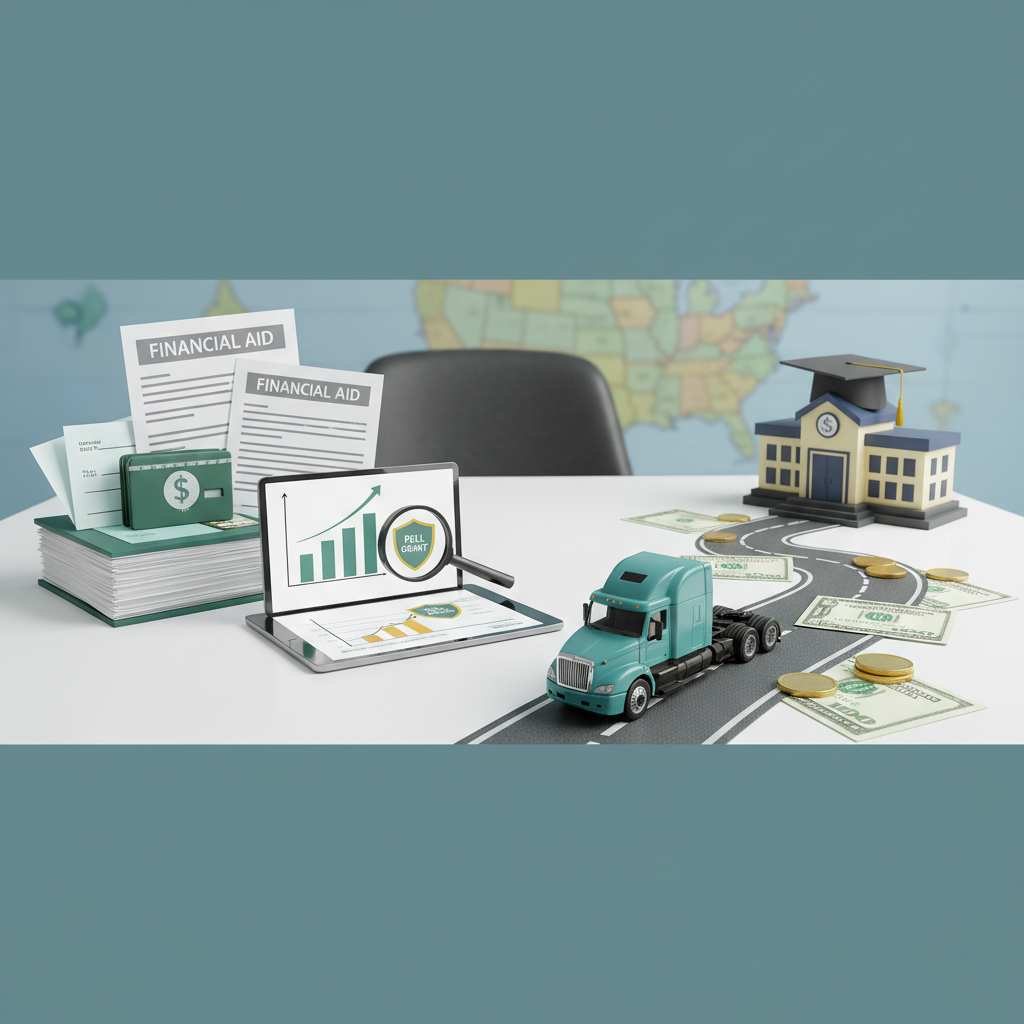
For many aspiring truck drivers, the cost of Commercial Driver's License (CDL) training can be a significant hurdle. A Pell Grant offers a powerful solution because, unlike a loan, it is a form of federal financial aid that does not need to be repaid. Traditionally associated with four-year colleges, the scope of the Pell Grant has expanded, making it a viable option for certain short-term career and technical programs, including truck driving schools.
This expansion means that students enrolling in qualifying CDL programs may be eligible for thousands of dollars in free aid to cover tuition, fees, and other related expenses. The key, however, lies in understanding that not every truck driving school or CDL program is eligible. The program must meet specific criteria set by the U.S. Department of Education, and the school must be accredited and approved to participate in the federal student aid system. This makes finding the right school just as important as being personally eligible for the grant.
Step-by-Step Guide to Applying for a Pell Grant
Navigating the financial aid process can seem complicated, but breaking it down into manageable steps makes it much easier. Follow this guide to apply for a Pell Grant to fund your truck driving education.
Step 1: Confirm Your Personal Eligibility
Before you even look at schools, you need to determine if you meet the basic requirements for federal student aid. The Pell Grant is primarily a need-based grant, meaning your financial situation is the biggest determining factor. To be eligible, you must demonstrate significant financial need and meet several other criteria.
General eligibility requirements include being a U.S. citizen or an eligible noncitizen, having a valid Social Security number, and possessing a high school diploma or a General Educational Development (GED) certificate. Additionally, you cannot be in default on a previous federal student loan. Your eligibility and potential award amount are calculated based on the information you provide on your financial aid application, which generates a number known as the Student Aid Index (SAI).
Step 2: Find an Eligible Truck Driving School
This is arguably the most critical step in the entire process. You can be perfectly eligible for a Pell Grant, but it won't matter if your chosen truck driving school doesn't participate in the federal student aid program. Only accredited institutions that are approved by the Department of Education can accept Pell Grant funds on behalf of their students.
To find an eligible school, start by visiting the websites of truck driving schools you are interested in and look for a "Financial Aid" page. They will often state clearly if they accept federal aid like Pell Grants. The most reliable method is to call the school's admissions or financial aid office directly and ask, "Do you accept the Pell Grant for your CDL program?" You can also use the Federal Student Aid school search tool to find participating institutions in your area.
Step 3: Gather Your Necessary Documents
To complete your financial aid application smoothly, you should gather all the necessary documents beforehand. Having everything in one place will prevent delays and ensure the information you provide is accurate. The application will ask for detailed personal and financial information for yourself (and your parents, if you are considered a dependent student).
Key documents you will likely need include:
- Your Social Security Number
- Your driver's license
- Your federal income tax returns (W-2s, and other records of money earned)
- Records of any untaxed income, such as child support received
- Information on cash, savings and checking account balances, investments, and other assets
Step 4: Complete the FAFSA (Free Application for Federal Student Aid)
The FAFSA is the one and only application for the Federal Pell Grant. You cannot get a Pell Grant without completing this form. The application is free and can be completed online at the official government website, StudentAid.gov. Be wary of any websites that ask you to pay to complete the FAFSA.
During the application process, you will need to create a personal FSA ID, which acts as your electronic signature. You will be asked to list the schools you want to receive your financial information. It is essential that you add the school code for the eligible truck driving school you plan to attend. Without this code, the school will never receive your information and cannot create a financial aid package for you.
Step 5: Review Your Student Aid Report (SAR)
A few days to a week after submitting your FAFSA, you will receive a Student Aid Report (SAR). This document is a summary of all the information you provided on your application. It is crucial to review your SAR carefully to check for any errors. If you find a mistake, you can log back into your FAFSA account to make corrections.
Your SAR will also include your Student Aid Index (SAI), which is the number that schools use to determine how much financial aid you are eligible to receive. A lower SAI generally means greater financial need and a larger potential Pell Grant award. The report does not tell you how much money you will get, but it confirms your application has been processed.
Step 6: Accept the Financial Aid Award
Once the truck driving school you listed on your FAFSA receives your information, its financial aid office will put together a financial aid package for you. This will be sent to you in the form of an award letter. This letter will detail all the aid you are eligible for, including the Pell Grant, and potentially other aid like federal loans or scholarships.
To receive the funds, you must formally accept the award through the school’s student portal or by contacting their financial aid office. The Pell Grant money is then disbursed directly to the school to cover your tuition and fees. If the grant amount exceeds your direct costs, the school will pay you the remaining balance, which you can use for other educational expenses like books or transportation.
The Role of Accreditation in Pell Grant Eligibility
Many prospective students focus solely on their personal eligibility for a Pell Grant and overlook the critical role of the institution. Accreditation is a process of quality assurance and validation that a college, university, or career school undergoes to confirm it meets high standards of educational performance. For the purposes of federal financial aid, this process is not optional—it's mandatory.
The U.S. Department of Education does not accredit schools itself. Instead, it recognizes specific accrediting agencies that are trusted to evaluate educational institutions. A truck driving school must be accredited by one of these recognized agencies to be eligible to participate in federal aid programs. This ensures that taxpayer-funded grants are going to programs that provide legitimate, quality training and have a track record of successfully preparing students for their careers. When you are researching CDL programs, confirming a school's accreditation is a non-negotiable step if you plan to use a Pell Grant.
Common Questions About Using Pell Grants for CDL School
As you explore your options, several common questions are likely to arise. Understanding the answers to these can help you better plan your path to a trucking career.
How Much Money Can I Get from a Pell Grant for Truck Driving School?
The amount of money you can receive from a Pell Grant depends on several factors. The most important is your Student Aid Index (SAI), which is calculated from your FAFSA. The lower your SAI, the higher your financial need and the larger your potential grant. The maximum award amount changes each academic year; for example, for the 2023-2024 award year, the maximum was $7,395.
Other factors include the cost of attendance at your specific truck driving school and your enrollment status (whether you are attending full-time or part-time). While a Pell Grant may not always cover the entire cost of a CDL program, it can often cover a very large portion, significantly reducing the amount you would need to pay out-of-pocket or finance through other means.
What If the Pell Grant Doesn't Cover the Full Cost?
It's common for a Pell Grant to cover most, but not all, of the tuition for a CDL program. If you find yourself with a remaining balance, you have several other options to explore. The same FAFSA application used for the Pell Grant also determines your eligibility for federal student loans, which have more favorable terms and repayment options than private loans.
Beyond federal aid, you should research scholarships specifically for the trucking industry. Many transportation companies, industry associations, and private organizations offer scholarships to help attract new drivers. Additionally, you may qualify for funding through the Workforce Innovation and Opportunity Act (WIOA), a federal program that helps individuals get training for in-demand jobs. Check with your local American Job Center or workforce development board to see if you qualify.
Can I Use a Pell Grant if I Already Have a Degree?
This is a frequent point of confusion. Generally, Pell Grants are reserved for students who have not yet earned their first bachelor's degree. If you already have a four-year degree, you are typically not eligible for another Pell Grant. However, the rules surrounding short-term certificate programs can sometimes provide an exception.
Some regulations allow students to receive Pell Grants for specific non-credit or certificate programs that provide job training, even if they already hold a degree. Because this is not a universal rule, the only way to know for sure is to speak directly with the financial aid office at the accredited truck driving school you wish to attend. They can review your specific situation and provide a definitive answer based on their program's eligibility.
Conclusion
Securing a Pell Grant can be a game-changer, making a career in truck driving accessible and affordable. The process hinges on three key actions: confirming your own financial eligibility, finding an accredited truck driving school that participates in the federal aid program, and accurately completing the FAFSA. By following these steps and doing your research, you can unlock valuable funding that never has to be paid back, putting you on the fast track to getting your CDL and starting a new career on the open road.
For official information and to apply for federal aid, please visit these resources: