Preview the Most Anticipated Luxury Sports Cars of 2026
The year 2026 is shaping up to be an incredible moment for automotive enthusiasts. Legendary brands are preparing to unleash everything from next-generation hybrid supercars to groundbreaking all-electric models that will redefine performance.
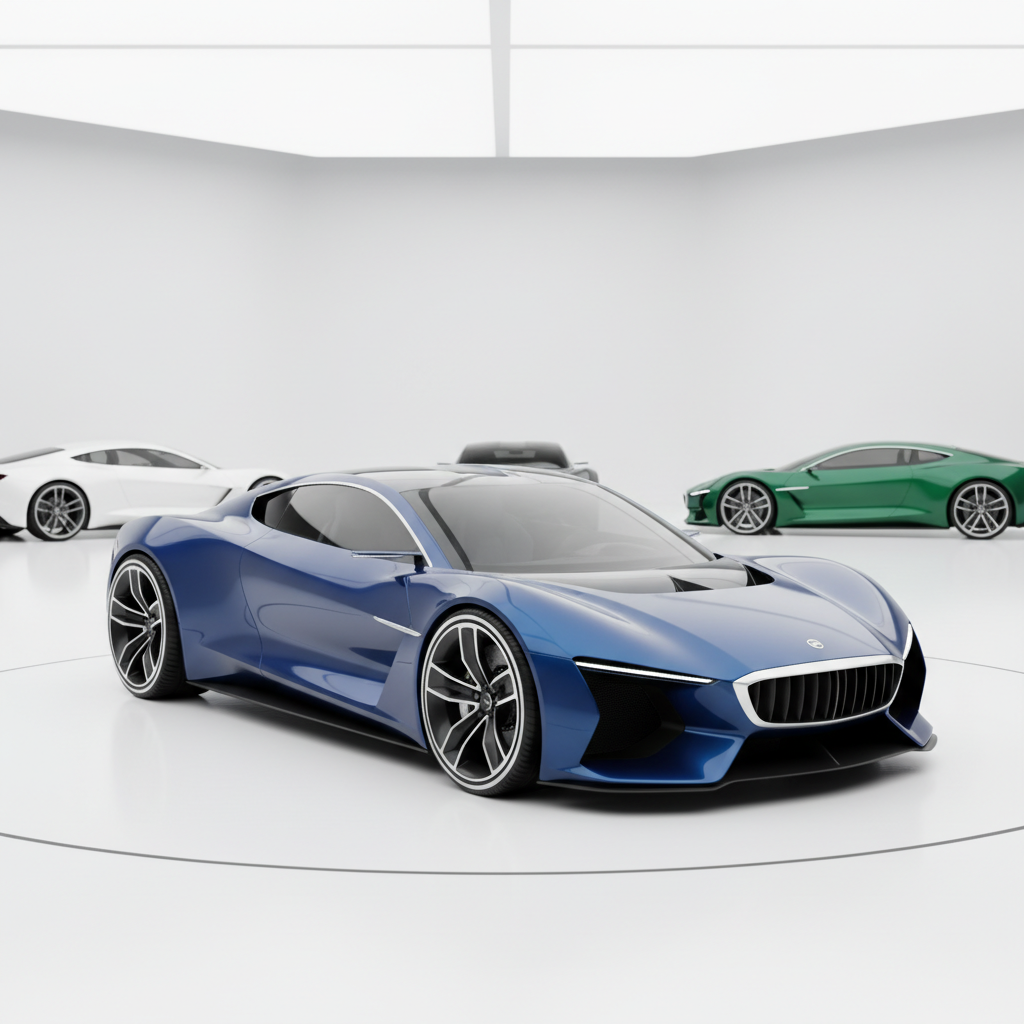
The Most Anticipated Luxury Sports Cars Arriving in 2026
The automotive landscape is shifting at an unprecedented pace, and the luxury sports car segment is at the forefront of this evolution. By 2026, we expect to see a stunning fusion of breathtaking design, revolutionary technology, and electrifying performance. While some details remain under wraps, industry whispers, concept reveals, and official roadmaps give us a thrilling glimpse into the future. Here is a detailed list of the luxury sports cars poised to redefine performance and style in 2026.
1. The First-Ever All-Electric Ferrari
For decades, the heart of every Ferrari has been its screaming, naturally-aspirated engine. In 2026, that all changes. The legendary Maranello-based manufacturer is set to launch its first-ever fully electric vehicle, a monumental step for the brand. While Ferrari has been tight-lipped about the specifics, company insiders have promised it will be a "true Ferrari," delivering an emotional and visceral driving experience that honors its heritage. Expect this car to feature groundbreaking battery technology developed in-house, focusing on power density and sustained performance rather than just outright range. The sound, a crucial part of the Ferrari experience, will be meticulously engineered to be unique and exhilarating, even without combustion.
The design is expected to be radical yet unmistakably Ferrari, leveraging the packaging advantages of an EV platform to create a low-slung, aerodynamically superior silhouette. Performance will be nothing short of hypercar-level, with acceleration figures that could challenge the fastest cars on the planet. The focus will be on creating a vehicle that feels agile, responsive, and connected to the driver, using advanced torque vectoring and electronic systems to mimic and even surpass the feel of its gasoline-powered siblings. This vehicle isn't just a new car; it's a statement about the future of the prancing horse.
2. Next-Generation Porsche 911 (Hybrid Variants)
The Porsche 911 is an icon, and its evolution is always a carefully managed process. For 2026, the 911 lineup is expected to be fully entrenched in its 992.2 generation, which will prominently feature hybridization for the first time in the model's history. This won't be a simple plug-in hybrid system aimed at efficiency; it will be a performance-oriented hybrid powertrain derived from Porsche's Le Mans-winning motorsport programs. The system is designed to provide instant torque-fill, eliminate turbo lag, and deliver a significant boost in overall horsepower without compromising the car's signature rear-engine balance and handling dynamics.
Expect models like the Carrera S and GTS to receive this "T-Hybrid" technology, which uses a compact electric motor integrated into the transmission and a lightweight battery pack to enhance, not dominate, the driving experience. The goal is to make the 911 even faster and more responsive on both road and track. Visually, the 992.2 generation will feature subtle but effective aerodynamic updates and modernized interior tech, but the timeless 911 silhouette will remain. This hybrid evolution ensures the 911 stays at the pinnacle of the sports car world while adapting to a new era of performance.
3. Aston Martin's First Electric Supercar
Aston Martin is on a mission to electrify its entire lineup, and by 2026, we anticipate the arrival of its first all-electric supercar. This vehicle is poised to be a successor to the current generation of front-engine sports cars like the DB11 and DBS, but built on a completely new, bespoke EV platform. The brand is partnering with Lucid Motors for its ultra-high-performance twin-motor technology, promising staggering power outputs likely exceeding 1,000 horsepower. This car will combine Aston Martin's tradition of beautiful, elegant grand touring design with the brutal, instantaneous acceleration that only a premium EV can provide.
Beyond raw power, Aston Martin will focus heavily on creating a luxurious and technologically advanced cabin experience. Expect a complete overhaul of the infotainment system, premium sustainable materials, and a design that emphasizes both driver focus and long-distance comfort. The chassis and suspension will be tuned to deliver the quintessential Aston Martin feel—a perfect balance between a comfortable GT and a sharp, engaging sports car. This model will be critical in defining the brand's identity in the electric age, proving that zero emissions can coexist with soul and sophistication.
4. The Successor to the Lamborghini Huracán
Following the trailblazing hybrid V12 Revuelto, Lamborghini is bringing its hybrid revolution to its V10 successor. Expected to be in full production by 2026, the replacement for the beloved Huracán will ditch the naturally-aspirated V10 in favor of a new, high-revving twin-turbo V8 paired with a sophisticated plug-in hybrid system. This new powertrain is being developed entirely by Lamborghini and promises to deliver more power, more torque, and a more electrifying performance curve than its predecessor. The electric motors will provide instant acceleration from a standstill while the V8 engine screams towards its redline, creating a dual-character performance experience.
The design will undoubtedly be aggressive and angular, drawing inspiration from fighter jets and Lamborghini's limited-run specials. Advanced aerodynamics and lightweight materials like carbon fiber will be used extensively to offset the added weight of the hybrid components. Inside, the cabin will feature a pilot-oriented cockpit with even more digital integration, putting the driver in complete control of this new hybrid beast. This car represents Lamborghini's commitment to retaining the wild, emotional character of its supercars while embracing a more sustainable, and even more powerful, future.
5. The Rumored Apple Car
While still the subject of intense speculation, the long-rumored Apple Car, codenamed "Project Titan," could make its debut around 2026. If it comes to fruition, it won't just be another luxury EV; it will be a complete reimagining of the automobile as a personal mobility device. Apple's focus is expected to be on a seamless user experience, integrating its hardware, software, and services into a sleek, minimalist vehicle. The car is rumored to feature a revolutionary monocell battery design for greater energy density and range, along with an incredibly advanced autonomous driving system.
The interior is where the Apple Car could truly disrupt the industry, potentially featuring a lounge-like environment with a massive central touchscreen running a new, car-specific operating system. The design, both inside and out, will likely follow Apple's signature aesthetic of clean lines and premium materials. While its "sports car" credentials may be more focused on effortless, silent acceleration rather than track-day prowess, its position in the luxury market and its technological ambition place it firmly on the list of the most anticipated vehicles of 2026. Its arrival could force every other luxury automaker to fundamentally rethink their approach to in-car technology and user interface design.
The Electrifying Shift: How Luxury Sports Cars are Evolving
The 2026 lineup of luxury sports cars marks a pivotal moment in automotive history. For the first time, electrification is not an alternative concept but a core component of mainstream performance. This transition is driven by two main factors: tightening global emissions regulations and the undeniable performance benefits of electric motors. Manufacturers are moving beyond the simple "gas vs. electric" debate and are instead creating sophisticated hybrid systems that use electric power to enhance the character of their combustion engines. This allows them to eliminate turbo lag, provide immense low-end torque, and achieve power figures that were once the exclusive domain of multi-million dollar hypercars.
At the same time, the leap to fully electric platforms, as seen with Ferrari and Aston Martin, is forcing a complete rethink of vehicle architecture. Without a large engine and transmission tunnel, designers have more freedom to sculpt bodies for optimal aerodynamics and create more spacious, futuristic interiors. The challenge, however, is preserving brand identity. A Lamborghini must feel like a Lamborghini, and a Ferrari must sound and feel like a Ferrari. This has led to massive investments in engineering synthetic-but-authentic sounds, developing advanced torque-vectoring systems to manage weight, and creating battery technologies that can withstand the rigors of high-performance driving without overheating or fading.
Common Questions About the Future of Performance Cars
Will Electric Sports Cars Ever Match the Thrill of Gasoline Engines?
This is one of the most debated topics among enthusiasts. The "thrill" of a gasoline engine is a multi-sensory experience: the roaring sound, the vibrations, the linear build-up of power, and the mechanical feedback through the chassis. Electric sports cars offer a different kind of thrill. The instantaneous and relentless torque provides an otherworldly sense of acceleration that even the most powerful combustion engines struggle to match. The silence allows the driver to hear the tires gripping the road and feel the car's every movement with greater clarity.
Manufacturers are working hard to bridge the emotional gap. Brands are creating unique powertrain sounds that are piped into the cabin, designed to be futuristic yet satisfying. Furthermore, advanced software is used to modulate power delivery, allowing for more nuanced control and preventing the on/off feeling of some early EVs. While an EV may never perfectly replicate the raw, mechanical sensation of a V12 engine, it is creating a new and equally valid form of performance excitement that is defined by precision, incredible speed, and a deep connection to the road.
What is the Future of the Manual Transmission in Luxury Sports Cars?
The rise of hybrid and all-electric powertrains spells trouble for the manual transmission. Electric motors do not require a multi-gear transmission in the traditional sense, making a manual gearbox completely redundant. In hybrid vehicles, the complex interplay between the engine and electric motor is best managed by a sophisticated dual-clutch or automatic transmission. As the industry moves rapidly in this direction, the manual transmission is becoming an endangered species in the luxury sports car segment.
However, some niche manufacturers may continue to offer it as a unique selling proposition for purists. Brands like Porsche have shown a commitment to offering manual options in certain models for as long as possible. For the most part, though, the 2026 model year and beyond will see the manual gearbox relegated to a handful of special-edition, combustion-only models. The future of high performance is inextricably linked to automatic, computer-controlled transmissions that can shift faster and more efficiently than any human ever could.
Conclusion
The year 2026 is shaping up to be a watershed moment for the luxury sports car. It represents a bold leap into a new era where heritage and technology collide. Whether it's the audacious move of an all-electric Ferrari, the calculated evolution of a hybrid Porsche 911, or the potential disruption from a tech giant like Apple, the landscape is becoming more diverse and exciting than ever. These vehicles promise to deliver unprecedented levels of performance, wrapped in stunning designs and packed with futuristic technology. For car enthusiasts, the future is arriving fast, and it looks absolutely exhilarating.