Smart Home Upgrades: How to Save with Potential Tax Credits
Making your home more energy-efficient is not only great for your monthly utility bills, but it can also put money back in your pocket come tax season.
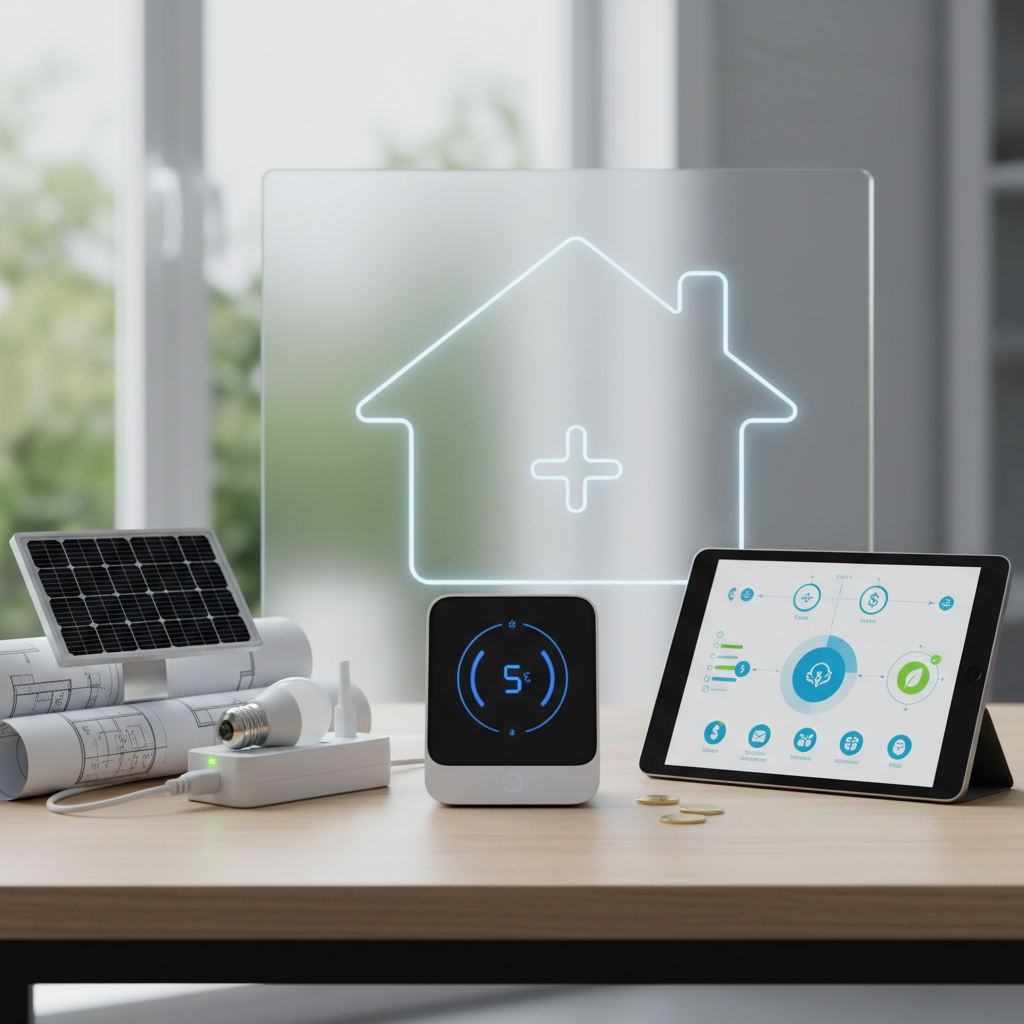
Energy-Efficient Building Upgrades
Many of the most valuable tax credits are aimed at improving your home's "building envelope"—the physical barrier between the conditioned interior and the unconditioned exterior. Upgrades in this category focus on reducing energy loss, which directly translates into lower heating and cooling bills.
Exterior Windows, Doors, and Skylights
Old, drafty windows and doors are a primary source of energy loss in many homes. Upgrading to new, energy-efficient models can make a significant difference in your home's comfort and utility costs. To qualify for tax credits, these products must typically meet specific ENERGY STAR requirements. This often means they have features like double or triple-pane glass, low-emissivity (Low-E) coatings that reflect infrared light, and inert gas fills (like argon or krypton) between the panes to improve insulation.
The tax credit generally applies to the cost of the products themselves, not the installation labor. When you purchase qualifying windows or doors, the manufacturer will provide a certification statement that you'll need to keep for your tax records. This upgrade not only helps you save on taxes and energy but also can improve your home's curb appeal and reduce outside noise.
Insulation and Air Sealing Materials
Proper insulation is one of the most effective ways to improve a home's energy efficiency. Heat naturally moves from warmer areas to cooler areas, meaning you lose heat in the winter and gain it in the summer. Insulation slows this process down. Tax credits are often available for adding insulation to your attic, walls, floors, and crawl spaces. This can include various types of materials like batts, rolls, blow-in fibers, and rigid foam boards.
Alongside insulation, air sealing is critical. This involves finding and sealing air leaks in your home's envelope, often around windows, doors, pipes, and electrical outlets. The tax credit may cover the cost of materials like weather stripping, spray foam in a can, caulk, and house wrap. A home energy audit can help identify the most critical areas for insulation and air sealing improvements, ensuring your investment has the biggest impact.
High-Efficiency Home Systems
Beyond the structure itself, the systems that heat, cool, and provide hot water for your home are major energy consumers. Upgrading to modern, high-efficiency equipment can qualify you for substantial tax credits.
Central Air Conditioners and Furnaces
Heating and cooling often account for the largest portion of a home's energy use. If your HVAC system is more than 10-15 years old, replacing it with a new, high-efficiency model can lead to significant savings. To qualify for tax credits, the equipment must meet or exceed specific efficiency ratings set by the Consortium for Energy Efficiency (CEE). For air conditioners, this rating is SEER2 (Seasonal Energy Efficiency Ratio 2), and for furnaces, it's AFUE (Annual Fuel Utilization Efficiency).
These credits can help offset the considerable cost of a new HVAC system. When shopping, look for the ENERGY STAR label and confirm the specific efficiency ratings with your contractor. A properly sized and installed system will not only lower your bills but also provide more consistent temperatures and better indoor air quality throughout your home.
Heat Pumps and Heat Pump Water Heaters
Heat pumps are an increasingly popular and highly efficient alternative to traditional furnaces and air conditioners. Instead of generating heat, they move it. In the winter, they extract heat from the outside air (even when it's cold) and transfer it inside. In the summer, they reverse the process to cool your home. Because they move heat rather than create it, they can be incredibly efficient, and substantial tax credits are available for qualifying models.
This same technology can be applied to water heaters. A heat pump water heater pulls heat from the surrounding air and transfers it to the water in the tank. They can be two to three times more energy-efficient than a conventional electric resistance water heater. The tax credits available for these systems make them a compelling option when it's time to replace an old, inefficient water heater.
Renewable Energy Installations
Perhaps the most significant federal tax credits are reserved for homeowners who install systems that generate their own clean energy. These credits are calculated as a percentage of the total project cost, including both materials and installation labor.
Residential Solar Panels (Photovoltaic Systems)
Installing solar panels on your roof allows you to generate your own electricity from the sun, drastically reducing or even eliminating your electric bill. The Residential Clean Energy Credit allows homeowners to claim a credit for a significant percentage of the total cost of a new solar PV system. There is no maximum limit on this credit, making it one of the most valuable incentives available.
This credit applies to the solar panels, inverters, racking, and all associated installation costs. It has been a major driver of residential solar adoption across the country, making clean energy more accessible and affordable for millions of households.
Battery Storage Technology
Home battery systems, often installed alongside solar panels, store excess energy for later use. This is particularly useful for powering your home during a grid outage or for use during evening hours when the sun isn't shining. The Residential Clean Energy Credit was expanded to include battery storage technology with a capacity of 3 kilowatt-hours (kWh) or greater. This means you can claim the same percentage credit on the cost of the battery and its installation, whether it's installed with a solar system or as a standalone upgrade.
Understanding the Energy Efficient Home Improvement Credit
The incentives for making these home upgrades primarily come from federal tax credits, which were significantly expanded and extended by the Inflation Reduction Act of 2022. This legislation established two key credits for homeowners: the Energy Efficient Home Improvement Credit and the Residential Clean Energy Credit. Understanding their basic structure is key to planning your projects effectively.
The Energy Efficient Home Improvement Credit covers upgrades like new windows, doors, insulation, and high-efficiency HVAC systems. This credit has an annual limit, meaning you can claim a certain amount each year. This is a crucial detail for homeowners, as it allows you to spread out multiple projects over several years to maximize the total credit you receive. For example, you could replace your windows one year and upgrade your furnace the next, claiming the credit in both tax years.
In contrast, the Residential Clean Energy Credit, which covers solar, geothermal, and battery storage, is not subject to an annual limit. It is a percentage of the total cost of the system, no matter how large. It’s important for homeowners to keep meticulous records, including purchase receipts and manufacturer certification statements, to prove that their specific products meet the strict eligibility requirements for these credits.
Common Questions About Home Improvement Tax Credits
Navigating the world of tax incentives can be confusing. Here are answers to a few common questions that homeowners often have when considering these energy-efficient upgrades.
What's the Difference Between a Tax Credit and a Deduction?
This is a critical distinction that highlights the value of these home improvement programs. A tax deduction reduces your taxable income. For example, if you are in a 22% tax bracket, a $1,000 deduction would save you $220 on your tax bill. It's a valuable tool, but its impact is based on your income level.
A tax credit, on the other hand, is a dollar-for-dollar reduction of the actual tax you owe. A $1,000 tax credit reduces your tax bill by the full $1,000, regardless of your tax bracket. This makes tax credits significantly more powerful and valuable for the average taxpayer. The energy-related home improvement incentives are credits, which means they directly reduce your final tax liability.
How Do I Claim These Tax Credits?
Claiming these credits requires careful record-keeping and filing the correct forms with your annual tax return. First and foremost, you must save all your receipts for the qualifying purchases and installation costs. You also need to obtain and keep the Manufacturer's Certification Statement for each product. This is a document from the manufacturer attesting that the product meets the specific energy efficiency requirements for the tax credit.
When you file your taxes, you will need to complete and attach IRS Form 5695, titled "Residential Energy Credits." This form has separate parts for the Energy Efficient Home Improvement Credit and the Residential Clean Energy Credit. It will guide you through calculating the exact amount you can claim. While the process is straightforward, consulting with a qualified tax professional is always a good idea to ensure you are claiming everything correctly.
Conclusion
Investing in energy-efficient home improvements offers a powerful two-fold benefit. In the short term, federal tax credits can significantly reduce the initial cost of these projects, making them more financially accessible. Over the long term, these upgrades lower your monthly utility bills, save energy, and improve the overall comfort and value of your home. By understanding which projects qualify and planning them strategically, homeowners can leverage these incentives to create a more sustainable and affordable living environment.