Step-by-Step Guide to Secure a Pell Grant for Truck Driving School
Yes, you can absolutely use a Pell Grant to help pay for truck driving school, but not all CDL programs are eligible.
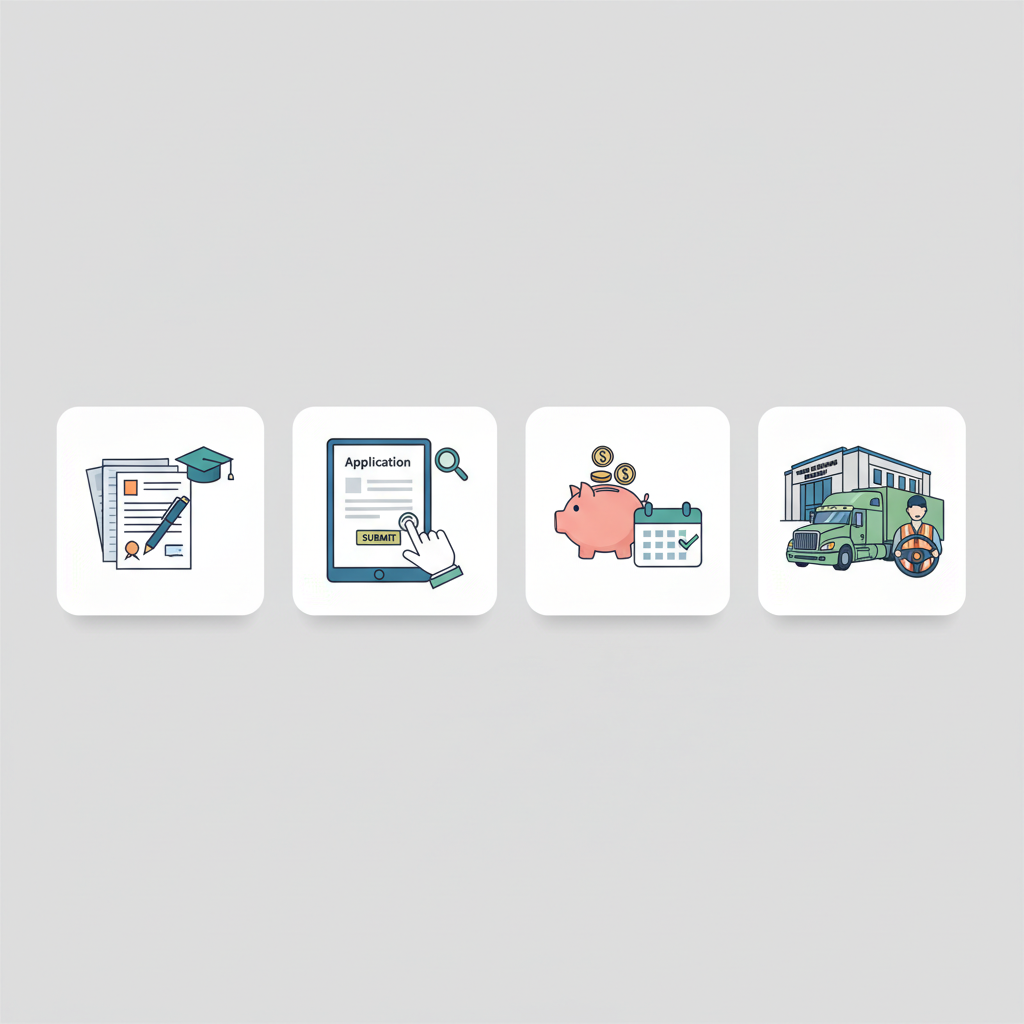
How To Get A Pell Grant For Truck Driving School
Embarking on a career in truck driving is a significant step toward a stable and in-demand profession. However, the initial cost of obtaining a Commercial Driver's License (CDL) can be a barrier for many. Fortunately, federal financial aid programs, specifically the Pell Grant, are available to help eligible students cover the costs of truck driving school. A Pell Grant is a form of federal aid that, unlike a loan, does not need to be repaid. This guide provides a comprehensive, step-by-step process for securing a Pell Grant to fund your CDL training.
Steps to Securing a Pell Grant for Your CDL Training
Navigating the financial aid process can seem daunting, but by breaking it down into manageable steps, you can successfully apply for the assistance you need. The key is to be thorough, accurate, and proactive in your approach.
Step 1: Confirm Your Basic Eligibility
Before you begin the application process, it's essential to ensure you meet the fundamental eligibility criteria set by the U.S. Department of Education. The Pell Grant is primarily need-based, but there are several non-negotiable requirements you must satisfy. You must be a U.S. citizen or an eligible noncitizen with a valid Social Security number. Additionally, you need to have a high school diploma, a General Educational Development (GED) certificate, or have completed a state-approved homeschool program.
Furthermore, you must demonstrate financial need, which is determined through your FAFSA application. You cannot be in default on any federal student loans or owe a refund on a previous federal grant. Maintaining satisfactory academic progress, as defined by the school you attend, is also a condition for continued eligibility. Meeting these baseline requirements is the first and most critical hurdle in the process of obtaining a Pell Grant.
Step 2: Find an Eligible Truck Driving School
This step is one of the most important in the entire process. Not all truck driving schools are created equal, and crucially, not all are eligible to participate in federal student aid programs. To use a Pell Grant, you must enroll in a school that is accredited by an agency recognized by the U.S. Department of Education and is approved to offer federal financial aid. Many private, for-profit CDL schools may not have this accreditation.
To find an eligible school, you can use the Department of Education's official school search tool or contact the admissions offices of schools you are interested in directly. Ask them explicitly if they are accredited to accept federal financial aid and Pell Grants for their CDL program. Choosing an accredited institution not only allows you to use federal aid but also often signifies a higher standard of training and education, which can be beneficial for your future career.
Step 3: Complete the Free Application for Federal Student Aid (FAFSA)
The FAFSA is the universal application for all federal student aid, including the Pell Grant. This form is the cornerstone of your application, as it collects detailed information about your and your family's financial situation to determine your eligibility for aid. You will need to gather several documents before starting, including your Social Security number, driver's license, federal income tax returns (and W-2s), and records of any untaxed income or assets.
It is vital to fill out the FAFSA completely and accurately. Any errors or omissions can cause significant delays in processing your application or even lead to a denial of aid. The application can be completed online at the official FAFSA website. Be sure to list the school codes for all the accredited truck driving schools you are considering. This ensures that each school receives your information and can create a financial aid package for you if you are accepted.
Step 4: Review Your Student Aid Report (SAR)
After you submit your FAFSA, the information will be processed, and you will receive a Student Aid Report (SAR) within a few days to a few weeks. The SAR is a summary of all the information you provided on your FAFSA. You should review it carefully to check for any errors. If you find any mistakes, you must correct them immediately through the FAFSA website.
The most important piece of information on your SAR is your Expected Family Contribution (EFC) or Student Aid Index (SAI), depending on the FAFSA year. This number is a measure of your family's financial strength and is used to determine your eligibility for federal student aid. A lower EFC/SAI indicates a greater financial need, which increases your likelihood of receiving a Pell Grant and may result in a larger award amount. The schools you listed on your FAFSA will also receive this information electronically.
Step 5: Work with Your School's Financial Aid Office
Once an eligible truck driving school has received your SAR and you have been accepted into their CDL program, their financial aid office will take over. They will use your EFC/SAI, the cost of attendance for their program, and your enrollment status (full-time or part-time) to calculate the specific amount of financial aid you are eligible to receive.
The school will then send you a financial aid award letter detailing the types and amounts of aid they can offer you, including any Pell Grant funds. You will need to formally accept the aid package. The Pell Grant funds are typically disbursed directly to the school to cover tuition and fees. If any funds are left over after these costs are paid, the school will issue the remaining balance to you to help with other educational expenses like books, supplies, or living costs.
The Significance of Pell Grants in Vocational Training
The Pell Grant program was originally established to help students pursue traditional two- and four-year college degrees. However, its role has expanded significantly over the years to recognize the importance of vocational and career training. This expansion is a game-changer for industries like transportation, which rely on skilled professionals who need specialized, short-term training rather than a traditional academic degree. By making funds available for programs like CDL training, the Pell Grant helps bridge the financial gap for individuals seeking to enter these vital fields.
This support lowers the barrier to entry, creating a more diverse and accessible pathway to middle-class careers. For many aspiring truck drivers, the upfront cost of a quality training program is the single biggest obstacle. The Pell Grant directly addresses this by providing debt-free assistance, allowing students to focus on their training without the immediate burden of high-interest private loans. This investment in vocational education not only empowers individuals but also helps address critical labor shortages in essential industries, strengthening the economy as a whole.
Common Questions About Pell Grants for CDL Programs
As you navigate the process, several common questions may arise. Understanding the answers to these can help you feel more confident and prepared to secure the funding you need for your truck driving career.
What Specific Eligibility Requirements Must I Meet?
Beyond the basics like citizenship and having a high school diploma, Pell Grant eligibility is heavily determined by financial need. This is calculated using the information from your FAFSA, including your income, your family's income (if you are a dependent), assets, and family size. The formula produces your EFC/SAI. The lower this number, the greater your financial need is considered to be.
Additionally, you must be enrolled in an eligible program at an accredited institution. Male applicants between the ages of 18 and 25 must also be registered with the Selective Service System. It is also important to note that you cannot have already earned a bachelor's degree or professional degree, as the Pell Grant is intended for students pursuing their first undergraduate credential, which includes vocational certificates like a CDL.
What If My Chosen Truck driving School Doesn't Accept Pell Grants?
Discovering that your preferred truck driving school is not eligible for federal aid can be disappointing, but it doesn't mean your journey is over. There are several alternative funding options to explore. First, research other accredited schools in your area that do accept Pell Grants. You may find an equally reputable program that fits your needs.
If you are set on a specific non-eligible school, ask their admissions or finance office about other financial assistance they offer. Many schools have institutional scholarships, grants, or flexible payment plans. You can also look for third-party scholarships specifically for truck driving students, which are often offered by trucking companies, industry associations, and private organizations. As a last resort, some students consider private loans, but it's crucial to carefully read the terms and understand the interest rates and repayment obligations before committing.
How Much Money Can I Actually Get from a Pell Grant?
The amount of money you can receive from a Pell Grant changes each academic year and depends on several factors. The U.S. Department of Education sets a maximum award amount annually. For the 2023-2024 award year, the maximum was $7,395. However, not everyone receives the maximum amount. The specific award you receive is determined by your EFC/SAI, the cost of attendance at your chosen school, and your enrollment status.
For example, if the cost of your CDL program is less than the maximum Pell Grant award, your grant will be capped at the cost of attendance. Similarly, if you are enrolled as a part-time student, your award may be prorated. Your financial aid award letter from the school will provide the exact amount you are eligible to receive for that specific program and academic term.
Conclusion
Securing a Pell Grant for truck driving school is an achievable goal that can make a career in trucking financially accessible. The process requires careful attention to detail and proactive effort. By starting with confirming your eligibility and finding an accredited school, you lay the essential groundwork. Diligently completing the FAFSA and working closely with your school's financial aid office are the final steps to unlocking this valuable, debt-free resource. By leveraging the Pell Grant, you can invest in your future and get on the road to a successful and rewarding career as a professional truck driver.
For more information and to start your application, visit the official Federal Student Aid websites: