The New Wave of Home Entertainment: What's Replacing Flat Screens
Flat screens are becoming a thing of the past as new display technologies surge in popularity. Discover what’s taking over the place of flat screens in modern-day entertainment and workspaces.
The Evolution of Home Entertainment Technology
For decades, flat-screen TVs have dominated living rooms worldwide. Yet, as technology rapidly evolves, new advancements are capturing consumers' attention and redefining home entertainment. This shift has sparked an intriguing question: "Flat screens are out – what's next?" Let us explore the emerging trends within this dynamic industry.
Current Innovations in Display Technology
In recent years, display technology has experienced substantial innovation, moving beyond the traditional flat-screen model. Here are some key developments that are redefining the future of viewing.
- Quantum Dot Displays: Quantum dot technology enhances LED displays by using semiconductor nanocrystals to produce purer colors. The result is an incredibly vivid picture quality. Brands like Samsung are leading with QLED TVs, offering excellent contrast and color accuracy.
- MicroLED Technology: MicroLEDs promise even better quality through self-emissive displays that deliver exceptional brightness and a wide color spectrum without the need for backlighting. Companies like Sony and Samsung are making strides in this high-end market.
- OLED Advances: OLED technology continues to evolve, offering perfect blacks and excellent viewing angles. Recent models from LG and Sony push the boundaries with enhanced motion handling and higher brightness levels.
- Rollable and Curved Displays: LG has sparked interest with its innovative rollable OLED TV, which rolls into a compact box when not in use. Curved TVs, though a niche product, offer an immersive experience by wrapping the display slightly around the viewer field.
The Rise of Smart Projectors
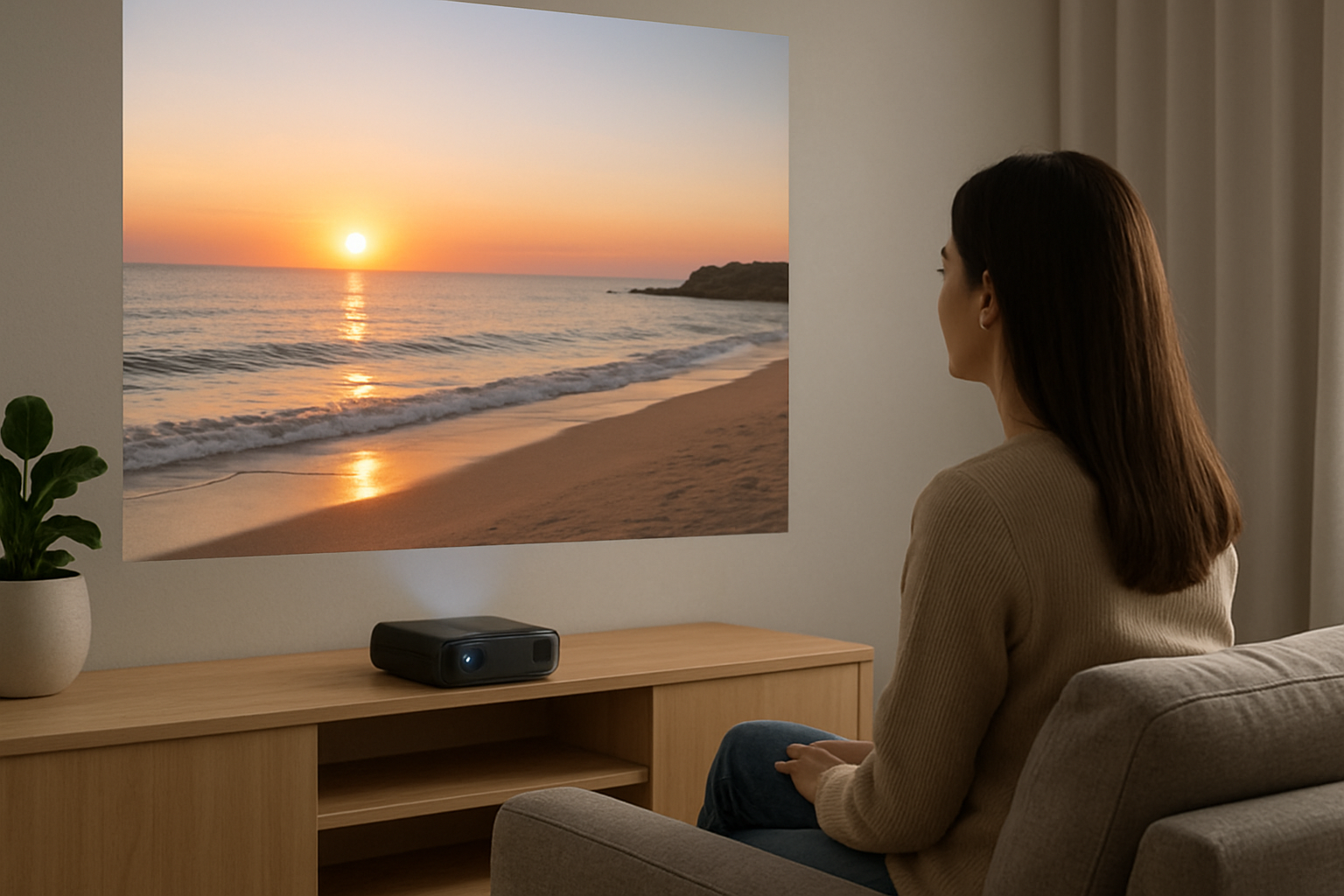
While projectors have been around for ages, the infiltration of smart technology has revitalized their appeal. Smart projectors combine portability, ease of use, and high-quality projection, making them a compelling alternative to traditional TVs.
Benefits include:
- Compact and Portable: Many modern smart projectors are small enough to fit in a backpack and can project large images of 100 inches or more on any flat surface.
- Smart Features: These devices often include built-in streaming apps, Wi-Fi connectivity, and even voice control, making access to content seamless and intuitive.
- High Picture Quality: Advances in laser and LED technology mean that smart projectors can offer impressive resolution and brightness comparable to good quality TVs.
Virtual and Augmented Reality (VR/AR) in Entertainment
The advent of VR and AR technologies is pushing the boundaries of how we experience entertainment. Devices like Oculus Quest and Microsoft HoloLens provide immersive experiences that were science fiction only a few years ago.
- Immersive Gaming: VR offers an unparalleled gaming experience by placing players inside the game environment. It's a burgeoning field, with applications that extend beyond traditional gaming to areas such as live sports and concert simulations.
- Augmented Reality Experiences: AR enhances the real world with digital overlays. Microsoft’s HoloLens, for example, enables professional training applications, virtual design processes, and interactive gaming.
Laser TVs: A New Contender
Laser TVs represent a novel approach, combining the size advantage of projectors with the display quality of high-end TVs. With models like Hisense's L9G, laser TVs are making significant inroads.
Features include:
- Improved Image Quality: Laser TVs offer a stunning viewing experience with vibrant colors and high contrast ratios produced by precision laser light sources.
- Large Displays: These units can project images up to 150 inches, transforming any room into a home theater.
- Cost and Maintenance Efficiency: Lower maintenance costs and prolonged lifespan compared to traditional projector bulbs make them a cost-effective alternative.
Considering the Future – What Lies Ahead?
The integration of AI and IoT is anticipated to further revolutionize entertainment systems as TV becomes more interactive and personalized. AI-driven content recommendations and voice-activated controls are just the starting point.
Research predicts that AI enhancements will facilitate real-time content adaptation and personalized viewer profiles. For instance, devices might eventually self-calibrate image settings in response to room lighting dynamics or offer scene-specific sound adjustments.
Conclusion
The successor to the flat screen is not a single technology but rather a spectrum of innovative options offering unique advancements in picture quality, automation, and user interactivity. As these technologies inch closer to mainstream adoption, the line between television and interactive digital experiences continues to blur. For consumers, this means a rich array of choices tailored to diverse viewing preferences and lifestyles.