The Real Odds: Exploring the Value of California Lottery Scratchers
It’s the question every Californian thinks while standing at the counter: are those colorful Scratchers actually worth the money? To find the real answer, we're moving past luck and superstition.
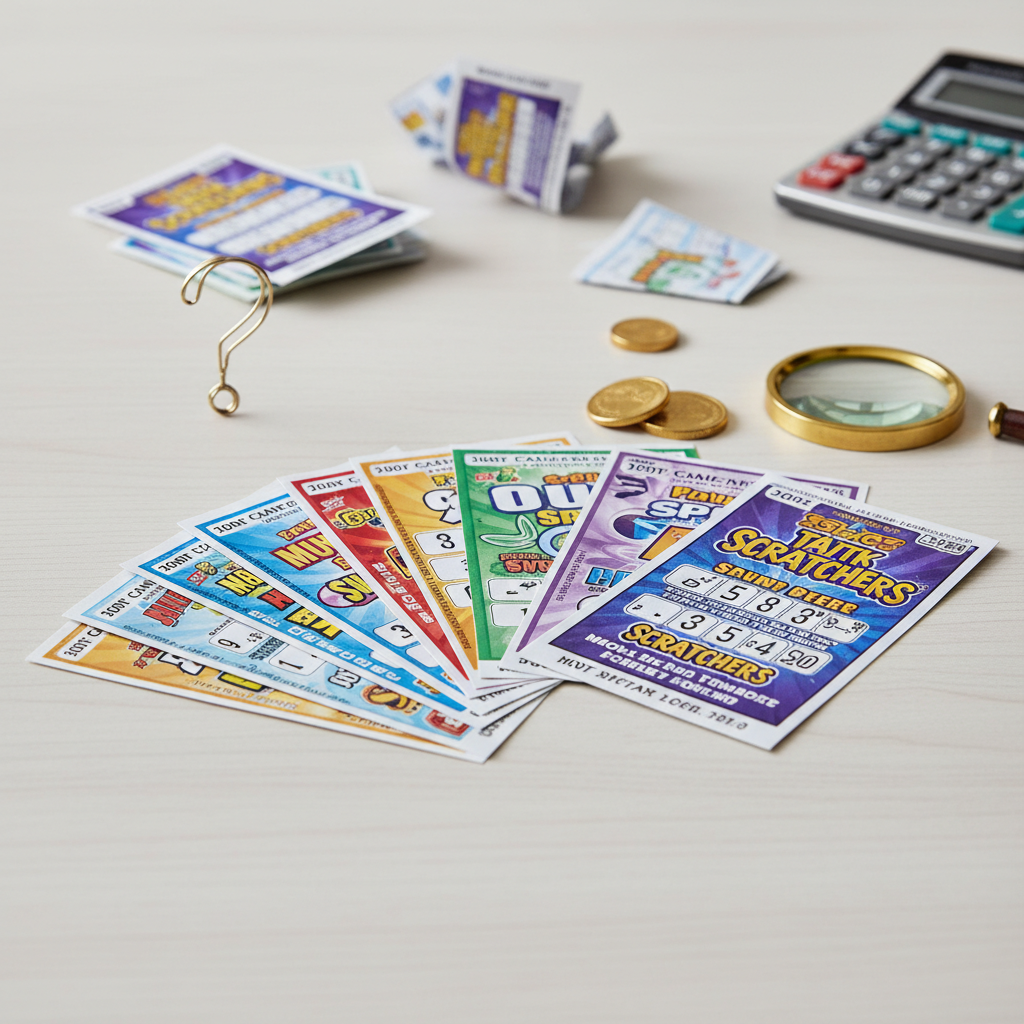
Breaking Down the Value: Key Factors to Consider
Deciding if a California Lottery Scratcher is "worth it" isn't a simple yes or no question. The answer depends entirely on what you consider valuable. For some, it's about the potential for a life-changing jackpot. For others, it's about the entertainment of a small gamble. To make an informed decision, it’s essential to look at the numbers, the structure of the games, and the non-monetary aspects involved.
Let's break down the most critical factors you should consider before you buy your next ticket.
1. Understanding the Odds of Winning
The most prominent number you'll see advertised on many Scratcher games is the "overall odds of winning," which might be something like "1 in 4." This can sound very appealing, but it's crucial to understand what this figure represents. These odds include every possible prize, from winning a free ticket or breaking even on your purchase to hitting the grand prize. The vast majority of wins fall into the lowest prize tiers.
So, while your chances of winning something might be 1 in 4, your chances of winning a substantial amount of money are significantly lower. The odds of winning the top prize can be as high as one in several million. Every game has its own unique odds, which are printed on the back of the ticket and are also available on the California Lottery website. More expensive tickets, such as the $20 or $30 games, generally offer better overall odds compared to the $1 or $2 tickets, but the fundamental principle remains the same: big wins are exceptionally rare.
2. Analyzing Prize Tiers and Payout Structures
The "payout structure" refers to how the total prize money for a specific Scratcher game is distributed among different prize levels. Lottery games are designed with a very top-heavy structure. A massive portion of the prize pool is allocated to a handful of grand prizes to generate excitement and ticket sales. The rest is divided among millions of smaller prizes.
This means that for every person who wins $1,000,000, there are hundreds of thousands of players who will win $10, $20, or simply get their money back. This is related to the concept of "Return to Player" (RTP), which in the lottery world is generally much lower than other forms of gaming. A typical California Scratcher game might return about 65-75% of its revenue as prizes. The remaining percentage covers state education funding, retailer commissions, and administrative costs. Essentially, for every dollar spent on tickets system-wide, only about 65 to 75 cents is paid back to players in total.
3. The Cost vs. Potential Return Equation
California Scratchers come in a variety of price points, typically ranging from $1 to $30. There's a direct correlation between the ticket price and the potential rewards. A $1 ticket might offer a top prize of $5,000, while a $30 ticket could have a grand prize of $10 million or more. As mentioned, the more expensive tickets also tend to have slightly better overall odds of winning any prize.
When evaluating if it's "worth it," you must weigh the upfront cost against the highly improbable, yet possible, massive return. Spending $30 on a single ticket is a more significant financial risk than spending $1. While the potential payout is larger, the most likely outcome for any single ticket is that it will not be a winner. Therefore, the decision should be based on what you are comfortable losing for a moment of entertainment and a slim chance at a large prize.
4. The Entertainment Value Component
For many players, the primary value of a Scratcher ticket isn't found in a statistical analysis of its return. Instead, it's about the entertainment and the experience. The act of buying a ticket, the anticipation of scratching off the foil, and the brief dream of what you would do with a jackpot win is a form of entertainment in itself.
If you view the cost of a Scratcher ticket in the same way you would view the cost of a coffee, a movie ticket, or a magazine, the perspective changes. It becomes a small expense for a moment of hope and fun. If this entertainment is what you’re seeking and you are playing within a budget you can afford to lose, then you might consider it "worth it" regardless of whether you win. This is perhaps the most subjective but equally important factor in the equation.
5. How Scratchers Compare to Draw Games like Powerball
It's also useful to compare Scratchers to multi-state draw games like Powerball or Mega Millions. Scratchers offer instant gratification—you know immediately if you've won or lost. The odds of winning a top prize, while long, are often better than the astronomical odds of hitting a Powerball jackpot (which can be 1 in 292 million).
Draw games, on the other hand, offer unimaginably large jackpots that build over time, creating national excitement. The trade-off is that the odds are much worse, and you have to wait for a drawing to know the result. For players who prefer immediate results and slightly better (though still poor) odds for a top prize, Scratchers are the more appealing option. For those who dream of the absolute biggest jackpots, draw games hold more appeal.
Where Does the Money from California Lottery Scratchers Go?
Understanding the financial lifecycle of a lottery ticket can provide important context. The California State Lottery was established in 1984 with a clear mandate: to provide supplemental funding for public education. This remains its primary purpose today. When you purchase a Scratcher, your money is divided into several key areas.
According to the California Lottery's official reports, the largest portion—typically around 95% of revenue—goes back to the community. This breaks down into roughly 65-75% being paid out in prizes to winners, a mandated minimum of 34% of revenue going to public education (though this often works out to be a smaller percentage of total sales after prizes are paid), and about 6-7% going to retailers as commissions and bonuses. The small remaining slice, usually around 1-2%, covers the administrative costs of running the lottery itself. Since its inception, the lottery has contributed tens of billions of dollars to California's K-12 schools, community colleges, and public universities, funding everything from teacher salaries to computer labs.
Common Questions About California Lottery Scratchers
After considering the basics, many people have follow-up questions about the specifics of playing and winning. Here are answers to some of the most common inquiries.
Which California Scratcher tickets have the best odds?
The term "best odds" can be interpreted in two ways: the best odds of winning any prize, or the best odds of winning a top prize. The California Lottery website is the most reliable resource for this information. It maintains a list of all active Scratcher games, and for each game, it shows the overall odds of winning and, crucially, how many of the top prizes are still remaining.
A smart strategy used by some players is to check this list before buying. A game that has been on sale for a while but still has all or most of its top prizes available might be considered a better choice than a game where all the major jackpots have already been claimed. The odds printed on the ticket are based on the entire print run, so if the top prizes are gone, your maximum potential win is significantly reduced. Ultimately, checking the official site gives you the most current data to inform your choice.
How are lottery winnings taxed in California?
This is a significant advantage for lottery players in the Golden State. California is one of a handful of states that does not charge state income tax on lottery winnings. This applies to prizes from both Scratchers and draw games like Powerball and SuperLotto Plus. However, that doesn't mean the winnings are completely tax-free.
All lottery winnings are still subject to federal income tax. For any prize over $5,000, the California Lottery is required by federal law to withhold 24% for federal taxes before you even receive your check. You will receive an IRS Form W-2G to report your winnings. Depending on your total annual income, you may owe additional federal taxes beyond the initial 24% withholding when you file your tax return, as the winnings could push you into a higher tax bracket.
What is the process for claiming a large prize?
The process for claiming your winnings depends on the amount. For smaller prizes, typically those under $600, you can usually cash them in at any California Lottery retailer. Many grocery stores and convenience stores will pay these out on the spot.
For prizes of $600 or more, you must file a formal claim. The first and most important step is to immediately sign the back of your winning ticket; this helps prove it is yours. You will then need to fill out a Winner Claim Form, which is available on the lottery's website or at any retailer. You can either mail the signed ticket and claim form to the lottery headquarters in Sacramento or, for larger amounts, it's highly recommended to make an appointment and deliver it in person to a Lottery District Office. Always make copies of the front and back of your ticket and the claim form for your records before submitting them.
The Final Verdict: A Personal Calculation
So, are California Lottery Scratchers worth it? From a purely financial and statistical standpoint, they are not a sound investment. The odds are designed to favor the house, ensuring that the lottery generates revenue for its designated public causes. The vast majority of players will spend more money on tickets over time than they will ever win back.
However, if viewed as a form of entertainment—a small expense for a moment of excitement and the possibility of a dream coming true—then their worth becomes a matter of personal perspective. The key is to play responsibly, understand the odds, and never spend more than you are comfortable losing. The value lies not in the expectation of winning, but in the fun of playing the game.
For More Information: